3D print the Library of Celsus
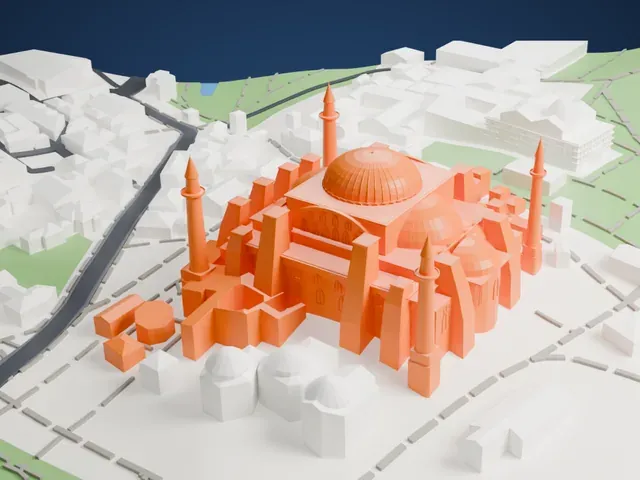
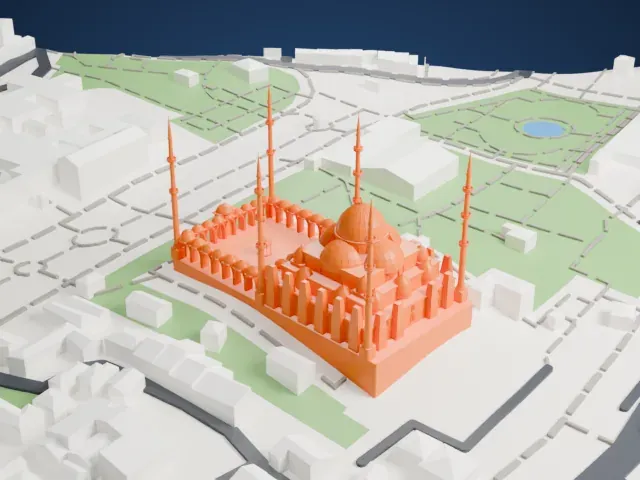
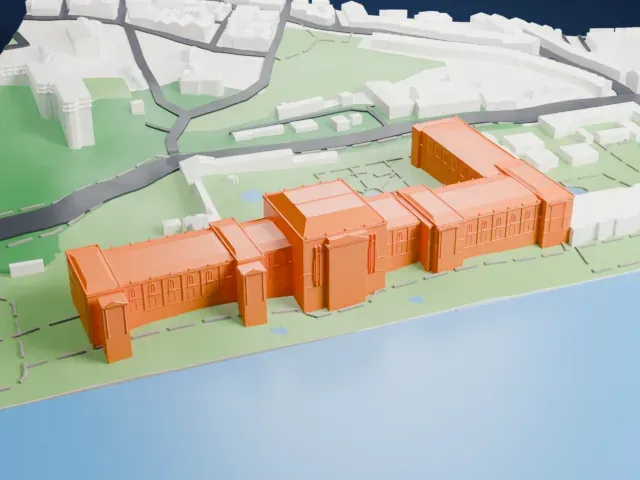
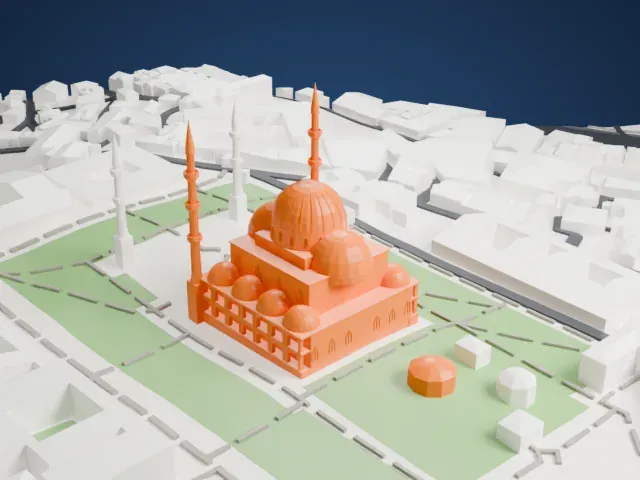
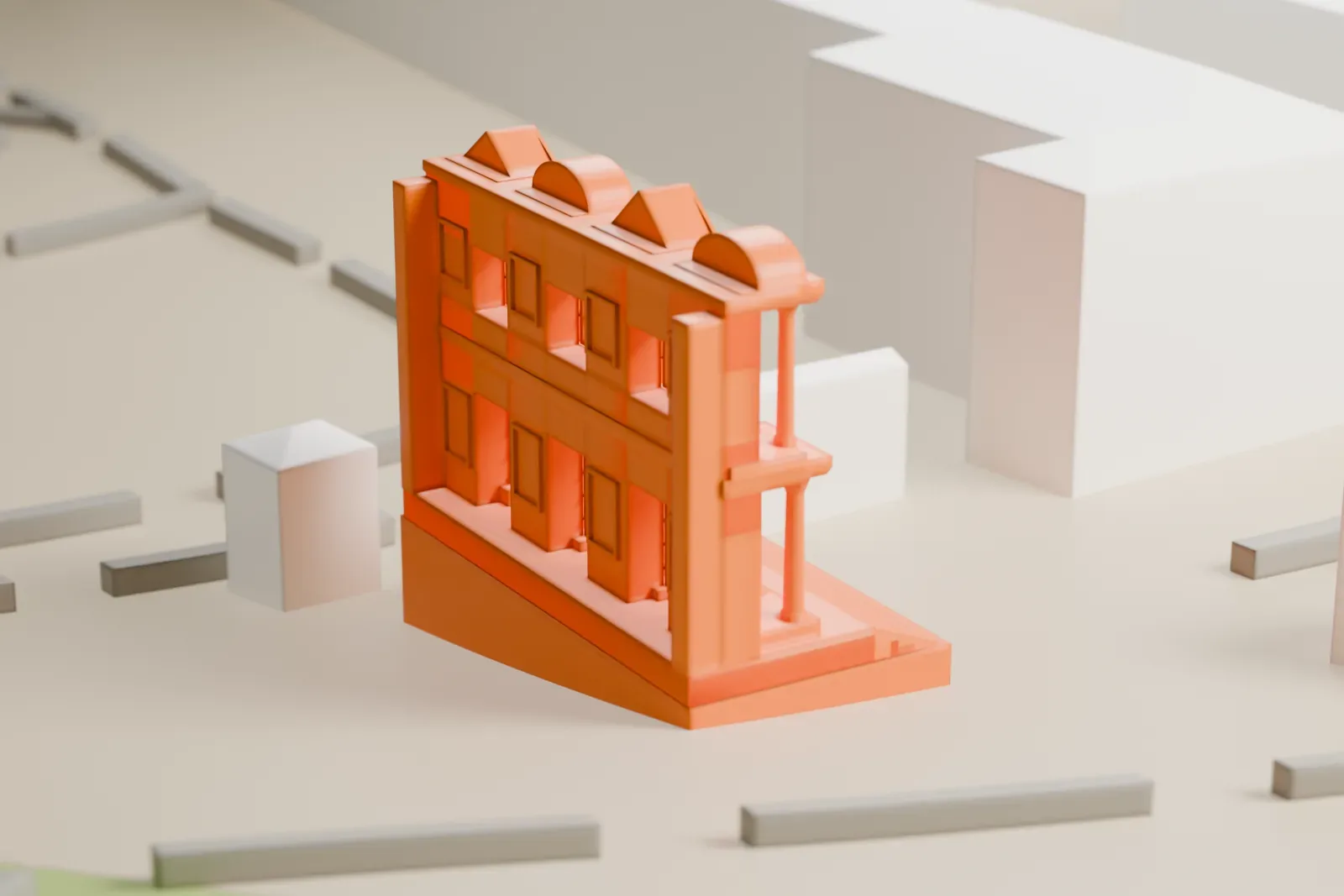
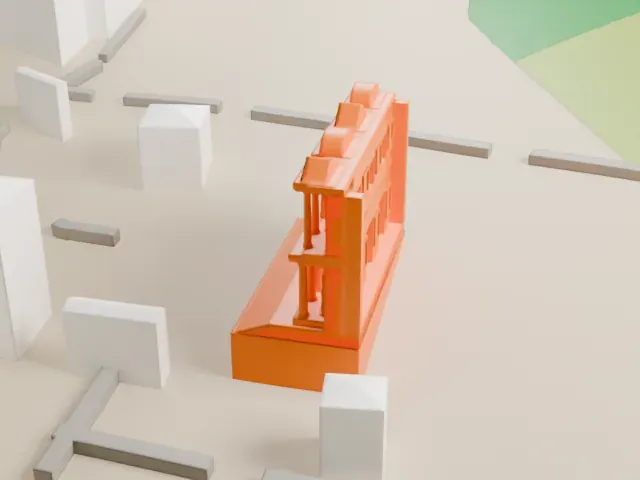
A free, printable model of the Library of Celsus, a two-level columned façade topped with pediments, standing on open ground with a few buildings nearby, generated from real map data in your browser.
-
 North
-
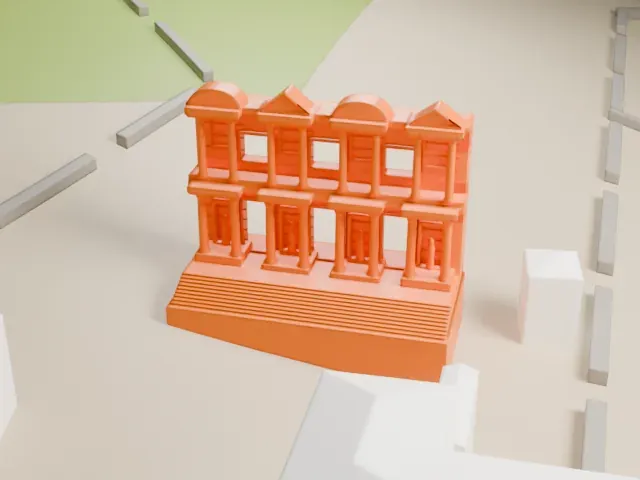 East
-
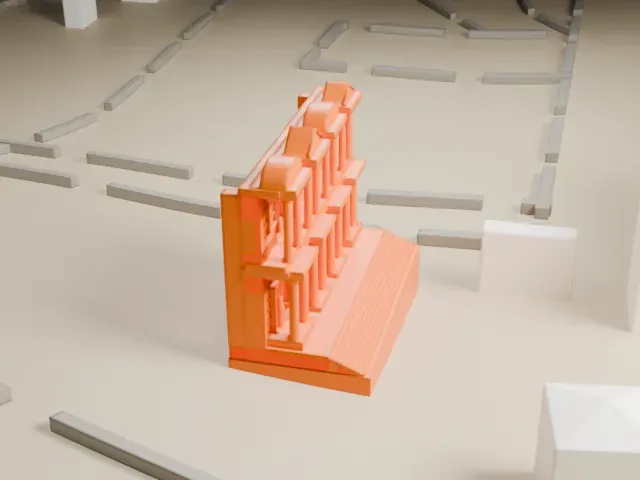 South
-
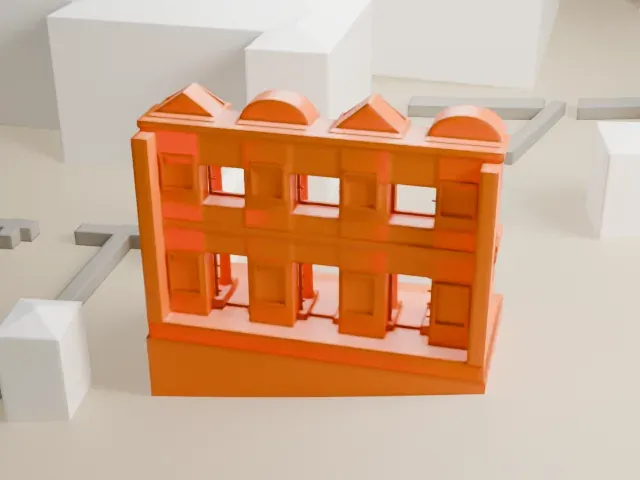 West
- On a 160 mm print
- 6 mm
- Scale
- 1:3,750
6 mm tall on a 160 mm print
Make this print opens the generator on a 600 m square around the landmark. Buildings print at close to true scale, so the landmark grows with the print size.
- Slender columns and pediments
Slim columns stand in front of the façade wall, with small statue niches and pediments above. Print friendly adapts these thin parts to the print scale; Full detail keeps them, best on a larger print, printed slowly with good cooling.
- A façade-only model
Like the reconstruction, the model is a standing façade with open window openings and a flat back. A larger print size gives its columns and window frames more thickness.
- One piece with the ground
The Library of Celsus is joined to the ground in the exported file, and the four-side check found no floating parts, so nothing needs gluing.
- Pick the detail for your nozzle
In the Buildings settings, set Landmark detail to Print friendly to adapt thin parts and small details to the print scale. Full detail keeps every modeled feature, for larger prints or a finer nozzle.
- Colors
Buildings, roads, water and ground arrive as separate filament slots in the 3MF. The Library of Celsus takes the building color.
- File format
You get a 3MF for Bambu Studio, OrcaSlicer or PrusaSlicer. Any of them can save it as STL if you need one.
About the Library of Celsus
In Ephesus, in Anatolia, stands the ancient Roman Library of Celsus, close to the town of Selçuk in İzmir Province, Türkiye. Tiberius Julius Aquila Polemaeanus, a consul of the Roman Empire, commissioned it in the 110s CE to honor his father, Tiberius Julius Celsus Polemaeanus, who had served as proconsul of Asia, and it doubled as a funerary monument. It was finished under Emperor Hadrian, after Aquila had died. Only the libraries of Alexandria and Pergamum were bigger in the Greco-Roman world, and it is thought to have held roughly 12,000 scrolls. A decorated marble sarcophagus holding Celsus lies in a crypt under the library.
Its east-facing marble façade is richly carved with plant motifs and decorated with portrait statues. It was built using false perspective, a Greek technique. The building sits on a platform, and nine steps spanning its full width lead to three entrances at the front. Four pairs of Composite columns on pedestals flank the entrances, with Corinthian columns directly above. On the lower level, four aediculae hold statues personifying the virtues Arete (excellence), Ennoia (intelligence), Episteme (knowledge) and Sophia (wisdom), though these are not the original statues.
A fire that resulted from either an earthquake or a Gothic invasion destroyed the interior and its contents in 262 CE, and an earthquake some time in the 10th or 11th centuries left the façade in ruins. Between 1970 and 1978, archaeologists re-erected the façade, a campaign led by Volker Michael Strocka. Only the façade was rebuilt. Tests carried out after the October 20, 2020 Aegean Sea earthquake found that the reconstructed library behaved well under seismic loading.
About this model
The Library of Celsus is one of more than 4,300 landmark models in Mini Skyline. They are made with AI, and each one is checked from four sides in its real surroundings before release. Everything around it is built from OpenStreetMap and Overture map data. If you would rather print the shape from map data, turn off Landmark models in the Buildings settings.
Keep exploring