3D print Melbourne Town Hall
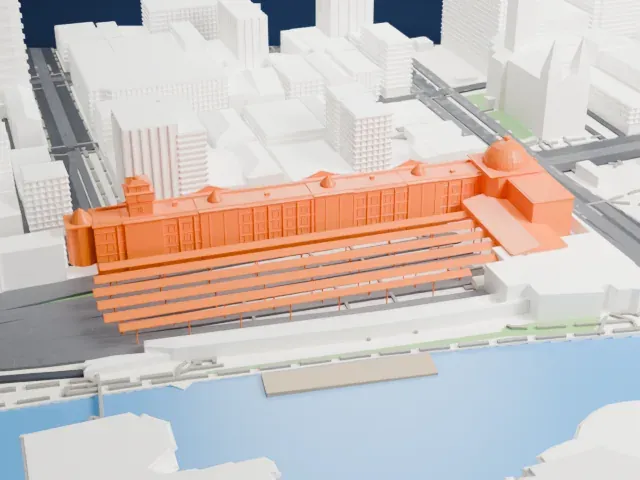
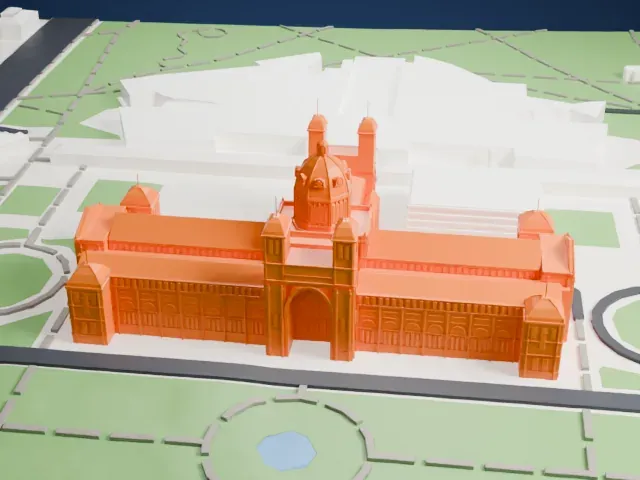
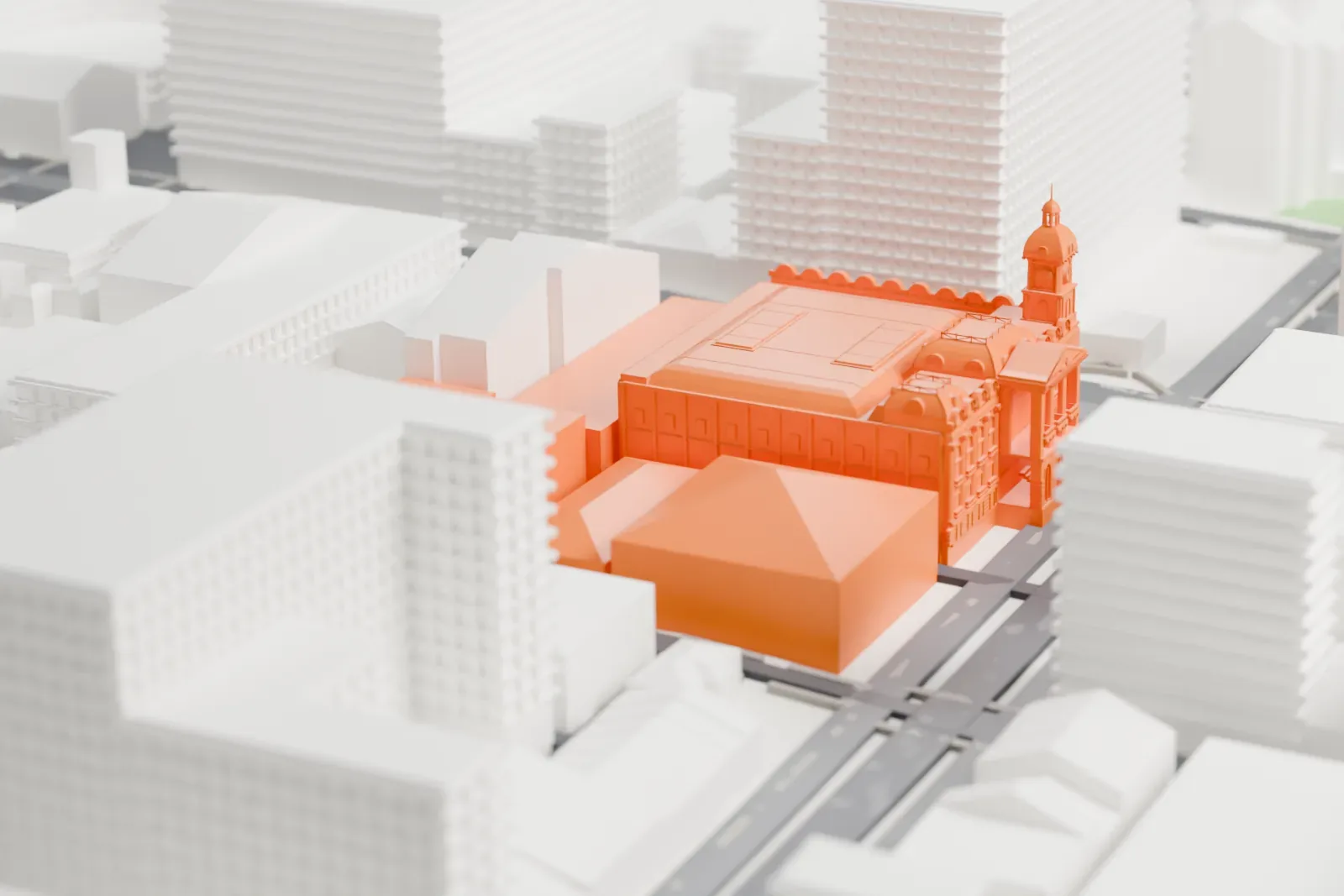
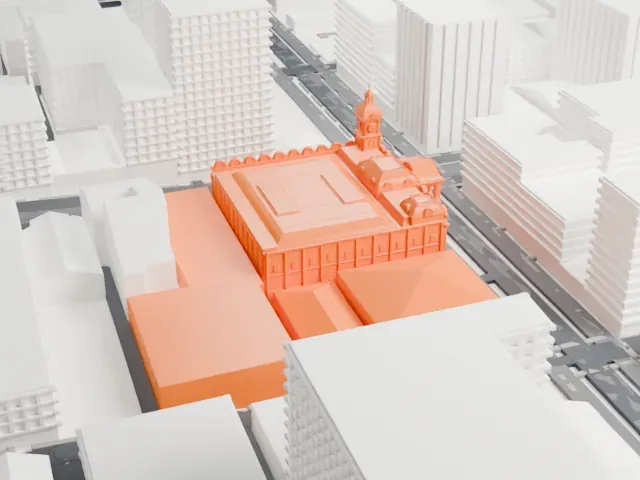
A free, printable model of Melbourne Town Hall, with its corner clock tower and mansard roofs, and the taller city blocks and streets around it, generated from real map data in your browser.
-
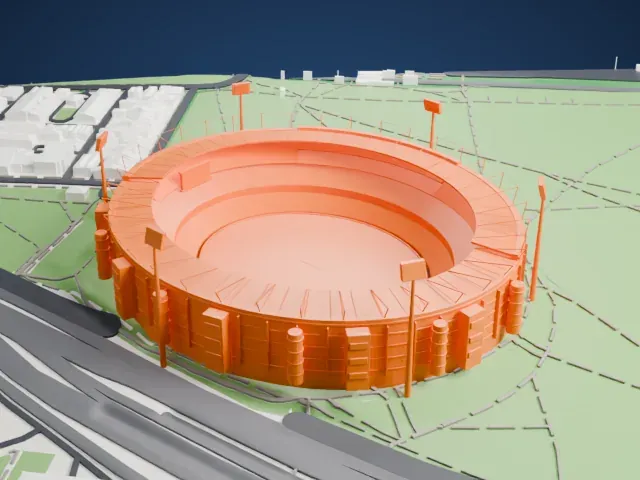
 North
-
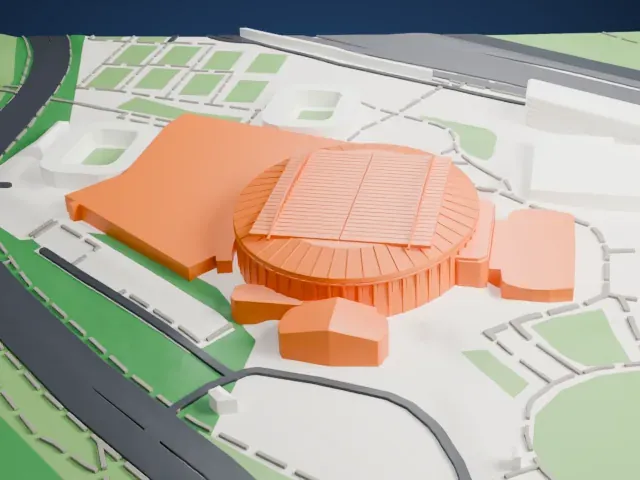
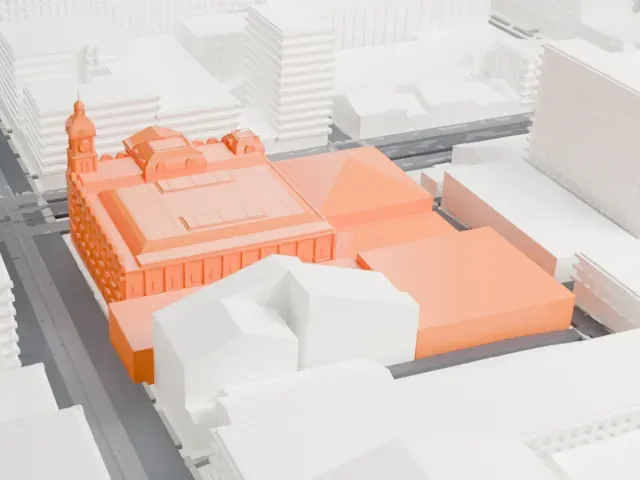 East
-
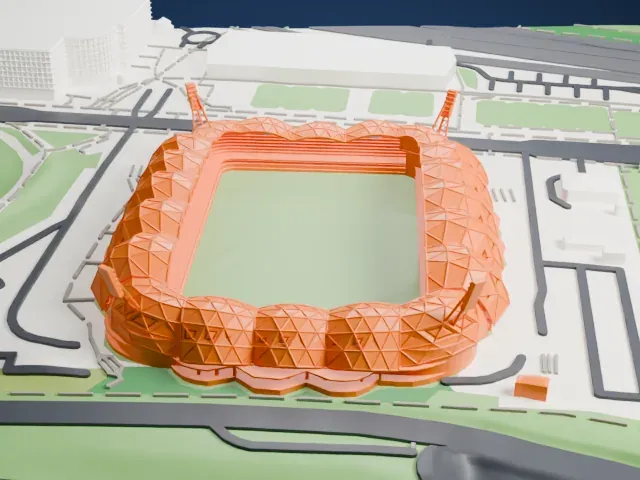
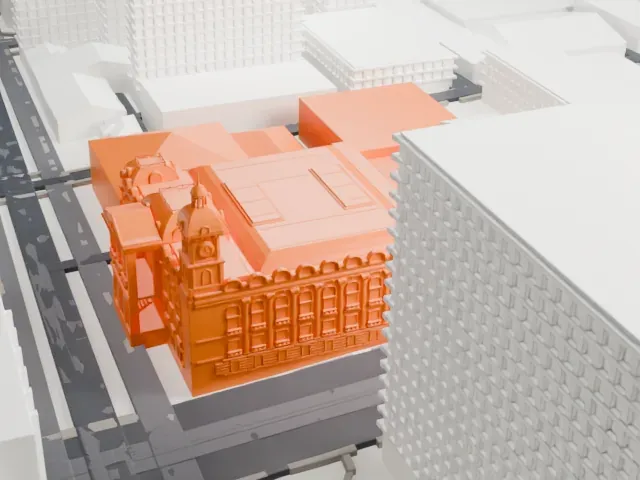 South
-
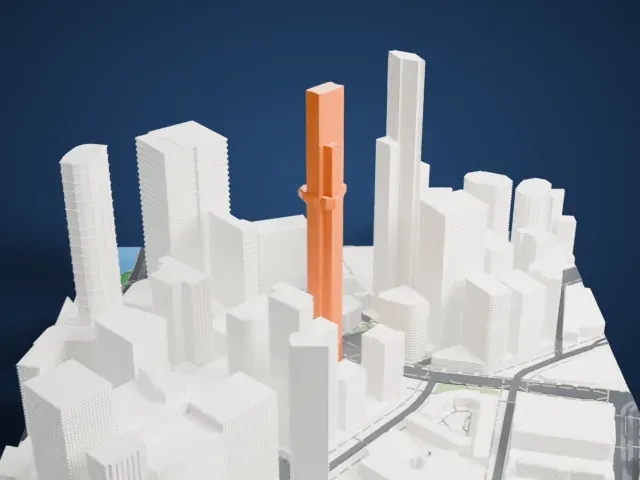
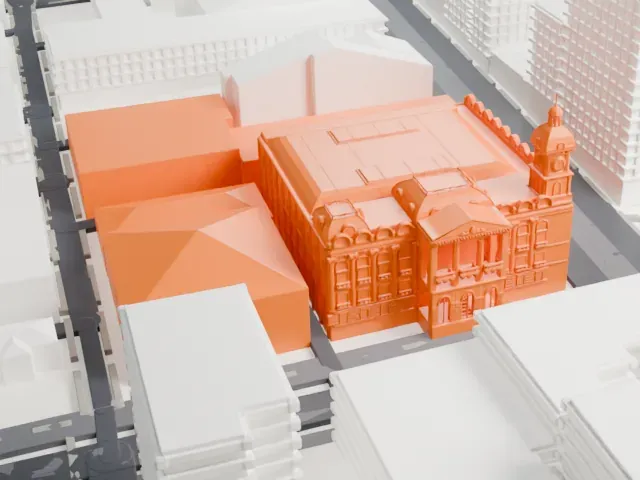 West
The model you print
Melbourne Town Hall in 3D
The landmark on its own, at its size on a 160 mm print. Print friendly thickens thin parts for a 0.4 mm nozzle; Full detail keeps every part.
- On a 160 mm print
- 13 mm
- Scale
- 1:3,750
13 mm tall on a 160 mm print
Make this print opens the generator on a 600 m square around the landmark. Buildings print at close to true scale, so the landmark grows with the print size.
- Clock tower and small domes
A clock tower with a domed top stands at the corner, and smaller domes and decorative edges line the roof. Print friendly adapts these small details to the print scale; Full detail keeps them on larger prints.
- Facade columns and roof lines
Repeating pilasters and window bays cover the facades, and mansard roofs frame the top. A layer height of 0.12–0.16 mm keeps these lines crisp, and a bigger print size keeps them distinct.
- One piece with the ground
Melbourne Town Hall is joined to the ground in the exported file, and the four-side check found no floating parts, so nothing needs gluing.
- Pick the detail for your nozzle
In the Buildings settings, set Landmark detail to Print friendly to adapt thin parts and small details to the print scale. Full detail keeps every modeled feature, for larger prints or a finer nozzle.
- Colors
Buildings, roads, water and ground arrive as separate filament slots in the 3MF. Melbourne Town Hall takes the building color.
- File format
You get a 3MF for Bambu Studio, OrcaSlicer or PrusaSlicer. Any of them can save it as STL if you need one.
About Melbourne Town Hall
Melbourne Town Hall is where the City of Melbourne is administered, and it houses the main offices of the Lord Mayor and the city councillors. At Swanston and Collins Streets in central Melbourne, Victoria, Australia, it occupies the northeast corner. The land is traditionally Wurundjeri land. In 1974 it was listed on the Victorian Heritage Register for its historical, architectural, aesthetic and social value, and it often hosts concerts, festivals, plays and exhibitions.
A design competition in 1866 went to Reed & Barnes, and John James Clark drew the detailed plans. Prince Alfred, Duke of Edinburgh laid the foundation stone on November 29, 1867, and the new hall was formally opened on August 11, 1870, with a lavish ball paid for by Lord Mayor Samuel Amess himself. A foundation stone for an added front portico followed in 1887, and in 1910 an administration wing opened, with a large Council Chamber upstairs.
Joseph Reed of Reed & Barnes designed it in the Second Empire style, with a rough bluestone base, pilasters that repeat along the walls with arched window bays in between, and high parapets crowned by mansard roofs and attic windows. The clock tower on the corner is called Prince Alfred's Tower, and its clock is 2.44 m across. The main auditorium has a concert organ with 9,568 pipes in 147 ranks. By number of voices or stops it is Australia's largest and most comprehensive pipe organ.
About this model
Melbourne Town Hall is one of more than 5,500 landmark models in Mini Skyline. They are made with AI, and each one is checked in its real surroundings before release. Each model is written as code from public descriptions, plans, photographs and aerial views used only as references; no image or third-party model is copied into it. Everything around it is built from OpenStreetMap and Overture map data. Rights in the building itself, its name and any brands on it are not granted by Mini Skyline; clear them separately before you sell prints. If you would rather print the shape from map data, turn off Landmark models in the Buildings settings.
Mini Skyline is not affiliated with, or endorsed by, the owners of this building or its names and marks.
Same skyline