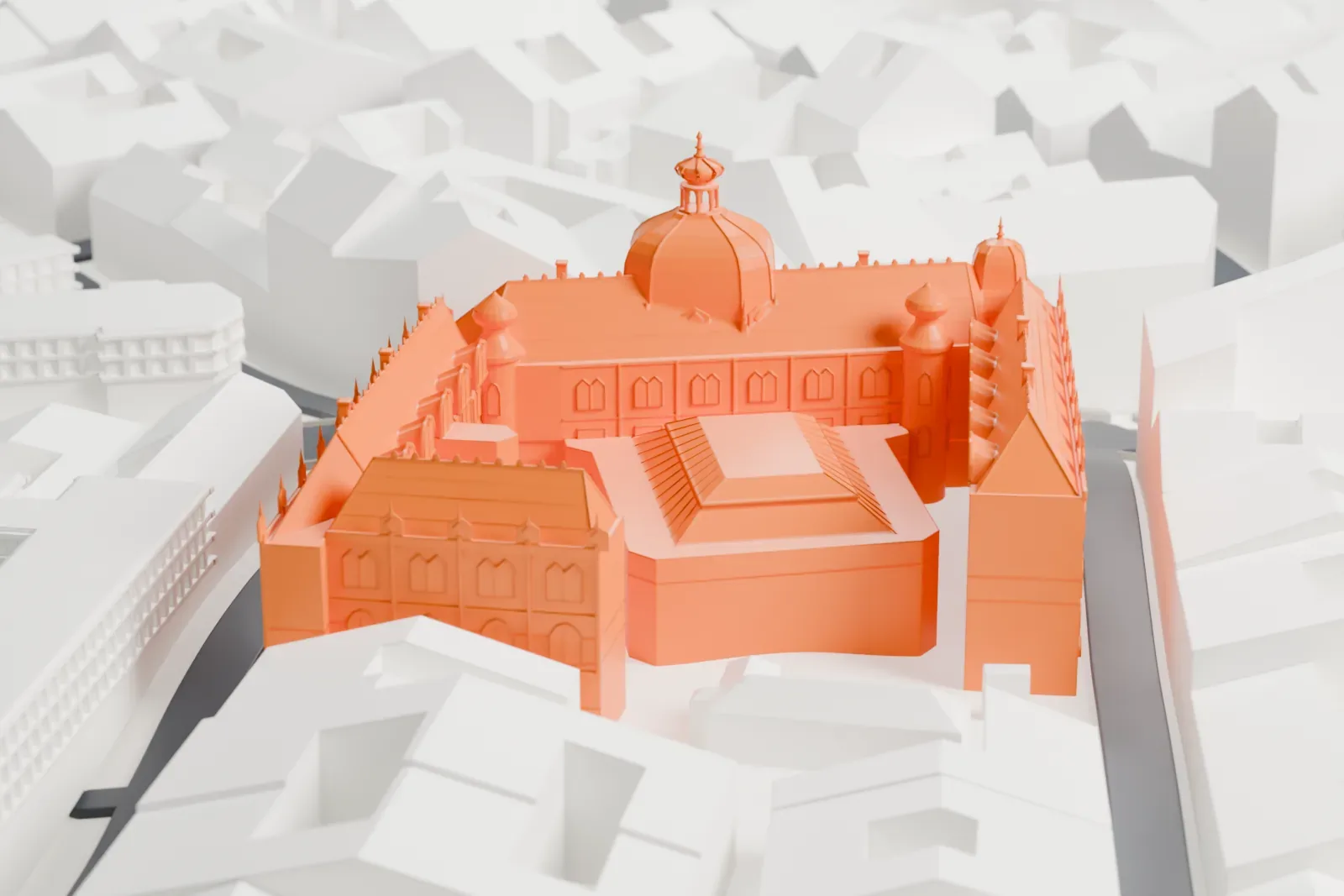
3D print the Museum of Applied Arts (Budapest)
Generate a free, printable model of the Museum of Applied Arts (Budapest), surrounding streets, and neighboring buildings from real map data in your browser.
-
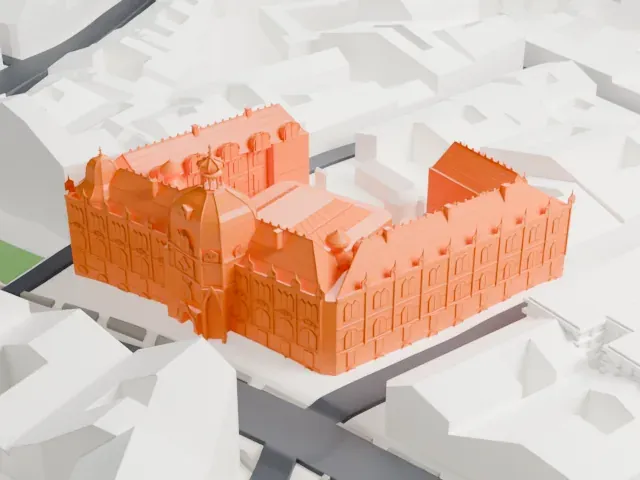 North
-
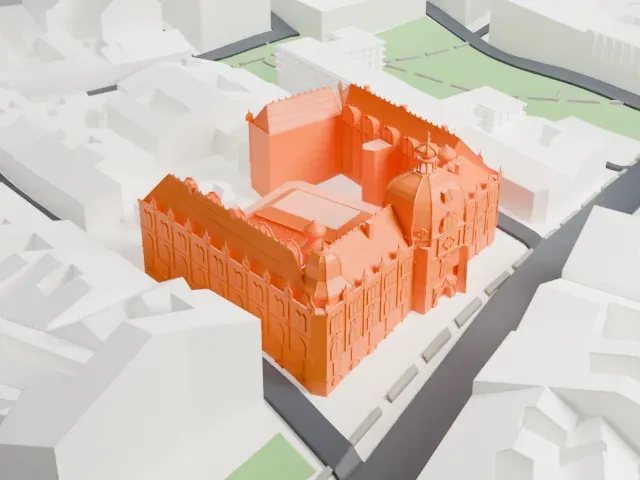 East
-
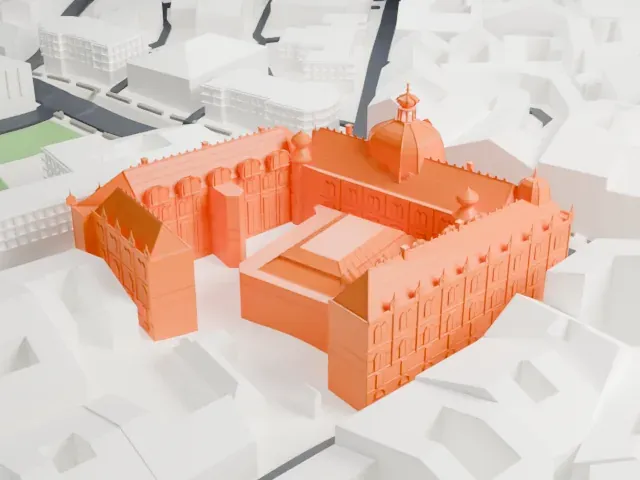 South
-
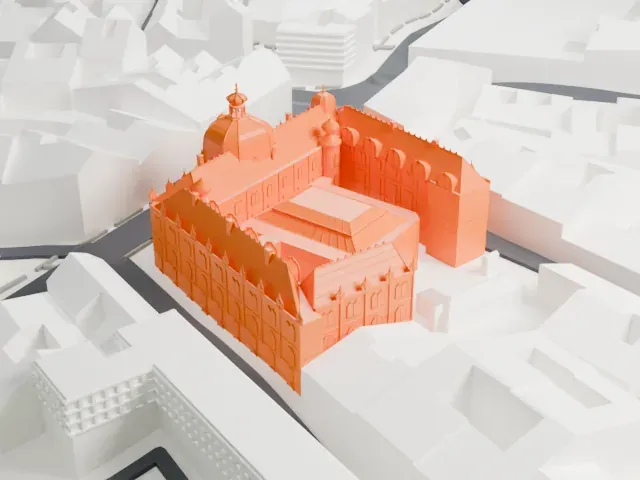 West
- On a 160 mm print
- 15 mm
- Scale
- 1:3,750
15 mm tall on a 160 mm print
Make this print opens the generator on a 600 m square around the landmark. Buildings print at close to true scale, so the landmark grows with the print size.
- Protect the small roof finials
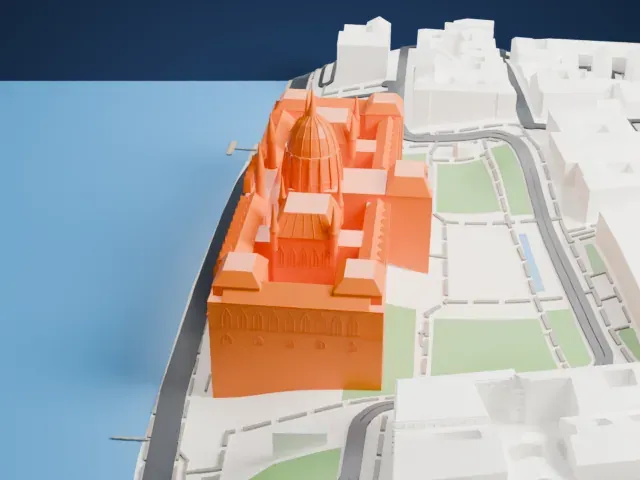
Small pointed finials top the central dome and corner turrets. Choose Print friendly to adapt these narrow tips at smaller sizes, or print larger with Full detail; slow printing and cooling help preserve the thin upper parts.
- Keep the window outlines clear
The facades carry repeated window outlines and raised trim. Use a larger print to retain these small details and 0.12–0.16 mm layers for crisp vertical definition.
- One piece with the ground
The Museum of Applied Arts (Budapest) is joined to the ground in the exported file, and the four-side check found no floating parts, so nothing needs gluing.
- Pick the detail for your nozzle
In the Buildings settings, set Landmark detail to Print friendly to adapt thin parts and small details to the print scale. Full detail keeps every modeled feature, for larger prints or a finer nozzle.
- Colors
Buildings, roads, water and ground arrive as separate filament slots in the 3MF. The Museum of Applied Arts (Budapest) takes the building color.
- File format
You get a 3MF for Bambu Studio, OrcaSlicer or PrusaSlicer. Any of them can save it as STL if you need one.
About the Museum of Applied Arts (Budapest)
Museum of Applied Arts (Budapest) is in Ferencváros, near the Grand Boulevard's southern end in Budapest, Hungary. Ödön Lechner and Gyula Pártos designed its building, constructed between 1893 and 1896. The architecture follows Hungarian Secession, a form of Art Nouveau, with a green roof and interiors drawing on Hindu, Mogul, and Islamic design traditions. In 1896, the applied arts school moved into the museum building from several separate locations across the city. A library shared by the school and museum opened the following year.
Hungary's Parliament established the museum in 1872 to gather both historical and contemporary applied art from Hungary and other countries. Its founding mission included supporting Hungarian craft industries and improving public taste. Artwork transferred from the Hungarian National Museum provided the basis for the historical collections. Purchases at world's fairs, along with corporate donations, added further holdings during the institution's early years. The collections encompass furniture, metalwork, glass, and textiles. Nagytétény Palace is another of the museum's locations.
About this model
The Museum of Applied Arts (Budapest) is one of more than 4,300 landmark models in Mini Skyline. They are made with AI, and each one is checked from four sides in its real surroundings before release. Everything around it is built from OpenStreetMap and Overture map data. If you would rather print the shape from map data, turn off Landmark models in the Buildings settings.
Same skyline