3D print the Museum of Vancouver
A free, printable model of the Museum of Vancouver and the surrounding streets and buildings, generated from real map data in your browser.
-
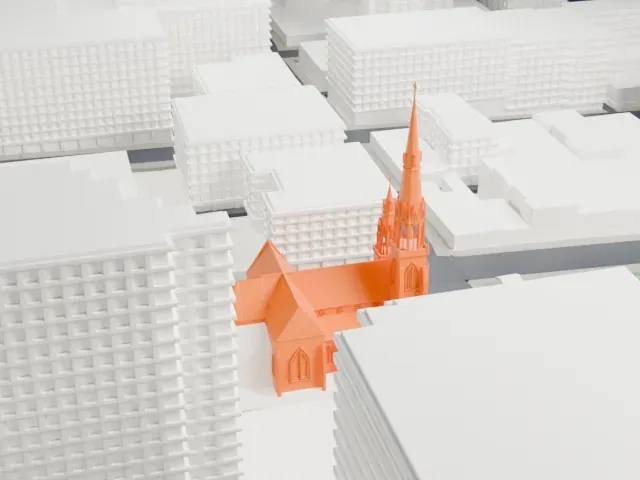
 North
-
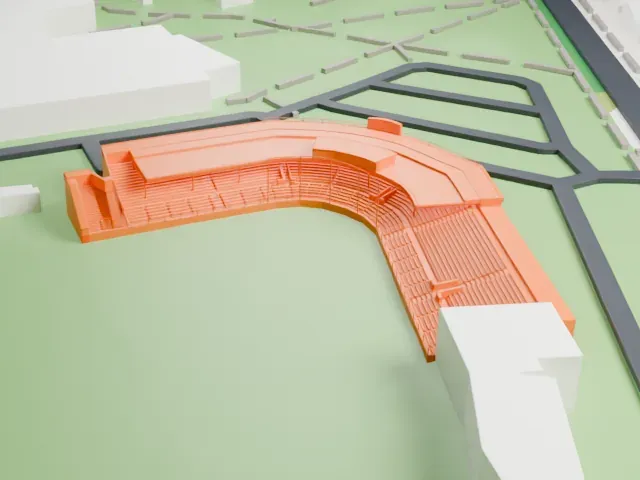
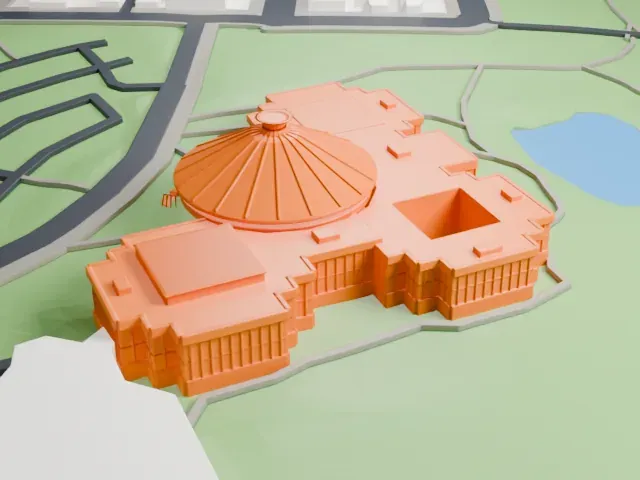 East
-
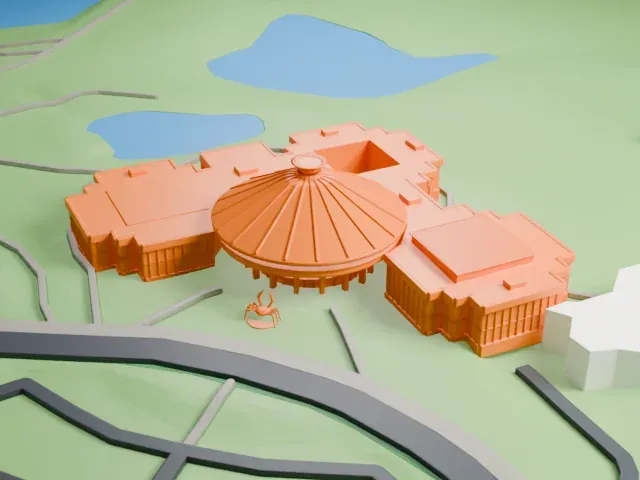 South
-
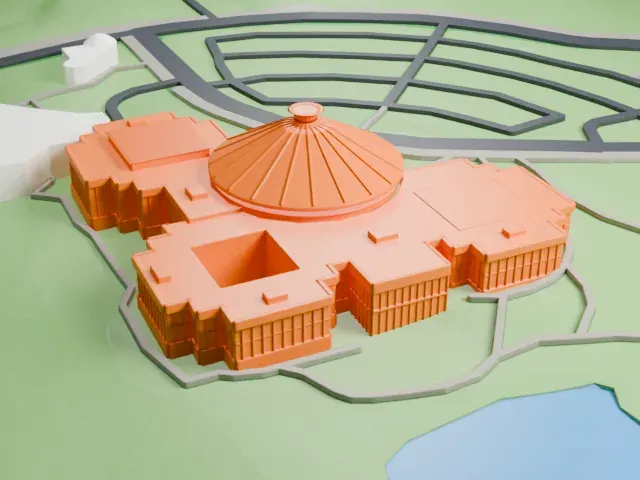
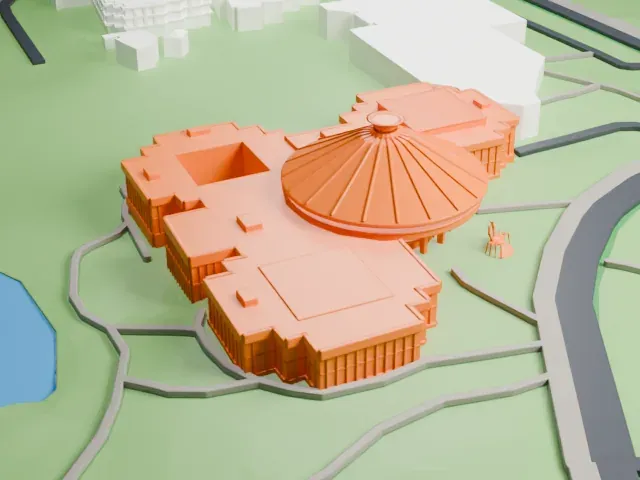 West
The model you print
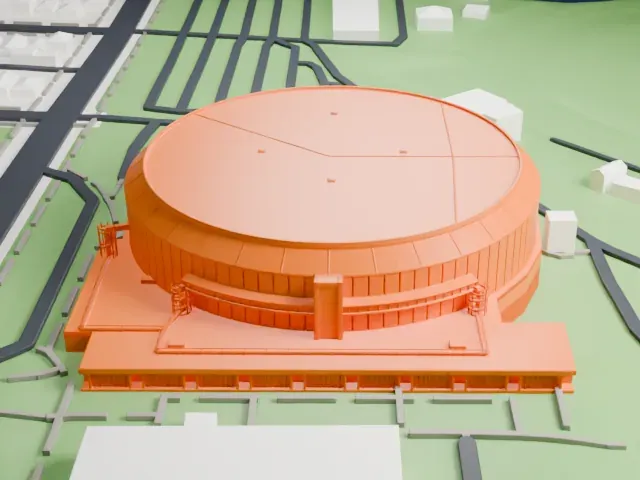
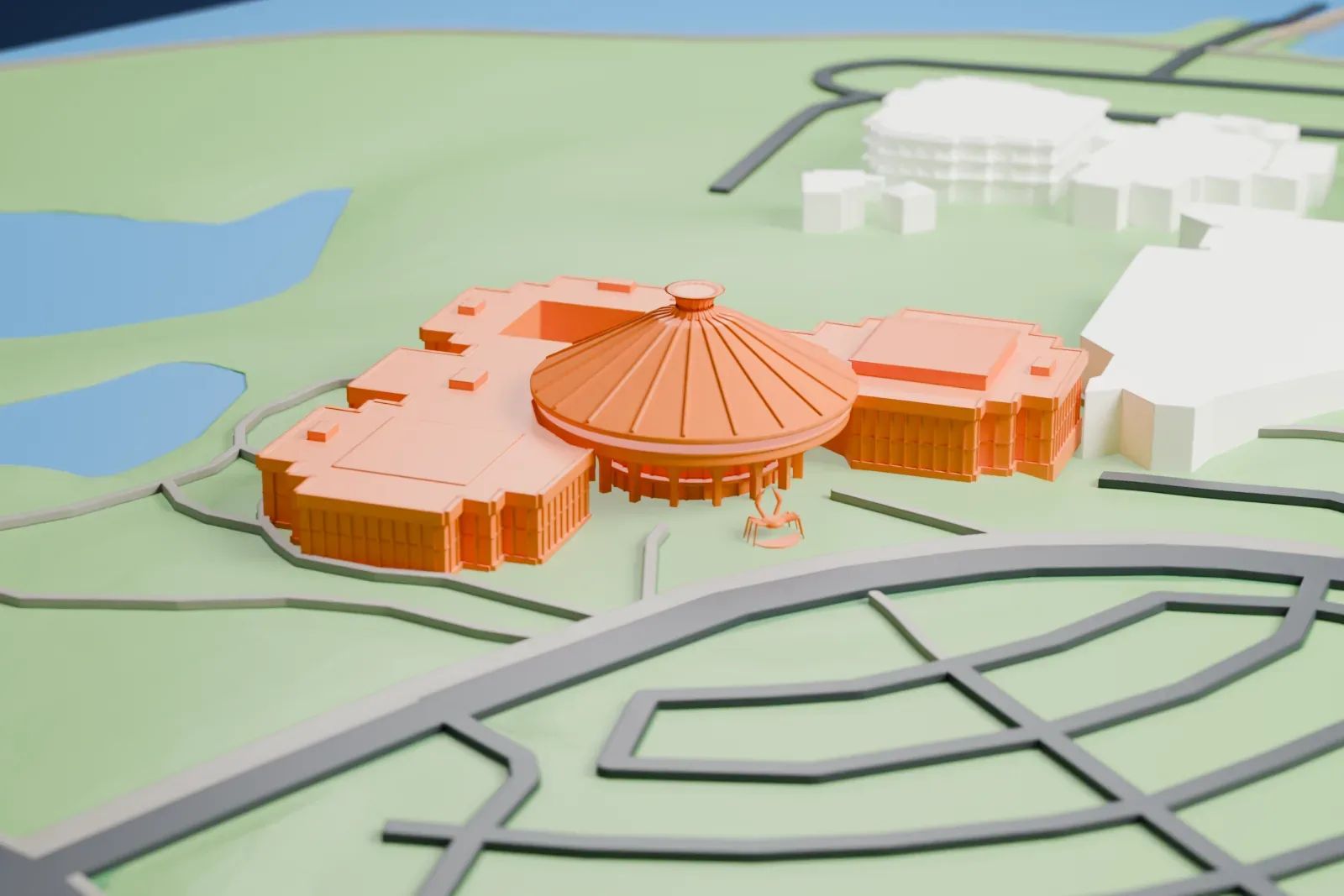
Museum of Vancouver in 3D
The landmark on its own, at its size on a 160 mm print. Print friendly thickens thin parts for a 0.4 mm nozzle; Full detail keeps every part.
- On a 160 mm print
- 8 mm
- Scale
- 1:3,750
8 mm tall on a 160 mm print
Make this print opens the generator on a 600 m square around the landmark. Buildings print at close to true scale, so the landmark grows with the print size.
- Roof edges and small details
Roof edges and other small details can blur at small sizes. Print friendly adapts small details to the print scale, while Full detail and a bigger print keep more of them.
- One piece with the ground
The Museum of Vancouver is joined to the ground in the exported file, and the four-side check found no floating parts, so nothing needs gluing.
- Pick the detail for your nozzle
In the Buildings settings, set Landmark detail to Print friendly to adapt thin parts and small details to the print scale. Full detail keeps every modeled feature, for larger prints or a finer nozzle.
- Colors
Buildings, roads, water and ground arrive as separate filament slots in the 3MF. The Museum of Vancouver takes the building color.
- File format
You get a 3MF for Bambu Studio, OrcaSlicer or PrusaSlicer. Any of them can save it as STL if you need one.
About the Museum of Vancouver
Vanier Park in Vancouver, British Columbia, is home to the Museum of Vancouver, a civic history museum. Among urban museums in Canada it is the largest, and in Vancouver it is the oldest. A local art, historical and scientific association founded it in 1894, and a rebrand in 2009 made it the Museum of Vancouver. About 80,000 objects make up its collection. A single entrance and foyer serve both the museum and the H. R. MacMillan Space Centre.
The building stands at 1100 Chestnut Street, in the Kitsilano neighborhood. Gerald Hamilton, the most visible proponent of New Formalism in Vancouver at the time, designed it, and it was constructed in 1967. The public first came in during October 1968. The gift of the lumber magnate H.R. MacMillan let Hamilton add a planetarium to a design that was first planned as a museum alone.
The distinctive roof was a change made before construction. Northwest Coast First Nations people made woven basket hats, and the roof's shape is supposedly meant to echo one. The roof also looks like a flying saucer, so many people wrongly assume the building holds only the planetarium. When it was new, people nicknamed it 'the Taj Mahal on the creek', and its features include a sweeping conical shape and reflecting pools with curved pedestrian bridges across them.
About this model
The Museum of Vancouver is one of more than 5,500 landmark models in Mini Skyline. They are made with AI, and each one is checked from four sides in its real surroundings before release. Each model is written as code from public descriptions, plans, photographs and aerial views used only as references; no image or third-party model is copied into it. Everything around it is built from OpenStreetMap and Overture map data. Rights in the building itself, its name and any brands on it are not granted by Mini Skyline; clear them separately before you sell prints. If you would rather print the shape from map data, turn off Landmark models in the Buildings settings.
Same skyline