3D print the Orpheum
A free, printable model of the Orpheum and its surroundings, generated from real map data in your browser.
-
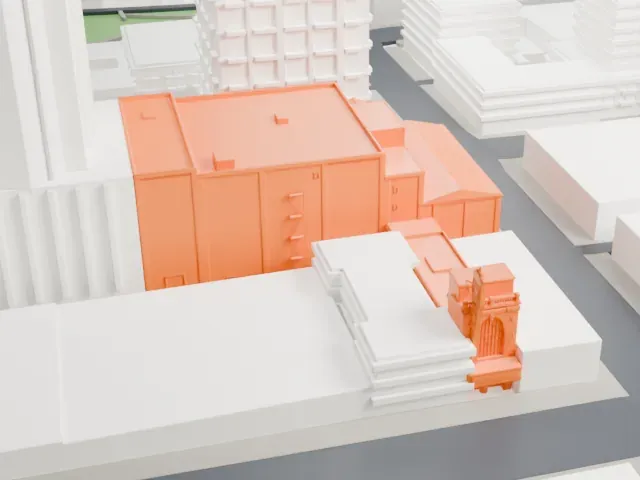 North
-
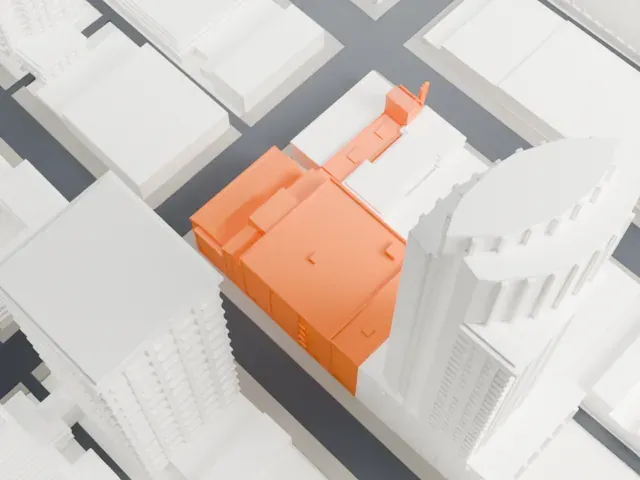 East
-
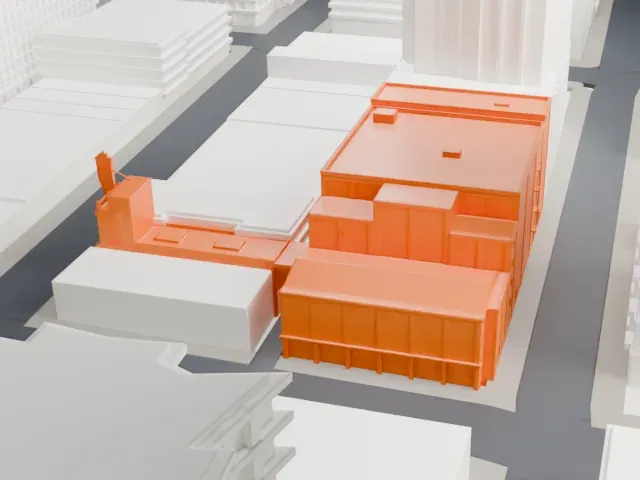 South
-
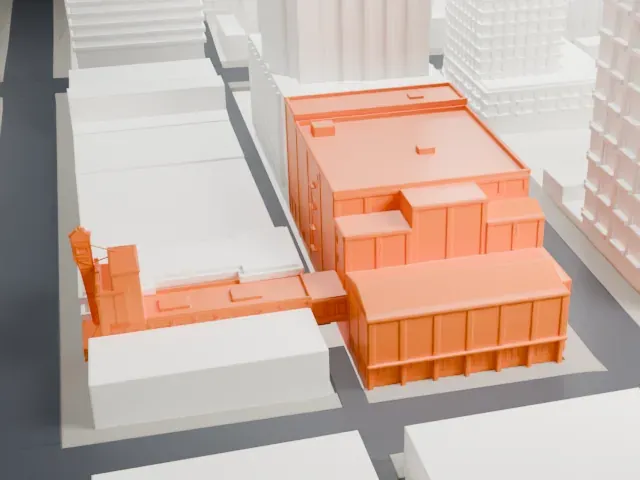 West
The model you print
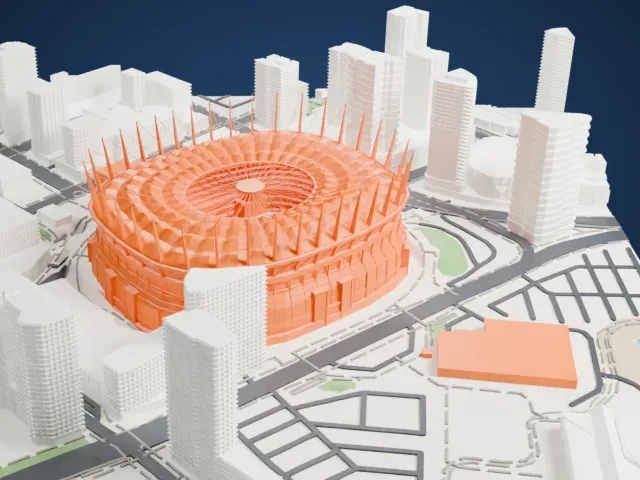
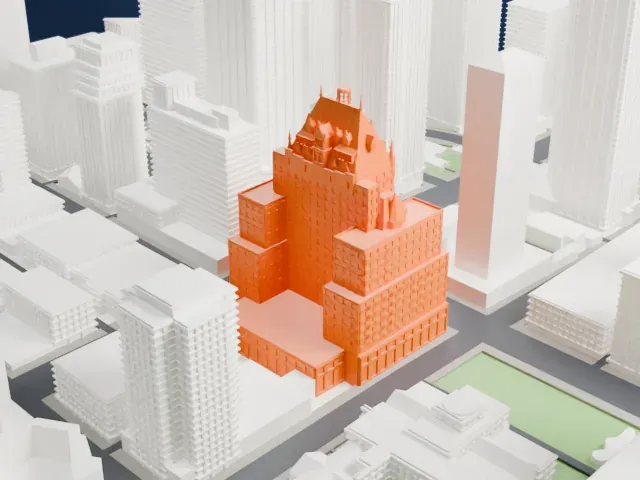
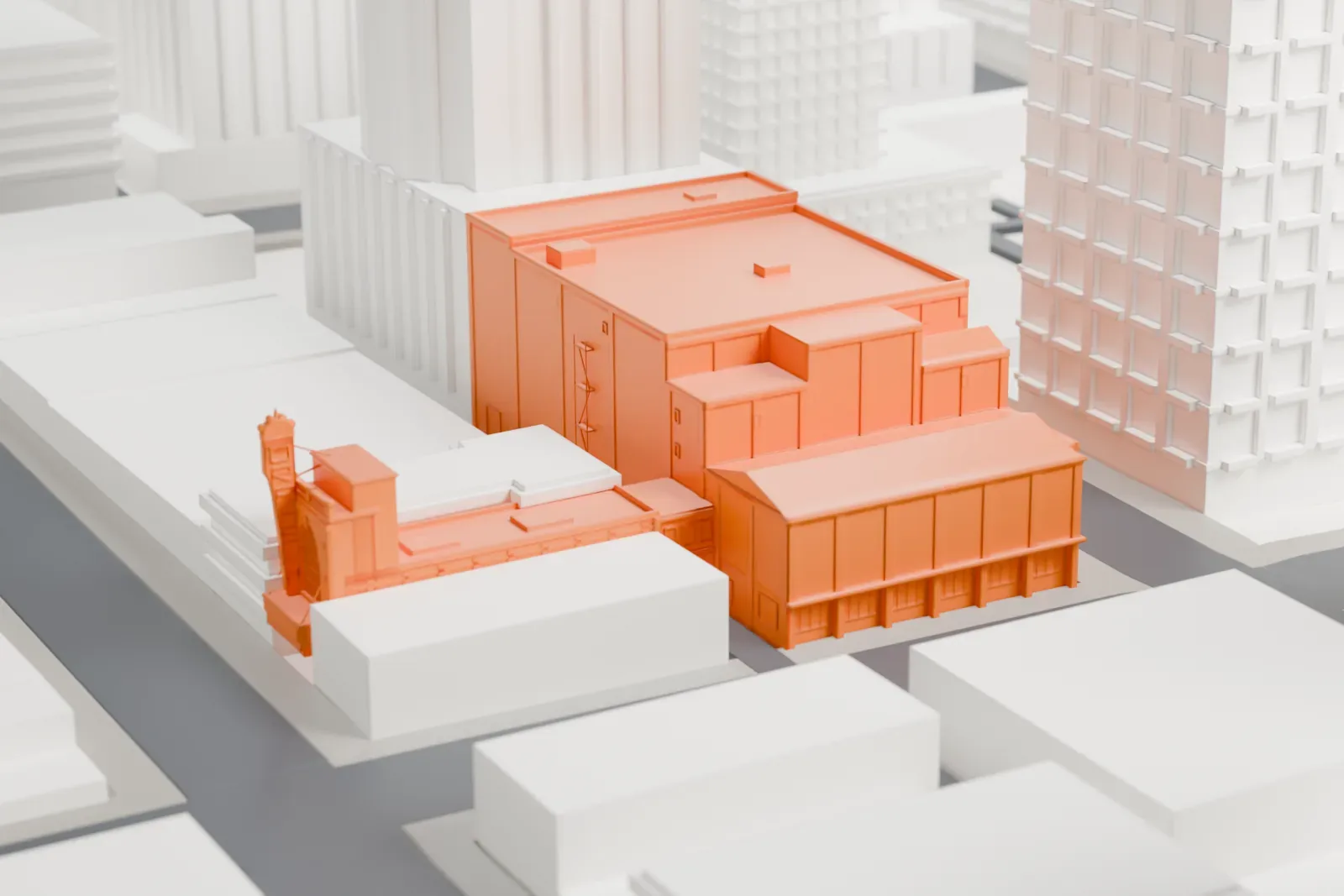
Orpheum in 3D
The landmark on its own, at its size on a 160 mm print. Print friendly thickens thin parts for a 0.4 mm nozzle; Full detail keeps every part.
- On a 160 mm print
- 8 mm
- Scale
- 1:3,750
8 mm tall on a 160 mm print
Make this print opens the generator on a 600 m square around the landmark. Buildings print at close to true scale, so the landmark grows with the print size.
- Facade detail
Print larger to keep small facade features, or choose "Full detail" with a fine nozzle; "Print friendly" adapts thin parts to the print scale.
- One piece with the ground
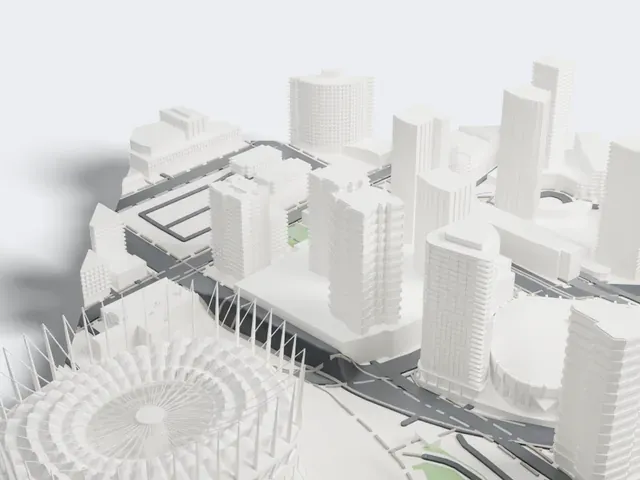
The Orpheum is joined to the ground in the exported file, and the four-side check found no floating parts, so nothing needs gluing.
- Pick the detail for your nozzle
In the Buildings settings, set Landmark detail to Print friendly to adapt thin parts and small details to the print scale. Full detail keeps every modeled feature, for larger prints or a finer nozzle.
- Colors
Buildings, roads, water and ground arrive as separate filament slots in the 3MF. The Orpheum takes the building color.
- File format
You get a 3MF for Bambu Studio, OrcaSlicer or PrusaSlicer. Any of them can save it as STL if you need one.
About the Orpheum
The Orpheum, a theater and music venue, sits on Granville Street close to Smithe Street in downtown Vancouver, British Columbia, Canada. Scottish architect Marcus Priteca designed it. Its first shows took place on November 7, 1927, and it opened officially as a vaudeville house the following day. When it opened in 1927 it was the biggest theater in Canada, with three thousand seats, and it cost $1.25 million to construct.
As vaudeville's heyday ended in the early 1930s, the building turned mainly into a movie house. In 1973 Famous Players decided to gut the interior and turn it into a multiplex, which set off a "Save the Orpheum" protest and fundraising campaign. The City of Vancouver bought the theater on March 19, 1974, for $7.1 million. Following a renovation and restoration, it reopened April 2, 1977. For the renovation, Tony Heinsbergen returned to the interior colors he had originally chosen: ivory, moss green, gold and burgundy.
The theater received National Historic Site of Canada status in 1979. The Vancouver Symphony Orchestra makes it a permanent home, and it belongs to the Vancouver Civic Theatres family of venues. An additional entrance on Smithe Street was opened in 1983. The theater and its neon sign were key locations for several episodes of Battlestar Galactica and Fringe, and of Highlander: The Series.
About this model
The Orpheum is one of more than 5,500 landmark models in Mini Skyline. They are made with AI, and each one is checked from four sides in its real surroundings before release. Each model is written as code from public descriptions, plans, photographs and aerial views used only as references; no image or third-party model is copied into it. Everything around it is built from OpenStreetMap and Overture map data. Rights in the building itself, its name and any brands on it are not granted by Mini Skyline; clear them separately before you sell prints. If you would rather print the shape from map data, turn off Landmark models in the Buildings settings.
Same skyline