3D print the Peace Arch
A free, printable 3D model of the Peace Arch and the surrounding streets and buildings, generated from real map data in your browser.
-
 North
-
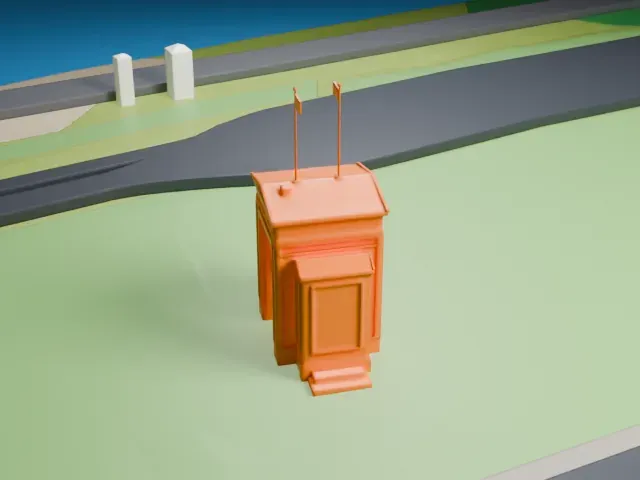 East
-
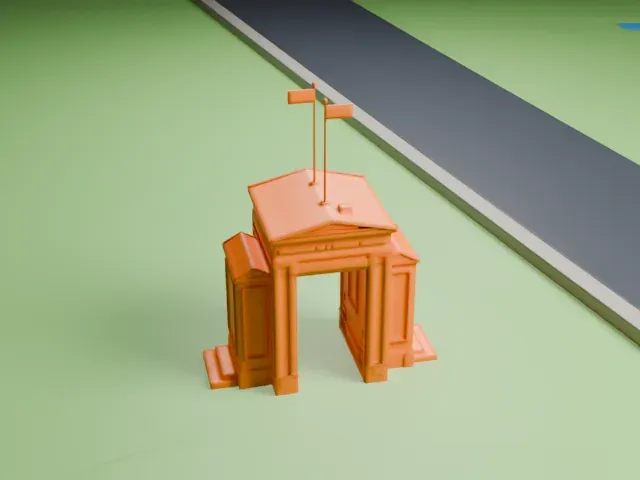 South
-
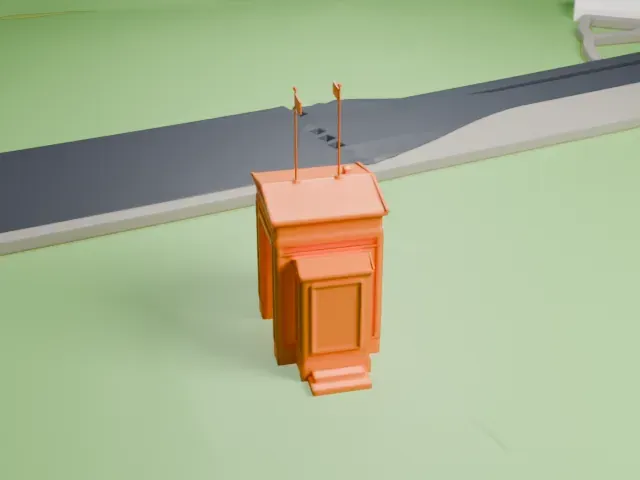 West
The model you print
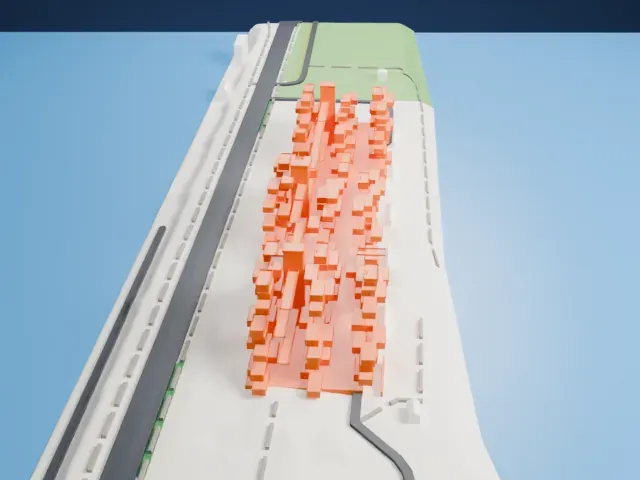
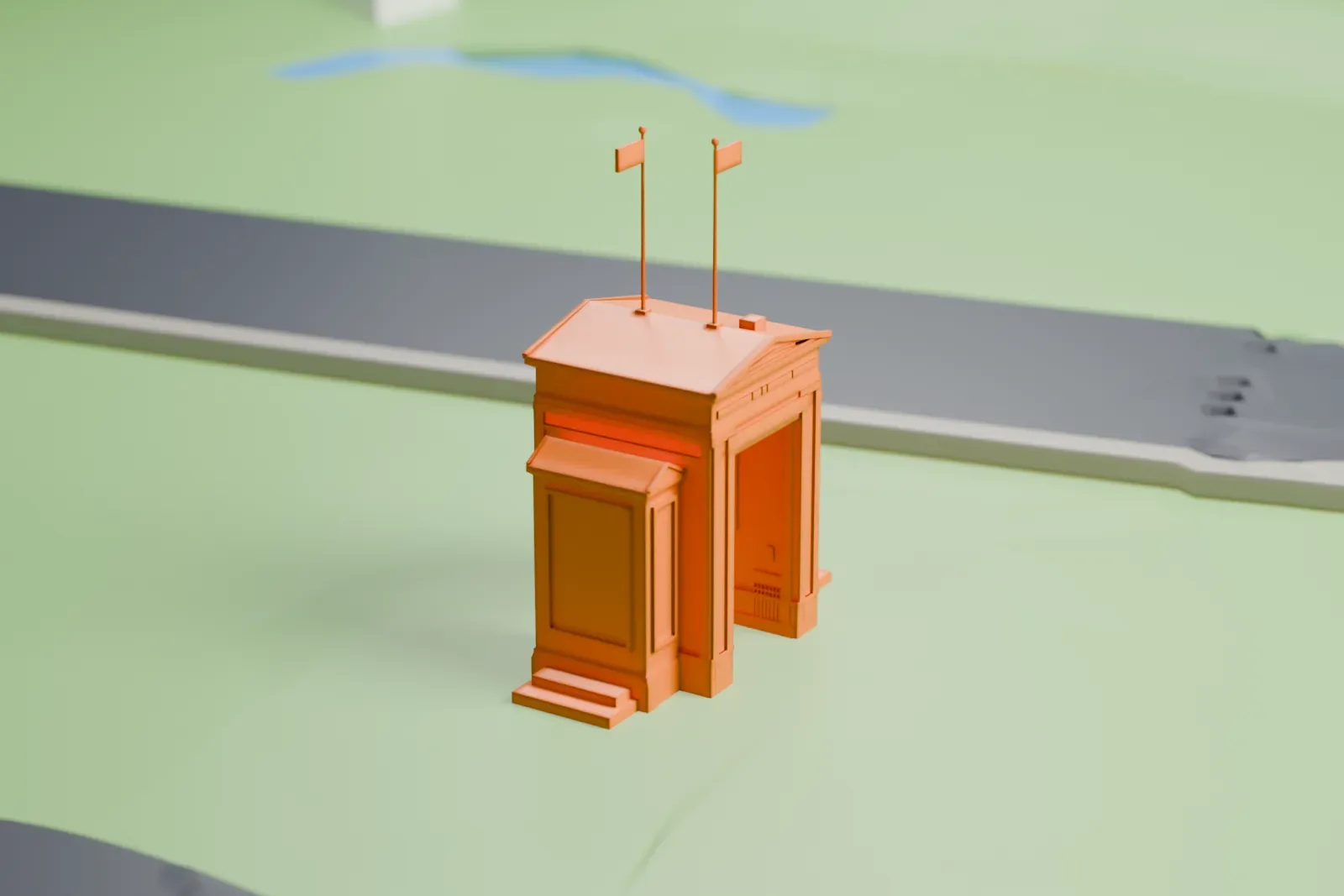
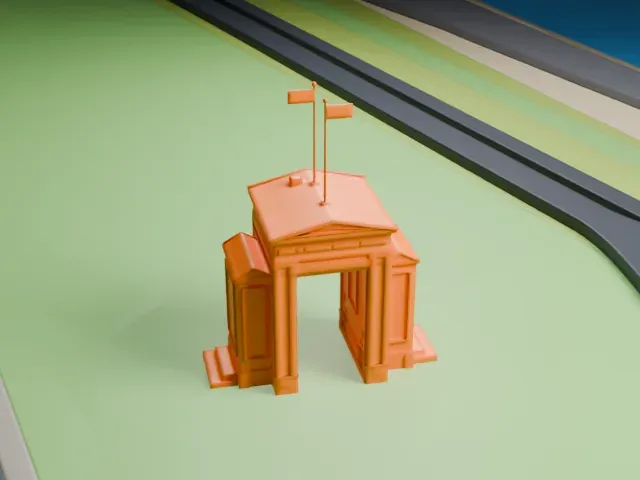
Peace Arch in 3D
The landmark on its own, at its size on a 160 mm print. Print friendly thickens thin parts for a 0.4 mm nozzle; Full detail keeps every part.
- Real height
- 21 m
- On a 160 mm print
- 6 mm
- Scale
- 1:3,750
21 m of the Peace Arch, 6 mm on your shelf
Make this print opens the generator on a 600 m square around the landmark. Buildings print at close to true scale, so the landmark grows with the print size.
- A freestanding arch
A single monumental arch has an open span and small details. Print friendly adapts thin details to the print scale; Full detail keeps them on a larger print.
- One piece with the ground
The Peace Arch is joined to the ground in the exported file, and the four-side check found no floating parts, so nothing needs gluing.
- Pick the detail for your nozzle
In the Buildings settings, set Landmark detail to Print friendly to adapt thin parts and small details to the print scale. Full detail keeps every modeled feature, for larger prints or a finer nozzle.
- Colors
Buildings, roads, water and ground arrive as separate filament slots in the 3MF. The Peace Arch takes the building color.
- File format
You get a 3MF for Bambu Studio, OrcaSlicer or PrusaSlicer. Any of them can save it as STL if you need one.
About the Peace Arch
Peace Arch straddles the border of two countries, linking Blaine in Washington with Surrey in British Columbia. It is close to the westernmost spot where the Canada–United States border runs through the contiguous United States. The arch is 20.5 meters (67 ft) tall. The boundary line runs through it, and it sits on a grassy median separating the northbound and southbound lanes at the point where Interstate 5 turns into Highway 99. It commemorates the Treaty of Ghent, signed in 1814, and symbolizes long-standing peace between the two nations.
Samuel Hill, the Great Northern Railway's lawyer, organized an international fundraising campaign in 1914 to pay for the arch. Harvey Wiley Corbett, an American architect, donated his design work. International volunteers started building in 1920, and the arch was dedicated on September 6, 1921. It was regarded as among North America's first earthquake-resistant structures.
The flags of Canada and the United States are mounted on its crown. Words on the American face read "Children of a common mother", while the Canadian face reads "Brethren dwelling together in unity". Inside, iron gates hang on either side of the border; the one on the east side bears the words "May these gates never be closed". The arch and the land around it form Peace Arch Park, treated as an international park.
About this model
The Peace Arch is one of more than 5,500 landmark models in Mini Skyline. They are made with AI, and each one is checked from four sides in its real surroundings before release. Each model is written as code from public descriptions, plans, photographs and aerial views used only as references; no image or third-party model is copied into it. Everything around it is built from OpenStreetMap and Overture map data. Rights in the building itself, its name and any brands on it are not granted by Mini Skyline; clear them separately before you sell prints. If you would rather print the shape from map data, turn off Landmark models in the Buildings settings.
Keep exploring