3D print Pipe Spring (Winsor Castle)
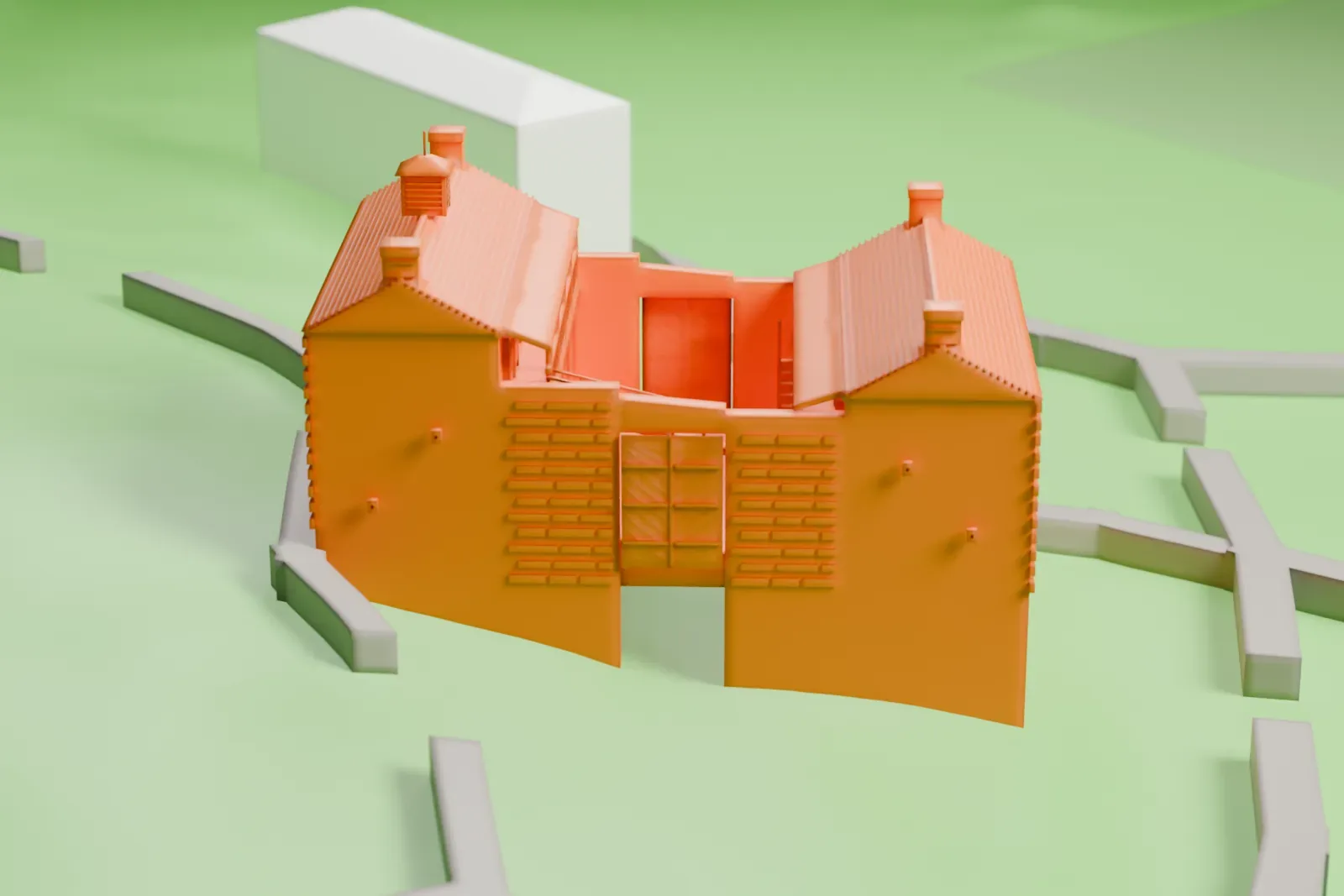
A free, printable model of Winsor Castle at Pipe Spring and the open green ground, paths and small patches of water around it, generated from real map data in your browser.
-
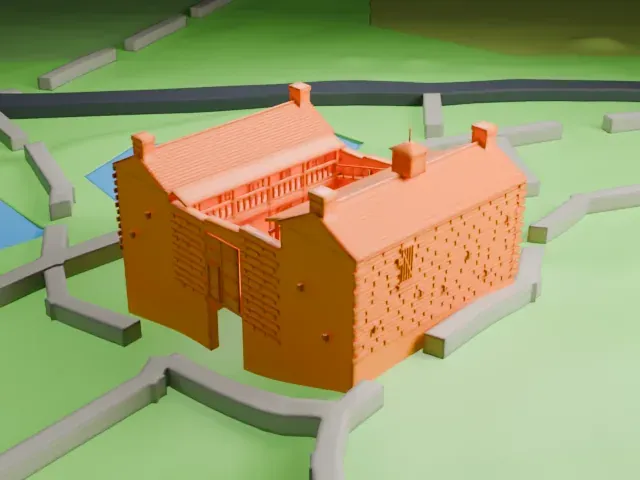 North
-
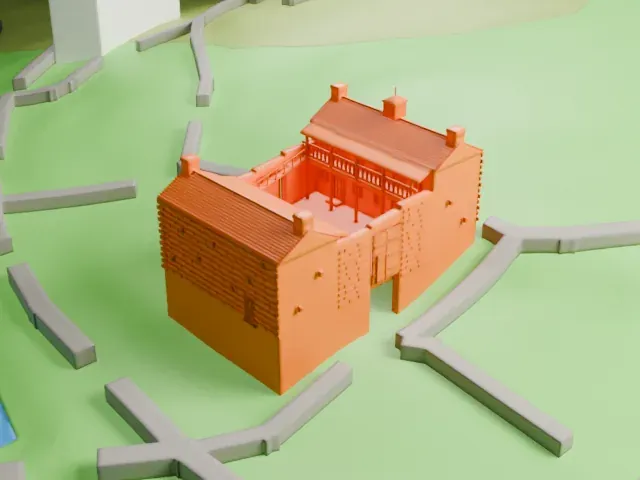 East
-
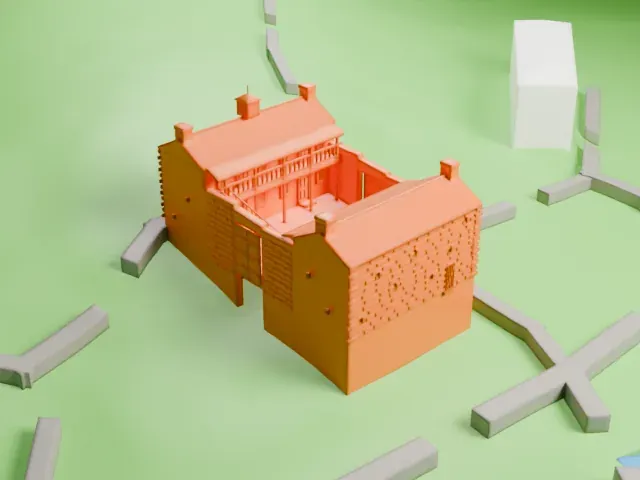 South
-
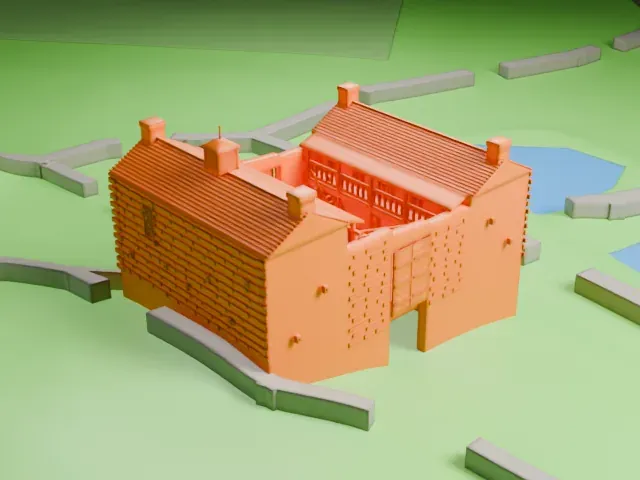 West
- On a 160 mm print
- 4 mm
- Scale
- 1:3,750
4 mm tall on a 160 mm print
Make this print opens the generator on a 600 m square around the landmark. Buildings print at close to true scale, so the landmark grows with the print size.
- Chimneys and porch railings
Small chimneys and thin porch railings sit around the roofs and courtyard. Print friendly adapts these thin parts to the print scale; Full detail keeps them, which suits a larger print.
- A small building
This is a small building, so a bigger print size keeps more of its horizontal wall lines. Layers of 0.12 to 0.16 mm keep them crisp.
- One piece with the ground
Pipe Spring (Winsor Castle) is joined to the ground in the exported file, and the four-side check found no floating parts, so nothing needs gluing.
- Pick the detail for your nozzle
In the Buildings settings, set Landmark detail to Print friendly to adapt thin parts and small details to the print scale. Full detail keeps every modeled feature, for larger prints or a finer nozzle.
- Colors
Buildings, roads, water and ground arrive as separate filament slots in the 3MF. Pipe Spring (Winsor Castle) takes the building color.
- File format
You get a 3MF for Bambu Studio, OrcaSlicer or PrusaSlicer. Any of them can save it as STL if you need one.
About Pipe Spring (Winsor Castle)
Pipe Spring National Monument, in Arizona, preserves a history that involves American Indians, early explorers and Mormon pioneers, and the National Park Service administers it. Its water has let plants, animals and people live in a dry desert region. For at least 1,000 years, people of the Ancestral Puebloan and Kaibab Paiute communities lived by the springs, gathering grass seeds, hunting animals and growing crops. Antonio Armijo found the springs in 1829, and a missionary expedition led by Jacob Hamblin gave Pipe Spring its name in 1858.
Mormon pioneers led by James M. Whitmore came from St. George, Utah, in the 1860s with cattle, and a large ranching operation grew up. After Pipe Spring was raided during the Black Hawk War, a protective fort was built over the main spring by 1872. The following year Brigham Young bought the fort and ranch for the LDS Church. Anson Perry Winsor was hired to run the ranch and look after the fort, which soon became known as Winsor Castle. The outpost was a way station for travelers across the Arizona Strip.
Penalties from the 1887 federal Edmunds-Tucker Act cost the church its ownership of the property. The Kaibab Paiute Indian Reservation was in place around the privately owned ranch by 1907. In 1923 the ranch was bought and turned into a national monument, to serve as a memorial to western pioneer life. Its listing in the National Register of Historic Places is dated October 15, 1966.
About this model
Pipe Spring (Winsor Castle) is one of more than 4,300 landmark models in Mini Skyline. They are made with AI, and each one is checked from four sides in its real surroundings before release. Everything around it is built from OpenStreetMap and Overture map data. If you would rather print the shape from map data, turn off Landmark models in the Buildings settings.
Keep exploring