3D print the Portuguese Synagogue (Amsterdam)
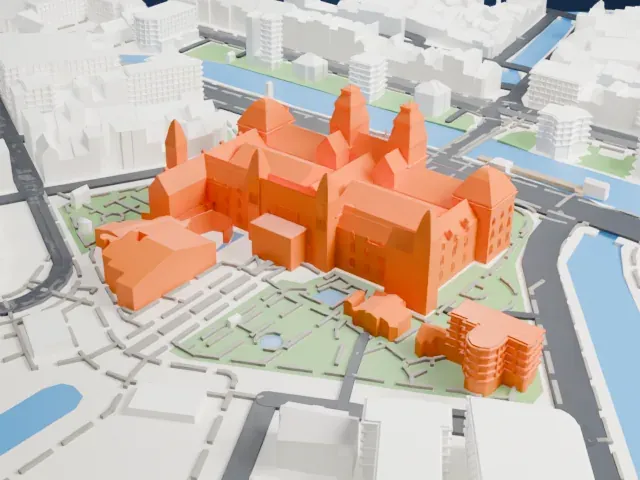
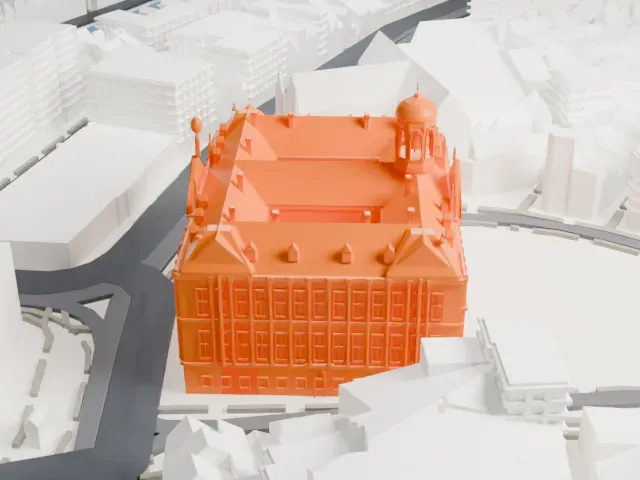
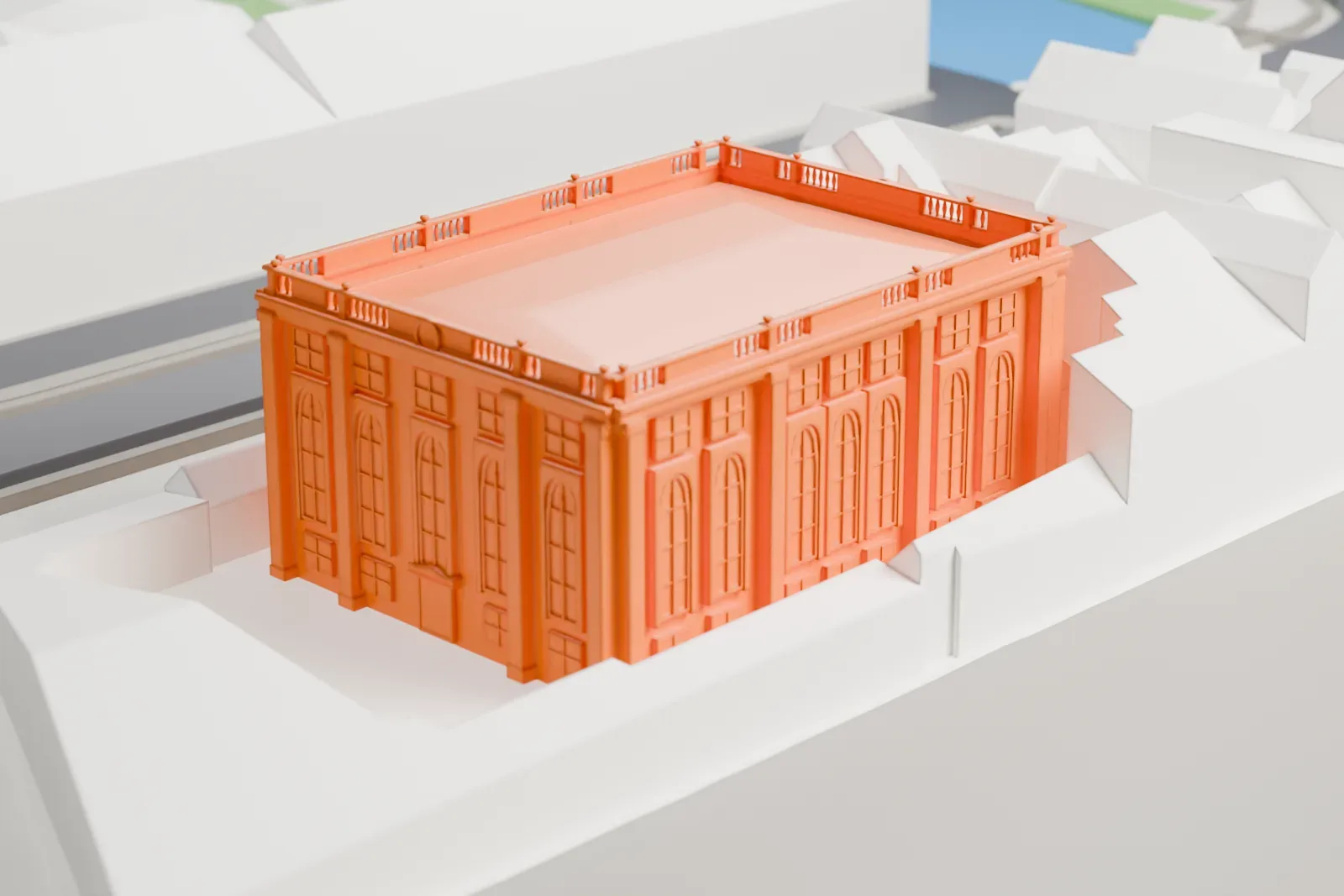
A free, printable 3D model of the Portuguese Synagogue in central Amsterdam, with the surrounding streets and buildings, generated from real map data in your browser.
-
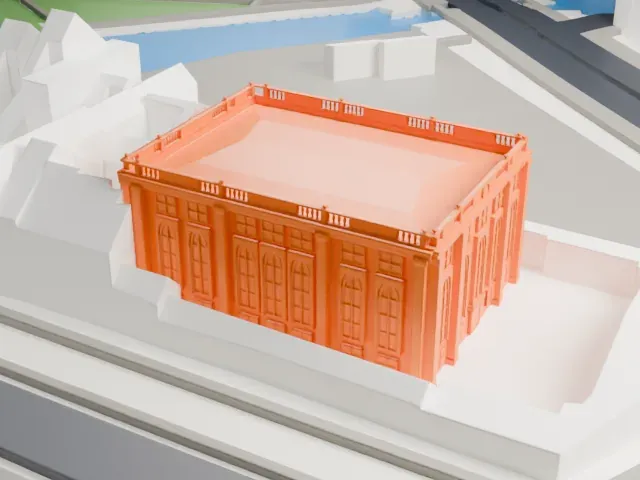 North
-
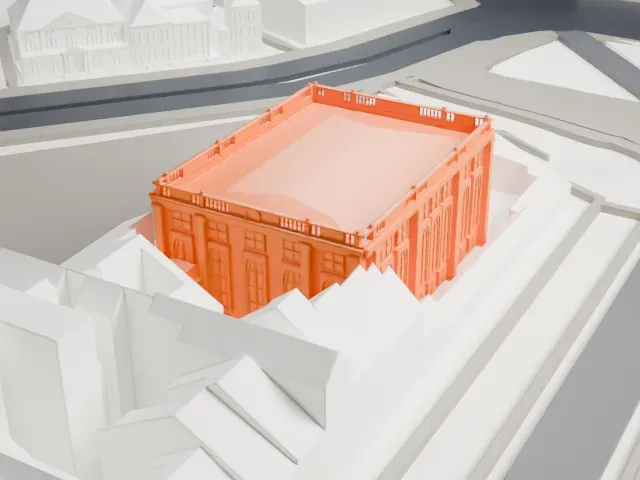 East
-
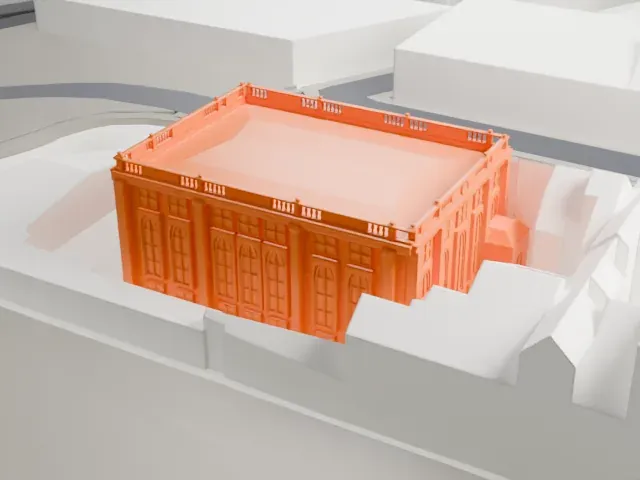 South
-
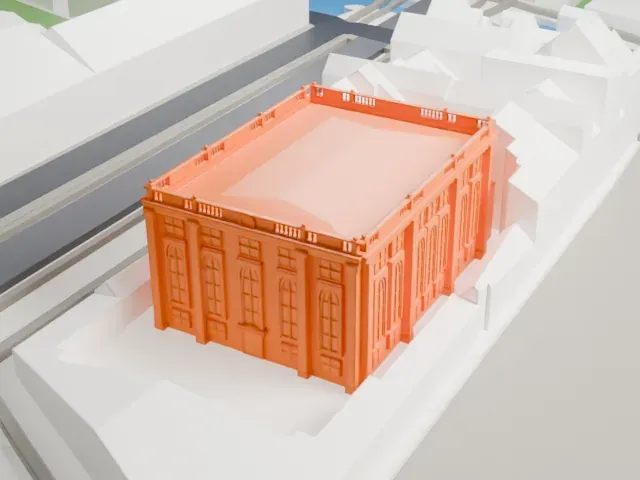 West
- On a 160 mm print
- 6 mm
- Scale
- 1:3,750
6 mm tall on a 160 mm print
Make this print opens the generator on a 600 m square around the landmark. Buildings print at close to true scale, so the landmark grows with the print size.
- A simple hall block
The synagogue is a single hall, so print size helps the walls and roofline read. Print friendly adapts small parts; Full detail keeps every modeled feature.
- Layers for clean edges
Layers of 0.12 to 0.16 mm keep the wall corners and roof edge crisp on the default print.
- One piece with the ground
The Portuguese Synagogue (Amsterdam) is joined to the ground in the exported file, and the four-side check found no floating parts, so nothing needs gluing.
- Pick the detail for your nozzle
In the Buildings settings, set Landmark detail to Print friendly to adapt thin parts and small details to the print scale. Full detail keeps every modeled feature, for larger prints or a finer nozzle.
- Colors
Buildings, roads, water and ground arrive as separate filament slots in the 3MF. The Portuguese Synagogue (Amsterdam) takes the building color.
- File format
You get a 3MF for Bambu Studio, OrcaSlicer or PrusaSlicer. Any of them can save it as STL if you need one.
About the Portuguese Synagogue (Amsterdam)
The Esnoga, as the Portuguese Synagogue is also called, is an Orthodox Jewish house of worship on Mr. Visserplein 3, in the center of Amsterdam. It was finished in 1675; the name Esnoga comes from the Judaeo-Spanish term Sephardi Jews used for a synagogue. During the Dutch Golden Age, Amsterdam's Sephardic community ranked among Europe's largest and richest, and its synagogue was correspondingly big. Worship continues there, and visitors have come since the building went up in the late 1600s, when non-Jews were allowed in.
The Sephardim trace their roots to the Iberian Peninsula. Spain's Alhambra Decree of 1492 gave Jews the choice of exile, conversion or execution, and many left; Portugal issued its own decree against Jews in 1496. Some adopted Catholicism; others kept Jewish practice in secret as crypto-Jews. Between the 1600s and the early 1800s, a large group of conversos made their way from Iberia to Amsterdam, and many there worshiped openly again. Calling themselves Portuguese Jews, they combined three congregations into the Talmud Torah, which bought land in 1670 and set about building a large synagogue.
Elias Bouman took charge of the work, which started on April 17, 1671; the synagogue opened on August 2, 1675. King Solomon's temple supplied the model for the plan. The structure stands free and is carried on wooden piles, and a boat on the canal beneath lets visitors see the foundation vaults. One very tall rectangular room forms the interior, with its original wooden benches; Brazilian jacaranda, cut as a single piece, makes the Torah ark of 1744.
About this model
The Portuguese Synagogue (Amsterdam) is one of more than 4,400 landmark models in Mini Skyline. They are made with AI, and each one is checked from four sides in its real surroundings before release. Everything around it is built from OpenStreetMap and Overture map data. If you would rather print the shape from map data, turn off Landmark models in the Buildings settings.
Same skyline