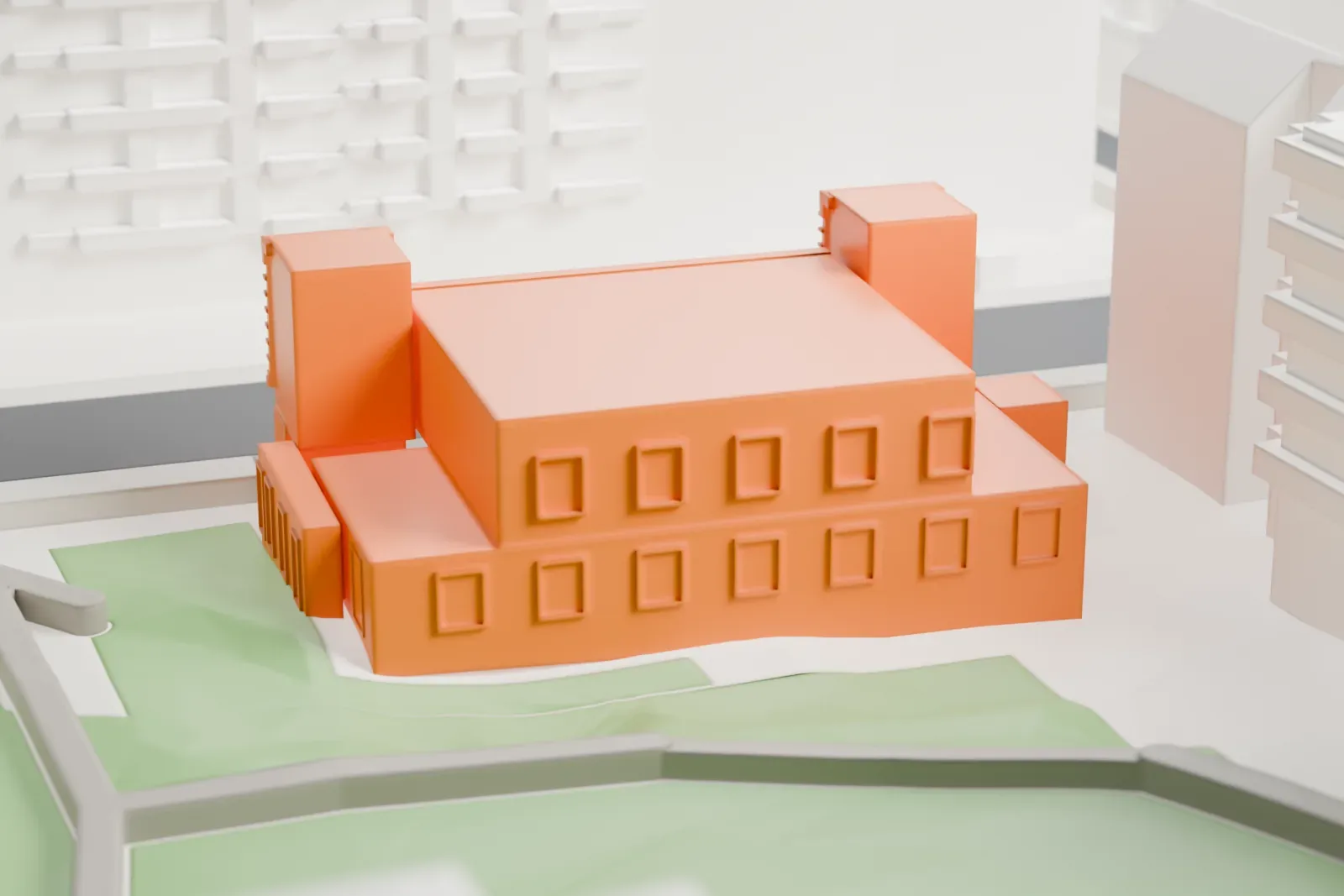
Rote Flora in 3D
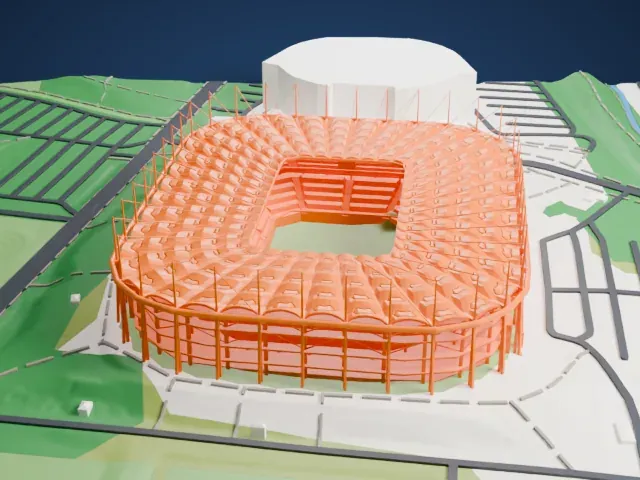
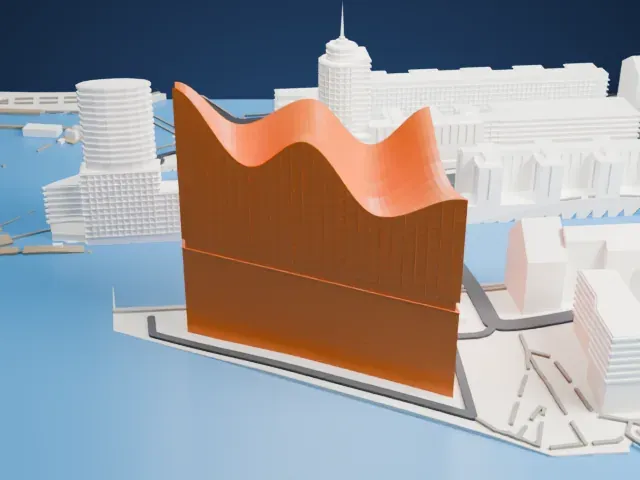
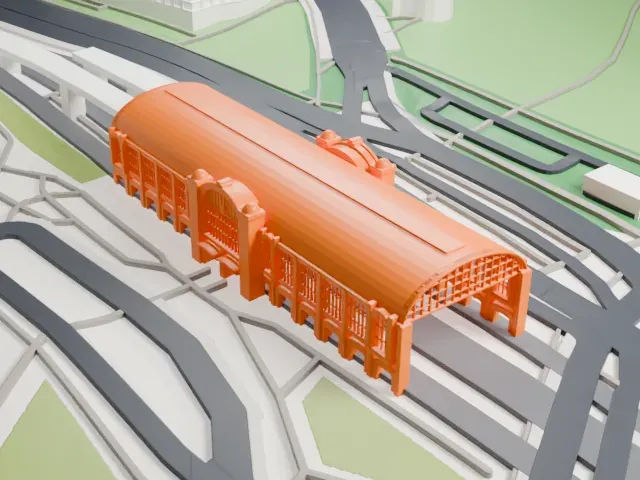
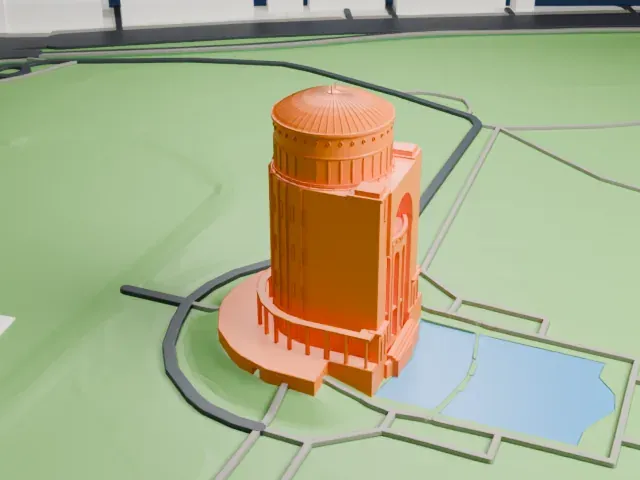
The Rote Flora appears in city models you make here; its design may still be protected, so it isn't offered as a separate download.
-
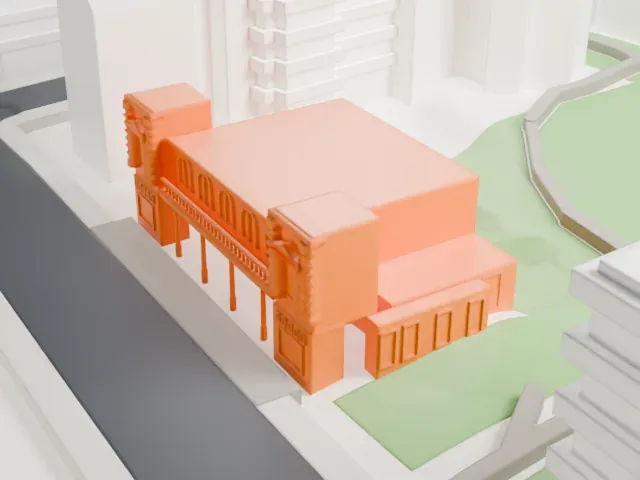 North
-
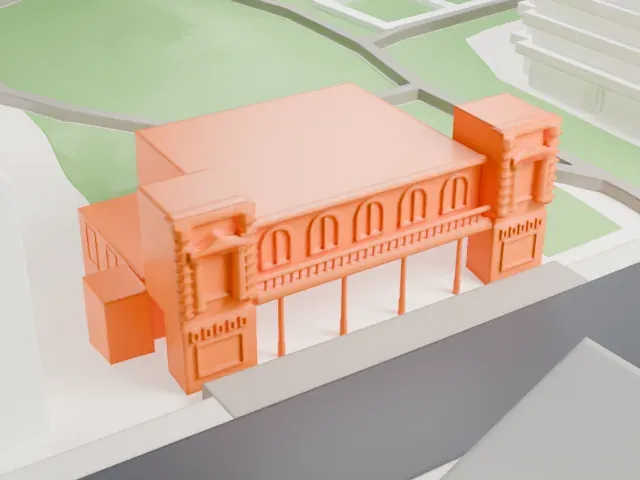 East
-
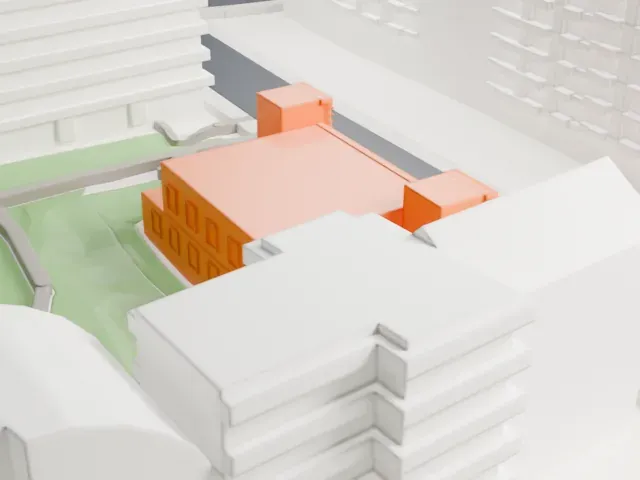 South
-
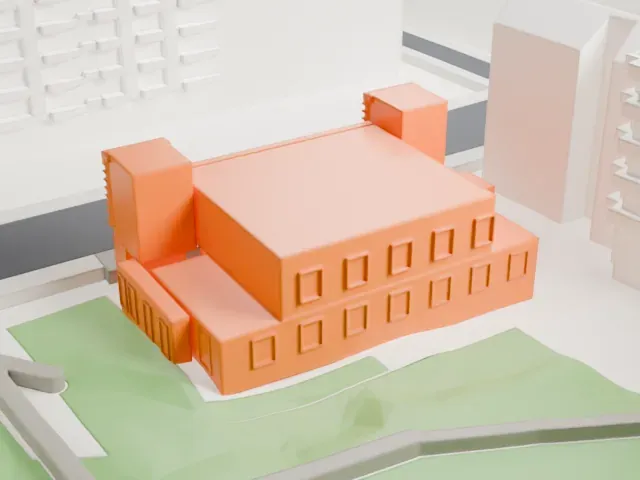 West
Copyright notice
The design of Rote Flora may still be protected by copyright. It appears in the city models you make here, but it is not offered as a separate model.
- On a 160 mm print
- 4 mm
- Scale
- 1:3,750
4 mm tall on a 160 mm print
Make this print opens the generator on a 600 m square around the landmark. Buildings print at close to true scale, so the landmark grows with the print size.
- Ornate facade towers
The front facade has two ornate corner blocks and a row of arched windows above thin columns. Print friendly adapts these to the print scale; Full detail on a larger print with 0.12 mm layers keeps more of the ornament.
- One piece with the ground
The Rote Flora is joined to the ground in the exported file, and the four-side check found no floating parts, so nothing needs gluing.
- Pick the detail for your nozzle
In the Buildings settings, set Landmark detail to Print friendly to adapt thin parts and small details to the print scale. Full detail keeps every modeled feature, for larger prints or a finer nozzle.
- Colors
Buildings, roads, water and ground arrive as separate filament slots in the 3MF. The Rote Flora takes the building color.
- File format
You get a 3MF for Bambu Studio, OrcaSlicer or PrusaSlicer. Any of them can save it as STL if you need one.
About the Rote Flora
The Rote Flora is a former theater in Hamburg's Sternschanze district, Germany. It began as the Flora theater on Schulterblatt, where it hosted concerts, operettas, revues and boxing matches. Later it was a variety theater until closing after World War II, then a cinema, and then a bargain store named 1000 Töpfe.
Toward the end of the 1980s, residents feared that a staging of The Phantom of the Opera there would draw tourists and change the neighborhood, and they proposed a community center instead. In April 1988 the back of the building was torn down. The community was then given a temporary lease, and when it expired on November 1, 1989, the occupiers stayed, one week ahead of the Berlin Wall's fall.
The occupiers have run the building as a self-managed social center since then. Its facilities include an infoshop and a music venue, along with an archive of social movements, a cafe, a bar, rehearsal rooms and a workshop for repairing bicycles. In mid-January 2014, Altona borough announced a change in plans that would ensure the building was not demolished and could remain a cultural center.
About this model
The Rote Flora is one of more than 6,500 landmark models in Mini Skyline. They are made with AI, and each one is checked in its real surroundings before release. Each model is written as code from public descriptions, plans, photographs and aerial views used only as references; no image or third-party model is copied into it. Everything around it is built from OpenStreetMap and Overture map data. Rights in the building itself, its name and any brands on it are not granted by Mini Skyline; clear them separately before you sell prints. If you would rather print the shape from map data, turn off Landmark models in the Buildings settings.
Mini Skyline is not affiliated with, or endorsed by, the owners of this building or its names and marks.
Same skyline