3D print St Mary-le-Bow
A free, printable 3D model of St Mary-le-Bow in London, with the surrounding streets and buildings, generated from real map data in your browser.
-
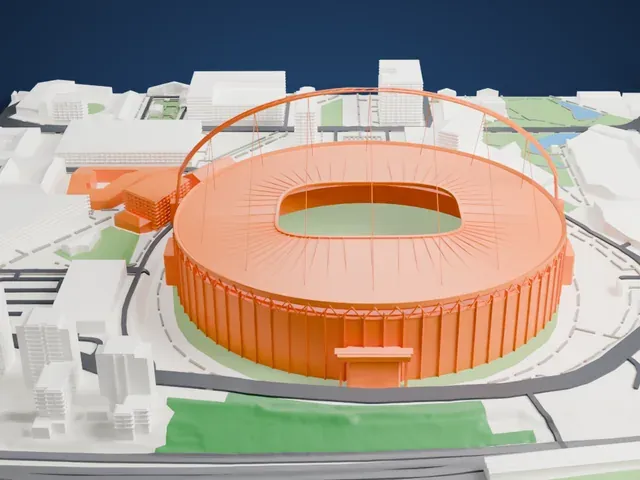
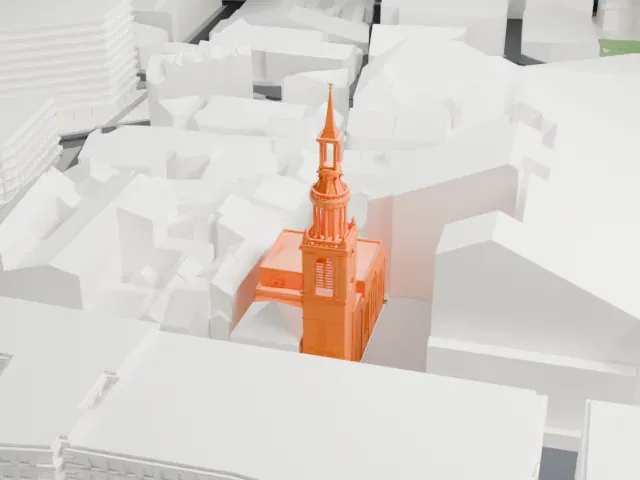 North
-
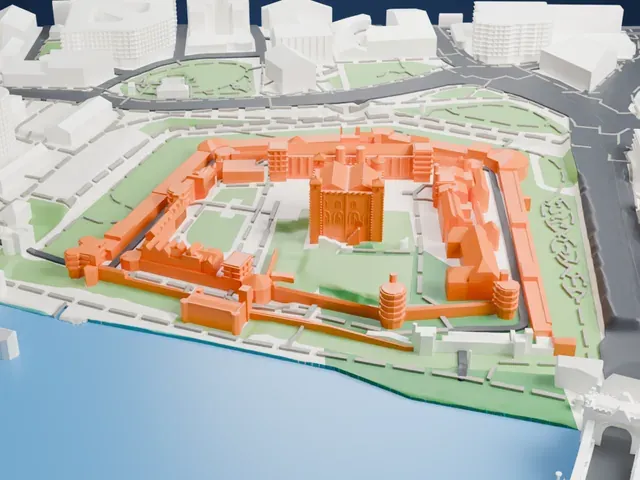
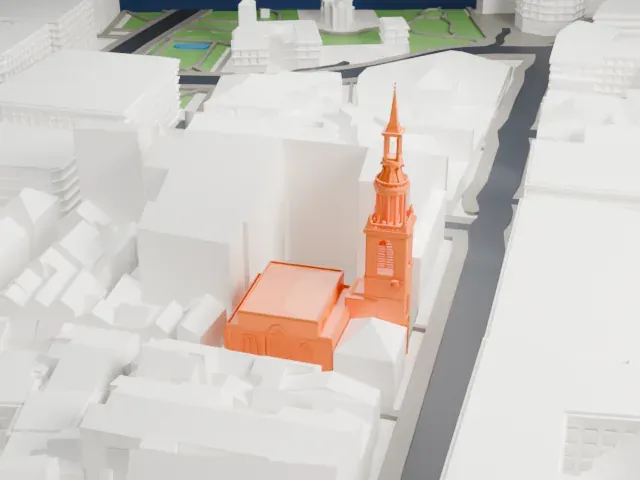 East
-
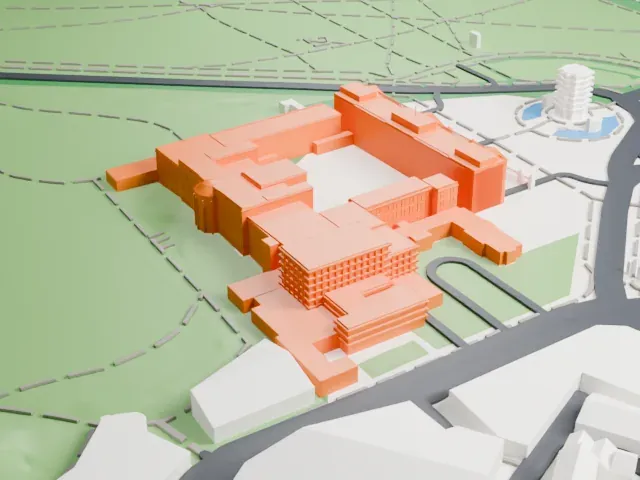
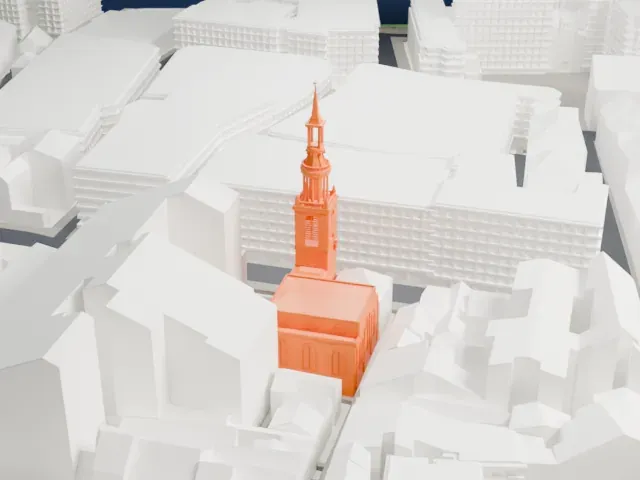 South
-
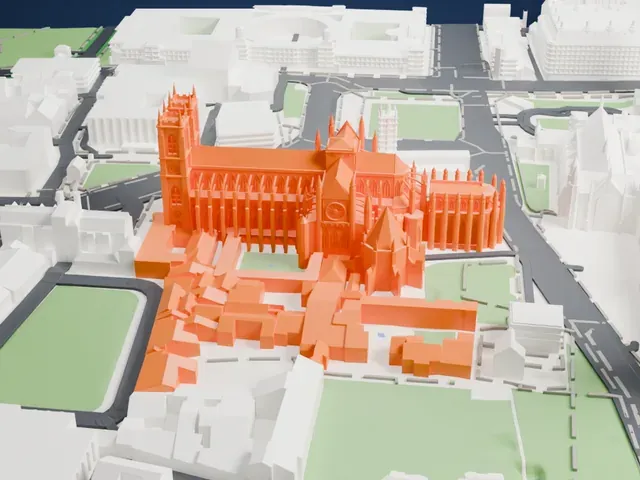
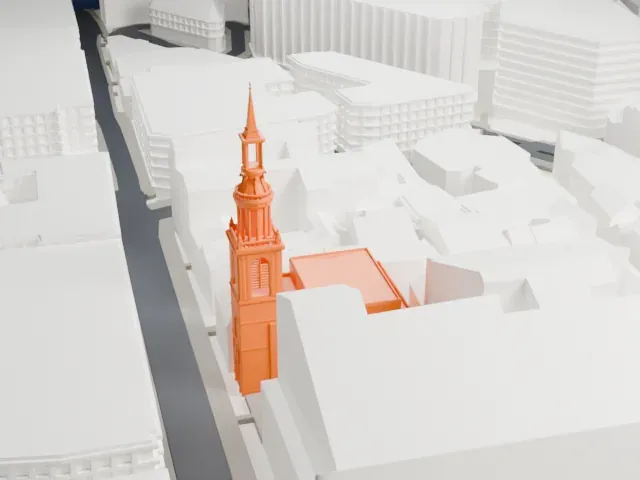 West
The model you print
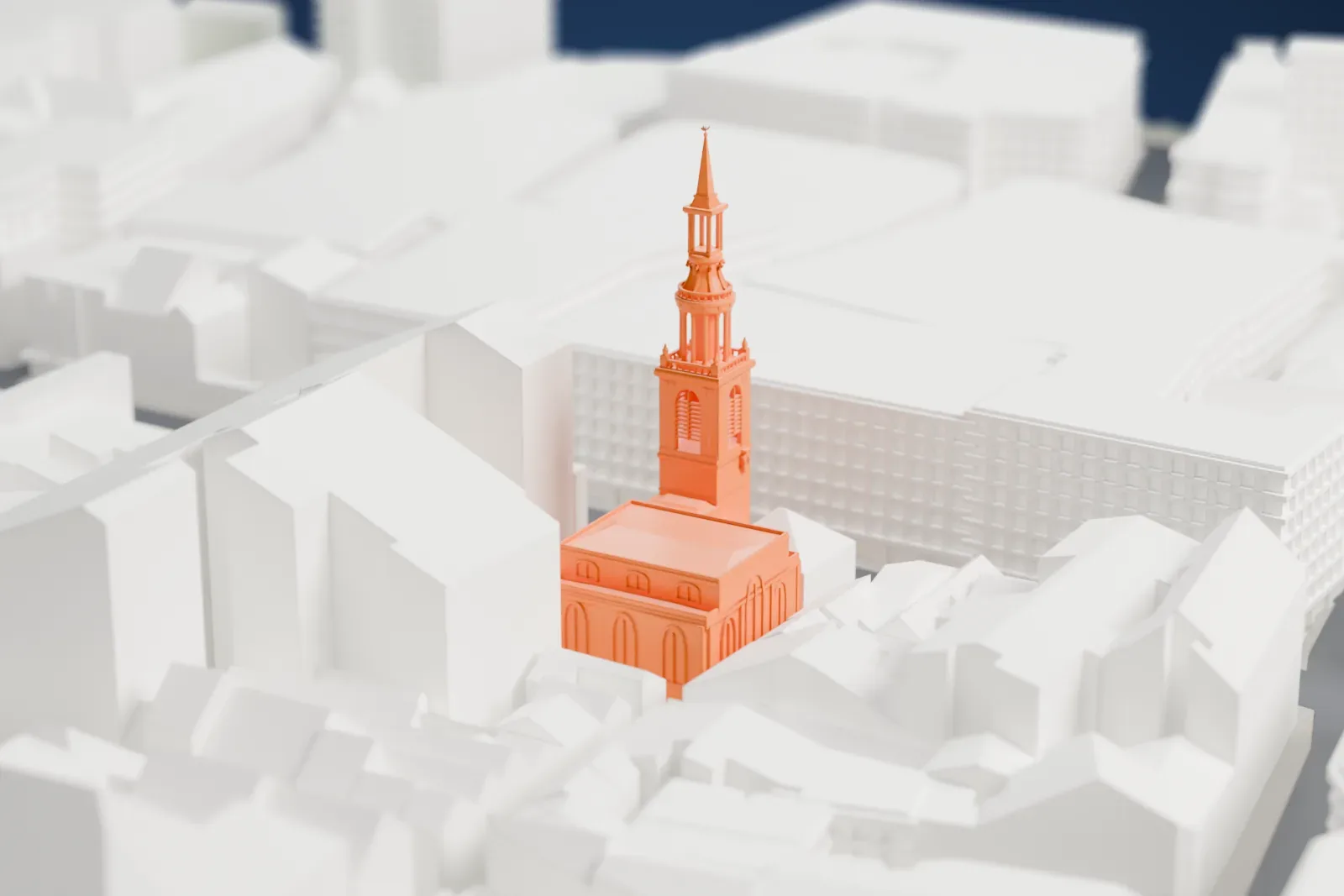
St Mary-le-Bow in 3D
The landmark on its own, at its size on a 160 mm print. Print friendly thickens thin parts for a 0.4 mm nozzle; Full detail keeps every part.
- On a 160 mm print
- 18 mm
- Scale
- 1:3,750
18 mm tall on a 160 mm print
Make this print opens the generator on a 600 m square around the landmark. Buildings print at close to true scale, so the landmark grows with the print size.
- Tall slender spire
The tower and spire are thin and tall, so print slowly with good cooling near the top. A layer height of 0.12–0.16 mm keeps vertical detail crisp, and Print friendly adapts thin parts to the print scale.
- One piece with the ground
St Mary-le-Bow is joined to the ground in the exported file, and the four-side check found no floating parts, so nothing needs gluing.
- Pick the detail for your nozzle
In the Buildings settings, set Landmark detail to Print friendly to adapt thin parts and small details to the print scale. Full detail keeps every modeled feature, for larger prints or a finer nozzle.
- Colors
Buildings, roads, water and ground arrive as separate filament slots in the 3MF. St Mary-le-Bow takes the building color.
- File format
You get a 3MF for Bambu Studio, OrcaSlicer or PrusaSlicer. Any of them can save it as STL if you need one.
About St Mary-le-Bow
St Mary-le-Bow is a parish church of the Church of England, on Cheapside, one of the oldest thoroughfares in the City of London. Lanfranc, Archbishop of Canterbury, founded it in 1080. The first church had two levels, and the lower one, built first, had round stone arches, a novelty then. That earned it the name Sancta Maria de Arcubus, and later St Mary-le-Bow, since bow is an old word for arches.
After the Great Fire of London in 1666, Sir Christopher Wren rebuilt the church. The body was completed by 1673 and the tower, finished in 1680, was built of Portland stone while the rest of the church is brick. The total cost was £15,421, the second most expensive of any Wren church after St Paul's Cathedral. Among Wren's churches, only St Bride's, Fleet Street, and St Paul's Cathedral are taller.
Its bells are widely known and appear in the rhyme "Oranges and Lemons". By tradition, a person born within earshot of the bells counted as a genuine Londoner (a Cockney). The church was hit directly several times on May 10–11, 1941, the last night of the Blitz, and its interior was reduced to a shell. Laurence King restored it to its pre-war condition from 1956 to 1964.
About this model
St Mary-le-Bow is one of more than 5,500 landmark models in Mini Skyline. They are made with AI, and each one is checked from four sides in its real surroundings before release. Each model is written as code from public descriptions, plans, photographs and aerial views used only as references; no image or third-party model is copied into it. Everything around it is built from OpenStreetMap and Overture map data. Rights in the building itself, its name and any brands on it are not granted by Mini Skyline; clear them separately before you sell prints. If you would rather print the shape from map data, turn off Landmark models in the Buildings settings.
Same skyline