3D print Teatro Carlo Felice
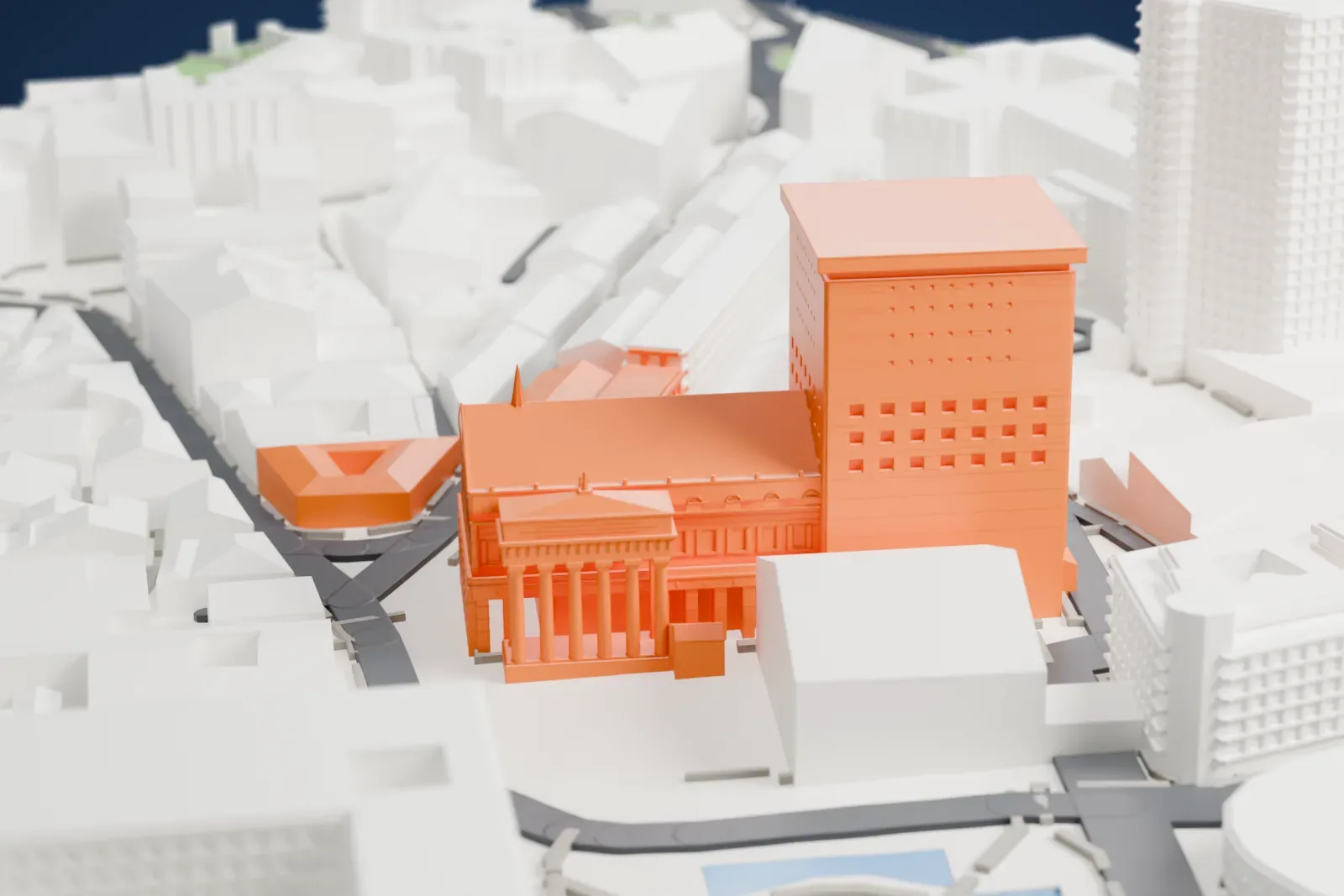
A free, printable model of the Teatro Carlo Felice, an opera house with a columned portico and a pitched roof, and the dense streets around it, generated from real map data in your browser.
Free, in your browser. Exports a slicer-ready 3MF.
About Teatro Carlo Felice
Genoa's principal opera house, the Teatro Carlo Felice, stages opera, ballet, orchestral concerts and recitals. It stands beside Piazza De Ferrari and takes its name from King Carlo Felice. On January 31, 1825, the local architect Carlo Barabino presented his plan for an opera house on the former site of the San Domenico church. The first stone was laid on March 19, 1826, and Bellini's Bianca e Fernando was performed at the inauguration on April 7, 1828.
The hall was altered repeatedly between 1859 and 1934. On February 9, 1941, a shell from a British warship hit the roof. A backstage fire followed on August 5, 1943, and an air raid in September 1944 destroyed the front of the theater, leaving little beyond the outer walls and the corridors behind the boxes.
Opera seasons moved to an emergency venue for more than four decades after the war. Paolo Antonio Chessa's design of 1951, the earliest, was turned down, and Carlo Scarpa's plan, approved in 1977, ended with his early death. Aldo Rossi eventually supplied the design that stands today: parts of the original facade were recreated, while the interior is entirely modern. In June 1991 the hall officially reopened, with a main hall seating up to 2,000 and a smaller auditorium seating up to 200.
How it prints
Make this print opens the generator on a 600 m square around the landmark. Buildings print at close to true scale, so the landmark grows with the print size.
| Print size | Landmark height | Scale |
|---|---|---|
| 160 mm default | 17 mm | 1:3,750 |
| 200 mm | 21 mm | 1:3,000 |
| 256 mm | 27 mm | 1:2,344 |
-
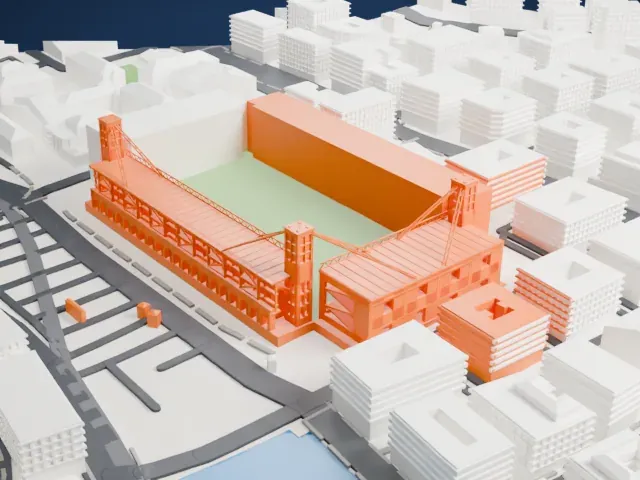
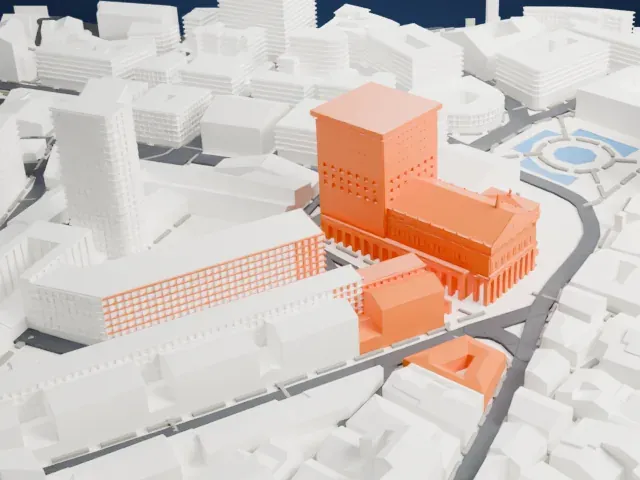 North
North
-
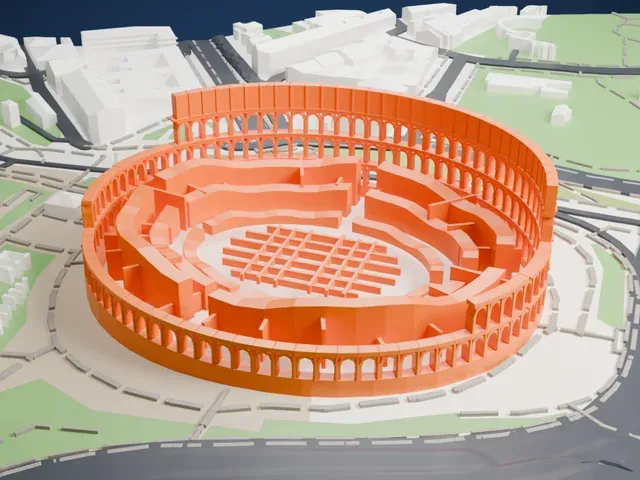
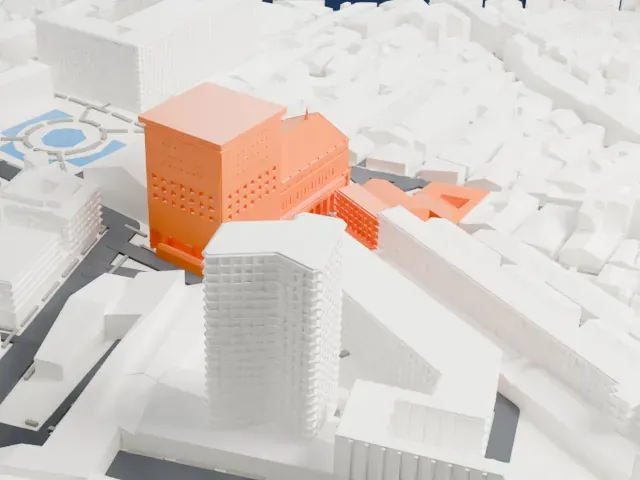 East
East
-
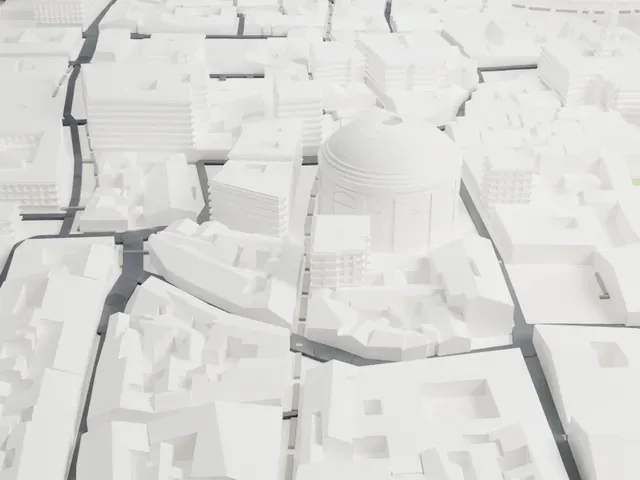
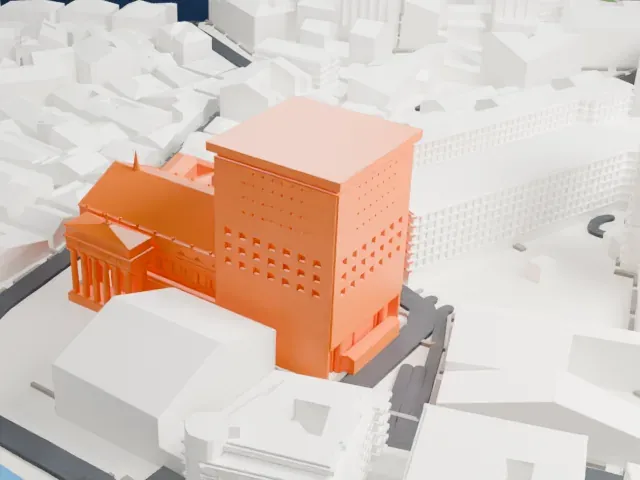 South
South
-
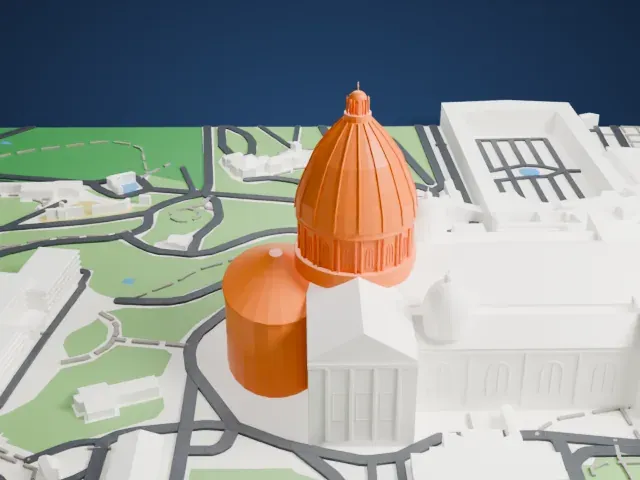
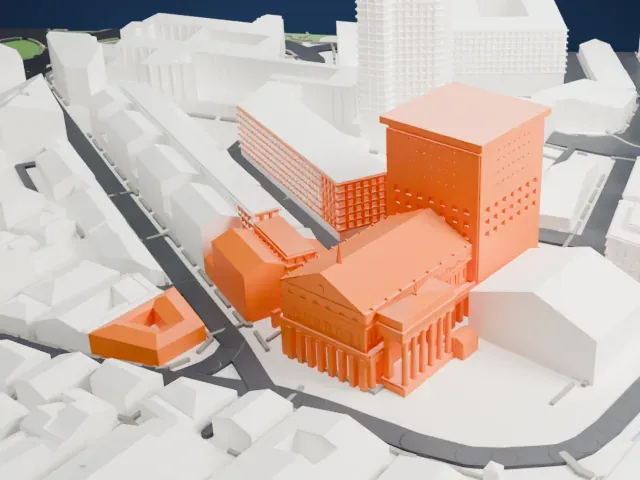 West
West
- Free-standing portico columns
- Tall slim columns carry the entrance portico. Print slowly with good cooling, and use Print friendly to adapt the thin columns to the print scale.
- Small spire on the roof ridge
- A slim pointed spire stands at the end of the pitched roof. A larger print size keeps it sturdier, and layers of 0.12–0.16 mm keep its tip crisp.
- One piece with the ground
- Teatro Carlo Felice is joined to the ground in the exported file, and the four-side check found no floating parts, so nothing needs gluing.
- Pick the detail for your nozzle
- In the Buildings settings, set Landmark detail to Print friendly to adapt thin parts and small details to the print scale. Full detail keeps every modeled feature, for larger prints or a finer nozzle.
- Colors
- Buildings, roads, water and ground arrive as separate filament slots in the 3MF. Teatro Carlo Felice takes the building color.
- File format
- You get a 3MF for Bambu Studio, OrcaSlicer or PrusaSlicer. Any of them can save it as STL if you need one.
About this model
Teatro Carlo Felice is one of more than 2,300 landmark models in Mini Skyline. They are made with AI, and each one is checked from four sides in its real surroundings before release. Everything around it is built from OpenStreetMap and Overture map data. If you would rather print the shape from map data, turn off Landmark models in the Buildings settings.
Common questions
Is there a Teatro Carlo Felice STL I can download?
Mini Skyline builds the file for you in your browser and exports 3MF, which every major slicer opens. If you need an STL, open the 3MF in your slicer and export it from there.
How big can I print it?
Any print size from 40 mm across. Teatro Carlo Felice grows with the print: about 17 mm tall on the default 160 mm print. For a model larger than your printer bed, Project Mode splits the area into tiles.
Is it free?
Yes. Generation runs in your browser, with no account and nothing behind a paywall.