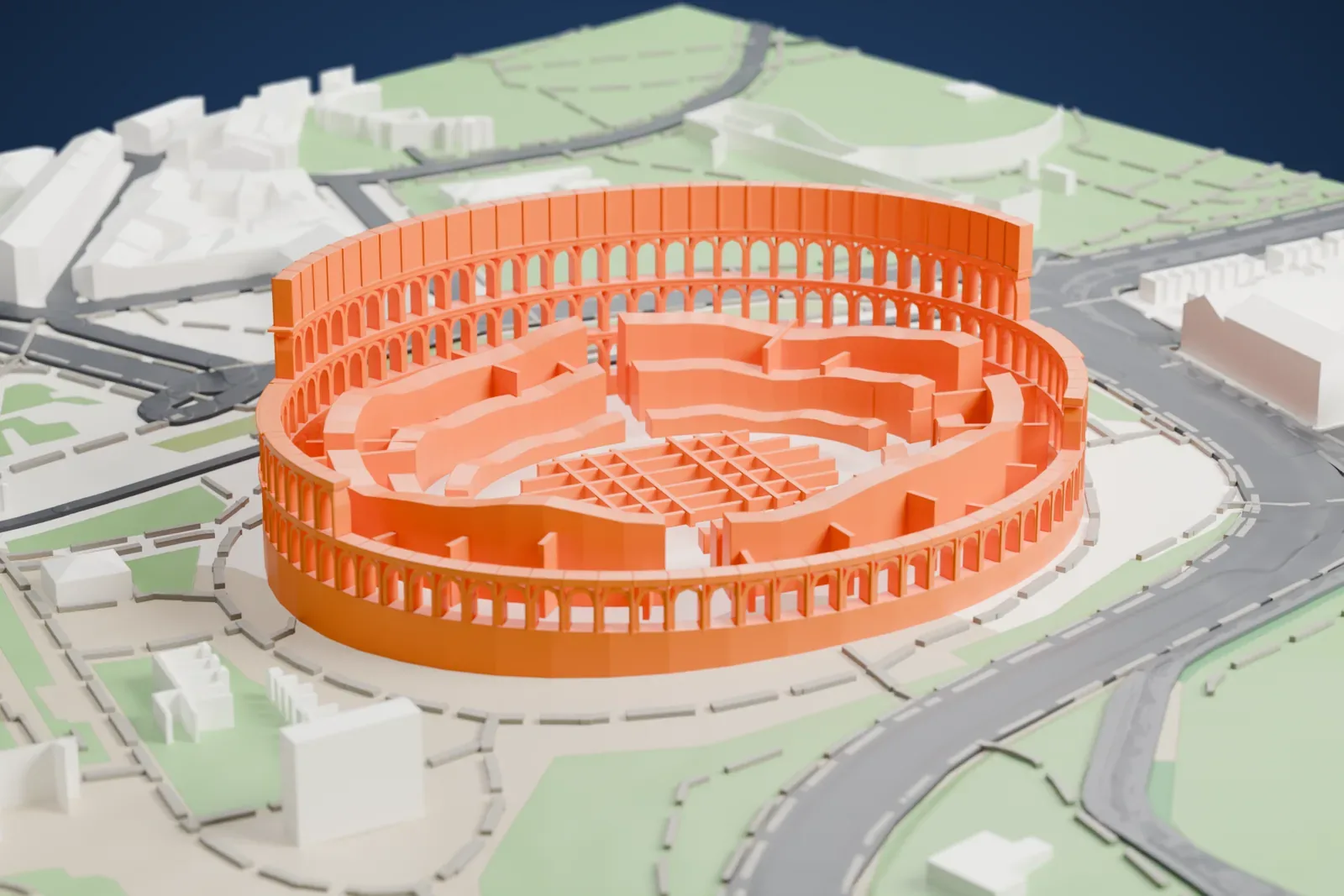
3D print the Colosseum
A free, printable model of the Colosseum and the streets, parks and buildings around it in central Rome, generated from real map data in your browser.
-
 North
-
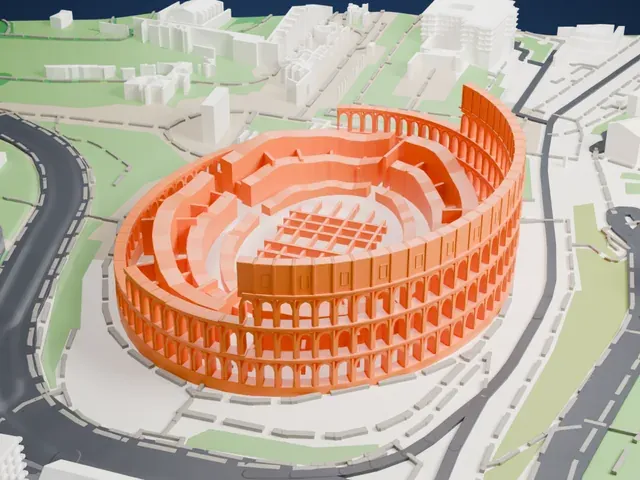 East
-
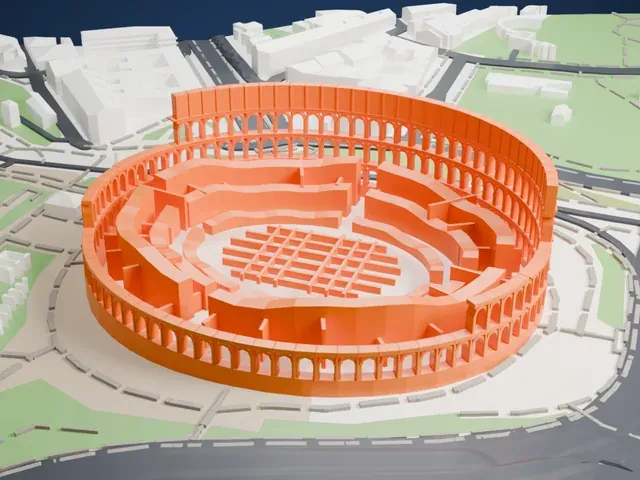 South
-
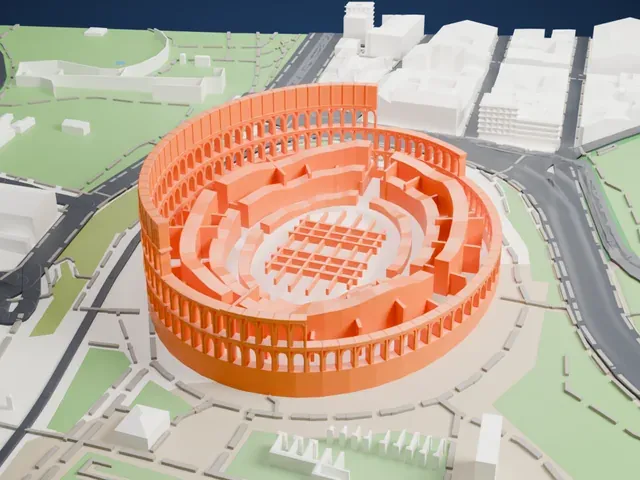 West
The model you print
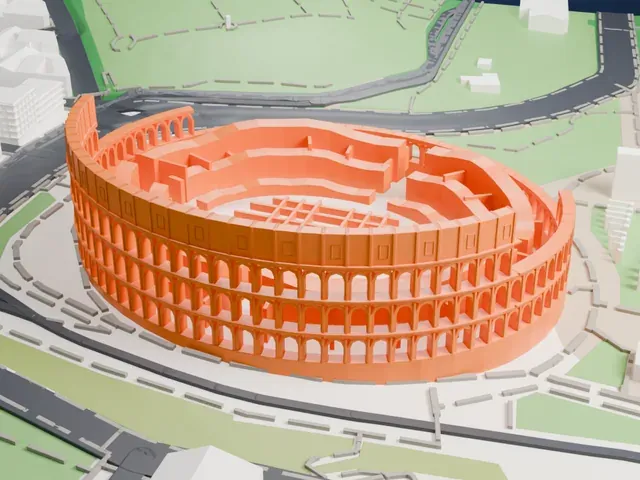
Colosseum in 3D
The landmark on its own, at its size on a 160 mm print. Print friendly thickens thin parts for a 0.4 mm nozzle; Full detail keeps every part.
- Real height
- 48 m
- On a 160 mm print
- 16 mm
- Scale
- 1:3,750
48 m of the Colosseum, 16 mm on your shelf
Make this print opens the generator on a 600 m square around the landmark. Buildings print at close to true scale, so the landmark grows with the print size.
- Rows of small arches
The oval wall is a stack of arcades. A larger print keeps the arch openings clear; at small sizes Print friendly adapts them to your nozzle, while Full detail keeps every arch.
- Cut-away wall and tiers
Part of the outer wall is missing, leaving thin arched edges beside the seating tiers inside. Layers of 0.12 to 0.16 mm keep those edges crisp, and slower printing helps the taller sections.
- Pick the detail for your nozzle
In the Buildings settings, set Landmark detail to Print friendly to adapt thin parts and small details to the print scale. Full detail keeps every modeled feature, for larger prints or a finer nozzle.
- Colors
Buildings, roads, water and ground arrive as separate filament slots in the 3MF. The Colosseum takes the building color.
- File format
You get a 3MF for Bambu Studio, OrcaSlicer or PrusaSlicer. Any of them can save it as STL if you need one.
About the Colosseum
The Colosseum, an elliptical amphitheater, sits just east of the Roman Forum in central Rome, Italy. It is the largest ancient amphitheater ever built and the largest one still standing anywhere. Work started under the Emperor Vespasian in 72, and his successor Titus saw it finished in AD 80. Further modifications followed under Domitian. Together the three emperors are called the Flavian dynasty, which is why later classicists and archaeologists named the building the Flavian Amphitheater.
The structure combines travertine, Roman concrete and tuff, a volcanic rock. By estimate, it held between 50,000 and 80,000 spectators at different points in its history, and audiences averaged some 65,000. The program ranged from gladiatorial contests and animal hunts to executions, dramas based on Roman mythology and re-enactments of famous battles. The site had held an artificial lake created by Nero, which was filled in, and the land was reused as the location of the new building.
Entertainment at the Colosseum ended in the early medieval era. Later uses included housing, workshops, a fortress, a quarry, a Christian shrine and quarters for a religious order. Earthquakes and stone robbers left it substantially ruined, yet it remains a renowned emblem of Imperial Rome. It was also named among the New 7 Wonders, and the Italian 5 euro cent coin shows its image.
About this model
The Colosseum is one of more than 5,500 landmark models in Mini Skyline. They are made with AI, and each one is checked in its real surroundings before release. Each model is written as code from public descriptions, plans, photographs and aerial views used only as references; no image or third-party model is copied into it. Everything around it is built from OpenStreetMap and Overture map data. Rights in the building itself, its name and any brands on it are not granted by Mini Skyline; clear them separately before you sell prints. If you would rather print the shape from map data, turn off Landmark models in the Buildings settings.
Mini Skyline is not affiliated with, or endorsed by, the owners of this building or its names and marks.
Same skyline