3D print the Westerkerk
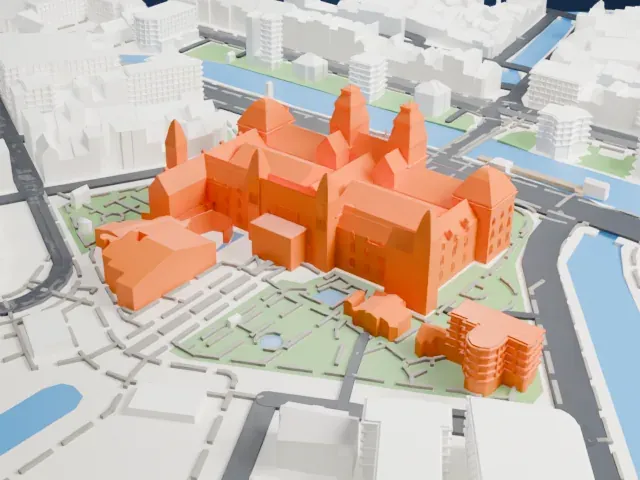
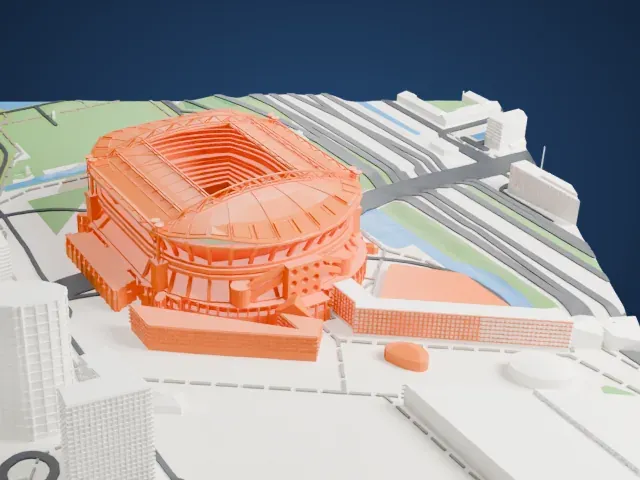
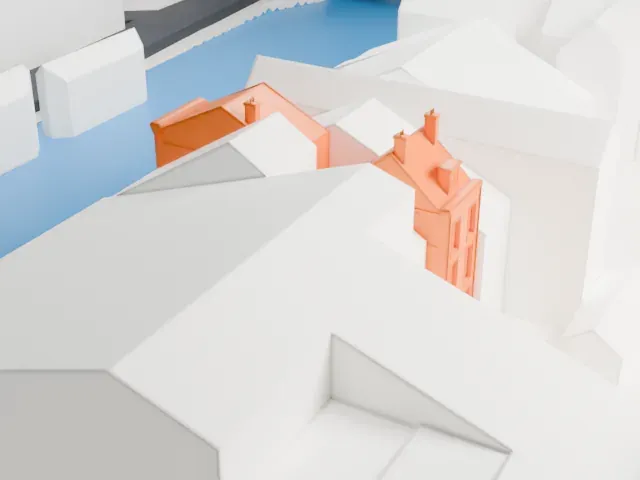
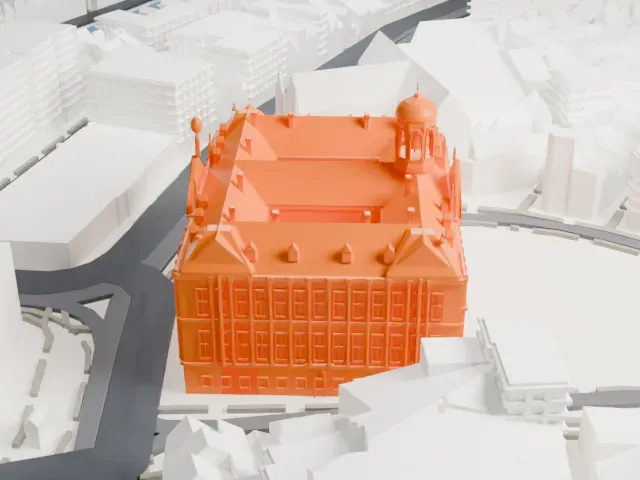
A free, printable model of the Westerkerk and the surrounding streets and buildings of central Amsterdam, generated from real map data in your browser.
-
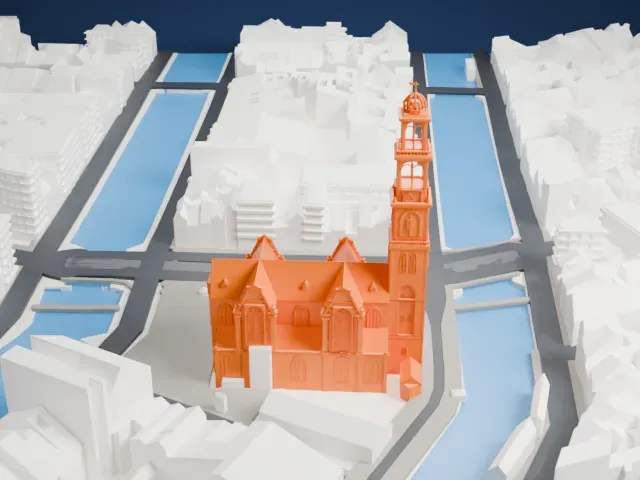 North
-
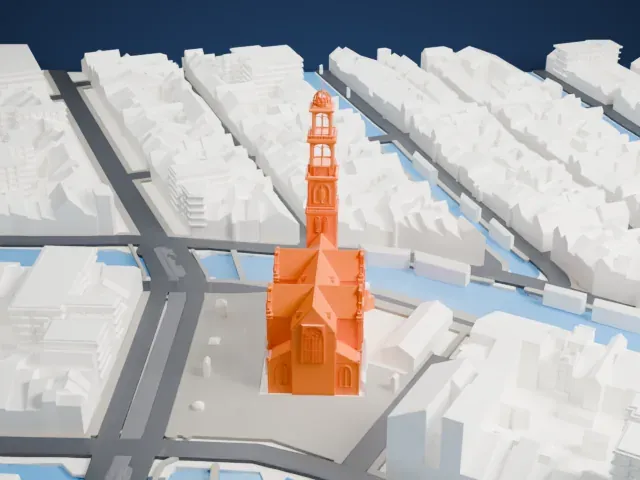 East
-
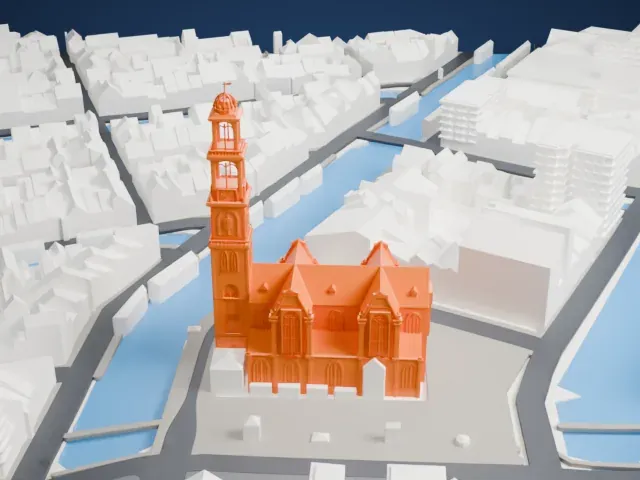 South
-
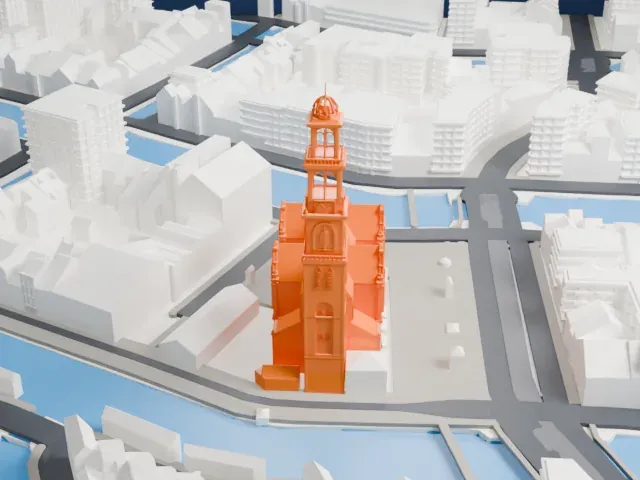 West
The model you print
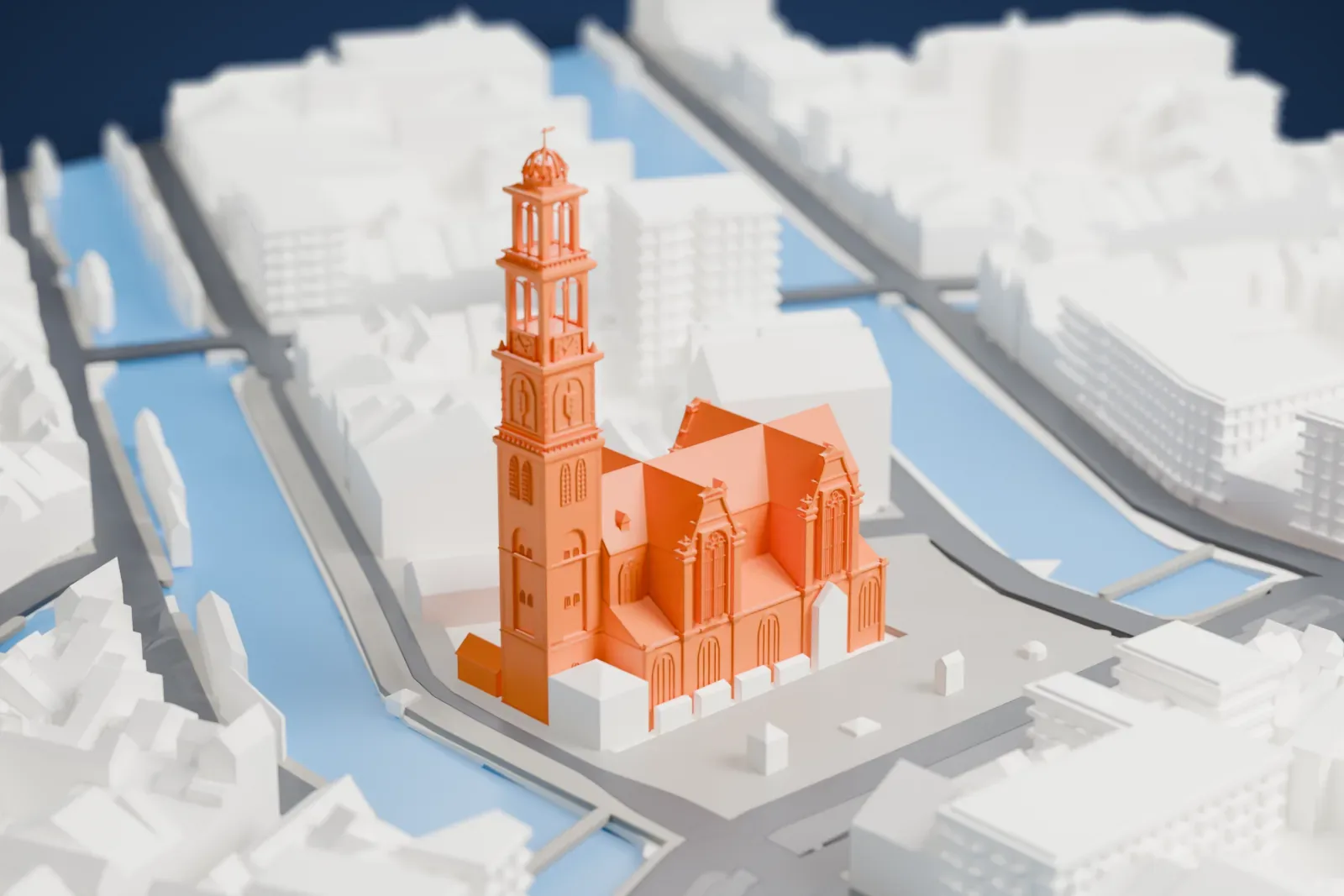
Westerkerk in 3D
The landmark on its own, at its size on a 160 mm print. Print friendly thickens thin parts for a 0.4 mm nozzle; Full detail keeps every part.
- Real height
- 87 m
- On a 160 mm print
- 23 mm
- Scale
- 1:3,750
87 m of the Westerkerk, 23 mm on your shelf
Make this print opens the generator on a 600 m square around the landmark. Buildings print at close to true scale, so the landmark grows with the print size.
- Tower and spire
A church tower and spire are usually the thinnest parts of a print. Print friendly adapts thin parts to the print scale, Full detail keeps more at larger sizes, and printing slowly with cooling helps the tip.
- One piece with the ground
The Westerkerk is joined to the ground in the exported file, and the four-side check found no floating parts, so nothing needs gluing.
- Pick the detail for your nozzle
In the Buildings settings, set Landmark detail to Print friendly to adapt thin parts and small details to the print scale. Full detail keeps every modeled feature, for larger prints or a finer nozzle.
- Colors
Buildings, roads, water and ground arrive as separate filament slots in the 3MF. The Westerkerk takes the building color.
- File format
You get a 3MF for Bambu Studio, OrcaSlicer or PrusaSlicer. Any of them can save it as STL if you need one.
About the Westerkerk
The Westerkerk, meaning Western Church in English, is a Reformed church in central Amsterdam, in the Netherlands. It stands in the westernmost part of the Grachtengordel neighborhood, beside the Jordaan, between the Prinsengracht and the Keizersgracht. Hendrick de Keyser designed it in Renaissance style, and it went up from 1620 to 1631. His son Pieter de Keyser completed it, and it was inaugurated June 8, 1631. The church is 58 meters (190 ft) long and 29 meters (95 ft) wide. Its plan is a three-aisled basilica with two transepts of equal dimensions, giving the form of two Greek crosses joined together.
The Westerkerk was among the first churches built specifically for Protestants; older churches like the Oude Kerk and the Nieuwe Kerk were converted to Protestantism in 1578. No church in the Netherlands built for Protestants is larger. The Westertoren, as its tower is called, stands 87 meters (286 feet) high, taller than any other church tower in Amsterdam. An octagonal spire designed by Hendrick de Keyser was never built, and the crown at the top of the spire is Maximilian I's Imperial Crown of Austria.
François Hemony cast the largest 14 of the carillon's 51 bells in 1658. No other carillon in Amsterdam chimes around the clock; residents of the Jordaan district asked for this one to. The hour strike bell, made by Assuerus Koster in 1636, weighs 7509 kg and is the largest in Amsterdam. There was no organ when the church was consecrated in 1631; the Duyschot organ was completed in 1686, with shutters painted by Gerard de Lairesse.
About this model
The Westerkerk is one of more than 5,500 landmark models in Mini Skyline. They are made with AI, and each one is checked from four sides in its real surroundings before release. Each model is written as code from public descriptions, plans, photographs and aerial views used only as references; no image or third-party model is copied into it. Everything around it is built from OpenStreetMap and Overture map data. Rights in the building itself, its name and any brands on it are not granted by Mini Skyline; clear them separately before you sell prints. If you would rather print the shape from map data, turn off Landmark models in the Buildings settings.
Same skyline