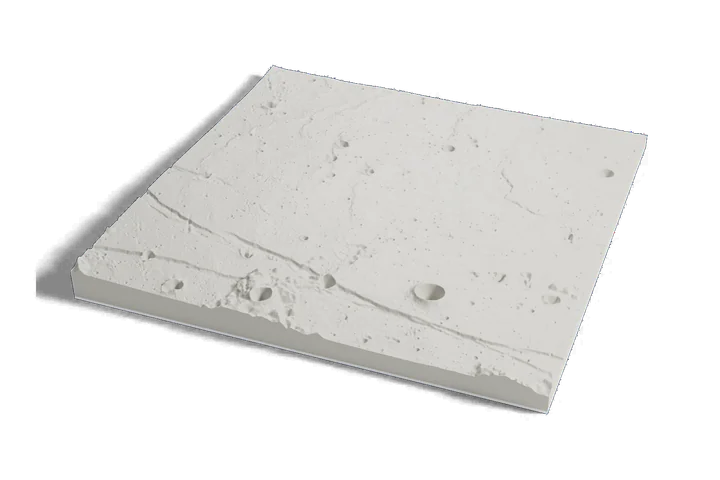
3D print Mare Imbrium, where Lunokhod 1 and Chang'e 3 landed
Two rover landings on one print: the lava plains of northern Mare Imbrium where the Soviet Lunokhod 1 and China's Chang'e 3 came down, with the edge of Sinus Iridum, from elevation data measured by lunar orbiters.
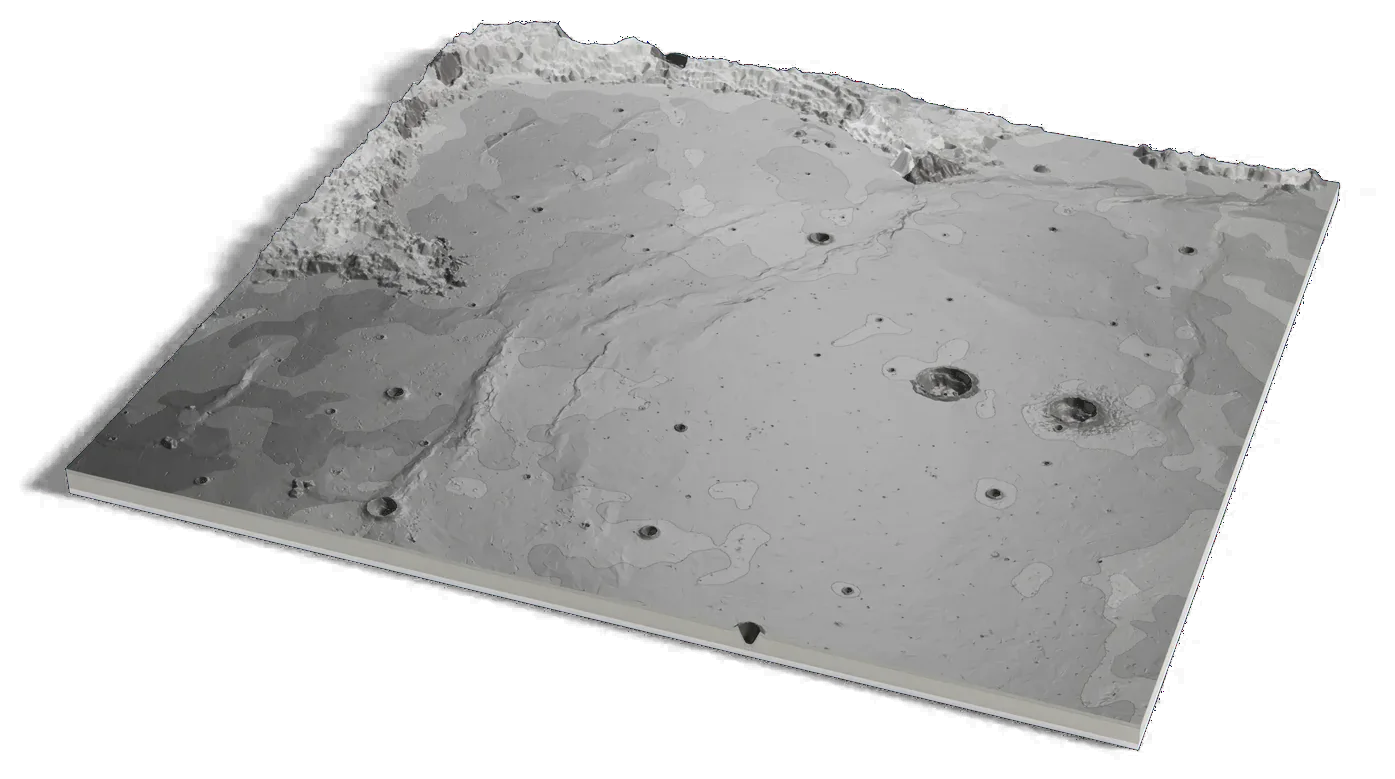
Moon terrain: USGS Astrogeology; NASA LRO LOLA; JAXA SELENE/Kaguya. Surface imagery: LRO LROC WAC mosaic, NASA/GSFC/Arizona State University.
Where it is 41.20°N 27.30°W The Moon · near side
- Lunokhod 1
- Landed November 17, 1970, at 38.24°N, 35.00°W
- Chang'e 3
- Landed December 14, 2013, at 44.12°N, 19.51°W
- Distance driven
- Lunokhod 1 about 10.5 km, Yutu about 100 m
- Mare Imbrium
- About 1,146 km (712 mi) across
- Operators
- Soviet Union; CNSA, China
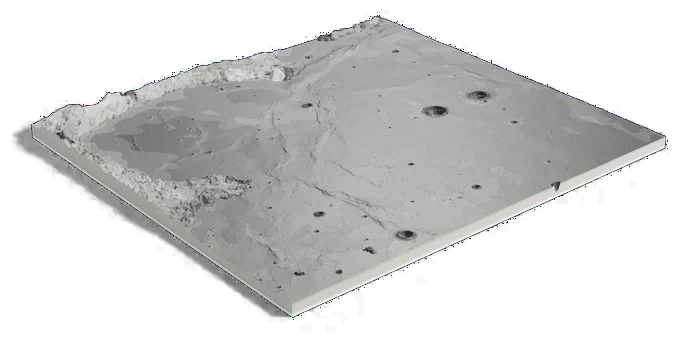
Moon terrain: USGS Astrogeology; NASA LRO LOLA; JAXA SELENE/Kaguya. Surface imagery: LRO LROC WAC mosaic, NASA/GSFC/Arizona State University.
497 by 450 km of the Moon, 160 mm across
About Mare Imbrium
Mare Imbrium, the "Sea of Showers", is a plain of dark lava about 1,146 km (712 mi) across on the Moon's near side. On November 17, 1970, the Soviet Luna 17 landed in it and set down Lunokhod 1, the first successful robotic rover on the Moon. It worked for eleven lunar days and drove about 10.5 km (6.5 mi).
On December 14, 2013, China's Chang'e 3 landed about 400 km (250 mi) to the northeast, beside a crater about 450 m (1,500 ft) across, with the Yutu rover. Yutu drove about 100 m (330 ft) before a fault left it stuck. LROC found both landers in its photos and measured where they stand.
Sources: IAU Gazetteer of Planetary Nomenclature: Mare Imbrium, LROC: Spacecraft coordinates, 2016 update, LROC: Lunokhod 1 revisited, NASA NSSDCA: Lunokhod 1, LROC: Chang'e 3 lander and rover from above
Elsewhere on the Moon
All worlds-
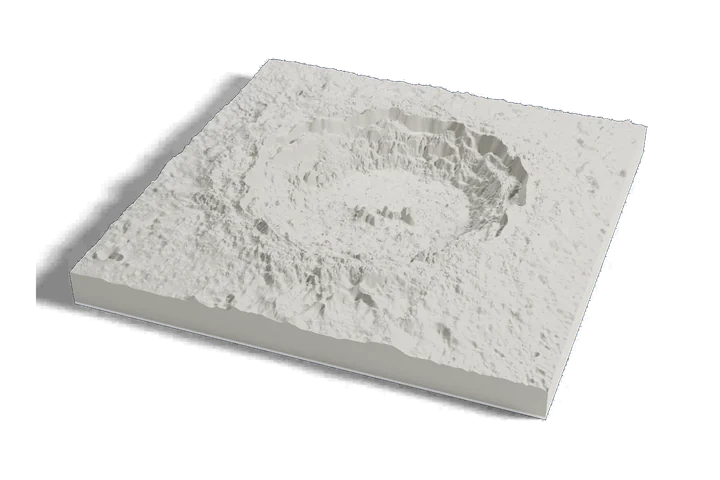 Crater
Copernicus crater
-
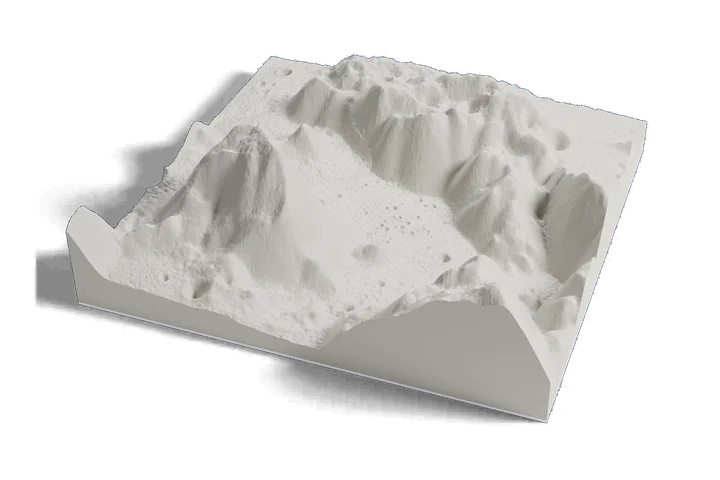 Landing site · Apollo 17, 1972
Taurus-Littrow valley
-
 Landing site · Apollo 11, 1969
Tranquility Base
Moon terrain: USGS Astrogeology; NASA LRO LOLA; JAXA SELENE/Kaguya. Surface imagery: LRO LROC WAC mosaic, NASA/GSFC/Arizona State University.