3D print Plato crater on the Moon
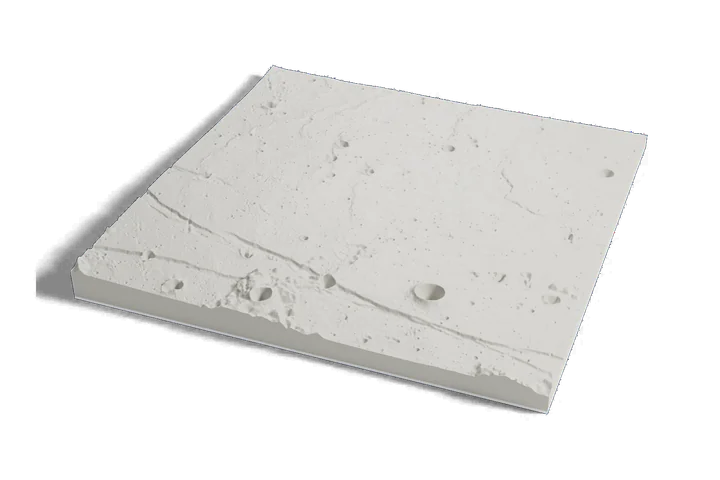
A big crater on the Moon's near side, on one print: the high rim of Plato and its flat, lava-filled floor, from elevation data measured by lunar orbiters.
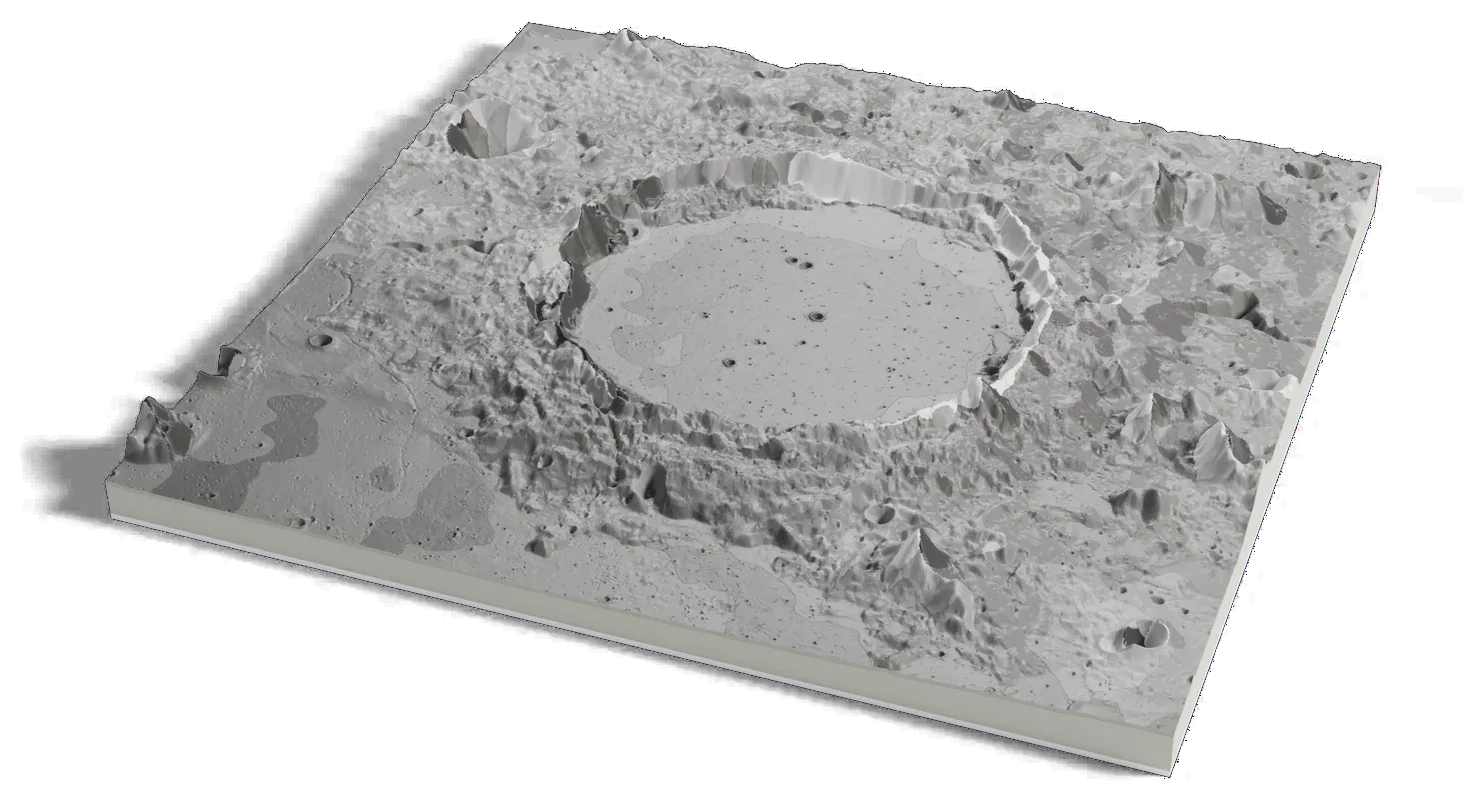
Moon terrain: USGS Astrogeology; NASA LRO LOLA; JAXA SELENE/Kaguya. Surface imagery: LRO LROC WAC mosaic, NASA/GSFC/Arizona State University.
Where it is 51.62°N 9.38°W The Moon · near side
- Diameter
- About 101 km (63 mi)
- Rim height
- Up to 1.4 km (4,600 ft) above the floor, on the east side
- Floor
- Basalt about 2.82 billion years old
- Named for
- Plato, Greek philosopher (c. 428-347 BC)
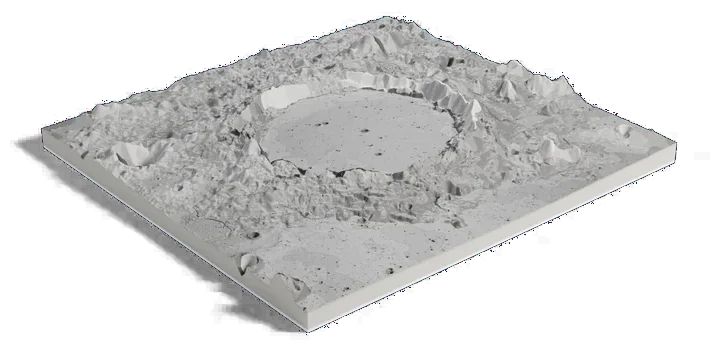
Moon terrain: USGS Astrogeology; NASA LRO LOLA; JAXA SELENE/Kaguya. Surface imagery: LRO LROC WAC mosaic, NASA/GSFC/Arizona State University.
214 by 200 km of the Moon, 160 mm across
About Plato crater
Plato is an impact crater about 101 km (63 mi) across on the Moon's near side, just north of Mare Imbrium. LROC estimates it is about 100 million years younger than the Imbrium basin, which formed about 3.85 billion years ago.
Its floor is dark lava: two basalt units of slightly different color that probably erupted separately around 2.82 billion years ago, young for lunar basalt. The eastern rim stands up to 1.4 km (4,600 ft) above that floor, and a large block of the western rim has slumped inward. An ancient volcanic vent lies in the rough ground just west of the rim. The crater is named for the Greek philosopher Plato.
Sources: IAU Gazetteer of Planetary Nomenclature: Plato, LROC: The west side of Plato crater, NASA: Ancient volcanic vent near the Moon's Plato crater
Elsewhere on the Moon
All worlds-
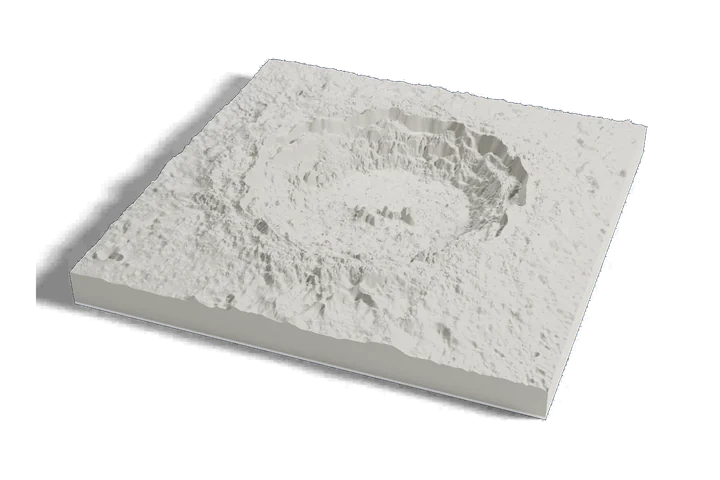 Crater
Copernicus crater
-
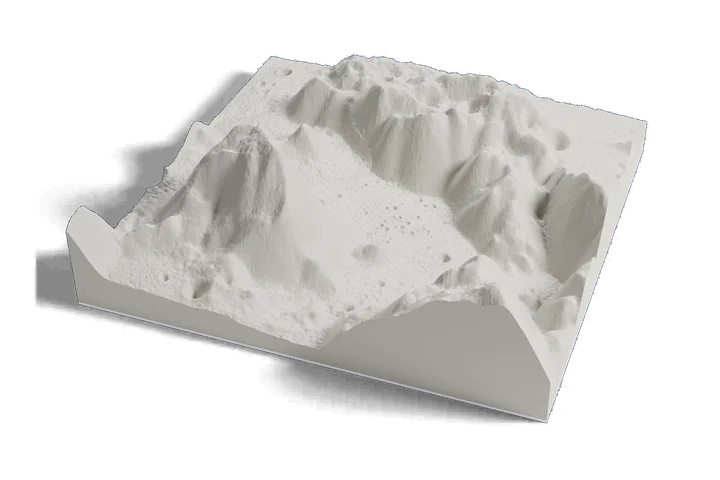 Landing site · Apollo 17, 1972
Taurus-Littrow valley
-
 Landing site · Apollo 11, 1969
Tranquility Base
Moon terrain: USGS Astrogeology; NASA LRO LOLA; JAXA SELENE/Kaguya. Surface imagery: LRO LROC WAC mosaic, NASA/GSFC/Arizona State University.