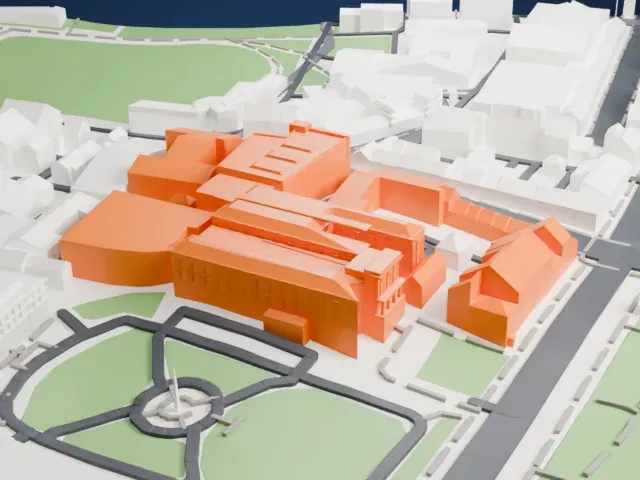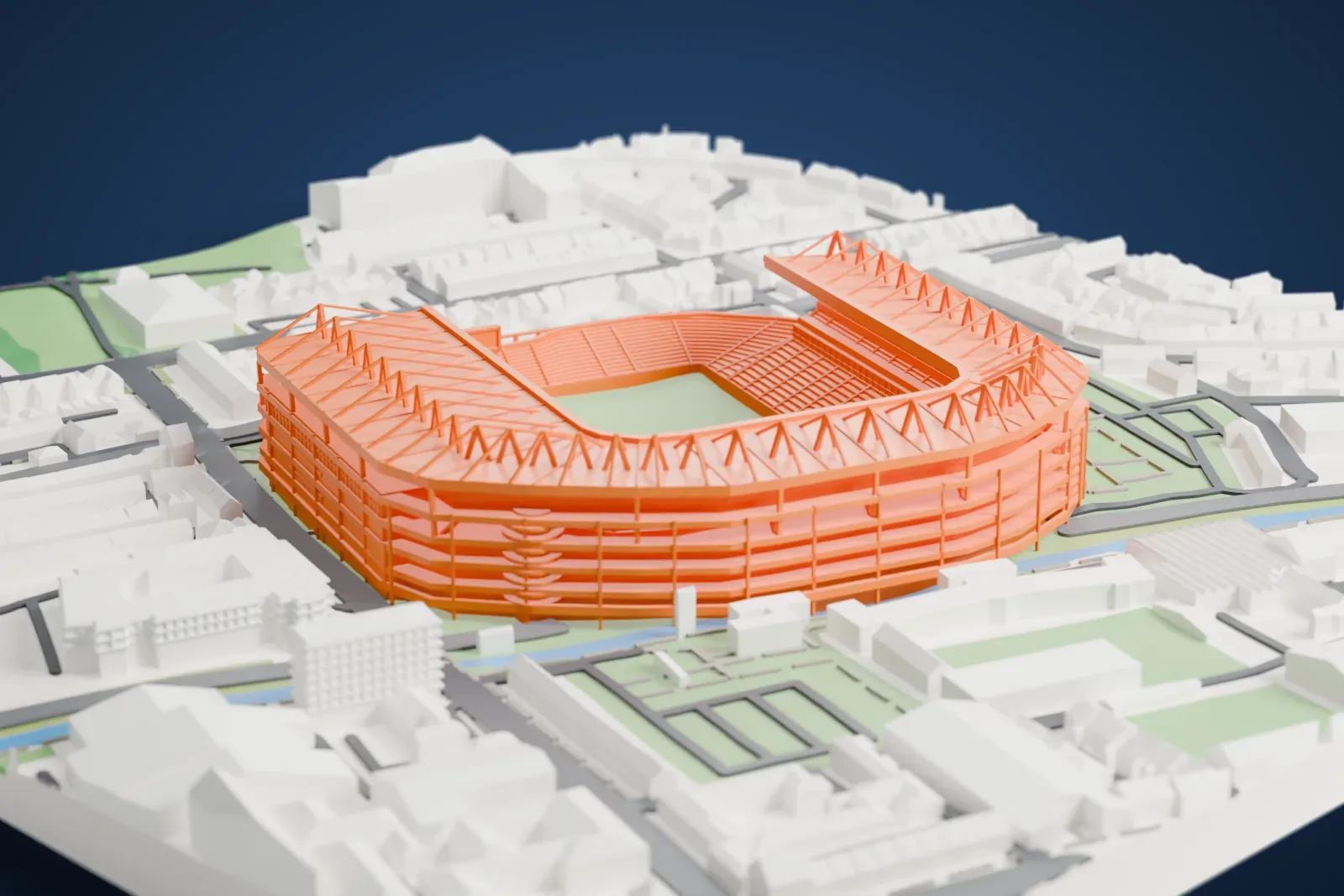
3D print Croke Park
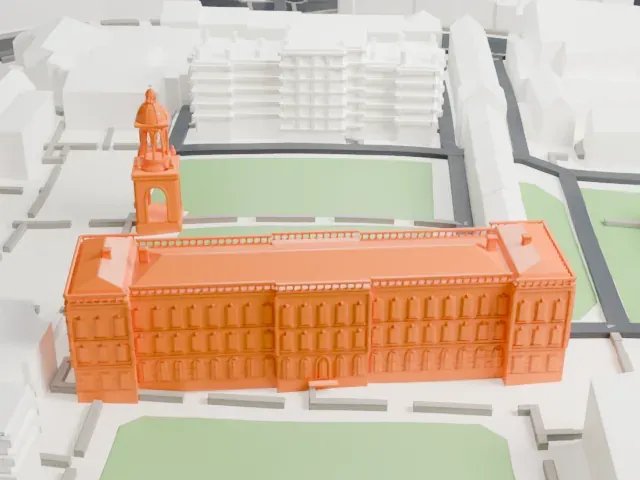
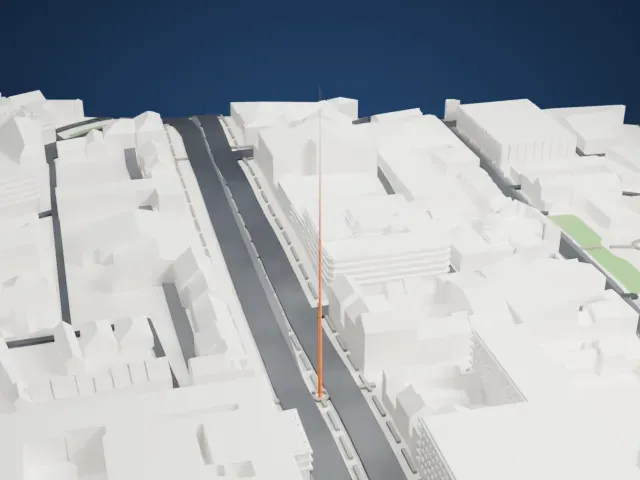
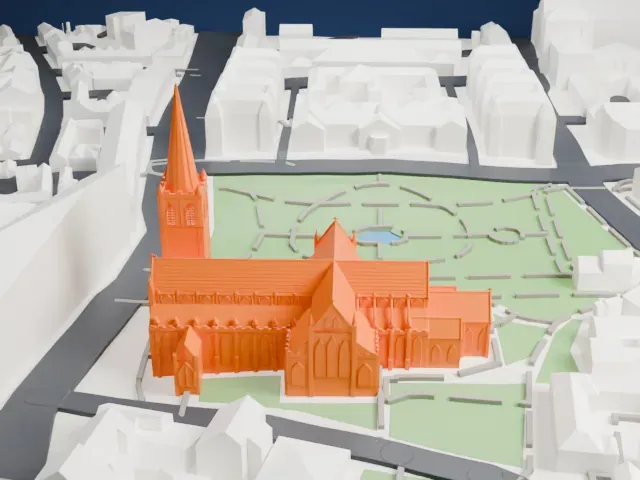
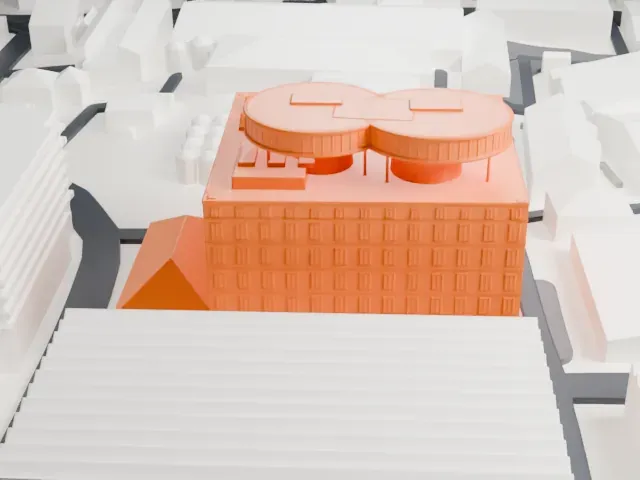
A free, printable model of Croke Park, a three-tier Gaelic games stadium with a cantilever roof, masts and an open terrace, among streets and buildings, generated from real map data in your browser.
-
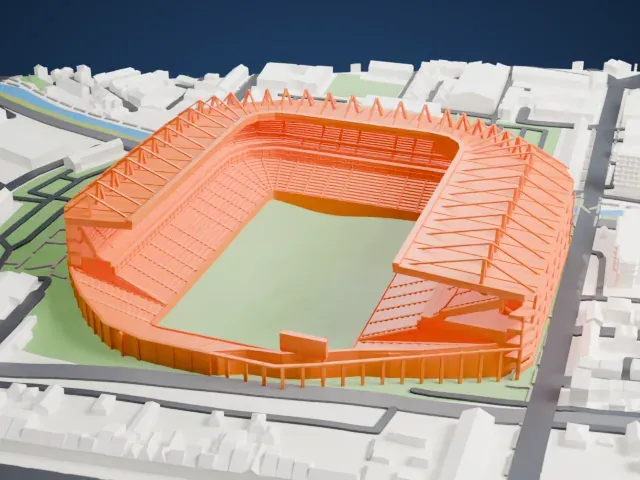 North
-
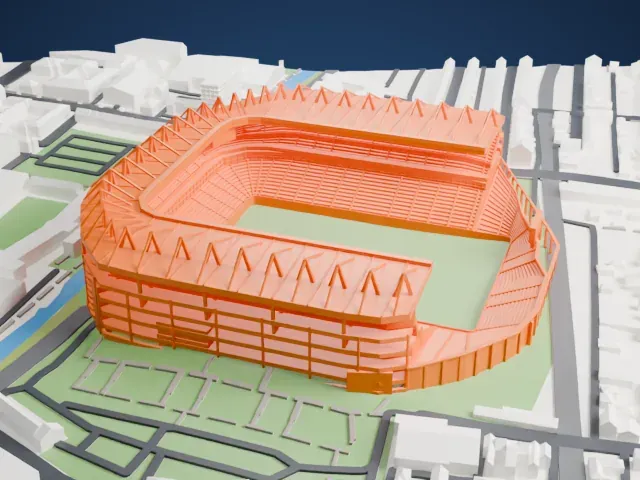 East
-
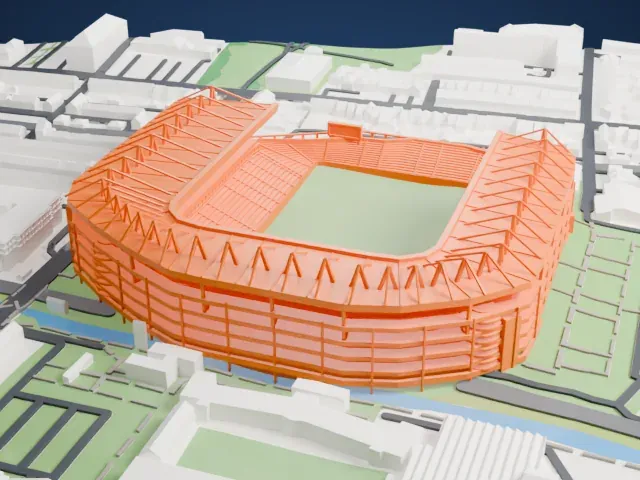 South
-
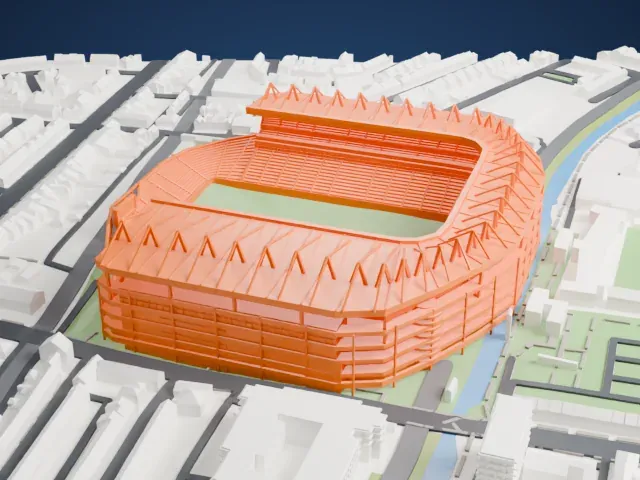 West
- On a 160 mm print
- 17 mm
- Scale
- 1:3,750
17 mm tall on a 160 mm print
Make this print opens the generator on a 600 m square around the landmark. Buildings print at close to true scale, so the landmark grows with the print size.
- Row of roof masts
A-frame masts stand in a line above the cantilever roof and are the stadium's top line. They are slim and tall, so print slowly and use Print friendly for a smaller model.
- Open Hill 16 terrace
One end is a low, unroofed terrace that steps down from the covered bowl, with a big screen beside it. Full detail keeps the steps and back wall crisp at a taller print size.
- One piece with the ground
Croke Park is joined to the ground in the exported file, and the four-side check found no floating parts, so nothing needs gluing.
- Pick the detail for your nozzle
In the Buildings settings, set Landmark detail to Print friendly to adapt thin parts and small details to the print scale. Full detail keeps every modeled feature, for larger prints or a finer nozzle.
- Colors
Buildings, roads, water and ground arrive as separate filament slots in the 3MF. Croke Park takes the building color.
- File format
You get a 3MF for Bambu Studio, OrcaSlicer or PrusaSlicer. Any of them can save it as STL if you need one.
About Croke Park
Croke Park, the Gaelic games stadium in Dublin, takes its name from Archbishop Thomas Croke. It is where the Gaelic Athletic Association, which has used the ground since 1891, holds its headquarters; the All-Ireland finals of Gaelic football and hurling are played there each year. Between 1991 and 2005 the venue was expanded and redeveloped, lifting capacity to 82,300, which puts it fourth in size among European stadiums and makes it the biggest in Europe not usually used for association football.
The land was the City and Suburban Racecourse, also called Jones' Road sports ground. The GAA member Frank Dineen bought it in 1908, borrowing much of the £3,250; the association bought it from him for £3,500 in 1913 and renamed it for Archbishop Croke. It had one stand and grassy banks; a hill raised at the railway end in 1917 became Hill 60, later Hill 16, named for the 1916 Easter Rising. On November 21, 1920, in the War of Independence, police auxiliaries shot into the crowd at a Dublin–Tipperary match, killing or fatally wounding 14 civilians, among them Tipperary player Michael Hogan, for whom the Hogan Stand was named.
The redevelopment was split into four phases over 14 years and never closed the ground. The new Cusack Stand, 180 meters long and 35 meters high with room for 27,000 people, opened in 1994 and 1995, costing £35 million. The last phase, opened on March 14, 2005, turned the Nally Stand and Hill 16 into a terrace for around 13,200, the only standing area left. The ground also held the 2003 Special Olympics ceremonies, and from 2007 to 2010 Ireland's rugby and football teams played there.
About this model
Croke Park is one of more than 4,300 landmark models in Mini Skyline. They are made with AI, and each one is checked from four sides in its real surroundings before release. Everything around it is built from OpenStreetMap and Overture map data. If you would rather print the shape from map data, turn off Landmark models in the Buildings settings.
Same skyline