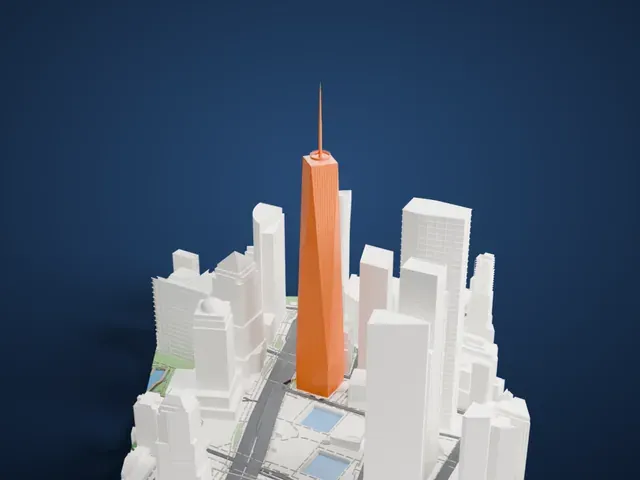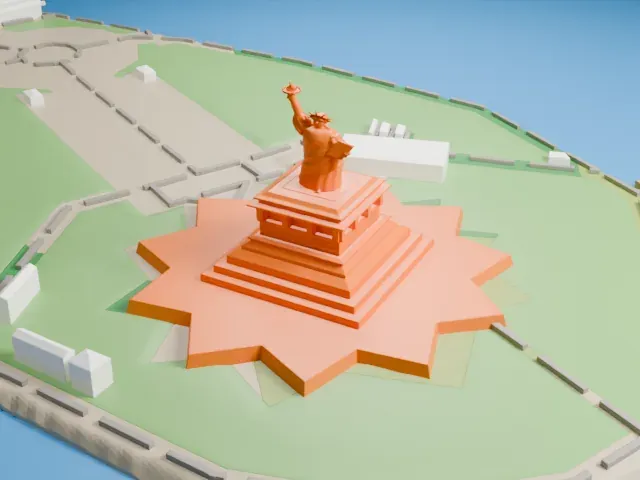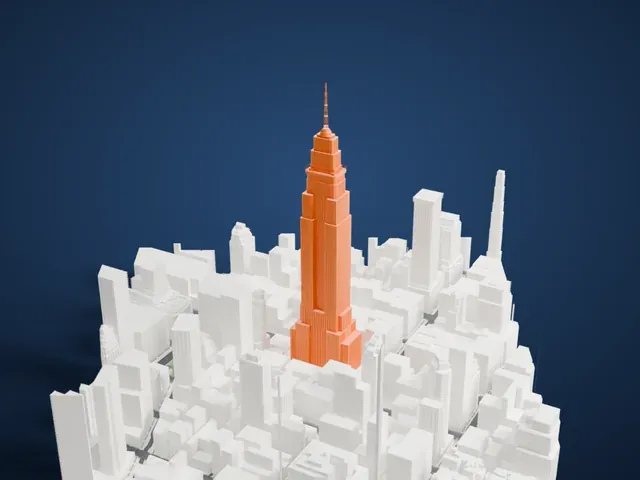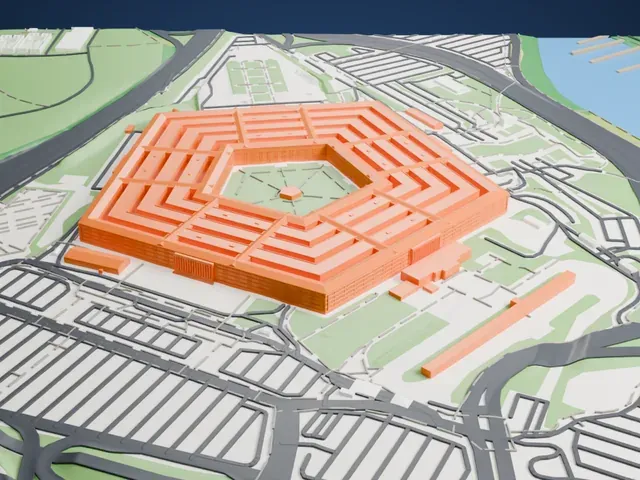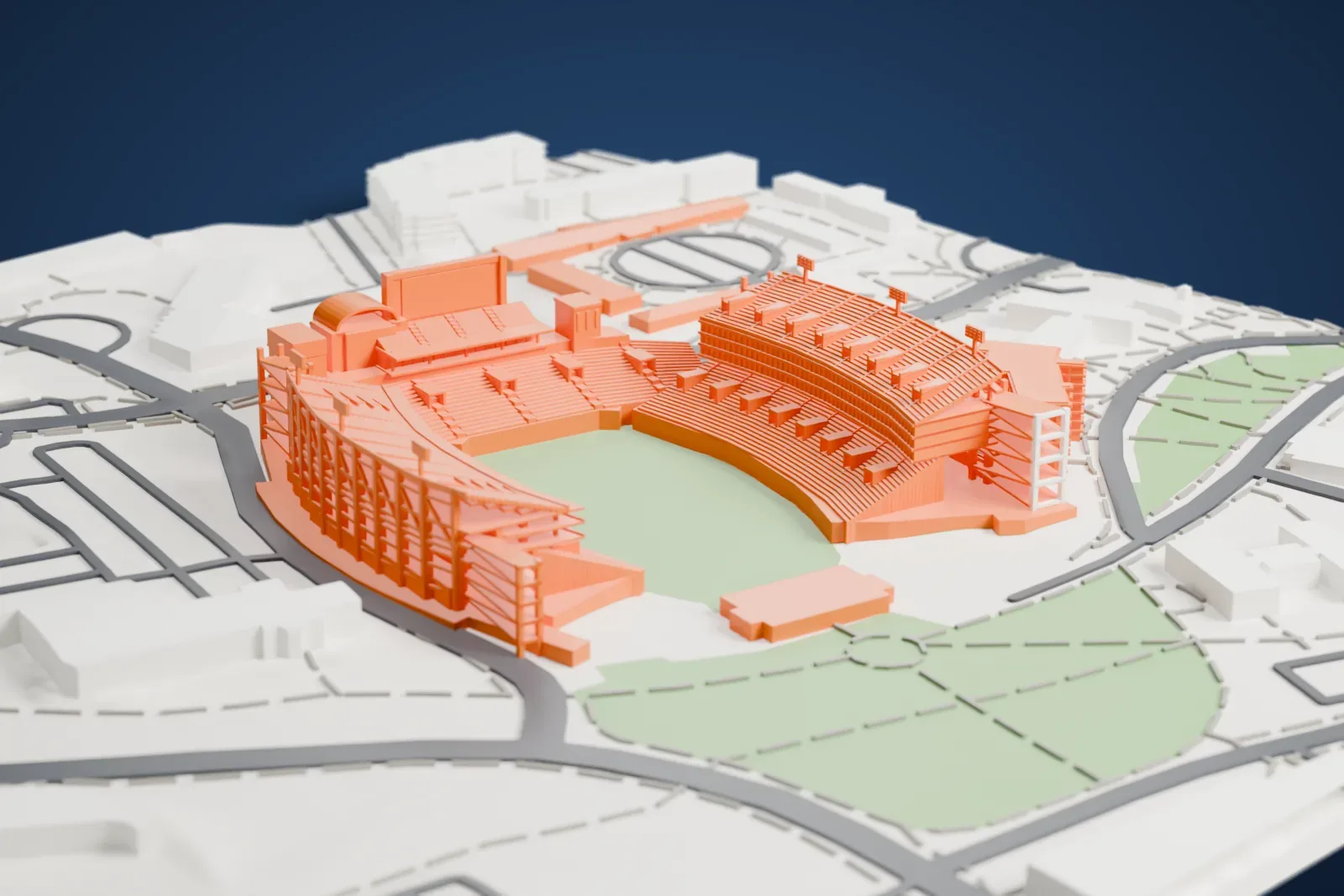
3D print Davis Wade Stadium
A free, printable model of Davis Wade Stadium and the lawns, roads and buildings around it, generated from real map data in your browser.
-
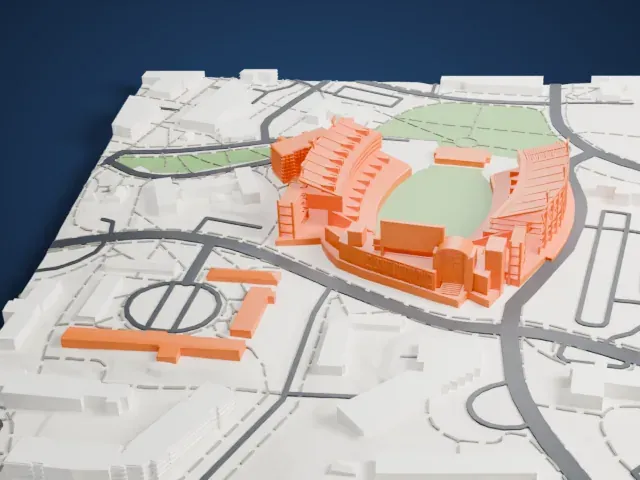 North
-
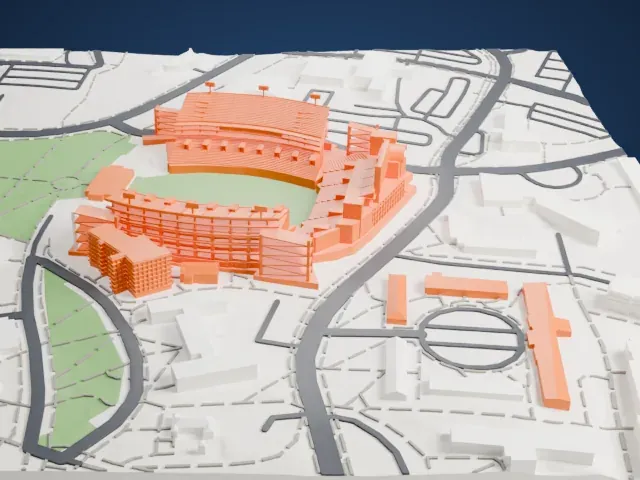 East
-
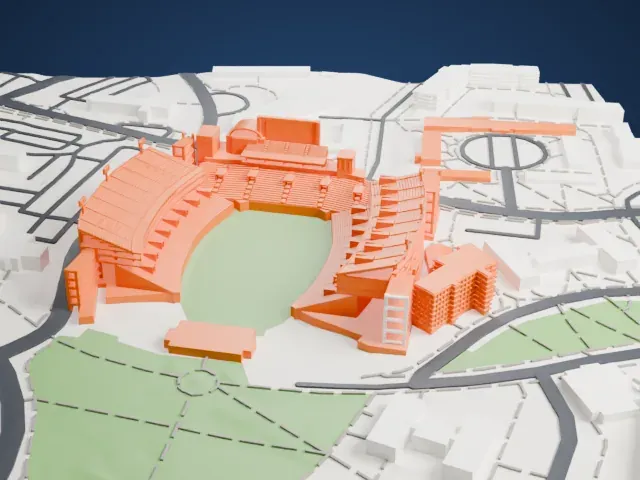 South
-
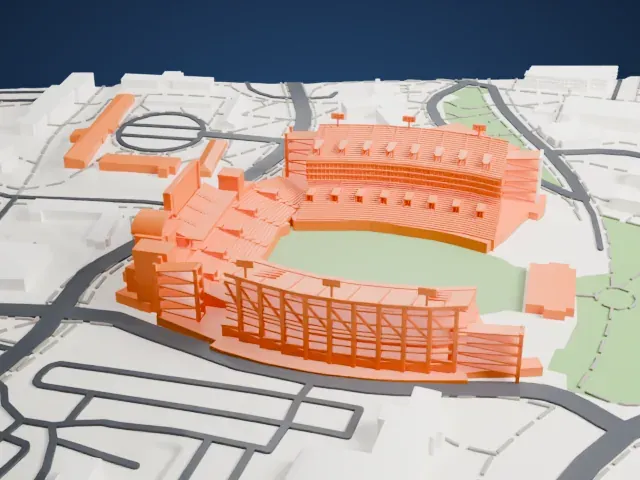 West
- On a 160 mm print
- 15 mm
- Scale
- 1:3,750
15 mm tall on a 160 mm print
Make this print opens the generator on a 600 m square around the landmark. Buildings print at close to true scale, so the landmark grows with the print size.
- Layered upper decks
The tall stands are built from many thin steps and supports. A bigger print keeps more of them, and layers of 0.12 to 0.16 mm keep the stepped rows crisp.
- Light masts on the roof edge
Small light masts stand along the top of the stands. Print friendly adapts these thin parts to the print scale; Full detail keeps them, which suits a larger print.
- One piece with the ground
Davis Wade Stadium is joined to the ground in the exported file, and the four-side check found no floating parts, so nothing needs gluing.
- Pick the detail for your nozzle
In the Buildings settings, set Landmark detail to Print friendly to adapt thin parts and small details to the print scale. Full detail keeps every modeled feature, for larger prints or a finer nozzle.
- Colors
Buildings, roads, water and ground arrive as separate filament slots in the 3MF. Davis Wade Stadium takes the building color.
- File format
You get a 3MF for Bambu Studio, OrcaSlicer or PrusaSlicer. Any of them can save it as STL if you need one.
About Davis Wade Stadium
Davis Wade Stadium is where the Mississippi State Bulldogs football team plays its home games; it carries the full name Davis Wade Stadium at Scott Field. It was first built in 1914 as New Athletic Field, replacing Hardy Field, and its first game was a 54-0 Mississippi State win over Marion Military Institute on October 3, 1914. In the Football Bowl Subdivision only Georgia Tech's Bobby Dodd Stadium is older, and across all of college football it is the fourth-oldest, after Franklin Field at Penn, Harvard Stadium and Bobby Dodd Stadium.
A 1920 student resolution named the field Scott Field, after Donald Scott, who ran middle distances at the Olympics and was among the university's football stars of 1915 and 1916. Before the 2001 season the stadium took the name Davis Wade Stadium, after supporter Floyd Davis Wade Sr., a co-founder of Aflac, who made a large financial contribution toward its expansion. The playing surface kept the name Scott Field.
Concrete stands for 8,000 people went up along the west sideline in 1936, built with WPA labor. A $7.2 million expansion in 1986 added almost 9,000 seats, mainly a 5,500-seat upper deck. A $50 million expansion finished in 2002 brought a second upper deck with 7,000 seats, along with 1,700 club-level seats and 50 skyboxes. An expansion in August 2014, costing $75 million, created a new west side concourse. Fans are known for ringing cowbells, and many tailgate at the Junction, a grassy park on the south side.
About this model
Davis Wade Stadium is one of more than 4,300 landmark models in Mini Skyline. They are made with AI, and each one is checked from four sides in its real surroundings before release. Everything around it is built from OpenStreetMap and Overture map data. If you would rather print the shape from map data, turn off Landmark models in the Buildings settings.
Keep exploring