3D print Dodger Stadium
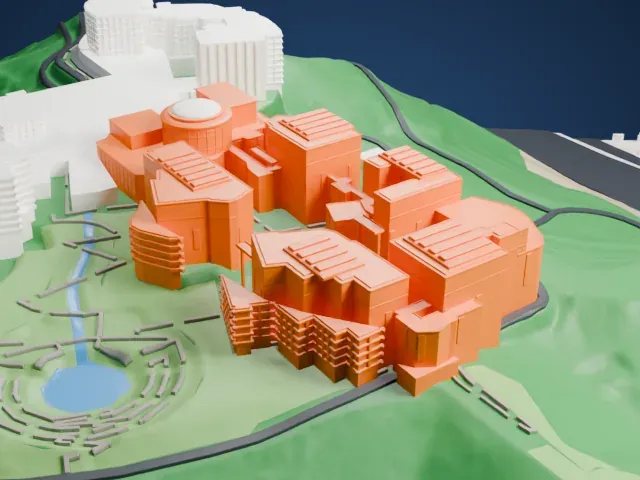
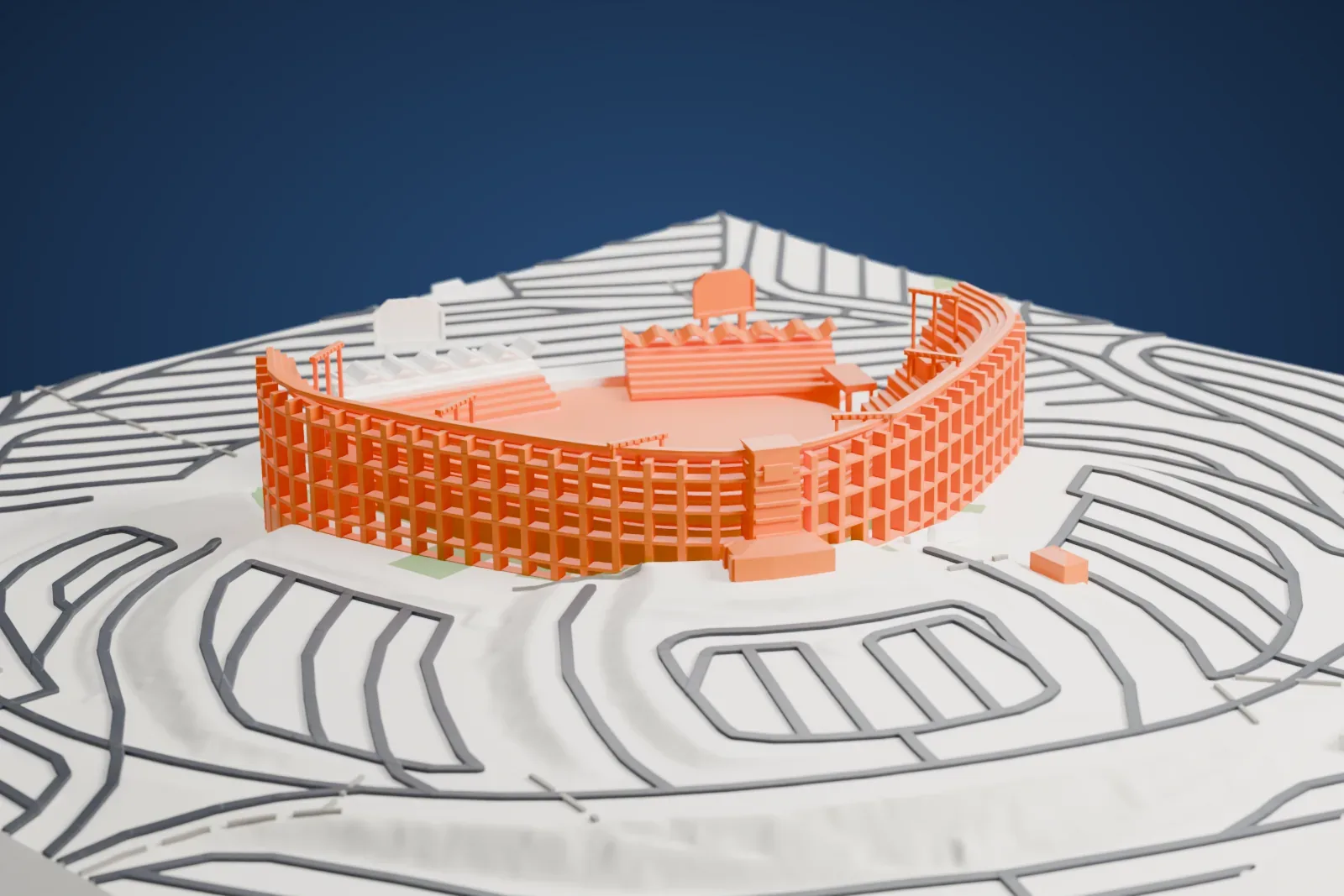
A free, printable model of Dodger Stadium and the curving roads around it on sloping ground, generated from real map data in your browser.
-
 North
-
 East
-
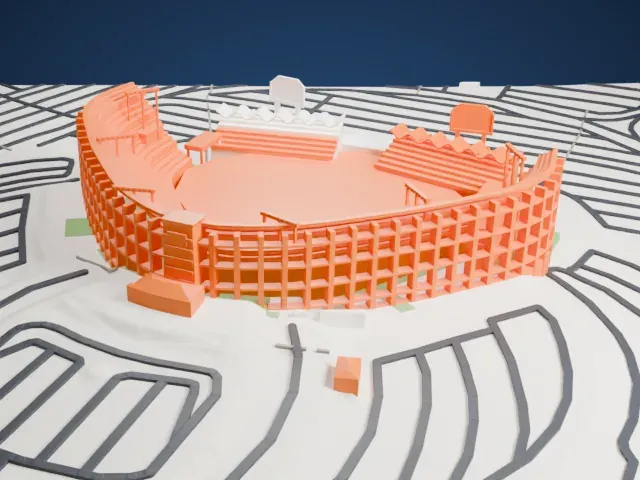 South
-
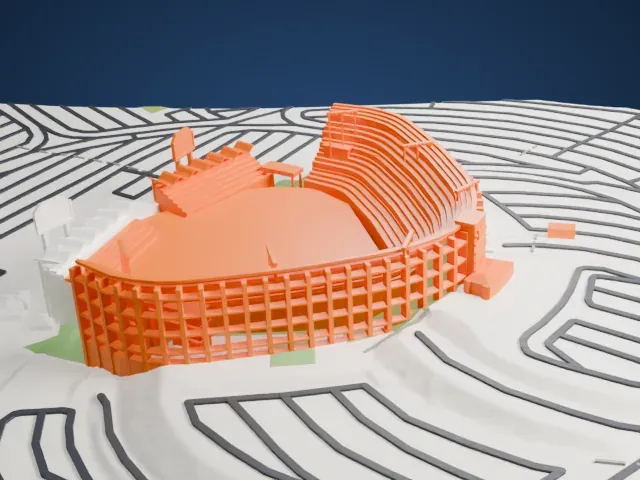 West
- On a 160 mm print
- 20 mm
- Scale
- 1:3,750
20 mm tall on a 160 mm print
Make this print opens the generator on a 600 m square around the landmark. Buildings print at close to true scale, so the landmark grows with the print size.
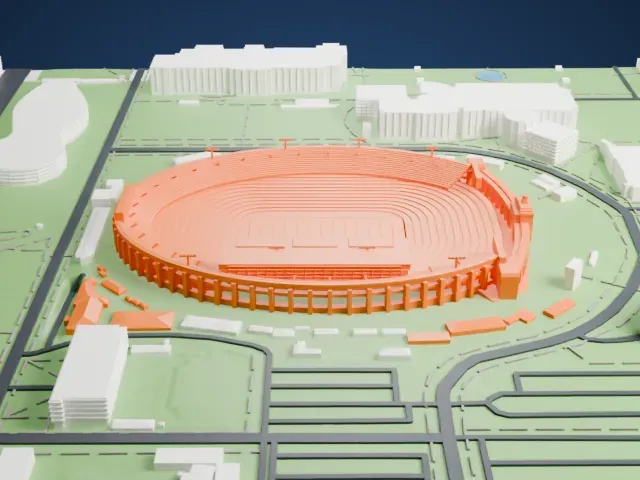
- An open concrete frame
The outer wall is an open grid of columns and floor edges. Print friendly adapts these slender members to the print scale; Full detail keeps every column on a larger print.
- Stepped seating tiers
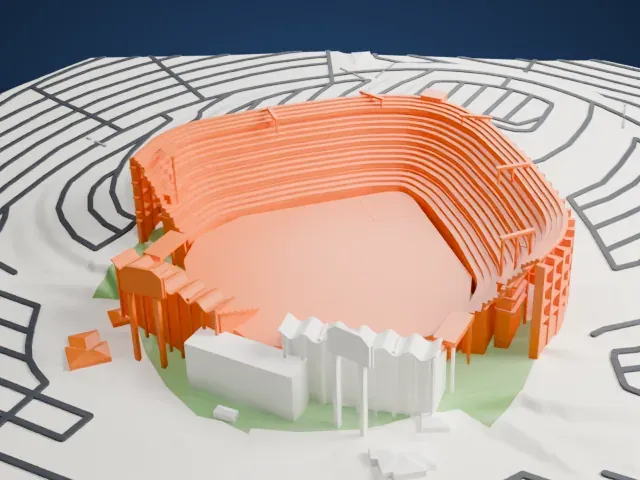
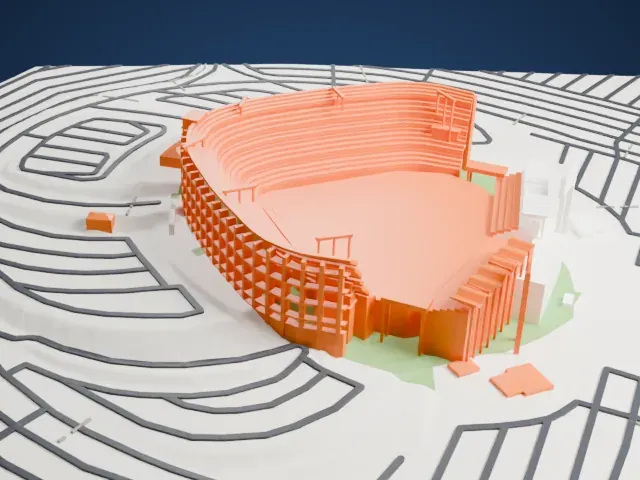
Thin curved seating tiers step up around the bowl. Layers of 0.12–0.16 mm keep the steps crisp, and a larger print size gives them more room.
- Pick the detail for your nozzle
In the Buildings settings, set Landmark detail to Print friendly to adapt thin parts and small details to the print scale. Full detail keeps every modeled feature, for larger prints or a finer nozzle.
- Colors
Buildings, roads, water and ground arrive as separate filament slots in the 3MF. Dodger Stadium takes the building color.
- File format
You get a 3MF for Bambu Studio, OrcaSlicer or PrusaSlicer. Any of them can save it as STL if you need one.
About Dodger Stadium
Dodger Stadium is a baseball park in Los Angeles, California, in the Elysian Park neighborhood, where Major League Baseball's Los Angeles Dodgers play. It opened in 1962 after construction that took less than three years and cost US$23 million. Among MLB parks west of the Mississippi River it is the oldest, and only Fenway Park (Boston, 1912) and Wrigley Field (Chicago, 1914) are older anywhere in the league. No other baseball stadium in the world has a larger seat capacity.
Ground was broken on September 17, 1959. Crews cut the tops off local ridges and used the soil to fill Sulfur and Cemetery Ravines, which gave them a level surface for the stadium and its parking lot. A total of 6,100,000 m3 (8 million cubic yards) of earth was shifted. The frame was assembled from 21,000 precast concrete units, some as heavy as 32 tons, made on site and set in place by a specially built crane. Its upper decks were designed so they could be extended over the outfield pavilions to reach 85,000 seats, but the Dodgers have never done so.
People often call the stadium Chavez Ravine, after the geographic feature it sits in, and former Dodgers manager Tommy Lasorda coined the nickname "Blue Heaven on Earth". It is often described as a "pitcher's ballpark", and 13 no-hitters have been thrown there, two of them perfect games. It has hosted the 1980 and 2022 All-Star Games, exhibition baseball at the 1984 Summer Olympics, and the 2009 and 2017 World Baseball Classic semifinals and finals. The Los Angeles Angels also played there from 1962 through 1965.
About this model
Dodger Stadium is one of more than 4,300 landmark models in Mini Skyline. They are made with AI, and each one is checked from four sides in its real surroundings before release. Everything around it is built from OpenStreetMap and Overture map data. If you would rather print the shape from map data, turn off Landmark models in the Buildings settings.
Same skyline