3D print Folsom Field
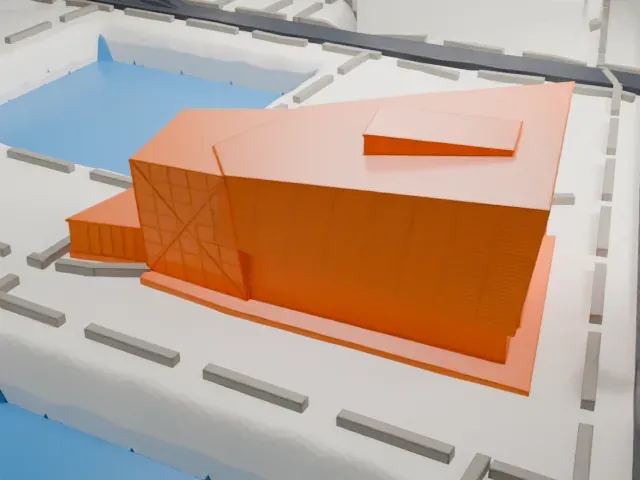
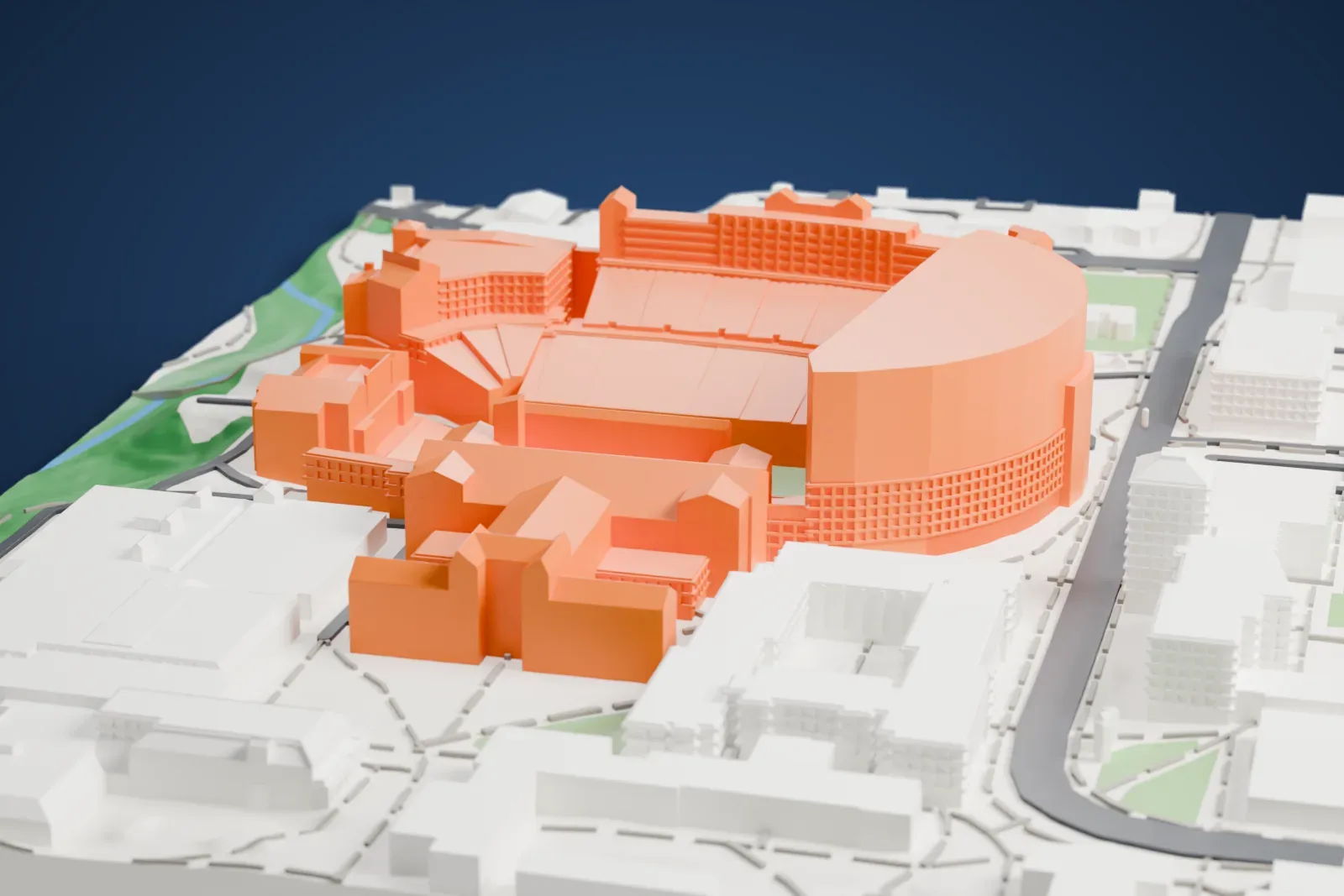
A free, printable model of the horseshoe-shaped bowl with its sloping seating rows and arched facade, set among the buildings, roads and green lawns around it, generated from real map data in your browser.
-
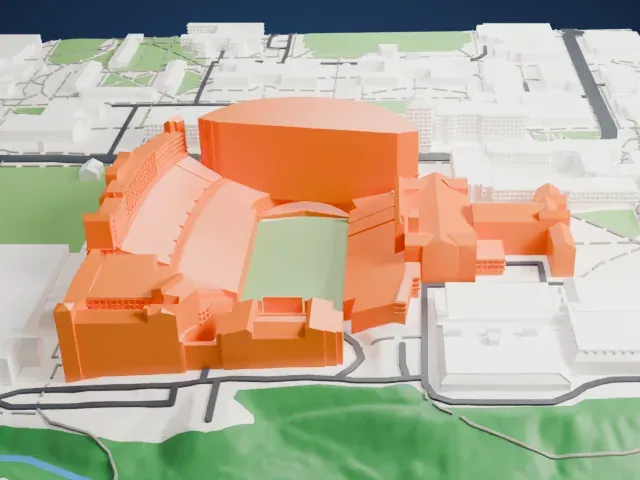 North
-
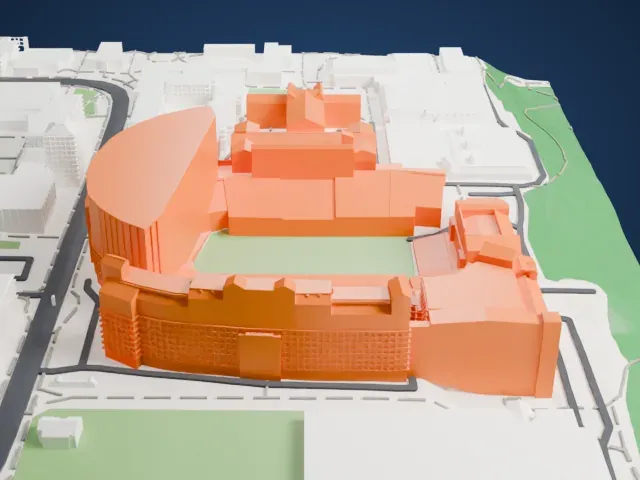 East
-
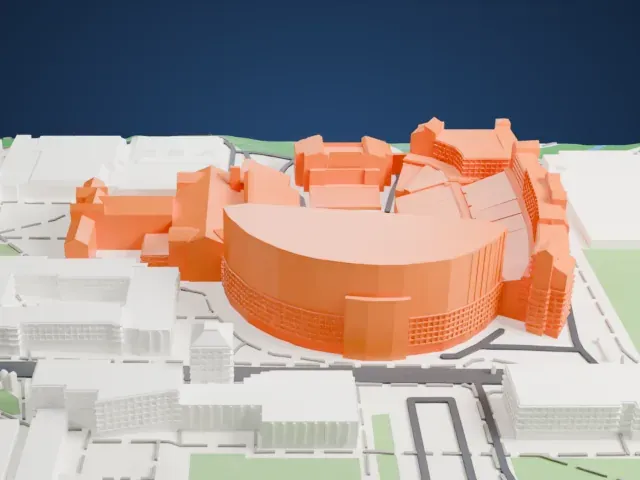 South
-
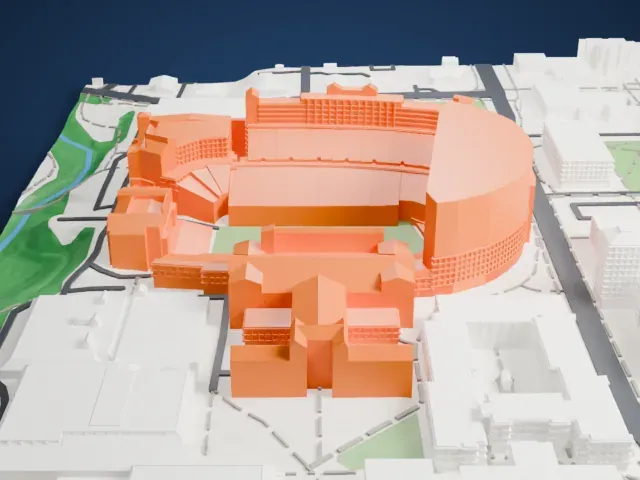 West
- On a 160 mm print
- 18 mm
- Scale
- 1:3,750
18 mm tall on a 160 mm print
Make this print opens the generator on a 600 m square around the landmark. Buildings print at close to true scale, so the landmark grows with the print size.
- Small towers on the east facade
Several small tower-like pylons rise above the arched east facade. Print friendly adapts these small details to your print scale; Full detail keeps them, which suits a larger print.
- Many narrow seating rows
The horseshoe bowl is built from many narrow rows. Layers of 0.12 to 0.16 mm keep them crisp, and a larger print gives each row more width.
- One piece with the ground
Folsom Field is joined to the ground in the exported file, and the four-side check found no floating parts, so nothing needs gluing.
- Pick the detail for your nozzle
In the Buildings settings, set Landmark detail to Print friendly to adapt thin parts and small details to the print scale. Full detail keeps every modeled feature, for larger prints or a finer nozzle.
- Colors
Buildings, roads, water and ground arrive as separate filament slots in the 3MF. Folsom Field takes the building color.
- File format
You get a 3MF for Bambu Studio, OrcaSlicer or PrusaSlicer. Any of them can save it as STL if you need one.
About Folsom Field
Folsom Field, an outdoor college football venue, stands on the University of Colorado campus in Boulder, Colorado, in the western United States. It is where the Colorado Buffaloes, a Big 12 team, play at home. The horseshoe-shaped stadium opened in 1924 and runs north–south, with its open end facing north. The field sits 1,635 m (5,360 ft) above sea level, more than a mile up.
Gamble Field was Colorado's football home for two decades, through the opening game of the 1924 season. The new stadium opened that October 11 as Colorado Stadium. It was also unofficially called Norlin Stadium, although President George Norlin did not want it named for him. In 1944, after the death of Fred Folsom, a former head coach, it was renamed Folsom Field; he had led the team for fifteen seasons, with a 78–24–2 record overall. The stadium was officially rechristened at the 1946 homecoming game. In 2008 it was the first stadium in the NCAA to go "zero-waste", through a rigorous recycling and composting program.
When it opened in 1924 the stadium held 26,000. A big expansion in 1956 made the structure taller, lifting capacity to 45,000. Taking out the running track in 1967 made room for six thousand more seats, and in 1968 a six-level press box went up on the west grandstand. In 1976 aluminum bleachers replaced old wooden ones, raising capacity to 52,005. Before the 2016 season, a $156 million initiative included a complete rebuild of the north end zone. The largest crowd ever, an estimated 61,500, came for a 1977 Colorado Sun Day rock concert. The Bolder Boulder 10K run uses Folsom Field as its finish line.
About this model
Folsom Field is one of more than 4,300 landmark models in Mini Skyline. They are made with AI, and each one is checked from four sides in its real surroundings before release. Everything around it is built from OpenStreetMap and Overture map data. If you would rather print the shape from map data, turn off Landmark models in the Buildings settings.
Keep exploring