3D print LaVell Edwards Stadium
A free, printable model of LaVell Edwards Stadium, its tiered sideline grandstands and roof lamp frames, with the playing field, roads and parking lots around it, generated from real map data in your browser.
-
 North
-
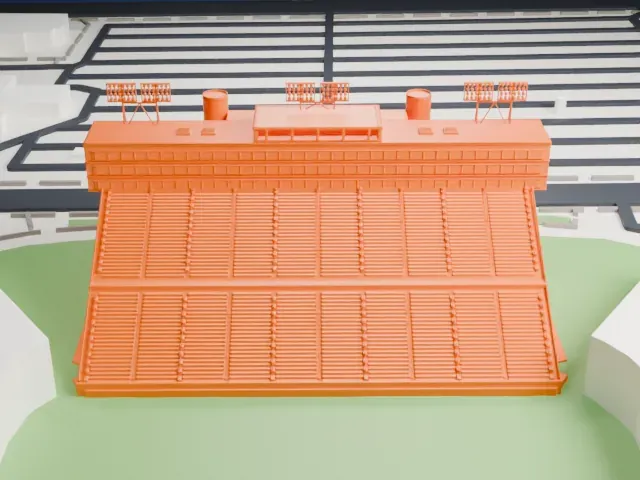 East
-
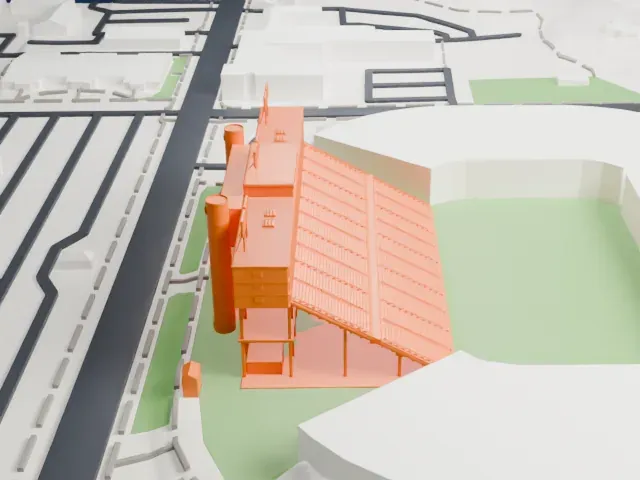 South
-
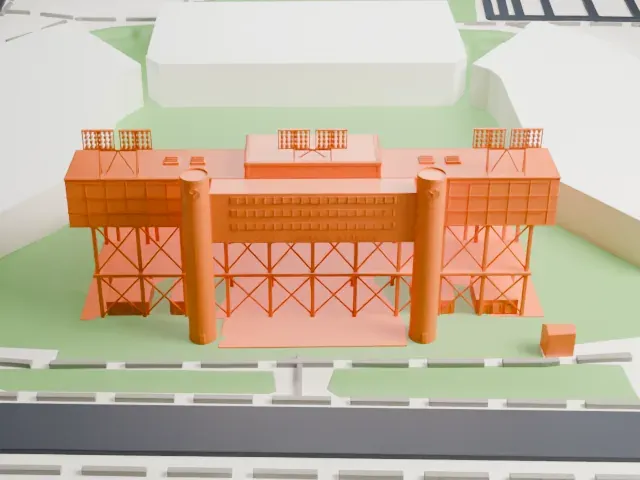 West
The model you print
LaVell Edwards Stadium in 3D
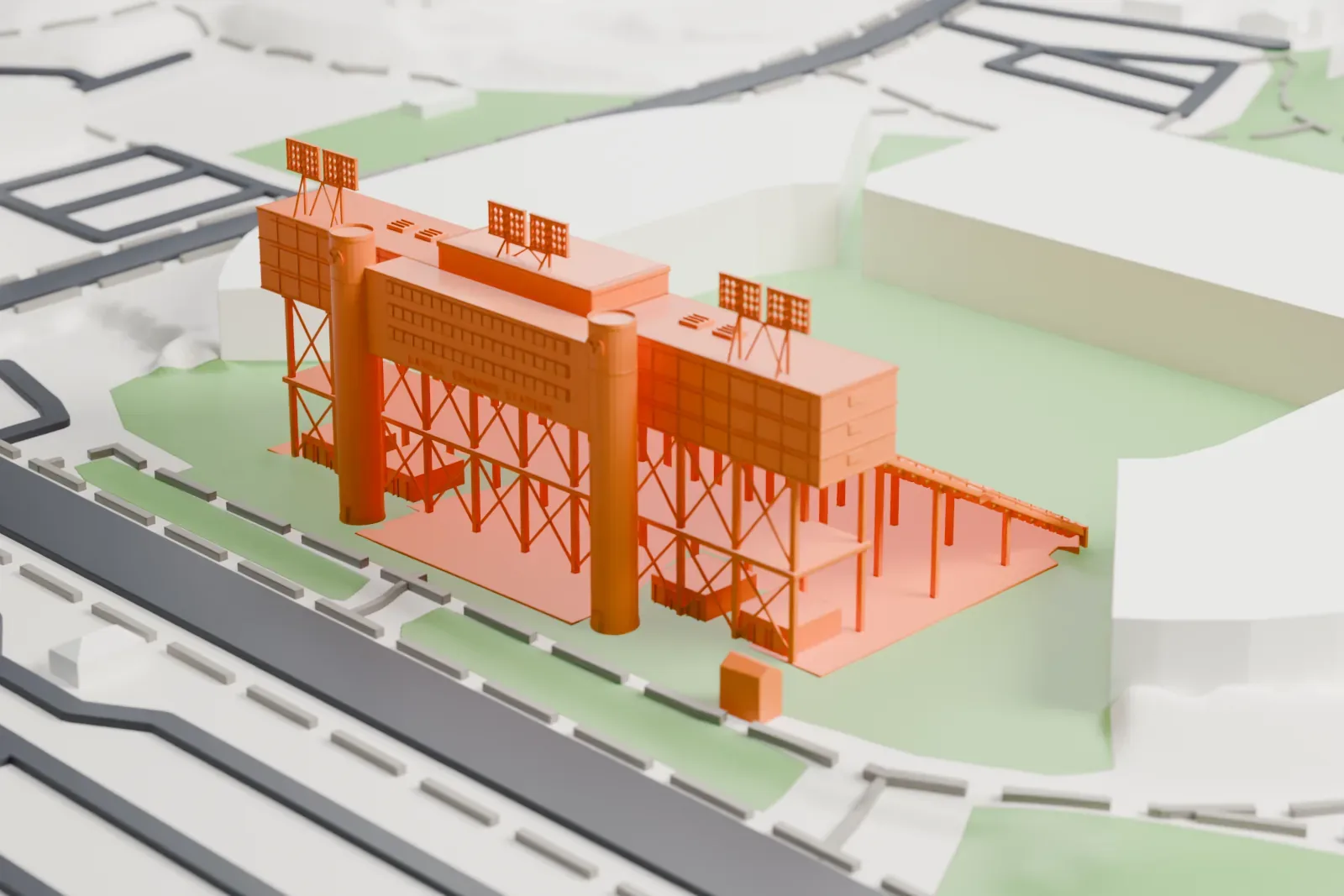
The landmark on its own, at its size on a 160 mm print. Print friendly thickens thin parts for a 0.4 mm nozzle; Full detail keeps every part.
- On a 160 mm print
- 14 mm
- Scale
- 1:3,750
14 mm tall on a 160 mm print
Make this print opens the generator on a 600 m square around the landmark. Buildings print at close to true scale, so the landmark grows with the print size.
- Many fine seating rows
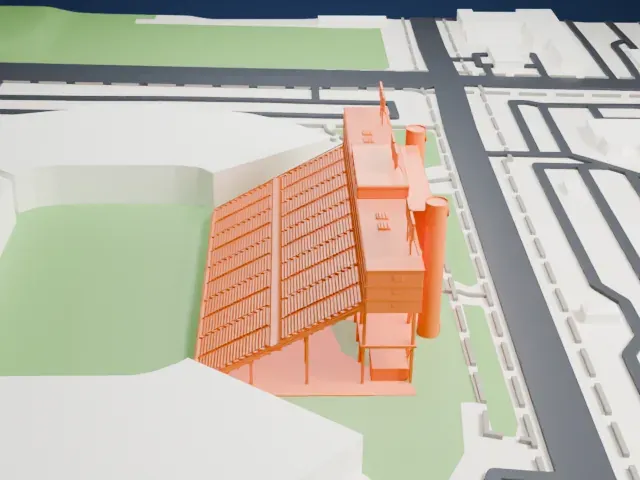
The sideline grandstands are built from many fine tiers. A larger print and a layer height of 0.12 to 0.16 mm keep the rows easier to read.
- Lamp frames and cross-bracing
Small lamp frames sit on the roofs, and the west stand rests on cross-braced supports. Print friendly adapts thin parts like these to your print scale; Full detail keeps them, best on a larger print.
- One piece with the ground
LaVell Edwards Stadium is joined to the ground in the exported file, and the four-side check found no floating parts, so nothing needs gluing.
- Pick the detail for your nozzle
In the Buildings settings, set Landmark detail to Print friendly to adapt thin parts and small details to the print scale. Full detail keeps every modeled feature, for larger prints or a finer nozzle.
- Colors
Buildings, roads, water and ground arrive as separate filament slots in the 3MF. LaVell Edwards Stadium takes the building color.
- File format
You get a 3MF for Bambu Studio, OrcaSlicer or PrusaSlicer. Any of them can save it as STL if you need one.
About LaVell Edwards Stadium
Brigham Young University's football team, the BYU Cougars, plays at LaVell Edwards Stadium, an open-air stadium on the BYU campus in Provo, Utah. It was called Cougar Stadium when it opened in 1964, and in 2000 it was renamed as a tribute to LaVell Edwards, the Hall of Fame coach who won a national championship at BYU. Edwards (1930–2016) led the team for 29 seasons as head coach, after ten as an assistant, and the renaming took place right before his final home game in charge.
Built at the campus's north end, the stadium replaced a far smaller venue of 5,000 seats that shared its name. The inaugural game, played on the night of Friday, October 2, 1964, drew 33,610 people, a state record. The original stadium equaled the lower half of the grandstand seating, holding just over 28,800. In 1982 it grew to hold over 65,000: permanent concrete end-zone stands took the place of temporary bleachers, the running track was removed, and the field was dropped by 8 feet (2.4 m).
The luxury seating added in 2003 uses blue and white seats that spell out BYU in block letters. Outdoor meets of BYU's track and field teams took place at the stadium until 1982, and it was the site of NCAA championship meets in both 1967 and 1975. A portion of the biggest Jurassic fossil collection in North America, kept at BYU, lay under the east bleachers until 2005. In the 2002 Winter Olympics, the parking lot doubled as a park-and-ride facility for spectators heading to Soldier Hollow and the Peaks Ice Arena.
About this model
LaVell Edwards Stadium is one of more than 5,500 landmark models in Mini Skyline. They are made with AI, and each one is checked in its real surroundings before release. Each model is written as code from public descriptions, plans, photographs and aerial views used only as references; no image or third-party model is copied into it. Everything around it is built from OpenStreetMap and Overture map data. Rights in the building itself, its name and any brands on it are not granted by Mini Skyline; clear them separately before you sell prints. If you would rather print the shape from map data, turn off Landmark models in the Buildings settings.
Outside the United States this design may still be protected; check the rules where you sell.
Mini Skyline is not affiliated with, or endorsed by, the owners of this building or its names and marks.
Keep exploring