3D print the Verona Arena
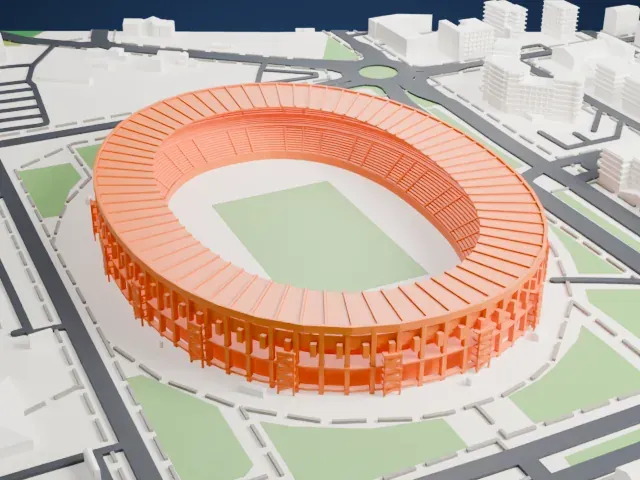
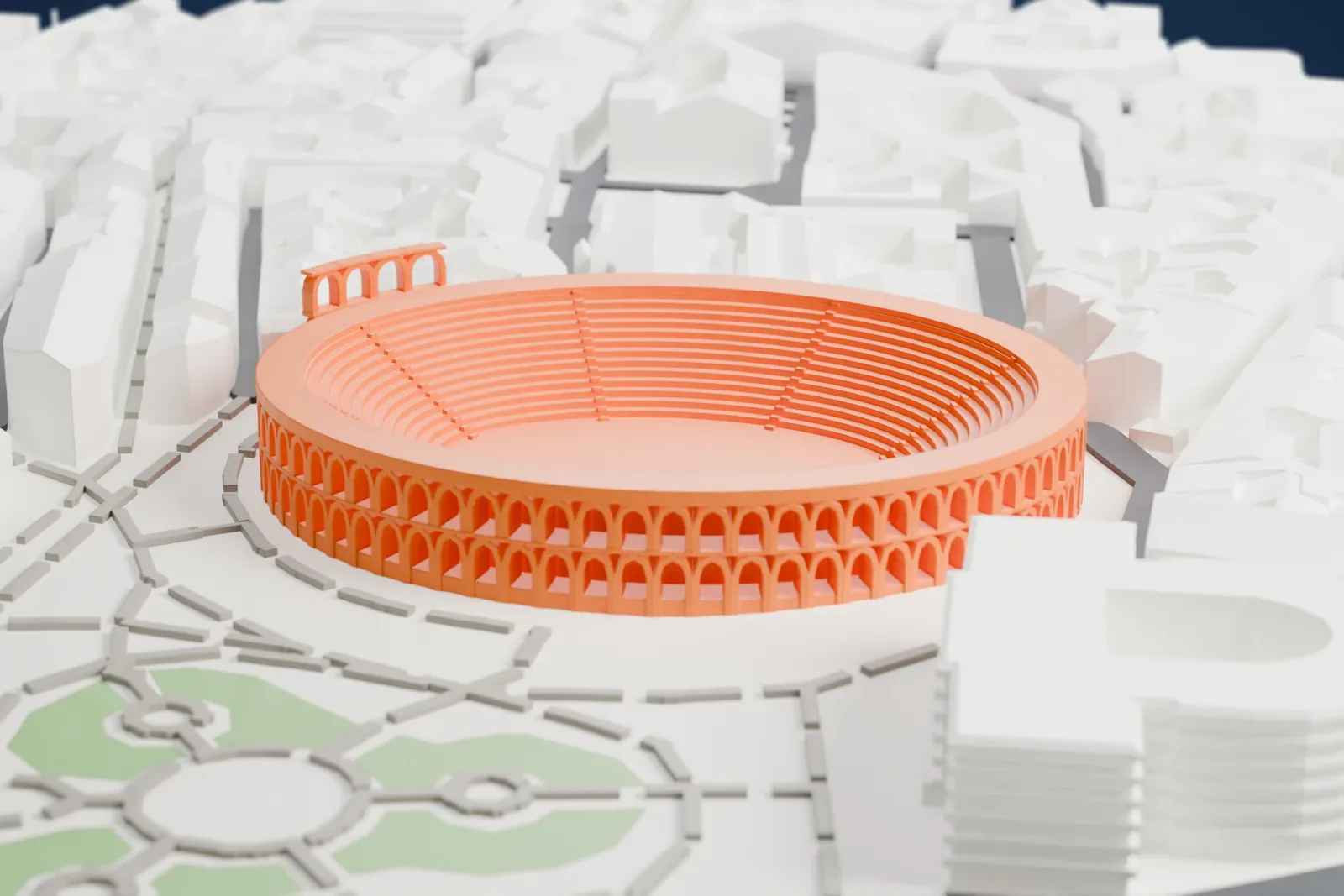
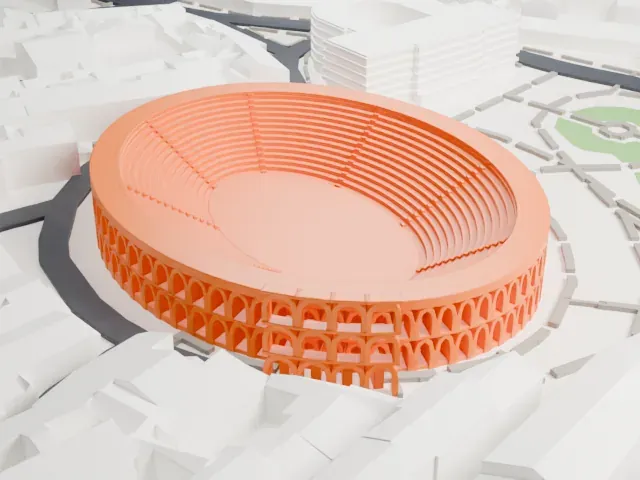
A free, printable model of the oval amphitheater with its rings of arches and stepped seating, with the dense buildings, streets and park around it, generated from real map data in your browser.
-
 North
-
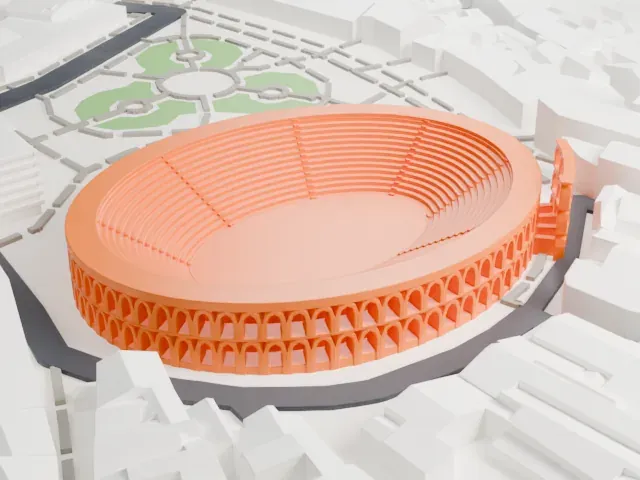 East
-
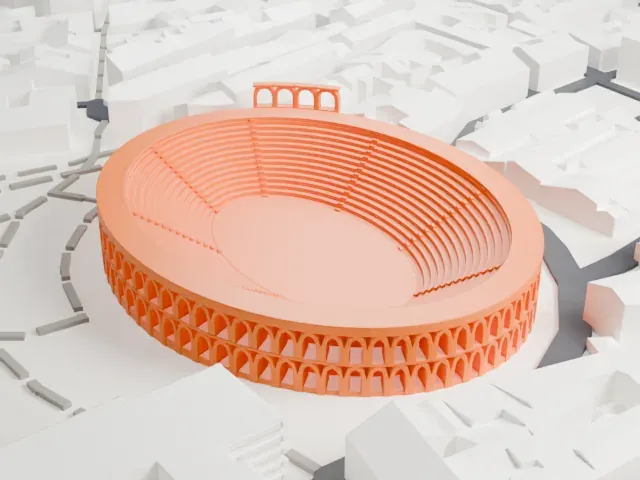 South
-
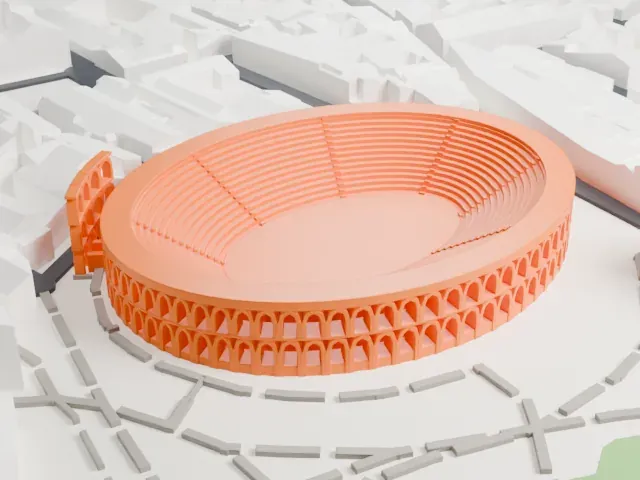 West
- Real height
- 31 m
- On a 160 mm print
- 8 mm
- Scale
- 1:3,750
31 m of the Verona Arena, 8 mm on your shelf
Make this print opens the generator on a 600 m square around the landmark. Buildings print at close to true scale, so the landmark grows with the print size.
- Two rings of small arches
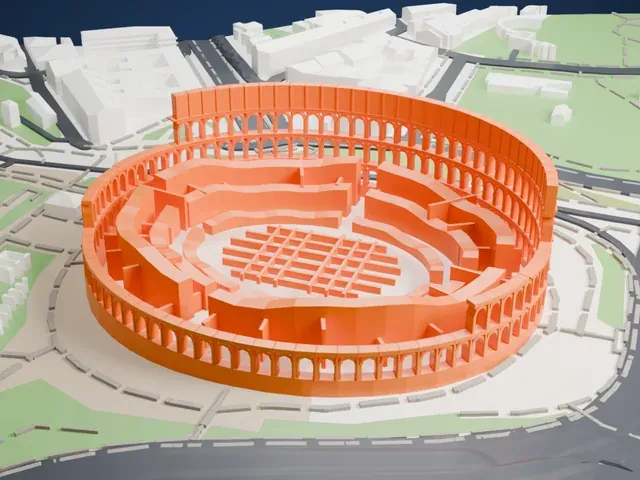
The outer wall is a double ring of small arches. Print friendly adapts them to your print scale; Full detail keeps every arch, which suits larger prints and a fine nozzle.
- Thin stepped seating rows
Inside, the seating is drawn as many thin stepped rows. A larger print keeps them readable, and layers of 0.12 to 0.16 mm keep their edges crisp.
- One piece with the ground
The Verona Arena is joined to the ground in the exported file, and the four-side check found no floating parts, so nothing needs gluing.
- Pick the detail for your nozzle
In the Buildings settings, set Landmark detail to Print friendly to adapt thin parts and small details to the print scale. Full detail keeps every modeled feature, for larger prints or a finer nozzle.
- Colors
Buildings, roads, water and ground arrive as separate filament slots in the 3MF. The Verona Arena takes the building color.
- File format
You get a 3MF for Bambu Studio, OrcaSlicer or PrusaSlicer. Any of them can save it as STL if you need one.
About the Verona Arena
The Verona Arena, a Roman amphitheater, stands in Verona, Italy, inside the historic center. It is one of the best preserved ancient amphitheaters to reach the modern era, largely thanks to systematic restoration begun in the 16th century. In summer it hosts the Arena di Verona Festival, whose opera seasons have run without interruption, except for wars, since 1913. For the other months it works as a concert venue.
Nothing written records when the amphitheater was built, so proposed dates run between the 1st and 3rd centuries. Pirro Marconi inferred that it was finished by approximately 30 AD. Scholars compare it with the amphitheater of Pula, which shares stylistic and technical similarities and is usually placed in the Augustan period. Both predate the Colosseum. By 69 AD the Verona arena already stood. The city walls were inadequate then, partly because the amphitheater lay just outside them, so Vespasian ordered a rampart and a moat.
In 265, Emperor Gallienus had a new 550-meter section of wall built to enclose the Arena. In 312, during the war between Constantine and Maxentius, the amphitheater was a stronghold for the defenders because it stood higher than those walls. Few documents describe the spectacles held there, and the only surviving literary record is a letter from Pliny the Younger. Several funerary inscriptions for gladiators killed in combat there have also turned up. One names the secutor Aedonius, who took part in eight fights in Verona and died aged twenty-six.
About this model
The Verona Arena is one of more than 4,300 landmark models in Mini Skyline. They are made with AI, and each one is checked from four sides in its real surroundings before release. Everything around it is built from OpenStreetMap and Overture map data. If you would rather print the shape from map data, turn off Landmark models in the Buildings settings.
Keep exploring