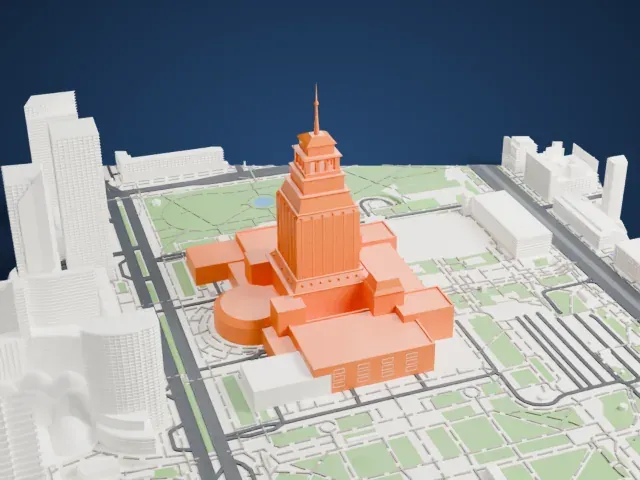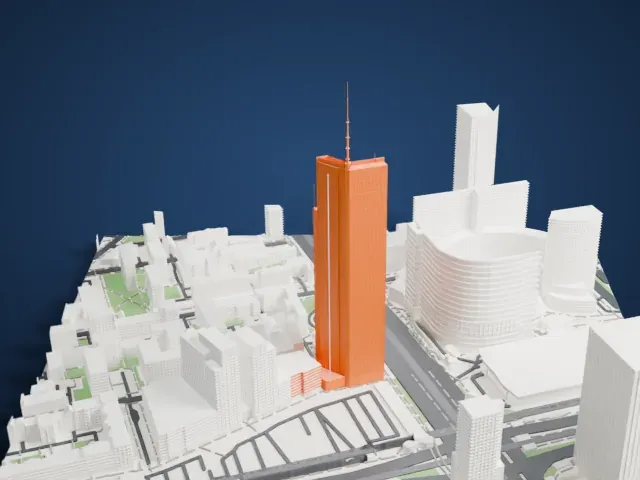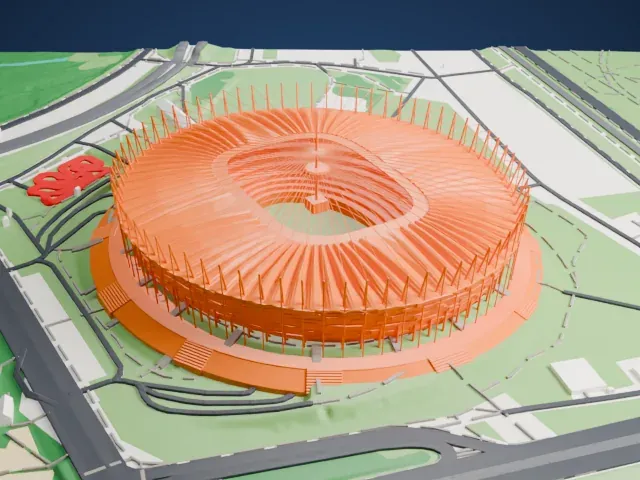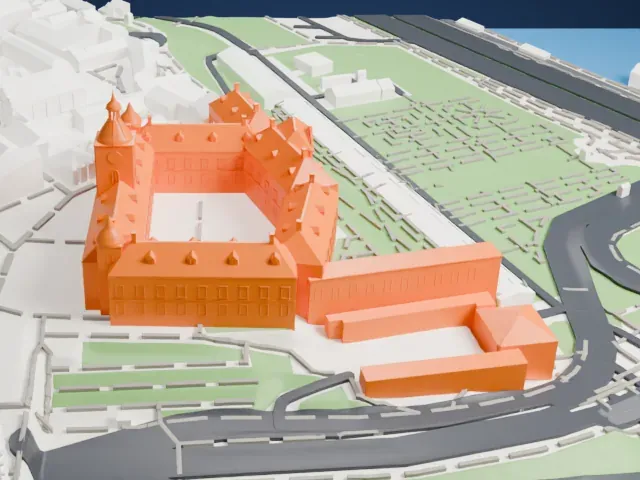
3D print the Czapski Palace
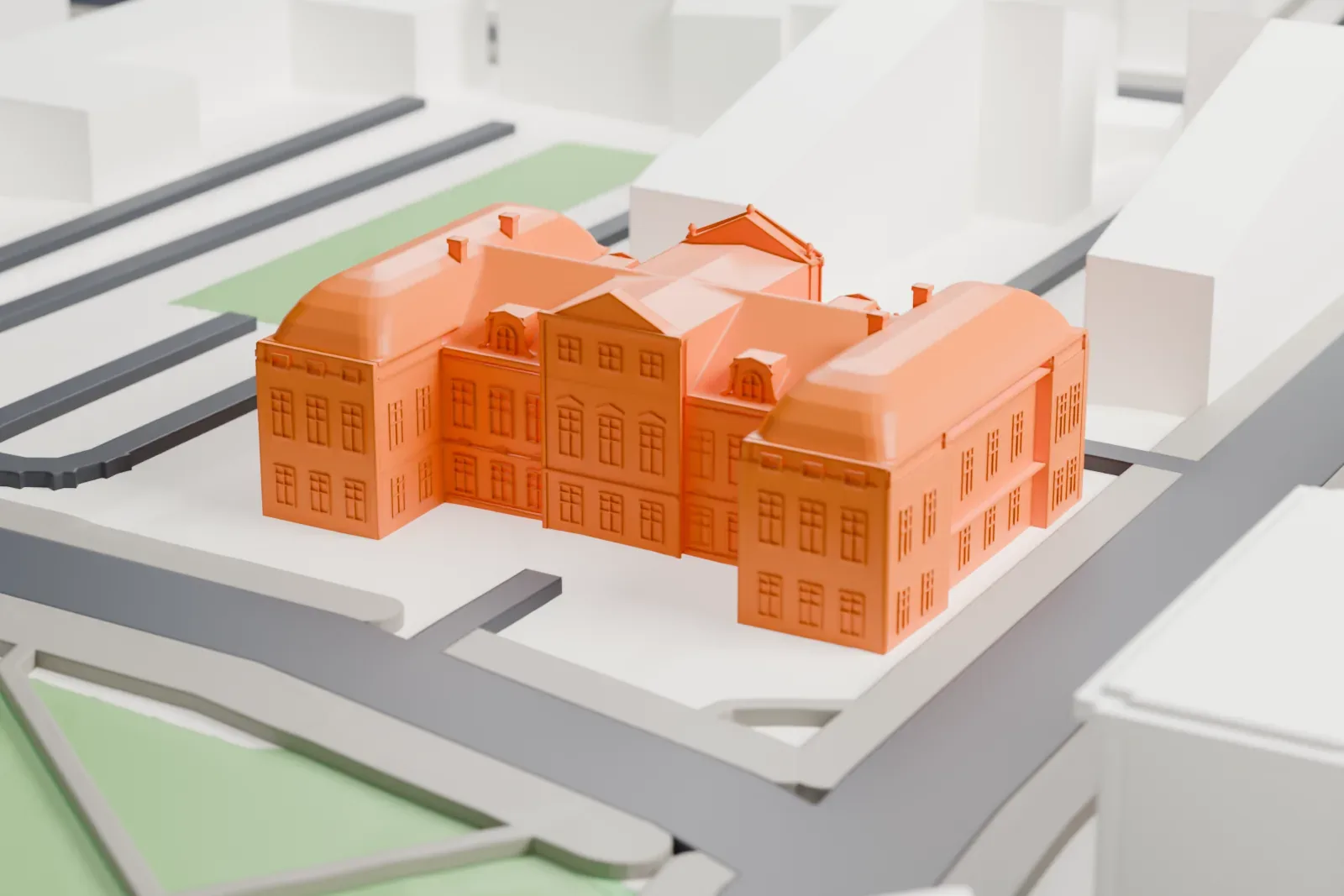
A free, printable 3D model of the Czapski Palace in Warsaw and the surrounding streets and buildings, generated from real map data in your browser.
-
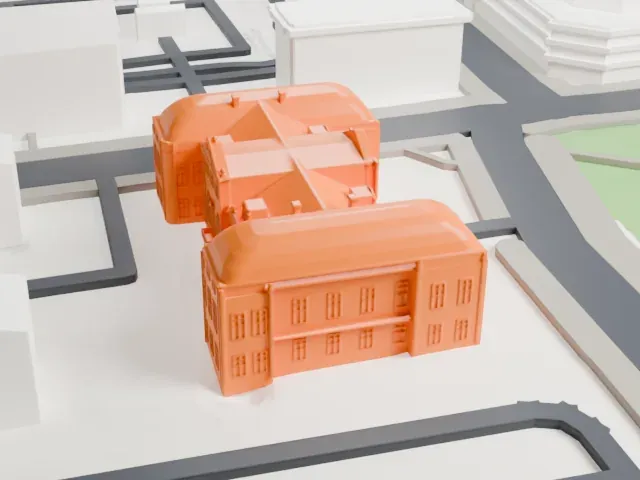 North
-
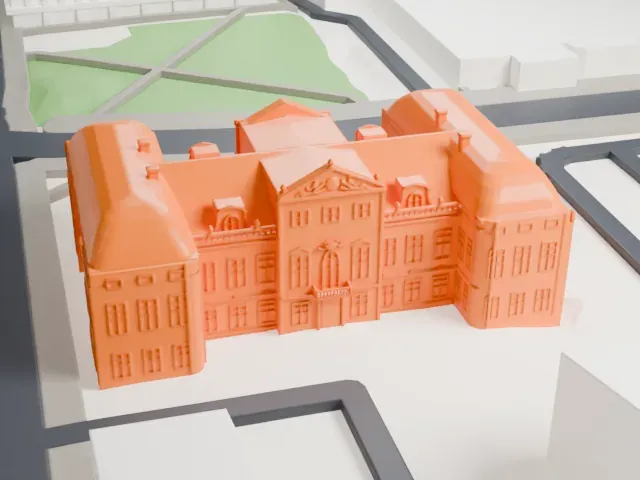 East
-
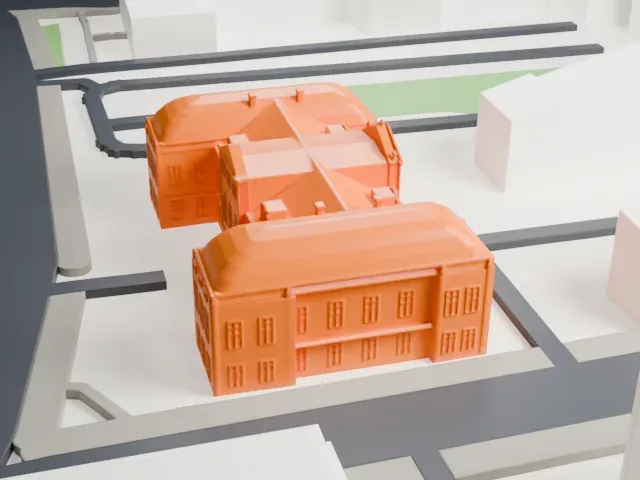 South
-
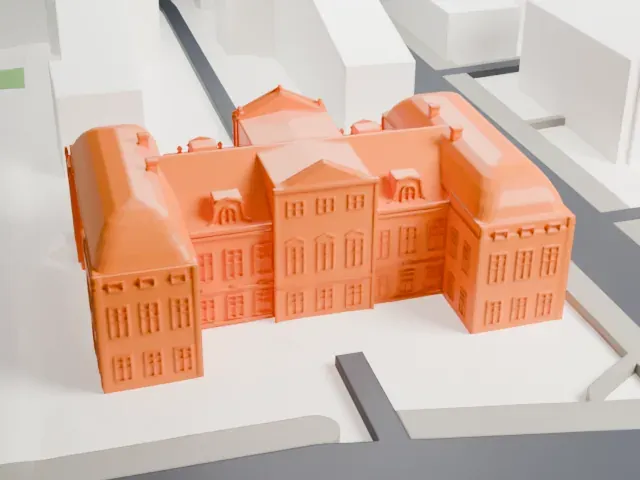 West
The model you print
Czapski Palace in 3D
The landmark on its own, at its size on a 160 mm print. Print friendly thickens thin parts for a 0.4 mm nozzle; Full detail keeps every part.
- On a 160 mm print
- 6 mm
- Scale
- 1:3,750
6 mm tall on a 160 mm print
Make this print opens the generator on a 600 m square around the landmark. Buildings print at close to true scale, so the landmark grows with the print size.
- Small details on a palace
A palace has many small details close together. A larger print keeps them, and Print friendly adapts thin parts to the print scale; Full detail keeps every modeled feature.
- One piece with the ground
The Czapski Palace is joined to the ground in the exported file, and the four-side check found no floating parts, so nothing needs gluing.
- Pick the detail for your nozzle
In the Buildings settings, set Landmark detail to Print friendly to adapt thin parts and small details to the print scale. Full detail keeps every modeled feature, for larger prints or a finer nozzle.
- Colors
Buildings, roads, water and ground arrive as separate filament slots in the 3MF. The Czapski Palace takes the building color.
- File format
You get a 3MF for Bambu Studio, OrcaSlicer or PrusaSlicer. Any of them can save it as STL if you need one.
About the Czapski Palace
The Czapski Palace, a palatial complex at 5 Krakowskie Przedmieście, stands in central Warsaw, facing the University of Warsaw across the street. It was built in about 1686 for Michał Stefan Radziejowski, Catholic Primate of Poland, from plans by Tylman van Gameren, a Polish architect and engineer born in the Netherlands. Rebuilding followed in 1712–1721, and the palace gained its present rococo look in 1752–65. Other names for it have been the Krasiński, Sieniawski and Raczyński Palace.
Many notable people lived here. Stanisław Małachowski, who served as Marshal of the Sejm, co-authored the Constitution of May 3, 1791, the second codified written national constitution in the world and the first in Europe. The artist Zygmunt Vogel lived in the palace from 1808 to 1826, and the poet Zygmunt Krasiński was born here in 1812. Frédéric Chopin lived with his family in the south annex in 1827–30, and the palace was his last home before exile. The poet Cyprian Norwid lived here in 1837–39.
German artillery shelled the palace in 1939 and it burned. Stanisław Brukalski designed its reconstruction in 1948–59, after which the palace passed to the Warsaw Academy of Fine Arts. A copy of Verrocchio's equestrian statue of Bartolomeo Colleoni stands in the courtyard, and the Academy's museum holds 30,000 works in the attic.
About this model
The Czapski Palace is one of more than 5,500 landmark models in Mini Skyline. They are made with AI, and each one is checked from four sides in its real surroundings before release. Each model is written as code from public descriptions, plans, photographs and aerial views used only as references; no image or third-party model is copied into it. Everything around it is built from OpenStreetMap and Overture map data. Rights in the building itself, its name and any brands on it are not granted by Mini Skyline; clear them separately before you sell prints. If you would rather print the shape from map data, turn off Landmark models in the Buildings settings.
Same skyline