3D print the Gurk Cathedral
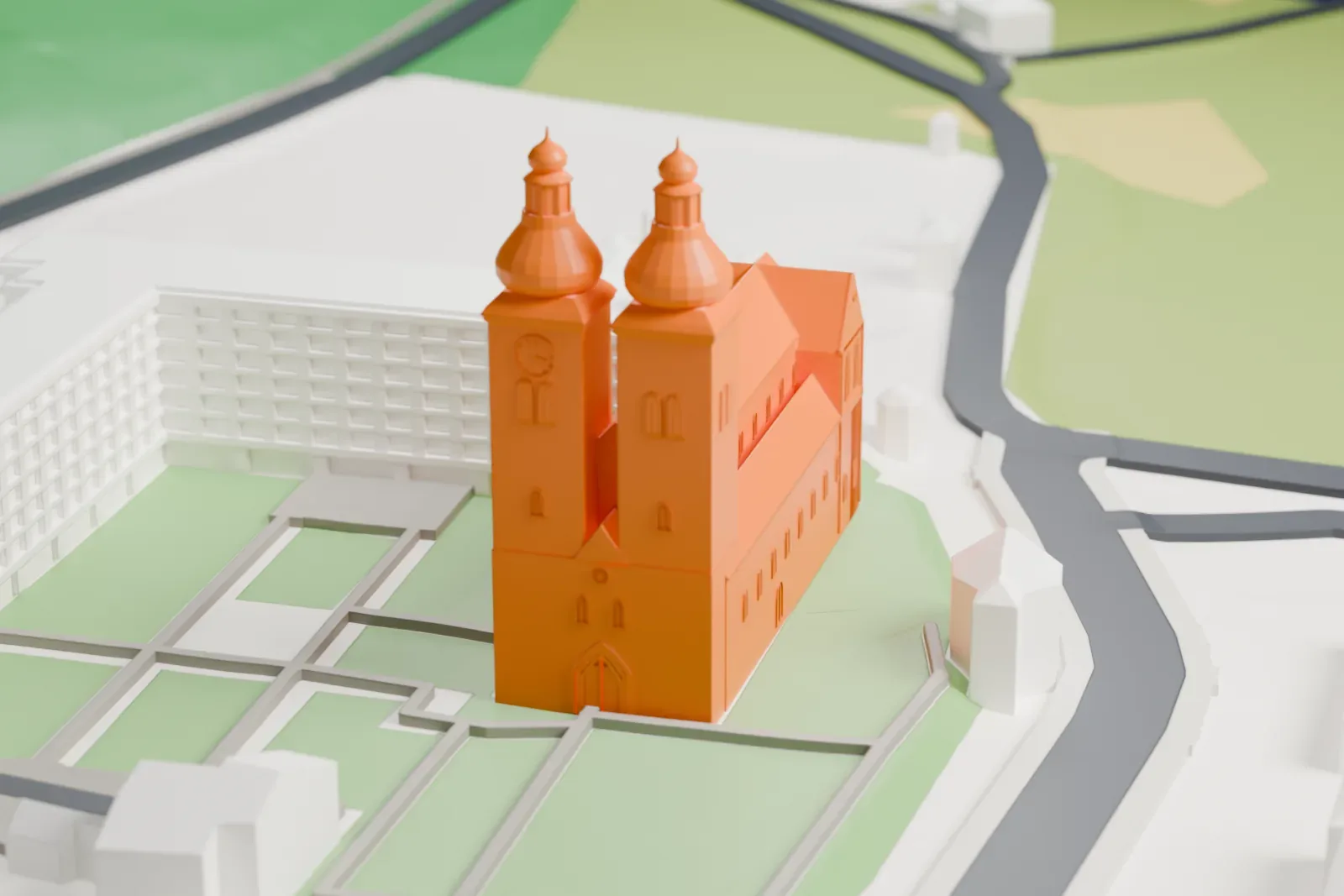
A free, printable model of Gurk Cathedral, a long church with two tall towers topped by bulbous caps, with the grass, paths and large buildings around it, generated from real map data in your browser.
-
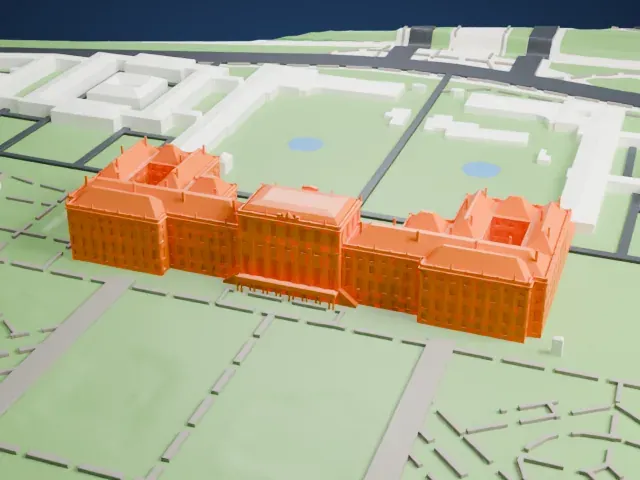
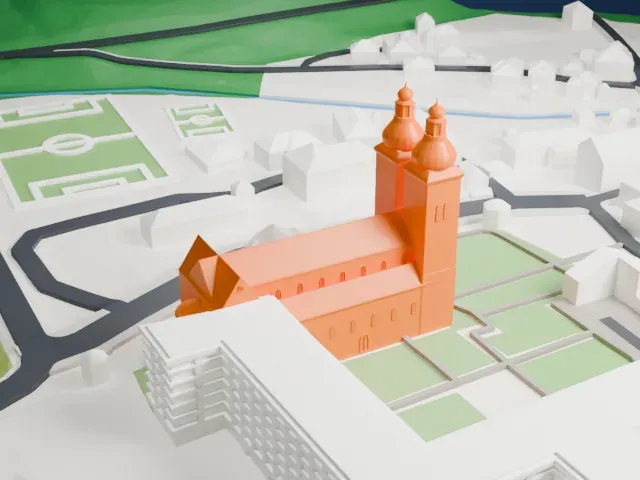 North
-
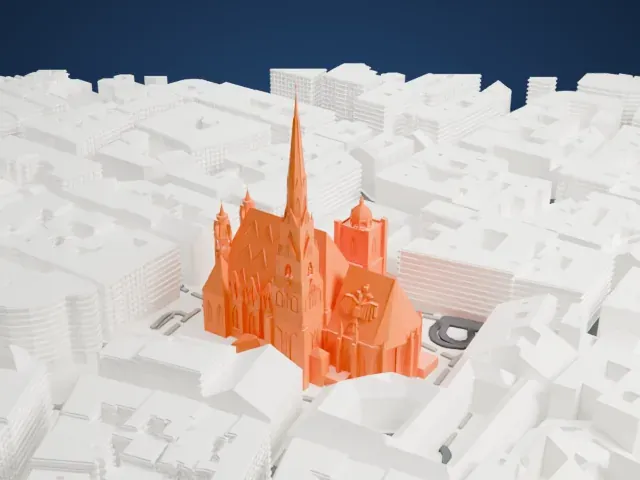
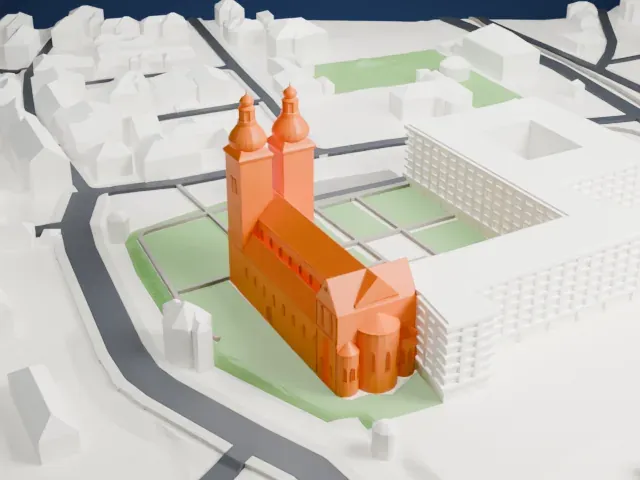 East
-
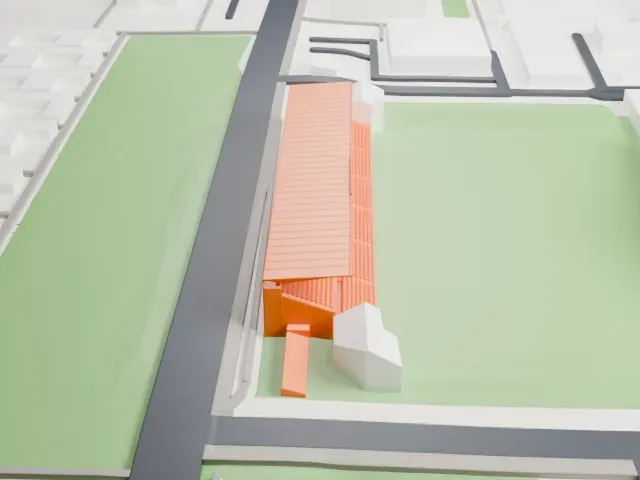
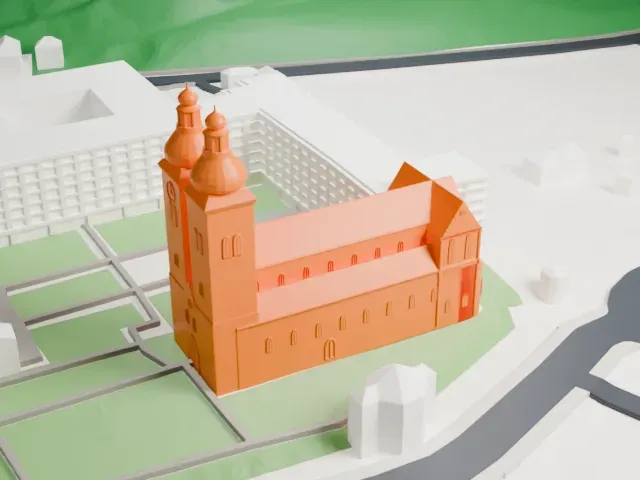 South
-
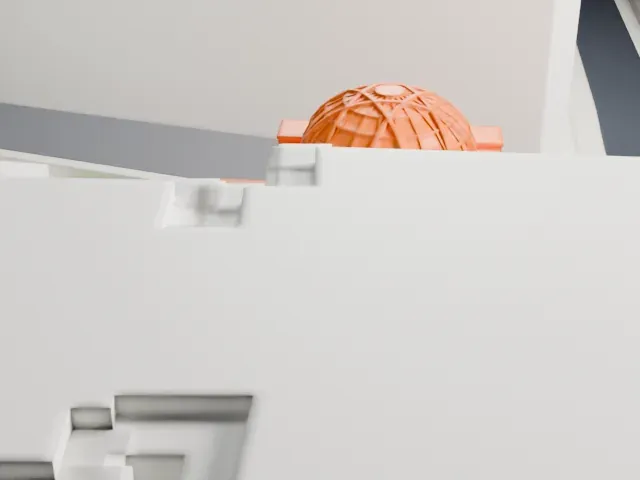
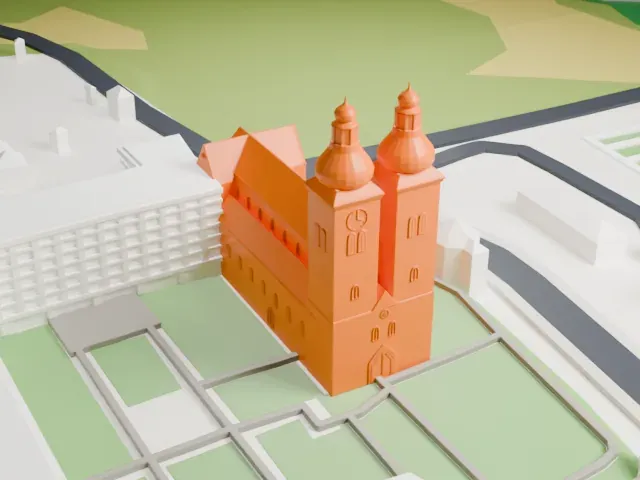 West
The model you print
Gurk Cathedral in 3D
The landmark on its own, at its size on a 160 mm print. Print friendly thickens thin parts for a 0.4 mm nozzle; Full detail keeps every part.
- Real height
- 60 m
- On a 160 mm print
- 16 mm
- Scale
- 1:3,750
60 m of the Gurk Cathedral, 16 mm on your shelf
Make this print opens the generator on a 600 m square around the landmark. Buildings print at close to true scale, so the landmark grows with the print size.
- Twin towers with bulbous caps
Two tall towers end in bulbous caps with small lanterns. Print friendly adapts the thin tips to the print scale; Full detail keeps them on a larger print. Printing slowly helps tall thin parts.
- Rounded apses and small windows
Three rounded apses and rows of narrow windows add fine detail. A layer height of 0.12–0.16 mm and a bigger print size keep them crisp.
- One piece with the ground
The Gurk Cathedral is joined to the ground in the exported file, and the four-side check found no floating parts, so nothing needs gluing.
- Pick the detail for your nozzle
In the Buildings settings, set Landmark detail to Print friendly to adapt thin parts and small details to the print scale. Full detail keeps every modeled feature, for larger prints or a finer nozzle.
- Colors
Buildings, roads, water and ground arrive as separate filament slots in the 3MF. The Gurk Cathedral takes the building color.
- File format
You get a 3MF for Bambu Studio, OrcaSlicer or PrusaSlicer. Any of them can save it as STL if you need one.
About the Gurk Cathedral
In Carinthia, an Austrian state, the town of Gurk has a Romanesque pillar basilica, Gurk Cathedral (Dom zu Gurk). It was built from 1140 to 1200 and ranks among Austria's most important Romanesque buildings. A former cathedral, it serves as the Catholic Diocese of Gurk's co-cathedral. The chapter of canons, set up in 1123, relocated to Klagenfurt in 1787.
The long building has a westwork carrying two towers, plus a gallery, crypt and three apses. Its oldest part is the crypt, which has 100 columns. The twin steeple is 60 m (200 ft) tall and rises in the heart of the rural Gurktal, visible from a very great distance.
The church was consecrated in 1174, and Saint Hemma of Gurk's grave was moved there from Gurk Abbey, a Benedictine nunnery that she founded in 1043. Archbishop Gebhard of Salzburg dissolved the abbey in 1070/72 to pay for the new Gurk diocese and for building the cathedral.
About this model
The Gurk Cathedral is one of more than 6,500 landmark models in Mini Skyline. They are made with AI, and each one is checked in its real surroundings before release. Each model is written as code from public descriptions, plans, photographs and aerial views used only as references; no image or third-party model is copied into it. Everything around it is built from OpenStreetMap and Overture map data. Rights in the building itself, its name and any brands on it are not granted by Mini Skyline; clear them separately before you sell prints. If you would rather print the shape from map data, turn off Landmark models in the Buildings settings.
Mini Skyline is not affiliated with, or endorsed by, the owners of this building or its names and marks.
Keep exploring