Hamburg State Opera in 3D
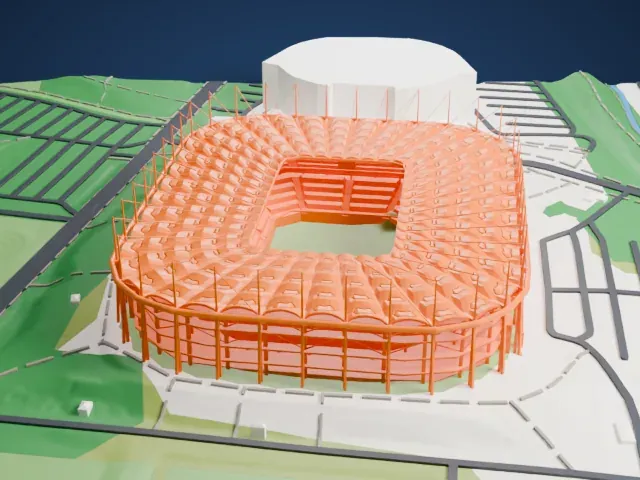
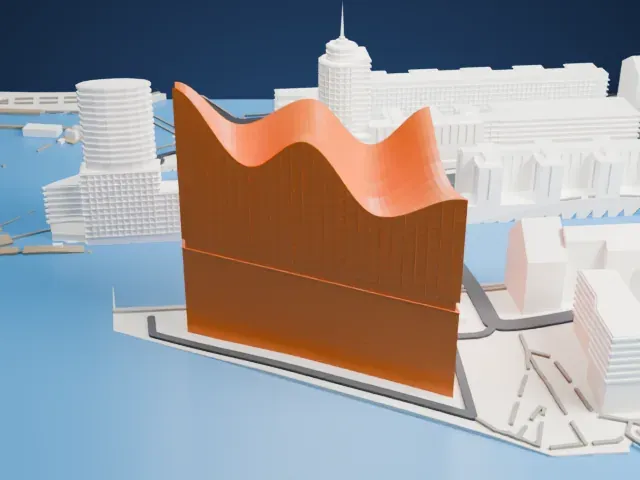
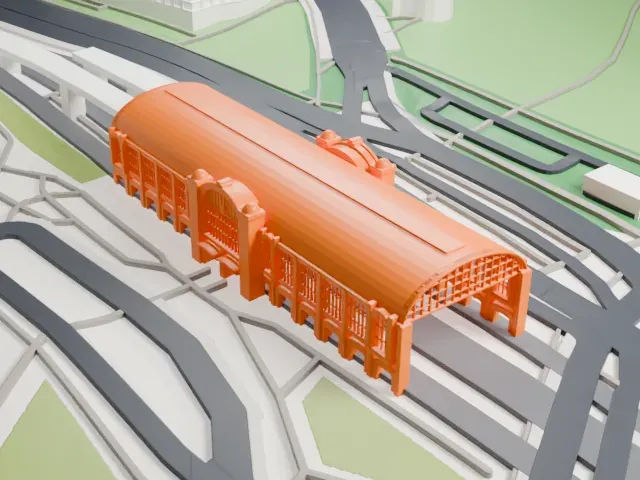
The Hamburg State Opera appears in city models you make here; its design may still be protected, so it isn't offered as a separate download.
-
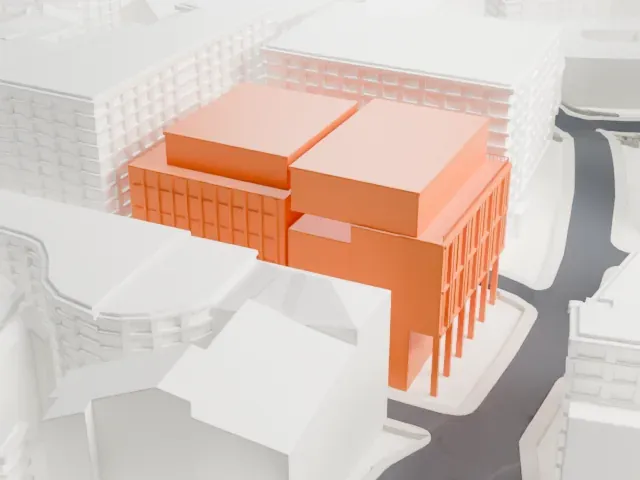 North
-
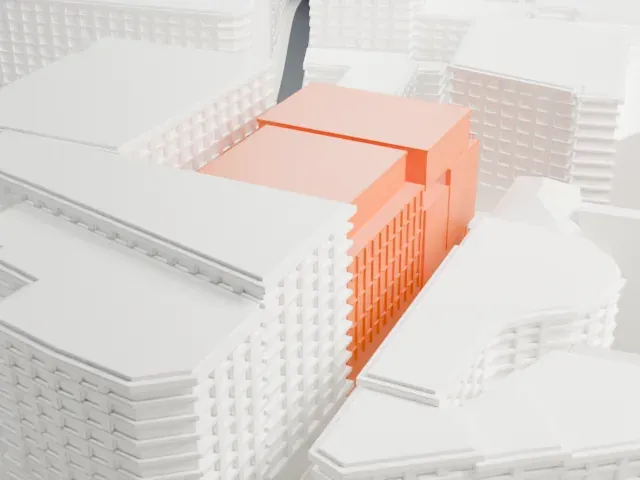 East
-
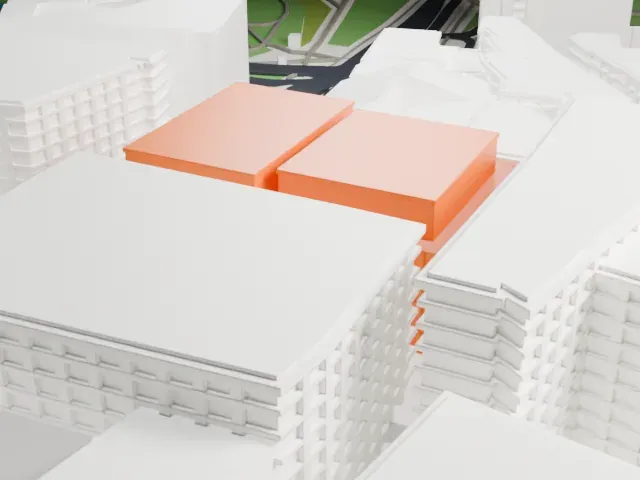 South
-
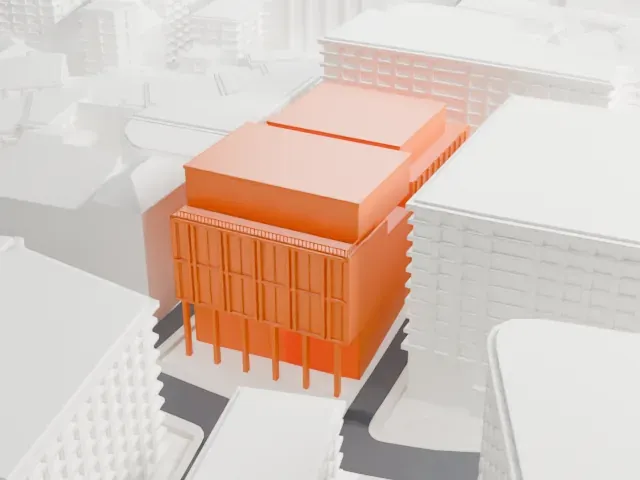 West
Copyright notice
The design of Hamburg State Opera may still be protected by copyright. It appears in the city models you make here, but it is not offered as a separate model.
- On a 160 mm print
- 11 mm
- Scale
- 1:3,750
11 mm tall on a 160 mm print
Make this print opens the generator on a 600 m square around the landmark. Buildings print at close to true scale, so the landmark grows with the print size.
- Slim columns at the corner
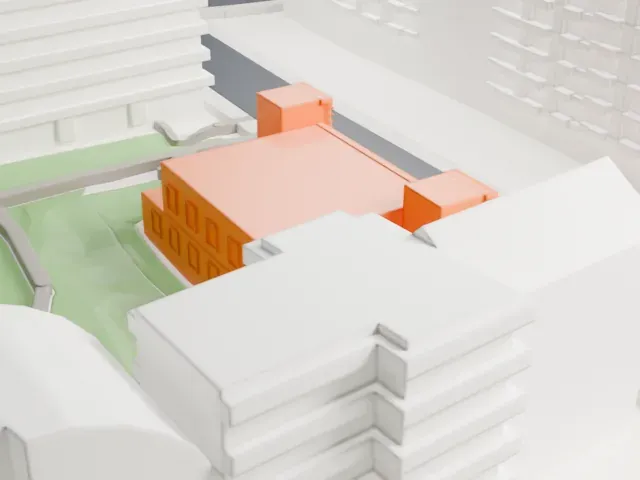
A row of thin columns holds up one corner of the building. Print friendly thickens thin parts like these; Full detail keeps them for larger prints, ideally at 0.12-0.16 mm layers.
- Ribbed front, big flat roofs
The front is covered in fine vertical ribs, while the two large roof blocks are plain and flat. A bigger print keeps the ribs crisp.
- One piece with the ground
The Hamburg State Opera is joined to the ground in the exported file, and the four-side check found no floating parts, so nothing needs gluing.
- Pick the detail for your nozzle
In the Buildings settings, set Landmark detail to Print friendly to adapt thin parts and small details to the print scale. Full detail keeps every modeled feature, for larger prints or a finer nozzle.
- Colors
Buildings, roads, water and ground arrive as separate filament slots in the 3MF. The Hamburg State Opera takes the building color.
- File format
You get a 3MF for Bambu Studio, OrcaSlicer or PrusaSlicer. Any of them can save it as STL if you need one.
About the Hamburg State Opera
The Hamburg State Opera, Hamburgische Staatsoper in German, is based in Hamburg, Germany, and its theater stands near the square of Gänsemarkt. Opera in Hamburg goes back to January 2, 1678, when the Oper am Gänsemarkt opened with Johann Theile's biblical Singspiel. The house was Germany's first public opera house, set up by the citizens of the prosperous Hanseatic League city rather than by a court.
A new stone theater, the Stadt-Theater, was to replace the aging wooden one, and its first stone was laid on May 18, 1826, on the site the opera still occupies. It opened within a year, seating 2,800, with Beethoven's incidental music for Egmont. Its exterior and interior were renovated in the Gründerzeit style in 1873 and again in 1891, the year it gained electric lighting. The first full Ring Cycle in the house came in 1879 under Bernhard Pollini, and Gustav Mahler was among its musical directors from 1891 to 1897.
On the night of August 2, 1943, air raids destroyed the auditorium and its neighboring buildings by fire-bombing. A new Staatsoper opened on October 15, 1955, with Mozart's Die Zauberflöte. In 1967 the company became the first to broadcast its operas in color on television. It gave the world premiere of Die Eroberung von Mexico by Wolfgang Rihm in 1992 and won Opernwelt's "Opera House of the Year" award in 1997 and 2005.
About this model
The Hamburg State Opera is one of more than 6,500 landmark models in Mini Skyline. They are made with AI, and each one is checked in its real surroundings before release. Each model is written as code from public descriptions, plans, photographs and aerial views used only as references; no image or third-party model is copied into it. Everything around it is built from OpenStreetMap and Overture map data. Rights in the building itself, its name and any brands on it are not granted by Mini Skyline; clear them separately before you sell prints. If you would rather print the shape from map data, turn off Landmark models in the Buildings settings.
Mini Skyline is not affiliated with, or endorsed by, the owners of this building or its names and marks.
Same skyline