3D print the Hoover Institution
A free, printable model of the Hoover Institution and the Stanford University campus buildings around it, generated from real map data in your browser.
-
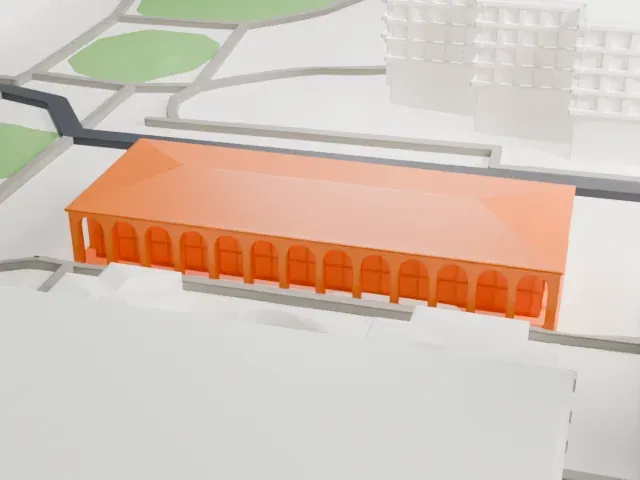 North
-
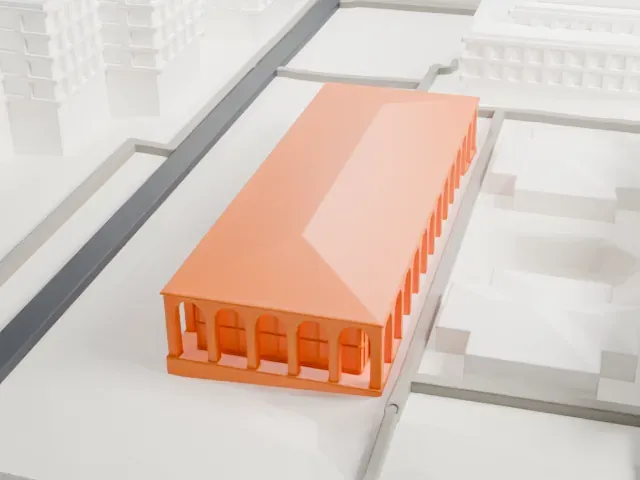 East
-
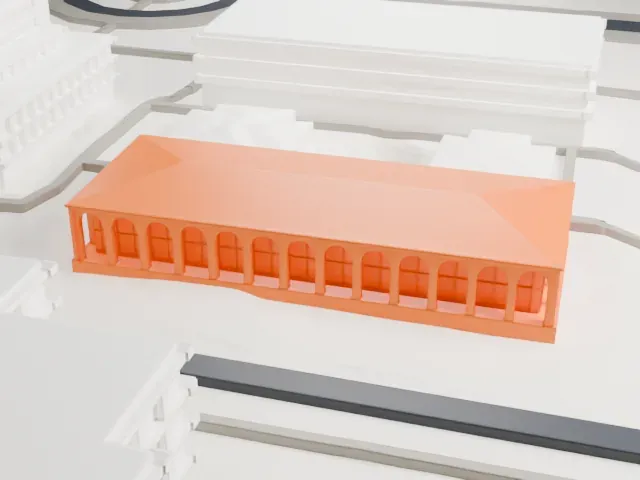 South
-
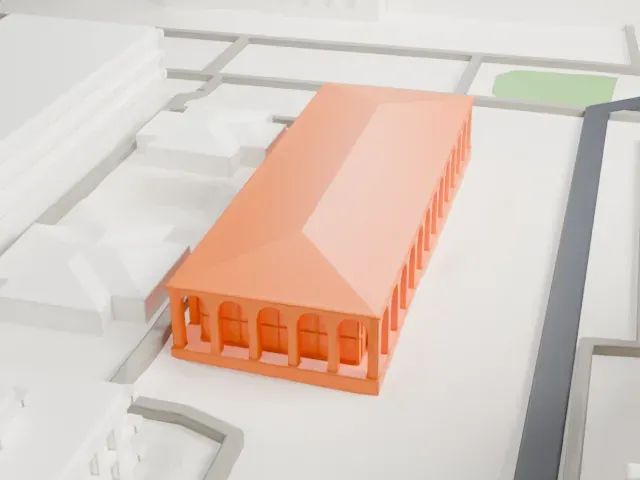 West
The model you print
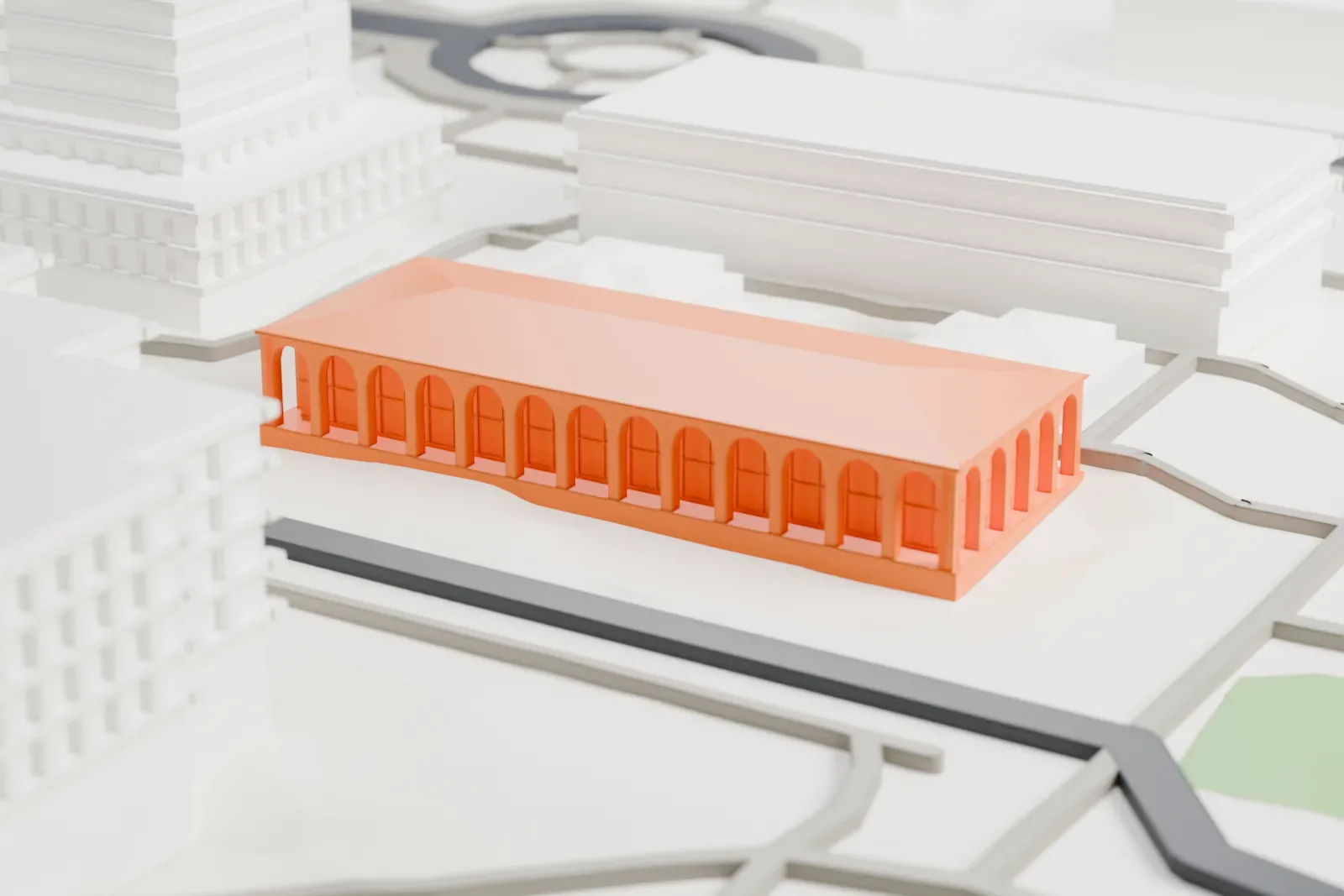
Hoover Institution in 3D
The landmark on its own, at its size on a 160 mm print. Print friendly thickens thin parts for a 0.4 mm nozzle; Full detail keeps every part.
- On a 160 mm print
- 3 mm
- Scale
- 1:3,750
3 mm tall on a 160 mm print
Make this print opens the generator on a 600 m square around the landmark. Buildings print at close to true scale, so the landmark grows with the print size.
- Scale it up first
This is a low building at map scale, so its walls and roof edges merge at small sizes. Scale it up before slicing, and use 0.12 to 0.16 mm layers for the detail.
- A long, low block
Most of the shape is in the plan rather than the height. Print friendly suits a small print; Full detail keeps the edges crisp on a larger one.
- One piece with the ground
The Hoover Institution is joined to the ground in the exported file, and the four-side check found no floating parts, so nothing needs gluing.
- Pick the detail for your nozzle
In the Buildings settings, set Landmark detail to Print friendly to adapt thin parts and small details to the print scale. Full detail keeps every modeled feature, for larger prints or a finer nozzle.
- Colors
Buildings, roads, water and ground arrive as separate filament slots in the 3MF. The Hoover Institution takes the building color.
- File format
You get a 3MF for Bambu Studio, OrcaSlicer or PrusaSlicer. Any of them can save it as STL if you need one.
About the Hoover Institution
The Hoover Institution advises on public policy: it is an American think tank that argues for economic and personal liberty, for free enterprise and for limited government. Officially it belongs to Stanford University as one of its units, yet an independent board of overseers governs it and its own income and donations pay for it. Herbert Hoover, a Stanford alumnus and later president, founded it as a library in 1919 to hold the archives he had gathered during World War I.
In June 1919 Hoover telegrammed Ray Lyman Wilbur, Stanford's president, offering $50,000 to help gather primary material on the war; the Hoover War Collection followed, and by 1922 it was the Hoover War Library. By 1926 it held 1.4 million items and no longer fitted the university library, so Stanford put up $600,000 for a tower to house it, completed in 1941. The library grew into a research institution in the mid-20th century and took its present name in 1957.
Fellows work in teams on economic policy, history, education and law, and the Hoover Institution Press publishes their research. Republican presidents from Nixon to Trump have drawn staff from its ranks. Its fellows and alumni include Henry Kissinger, Gary Becker and Milton Friedman, all Nobel laureates. Condoleezza Rice took over as director in 2020.
About this model
The Hoover Institution is one of more than 4,900 landmark models in Mini Skyline. They are made with AI, and each one is checked from four sides in its real surroundings before release. Everything around it is built from OpenStreetMap and Overture map data. If you would rather print the shape from map data, turn off Landmark models in the Buildings settings.
Keep exploring