3D print Institut d'Égypte
A free, printable model of the Institut d'Égypte and the surrounding streets and buildings of Cairo, generated from real map data in your browser.
-
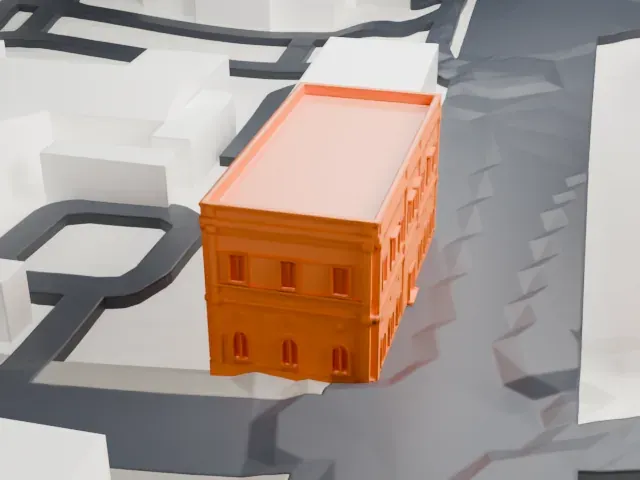 North
-
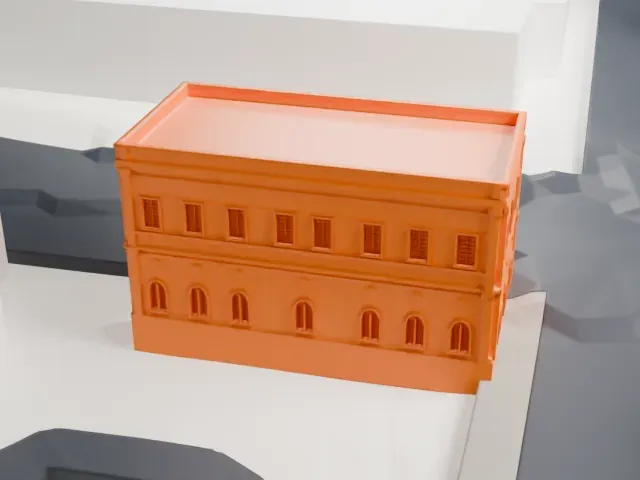 East
-
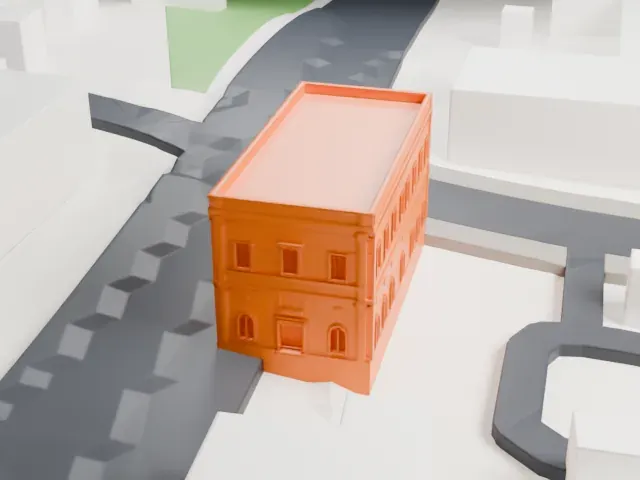 South
-
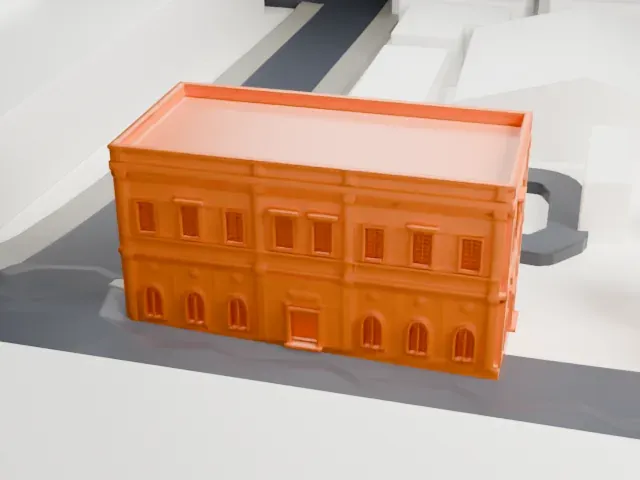 West
The model you print
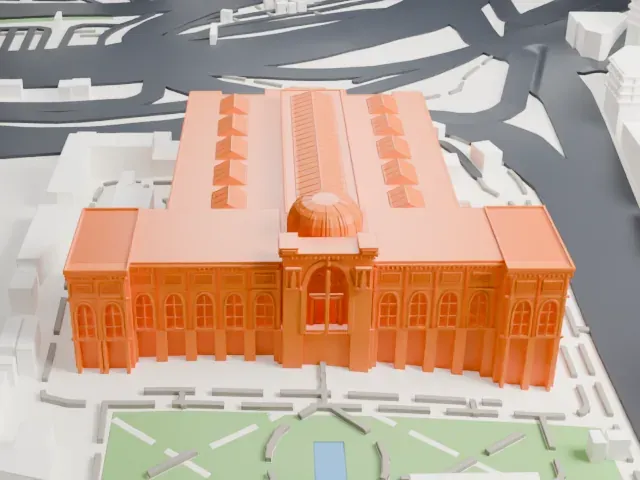
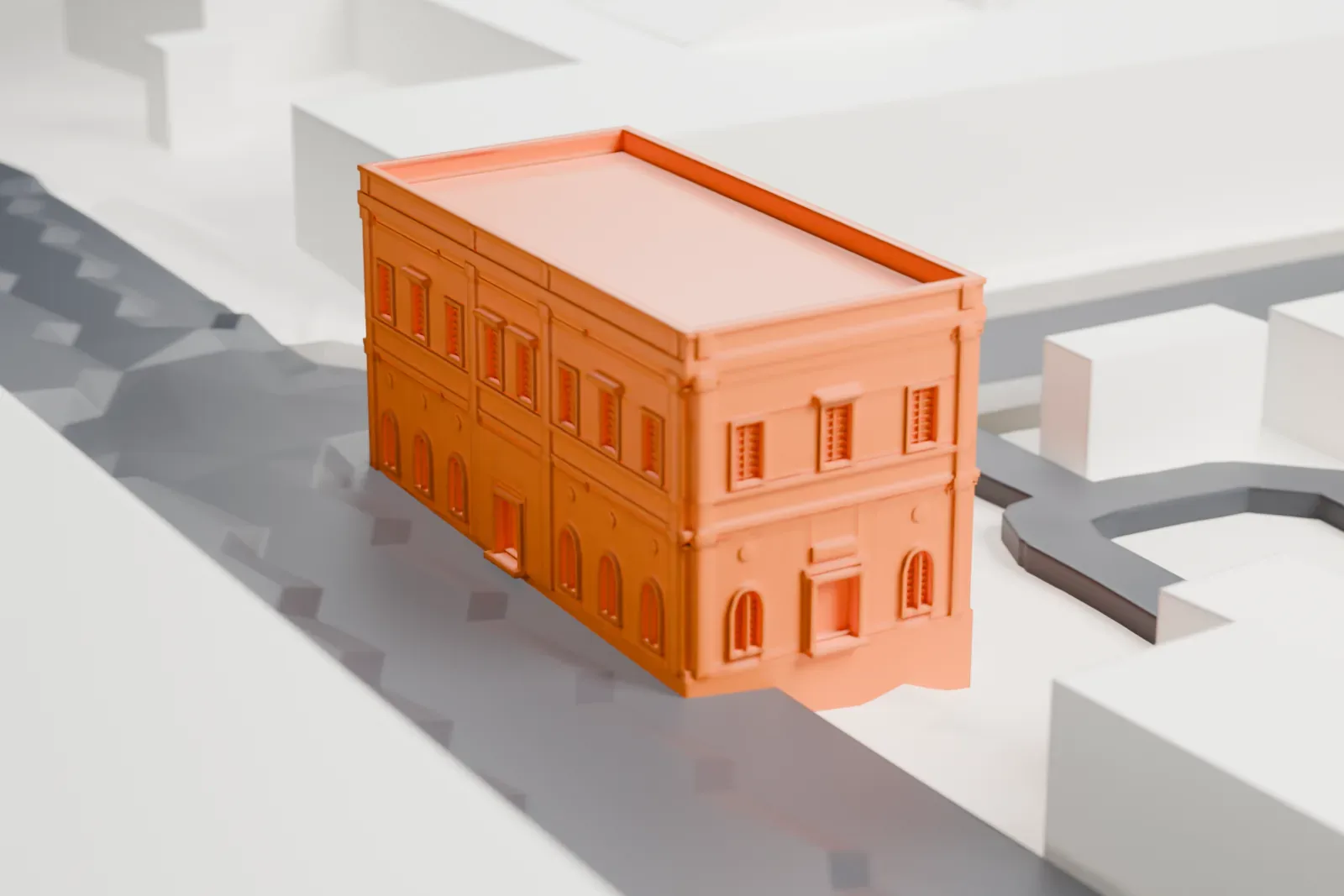
Institut d'Égypte in 3D
The landmark on its own, at its size on a 160 mm print. Print friendly thickens thin parts for a 0.4 mm nozzle; Full detail keeps every part.
- On a 160 mm print
- 5 mm
- Scale
- 1:3,750
5 mm tall on a 160 mm print
Make this print opens the generator on a 600 m square around the landmark. Buildings print at close to true scale, so the landmark grows with the print size.
- Small facade details
For an institutional building, Print friendly adapts small details to the print scale. Full detail on a larger print keeps every modeled feature.
- One piece with the ground
Institut d'Égypte is joined to the ground in the exported file, and the four-side check found no floating parts, so nothing needs gluing.
- Pick the detail for your nozzle
In the Buildings settings, set Landmark detail to Print friendly to adapt thin parts and small details to the print scale. Full detail keeps every modeled feature, for larger prints or a finer nozzle.
- Colors
Buildings, roads, water and ground arrive as separate filament slots in the 3MF. Institut d'Égypte takes the building color.
- File format
You get a 3MF for Bambu Studio, OrcaSlicer or PrusaSlicer. Any of them can save it as STL if you need one.
About Institut d'Égypte
The Institut d'Égypte, also called the Egyptian Scientific Institute, is a research center in Cairo that specializes in Egyptology. Founded in 1798, it is Egypt's second oldest scientific institute after Al-Azhar University. Napoleon Bonaparte created it on August 22, 1798, for the Institut de France, and it first met two days later, with Gaspard Monge presiding and Bonaparte as vice-president.
It had 48 scholars, divided into sections for mathematics, physics and natural history, political economy, and literature and arts. Its research appeared in Mémoires sur l'Égypte, a four-volume work published from 1798 to 1801, and on November 22, 1799 the Institut decided to publish its scholarly output under the title Description de l'Égypte. The 47th and final meeting took place on March 21, 1801. Activities resumed in 1836 as The Egyptian Society, the group moved to Alexandria in 1859 as the Institut Égyptien, and it returned to Cairo in 1880.
A fire destroyed the building on December 17, 2011, amid street clashes after the Egyptian revolution. The collection then numbered more than 200,000 rare books and texts, many of them from the Napoleonic era. Volunteers rushed into the burning building and saved many items. Press reports that the original Description de l'Égypte manuscript was destroyed were incorrect.
About this model
Institut d'Égypte is one of more than 5,500 landmark models in Mini Skyline. They are made with AI, and each one is checked from four sides in its real surroundings before release. Each model is written as code from public descriptions, plans, photographs and aerial views used only as references; no image or third-party model is copied into it. Everything around it is built from OpenStreetMap and Overture map data. Rights in the building itself, its name and any brands on it are not granted by Mini Skyline; clear them separately before you sell prints. If you would rather print the shape from map data, turn off Landmark models in the Buildings settings.
Keep exploring