3D print the Karnak Temple Complex
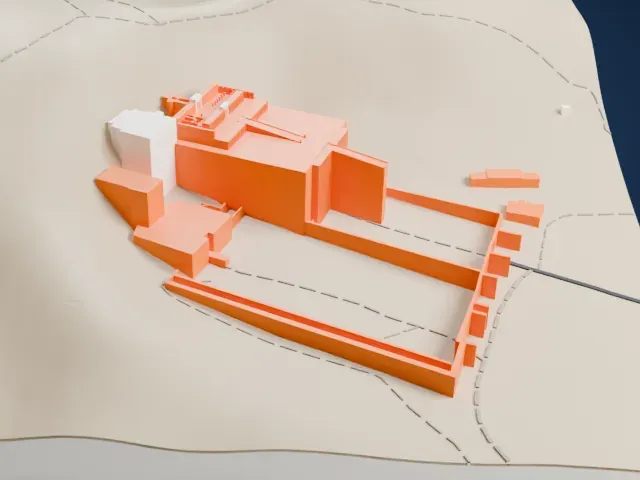
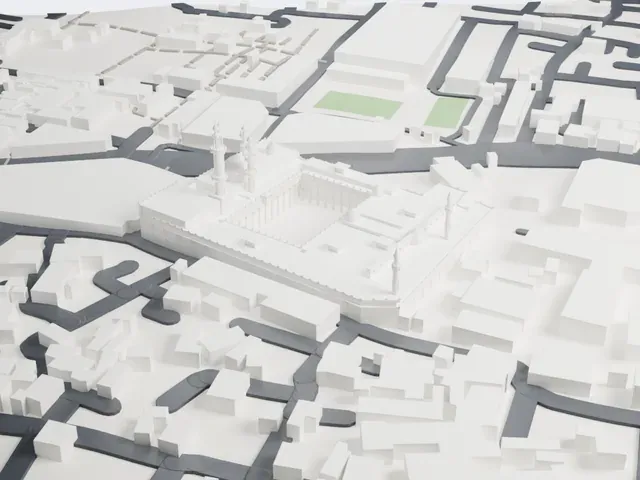
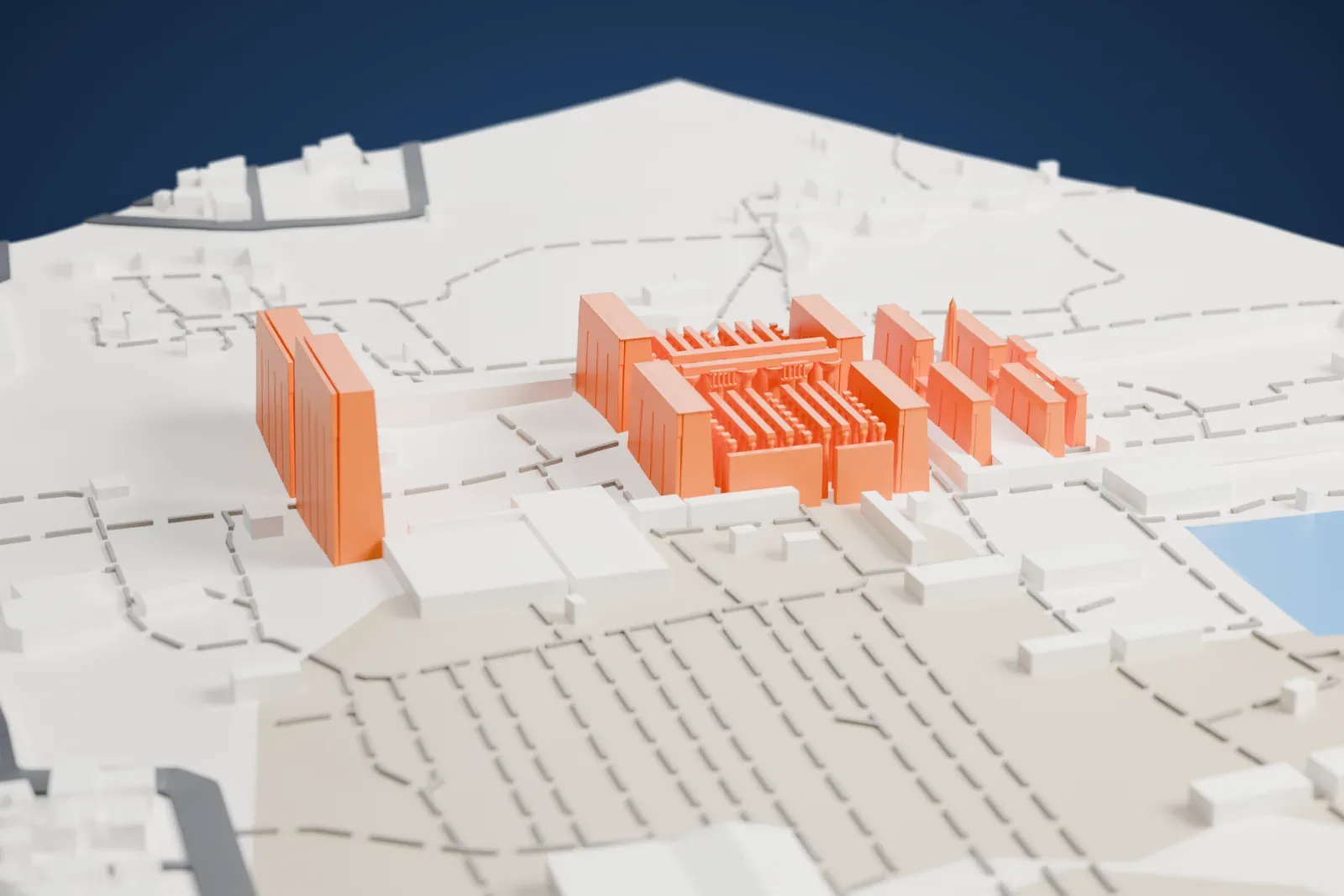
A free, printable model of the Karnak Temple complex, a group of huge gateway towers and a hall of slim columns, standing among streets and low buildings, generated from real map data in your browser.
-
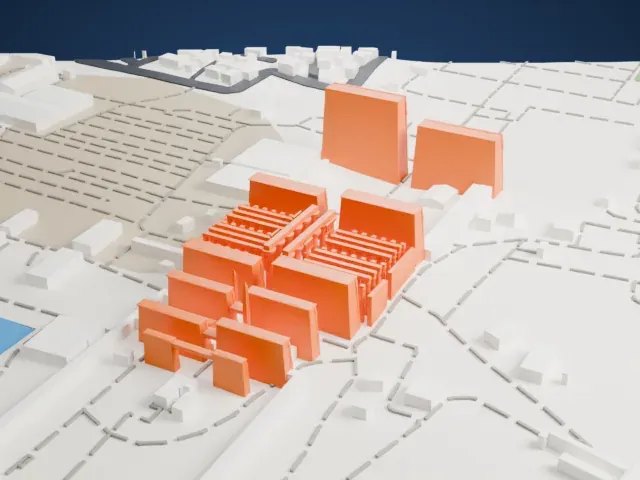
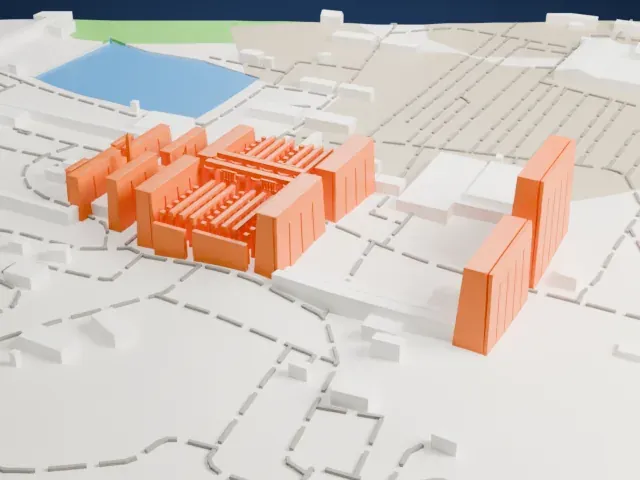 North
-
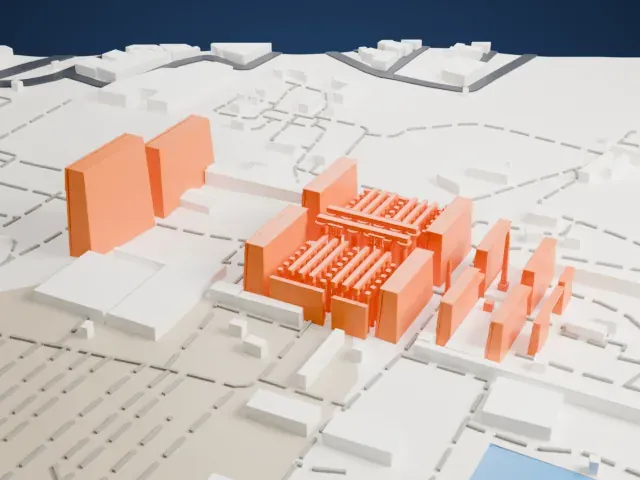
 East
-
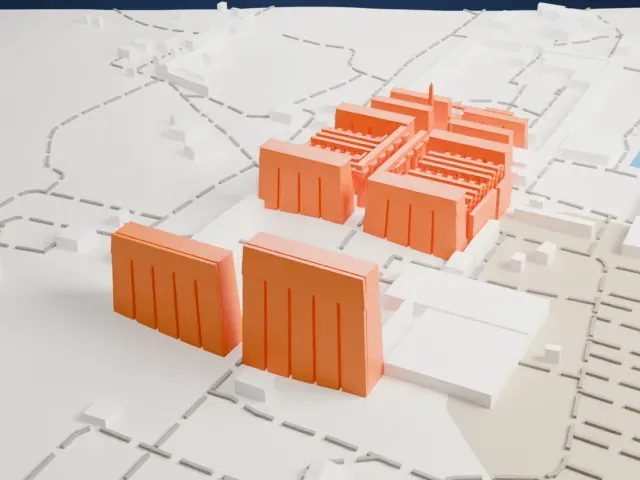
 South
-
 West
- On a 160 mm print
- 14 mm
- Scale
- 1:3,750
14 mm tall on a 160 mm print
Make this print opens the generator on a 600 m square around the landmark. Buildings print at close to true scale, so the landmark grows with the print size.
- A dense grid of slim columns
The central hall is a tight grid of slim columns. Print friendly adapts thin columns to your print scale; Full detail keeps them, best on a larger print with 0.12 to 0.16 mm layers.
- Tall sloping gateway towers
The gateway towers are big sloping faces with fine vertical grooves. A bigger print and layers of 0.12 to 0.16 mm keep the grooves crisp.
- Pick the detail for your nozzle
In the Buildings settings, set Landmark detail to Print friendly to adapt thin parts and small details to the print scale. Full detail keeps every modeled feature, for larger prints or a finer nozzle.
- Colors
Buildings, roads, water and ground arrive as separate filament slots in the 3MF. The Karnak Temple Complex takes the building color.
- File format
You get a 3MF for Bambu Studio, OrcaSlicer or PrusaSlicer. Any of them can save it as STL if you need one.
About the Karnak Temple Complex
The story of the Karnak Temple complex is, to a large extent, the story of Thebes. Thebes seems to have had little importance before the Eleventh Dynasty, which dates from about 2150 to about 1991 BC, and any early temple building would have been small, with shrines honoring Montu, the early god of Thebes. Karnak's ancient name, Ipet-Isut, is generally rendered as 'most select of places' and applies only to the central structures at the core of the Precinct of Amun-Re.
By the time the Theban kings of the Eleventh Dynasty ruled all Egypt, Karnak was already considered holy ground. Senusret I's White Chapel and the Middle Kingdom court make up the oldest building remains within the temple area. In the New Kingdom, a fairly modest temple grew into a huge state religious center as Egypt's wealth grew. Thutmose I surrounded the Middle Kingdom temple with a wall that ran between the Fourth and Fifth pylons; those pylons are the oldest surviving part of the temple that remains in place. Under Thutmose III the main temple grew by 50% through a building called the Akh-menu, also called the Festival Hall of Thutmose III.
Most work on the Great Hypostyle Hall was done under Seti I and Ramesses II, though it may have begun in the Eighteenth Dynasty. The Temple of Khonsu was built and then expanded under Ramesses III and IV, and Shoshenq I added the Bubastis Portal. The last major change to the layout was the First pylon plus the huge enclosure walls around the entire complex, both built by Nectanebo I. By the time non-Christian temples were ordered closed throughout the empire in 356, Karnak had been largely abandoned, and Christian churches rose among its ruins.
About this model
The Karnak Temple Complex is one of more than 4,300 landmark models in Mini Skyline. They are made with AI, and each one is checked from four sides in its real surroundings before release. Everything around it is built from OpenStreetMap and Overture map data. If you would rather print the shape from map data, turn off Landmark models in the Buildings settings.
Keep exploring