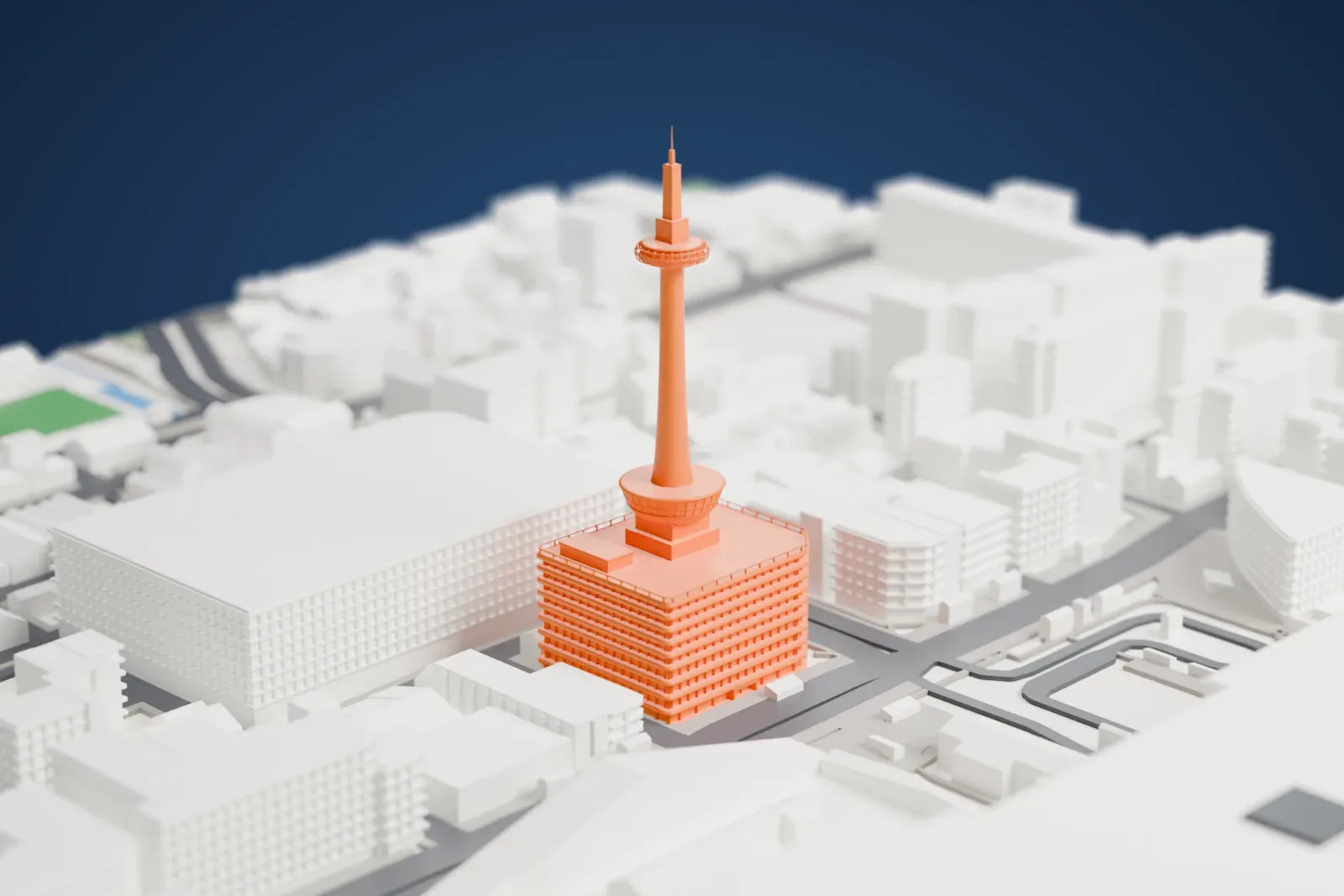
3D print the Kyoto Tower
A free, printable model of Kyoto Tower and the surrounding streets and buildings, generated from real map data in your browser.
-
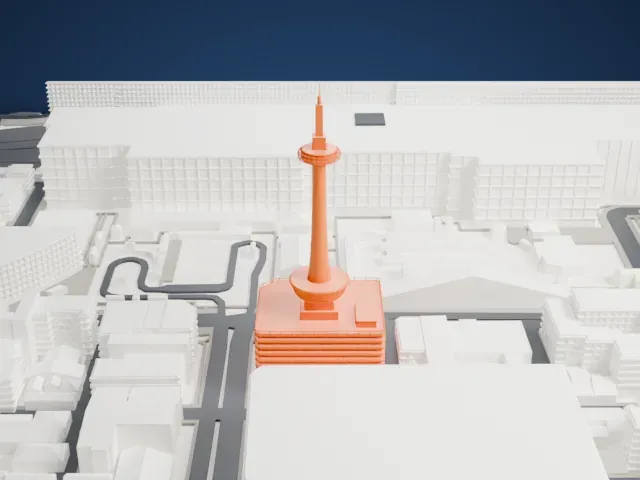 North
-
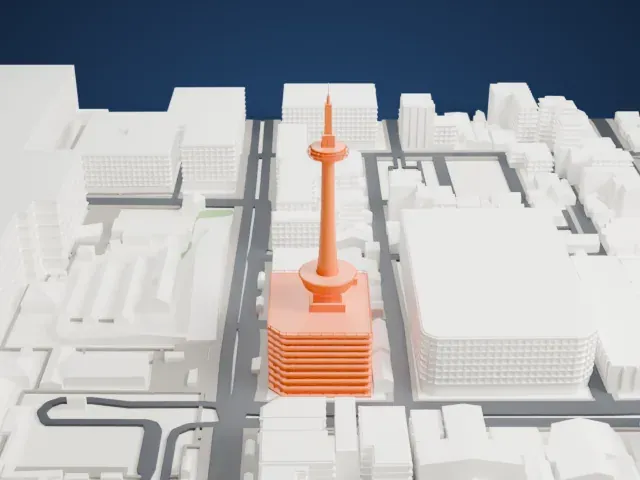 East
-
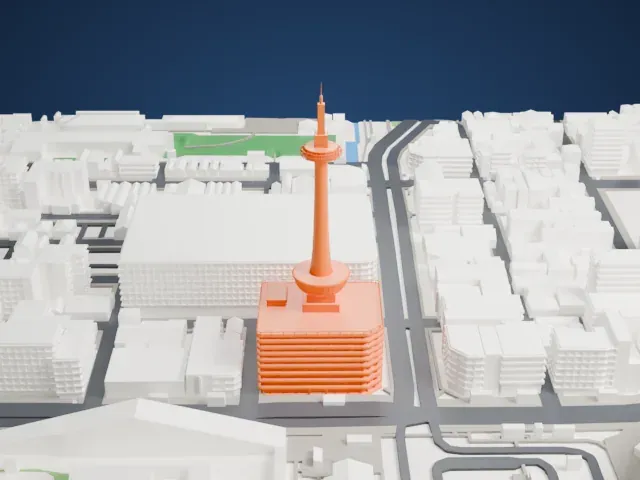 South
-
 West
The model you print
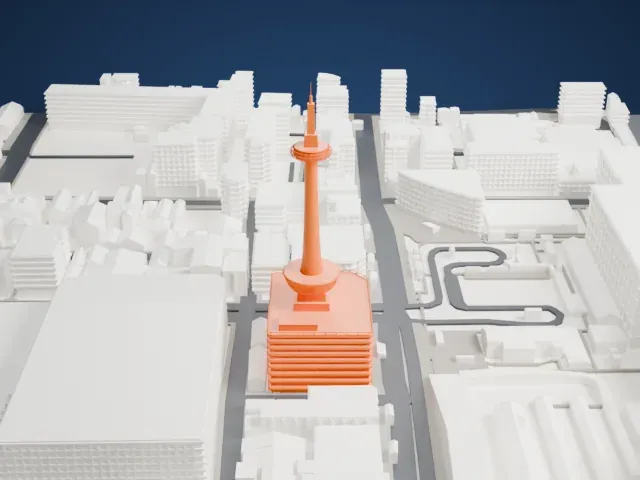
Kyoto Tower in 3D
The landmark on its own, at its size on a 160 mm print. Print friendly thickens thin parts for a 0.4 mm nozzle; Full detail keeps every part.
- Real height
- 131 m
- On a 160 mm print
- 35 mm
- Scale
- 1:3,750
131 m of the Kyoto Tower, 35 mm on your shelf
Make this print opens the generator on a 600 m square around the landmark. Buildings print at close to true scale, so the landmark grows with the print size.
- Thin layers for the needle
The shaft narrows to a stepped mast and a fine spire. A 0.12–0.16 mm layer height and slower printing help the slim top come out cleanly.
- Hotel ledges at print scale
The nine-story base has closely spaced floor ledges and window mullions. Full detail keeps them, or choose Print friendly for smaller prints.
- One piece with the ground
The Kyoto Tower is joined to the ground in the exported file, and the four-side check found no floating parts, so nothing needs gluing.
- Pick the detail for your nozzle
In the Buildings settings, set Landmark detail to Print friendly to adapt thin parts and small details to the print scale. Full detail keeps every modeled feature, for larger prints or a finer nozzle.
- Colors
Buildings, roads, water and ground arrive as separate filament slots in the 3MF. The Kyoto Tower takes the building color.
- File format
You get a 3MF for Bambu Studio, OrcaSlicer or PrusaSlicer. Any of them can save it as STL if you need one.
About the Kyoto Tower
Kyoto Tower is a steel observation tower in Kyoto, Japan, and the tallest structure in the city. Its observation deck sits at 100 meters (328 ft), with the spire reaching 131 meters (430 ft). The 800-ton tower rises from a nine-story building that holds a three-star hotel and several stores, and the whole complex faces Kyoto Station.
It was proposed in the early 1960s, with a target of finishing it for the 1964 Summer Olympics in Tokyo. Work began in 1963 on the site of Kyoto's former central post office and ended late in 1964. Mamoru Yamada designed it with advice from Makoto Tanahashi, an engineering doctor at Kyoto University, and the structure was built to resist earthquakes and typhoons. Its stacked steel rings are clad in lightweight steel sheets and painted white, an effect intended to suggest a Japanese candle.
Kyoto Tower received its first visitors on December 28, 1964. Visitors reach the 100-meter deck by one of nine elevators; it holds 500 people and offers views across the city in every direction. The building below begins with four commercial floors and a basement spa, while floors five to nine hold the Kyoto Tower Hotel.
About this model
The Kyoto Tower is one of more than 4,900 landmark models in Mini Skyline. They are made with AI, and each one is checked from four sides in its real surroundings before release. Everything around it is built from OpenStreetMap and Overture map data. If you would rather print the shape from map data, turn off Landmark models in the Buildings settings.
Same skyline