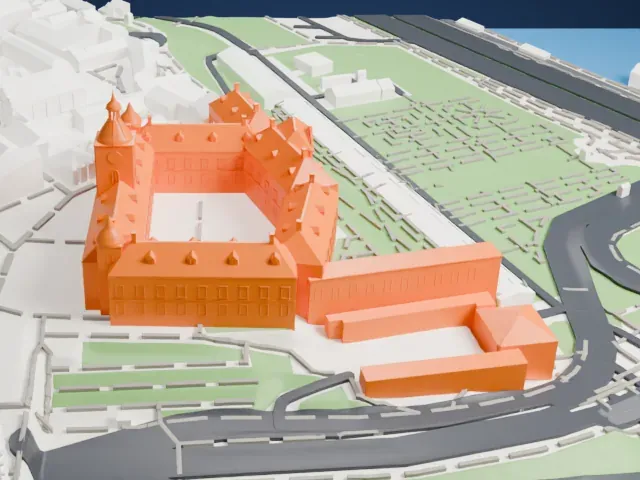
3D print Łańcut Castle
A free, printable 3D model of Łańcut Castle and the surrounding streets and buildings, generated from real map data in your browser.
-
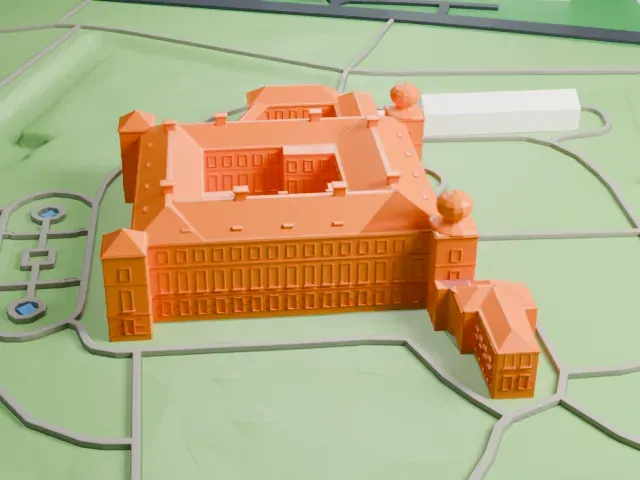 North
-
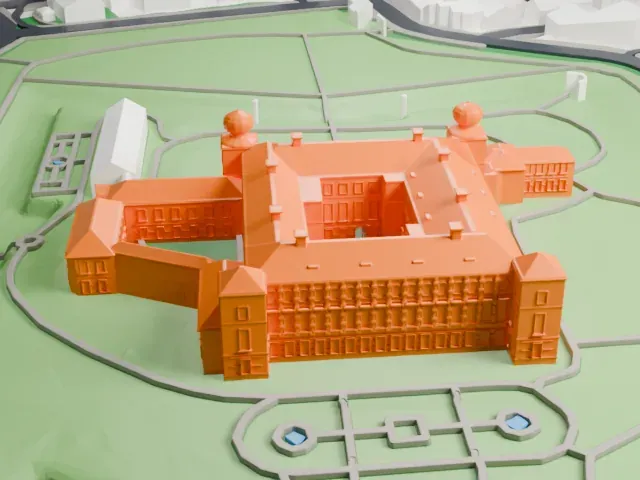 East
-
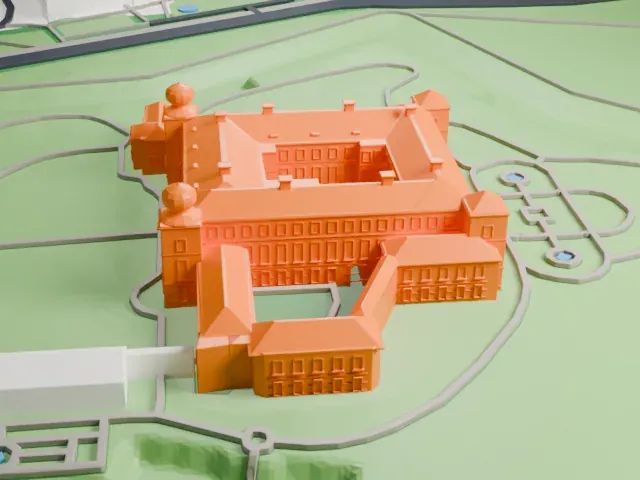 South
-
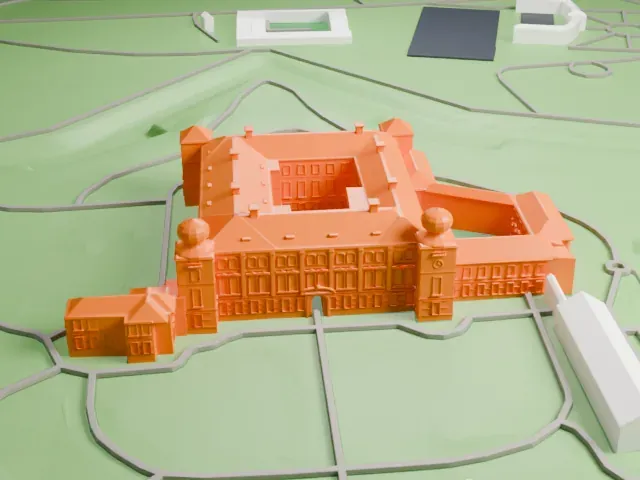 West
The model you print
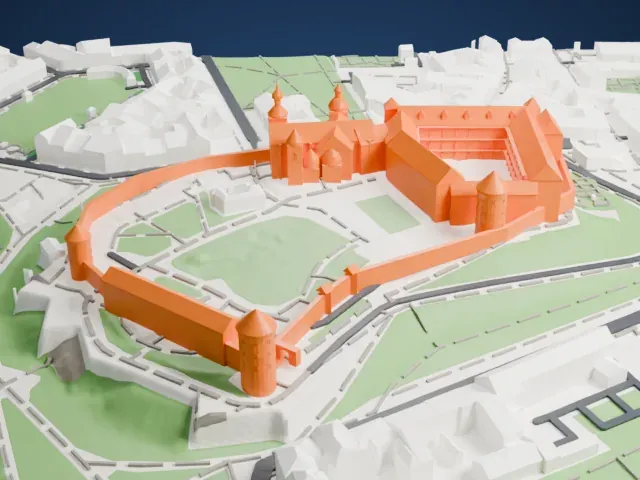
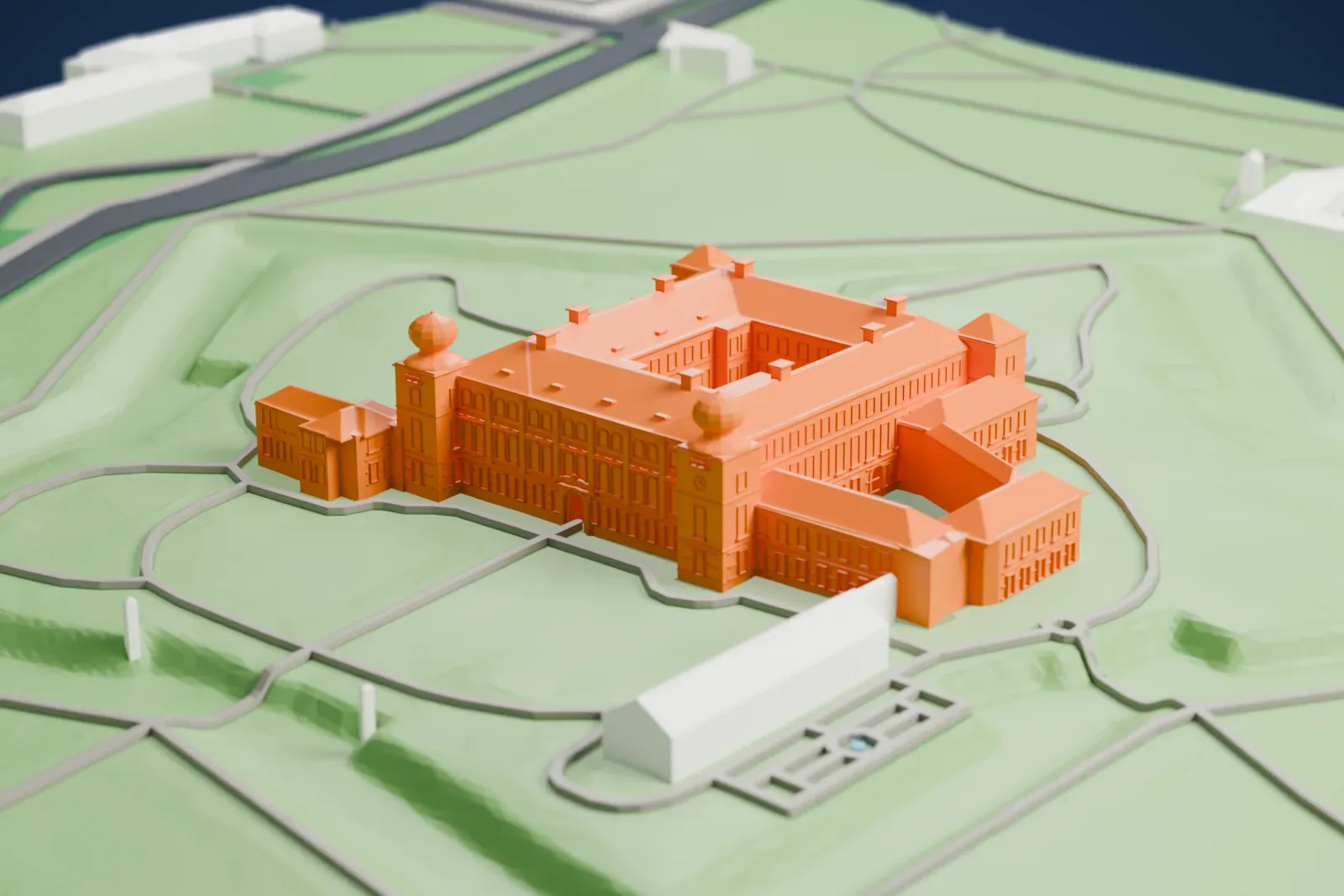
Łańcut Castle in 3D
The landmark on its own, at its size on a 160 mm print. Print friendly thickens thin parts for a 0.4 mm nozzle; Full detail keeps every part.
- On a 160 mm print
- 8 mm
- Scale
- 1:3,750
8 mm tall on a 160 mm print
Make this print opens the generator on a 600 m square around the landmark. Buildings print at close to true scale, so the landmark grows with the print size.
- Small towers and domes
Small towers and domes are among the finest details of many castle prints. Choose Full detail with a larger print size to keep them, or Print friendly for a smaller print.
- One piece with the ground
Łańcut Castle is joined to the ground in the exported file, and the four-side check found no floating parts, so nothing needs gluing.
- Pick the detail for your nozzle
In the Buildings settings, set Landmark detail to Print friendly to adapt thin parts and small details to the print scale. Full detail keeps every modeled feature, for larger prints or a finer nozzle.
- Colors
Buildings, roads, water and ground arrive as separate filament slots in the 3MF. Łańcut Castle takes the building color.
- File format
You get a 3MF for Bambu Studio, OrcaSlicer or PrusaSlicer. Any of them can save it as STL if you need one.
About Łańcut Castle
Łańcut Castle is a complex of historical buildings in Łańcut, Subcarpathian Voivodeship, Poland. The Pilecki, Lubomirski and Potocki families all lived there at various times, and a park surrounds it. Poland officially lists the castle as a national Historic Monument (Pomnik historii), designated on September 1, 2005. The Lubomirski family owned it until 1816, and the Potocki family after them until 1944.
Stanisław Lubomirski took over Łańcut in 1629. To a design by Maciej Trapola, he built the quadrilateral castle, with donjons at its corners and fortifications around it. After a fire in 1688, he brought in Tylman van Gameren, a Polish architect and engineer born in the Netherlands, to restore the castle. Tylman turned it into a palace and gave the side towers bulbous cupolas, the feature most characteristic of the castle's architecture.
Duchess Izabela Lubomirska began expanding the complex in the late eighteenth and early nineteenth centuries. Later, under Roman Potocki and his wife Elżbieta, Neo-Baroque ornamentation took the place of the Neo-Gothic decoration on the frontage, and the architect Amand Louis Bauqué designed new Neo-Baroque stables. The complex has been transformed into a museum.
About this model
Łańcut Castle is one of more than 5,500 landmark models in Mini Skyline. They are made with AI, and each one is checked from four sides in its real surroundings before release. Each model is written as code from public descriptions, plans, photographs and aerial views used only as references; no image or third-party model is copied into it. Everything around it is built from OpenStreetMap and Overture map data. Rights in the building itself, its name and any brands on it are not granted by Mini Skyline; clear them separately before you sell prints. If you would rather print the shape from map data, turn off Landmark models in the Buildings settings.
Keep exploring