3D print the Lonja de la Seda
A free, printable model of the crenellated exchange building, tightly surrounded by the buildings of Valencia, generated from real map data in your browser.
-
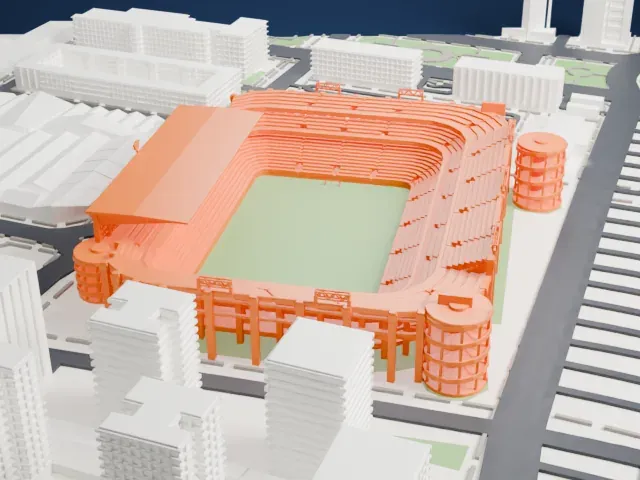
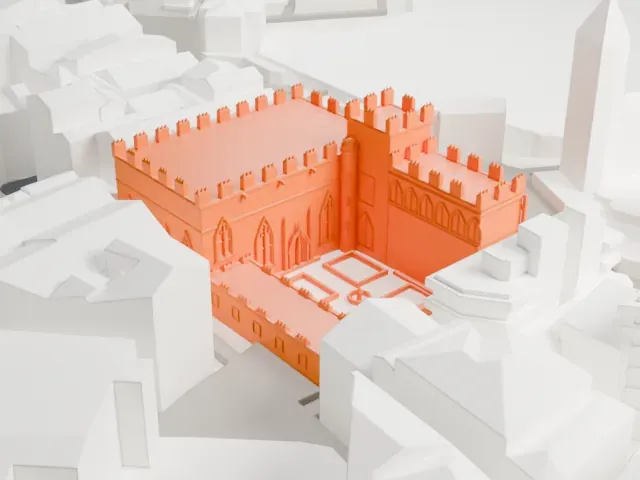 North
-
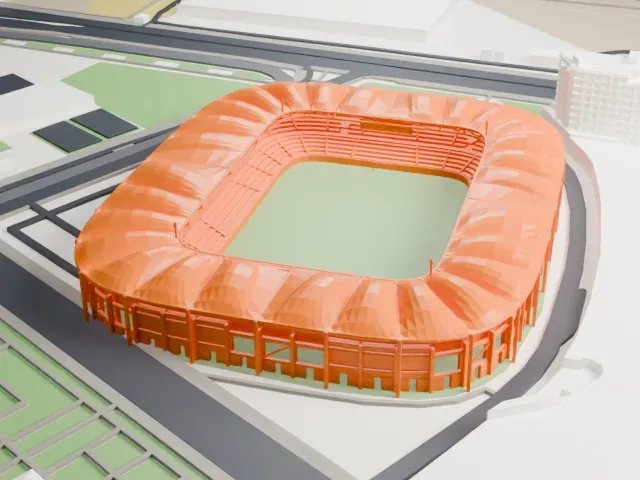
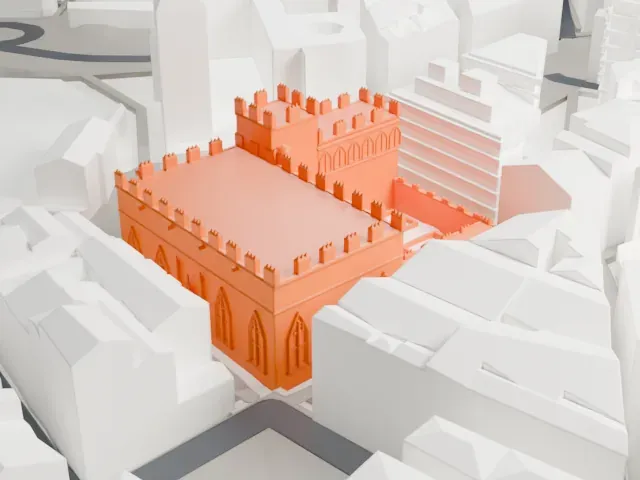 East
-
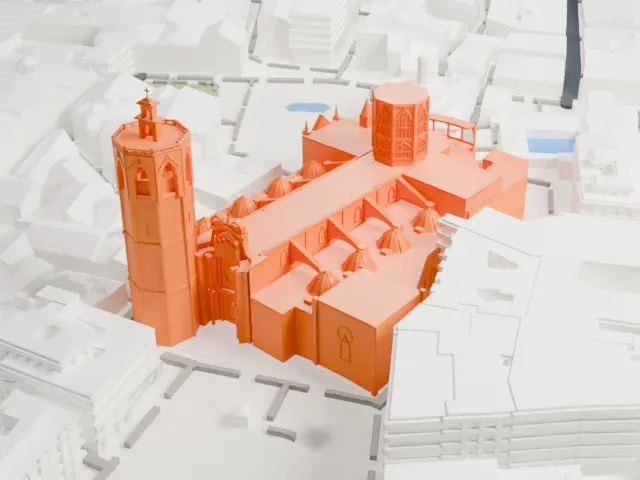
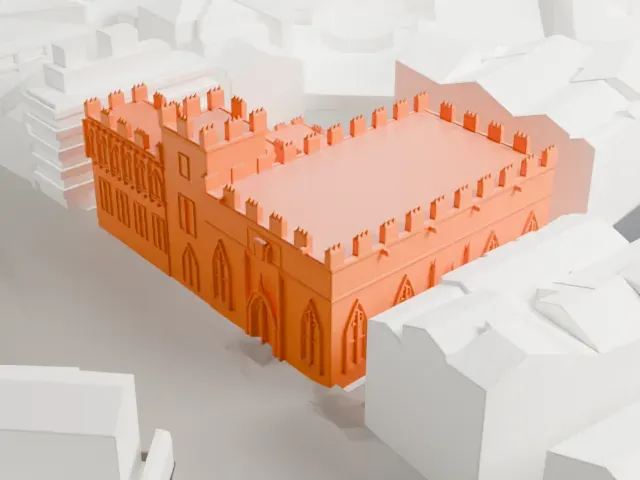 South
-
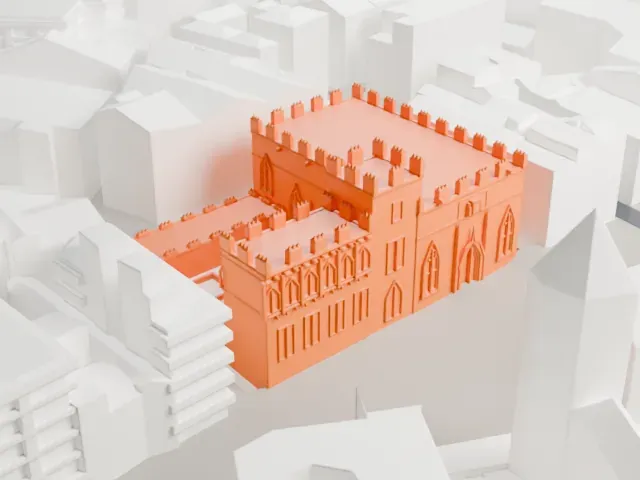 West
The model you print
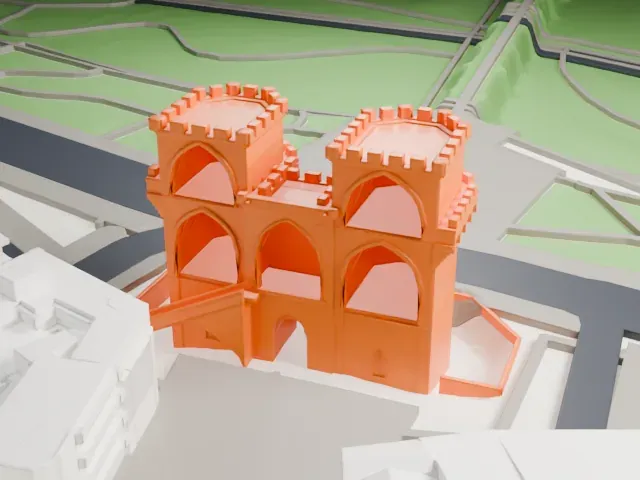
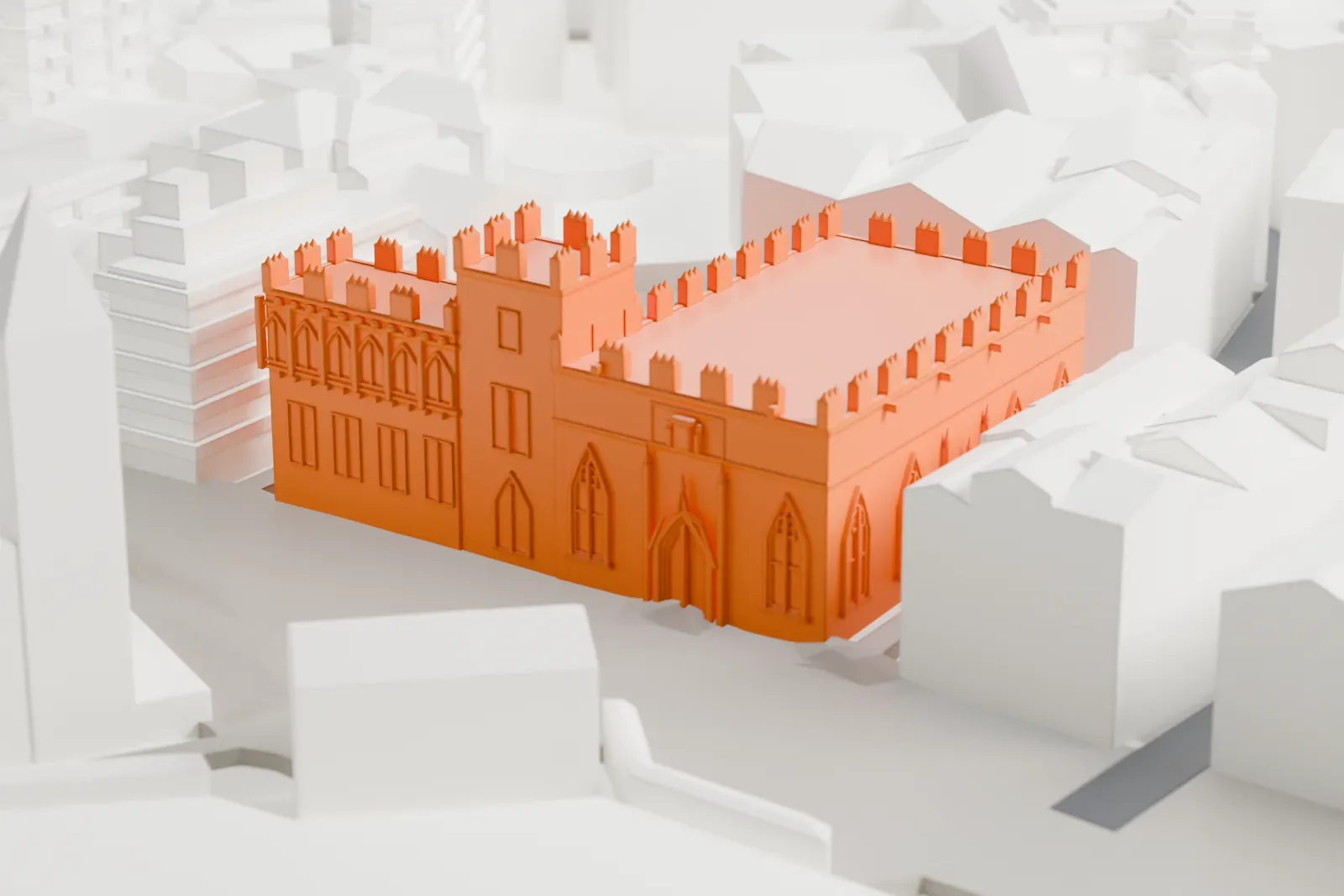
Lonja de la Seda in 3D
The landmark on its own, at its size on a 160 mm print. Print friendly thickens thin parts for a 0.4 mm nozzle; Full detail keeps every part.
- On a 160 mm print
- 7 mm
- Scale
- 1:3,750
7 mm tall on a 160 mm print
Make this print opens the generator on a 600 m square around the landmark. Buildings print at close to true scale, so the landmark grows with the print size.
- Tiny battlements along the roof
Rows of small crenellations run along the roofline and tower tops. They soften at small print sizes, so a larger print or Full detail keeps them, and a 0.12 mm layer height keeps the notches crisp.
- One piece with the ground
The Lonja de la Seda is joined to the ground in the exported file, and the four-side check found no floating parts, so nothing needs gluing.
- Pick the detail for your nozzle
In the Buildings settings, set Landmark detail to Print friendly to adapt thin parts and small details to the print scale. Full detail keeps every modeled feature, for larger prints or a finer nozzle.
- Colors
Buildings, roads, water and ground arrive as separate filament slots in the 3MF. The Lonja de la Seda takes the building color.
- File format
You get a 3MF for Bambu Studio, OrcaSlicer or PrusaSlicer. Any of them can save it as STL if you need one.
About the Lonja de la Seda
The Lonja de la Seda (Llotja de la Seda in Valencian) is a civil building in Valencia, Spain, in the late Valencian Gothic style. English speakers call it the Silk Exchange. It ranks among the city's main tourist attractions, and UNESCO added it to its World Heritage list in 1996.
It was built between 1482 and 1533. Valencia's commercial prosperity peaked in the 15th century, which led to the new building, and its design was derived from the Lonja of Palma de Majorca. Pere Compte was the architect in charge, and he completed the main body, the Trading Hall, in only fifteen years, from 1483 to 1498.
The building has three parts, along with the Orange Garden, a courtyard enclosed by walls. The Trading Hall, a big and richly decorated room held up by twisted columns, was where merchants drew up contracts. The side wing, named the Pavilion of the Consulate, housed the Consolat del Mar, which was the earliest marine merchant tribunal set up in Spain. The central tower is the third part of the structure.
About this model
The Lonja de la Seda is one of more than 6,500 landmark models in Mini Skyline. They are made with AI, and each one is checked in its real surroundings before release. Each model is written as code from public descriptions, plans, photographs and aerial views used only as references; no image or third-party model is copied into it. Everything around it is built from OpenStreetMap and Overture map data. Rights in the building itself, its name and any brands on it are not granted by Mini Skyline; clear them separately before you sell prints. If you would rather print the shape from map data, turn off Landmark models in the Buildings settings.
Mini Skyline is not affiliated with, or endorsed by, the owners of this building or its names and marks.
Same skyline