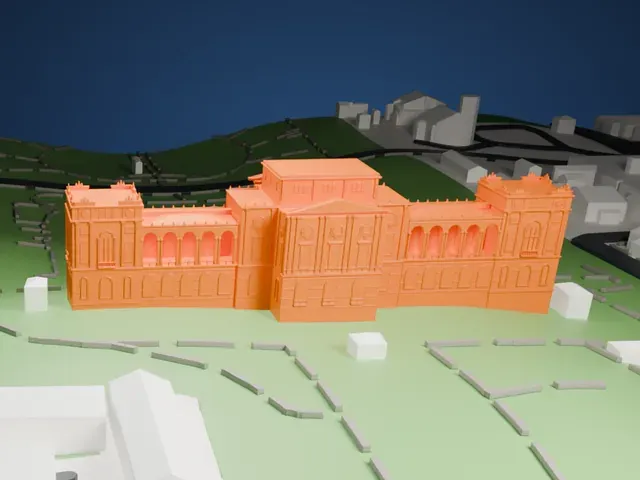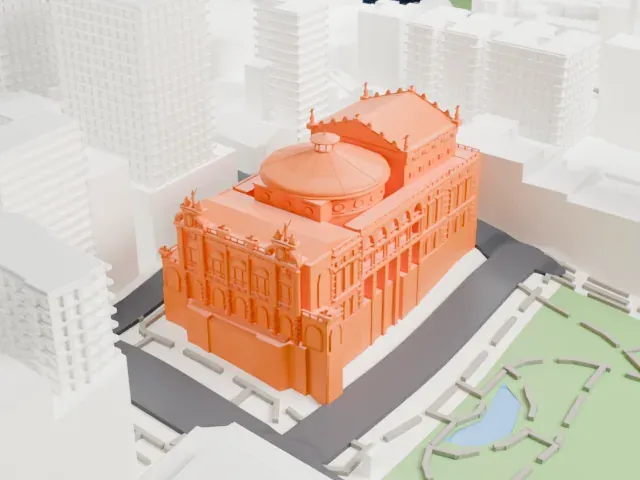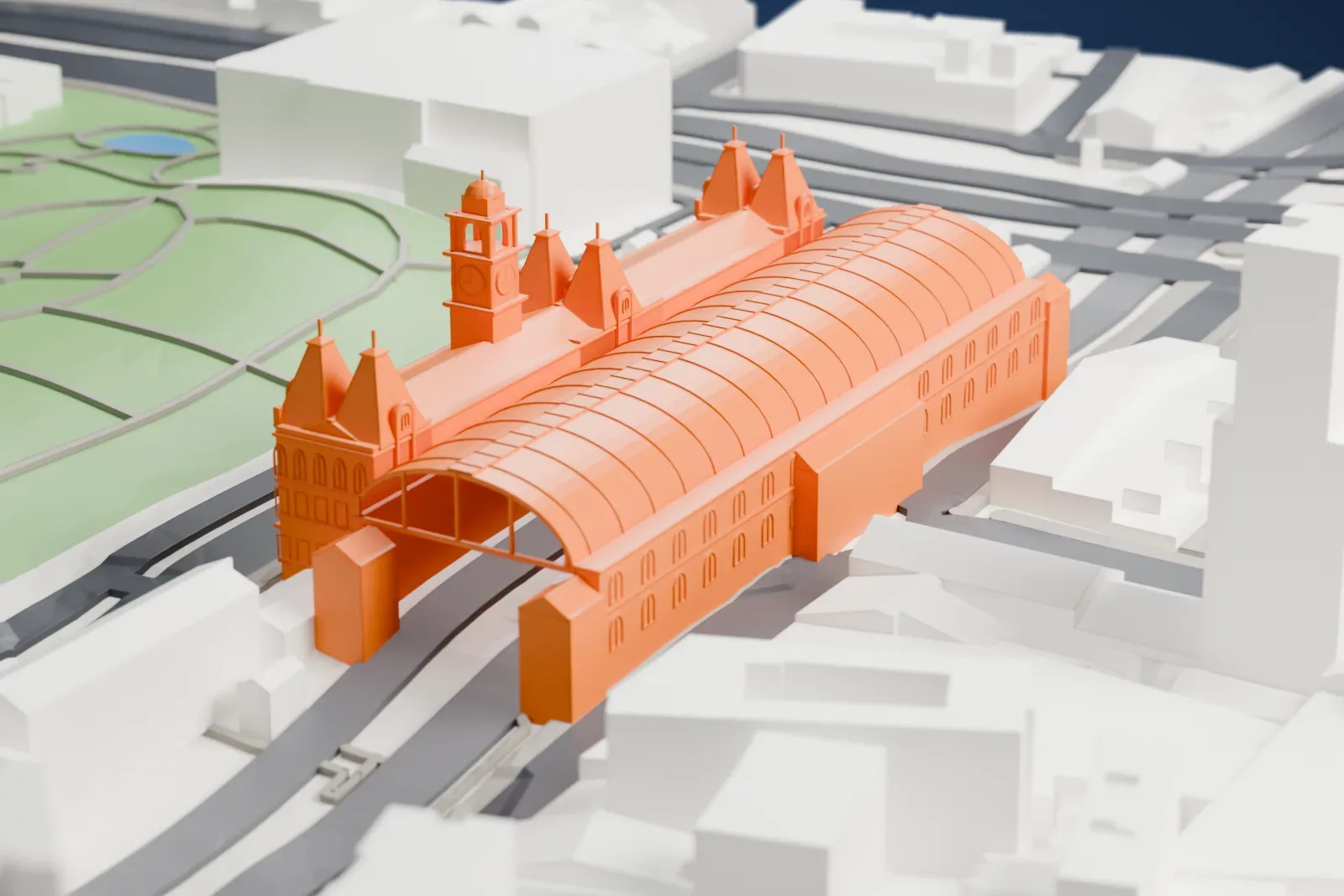
3D print Luz Station
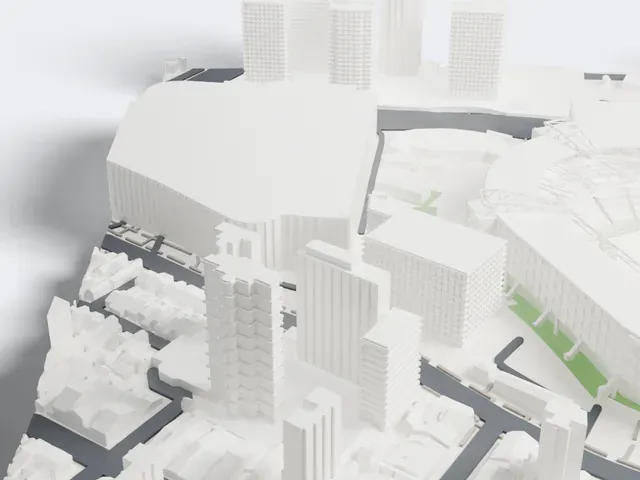
A free, printable model of Luz Station in São Paulo, with its station building and the surrounding city, generated from real map data in your browser.
-
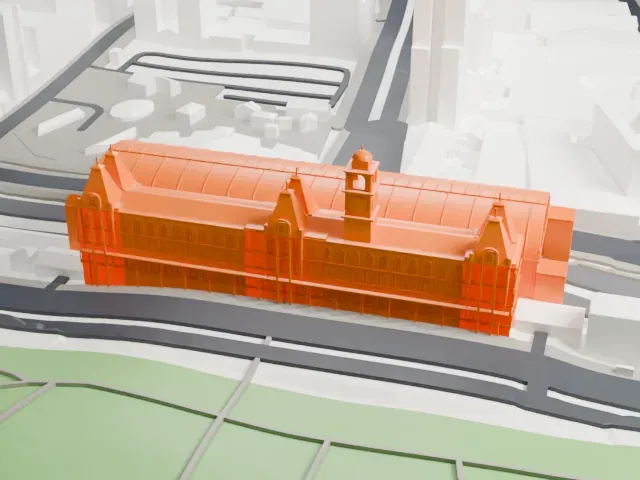 North
-
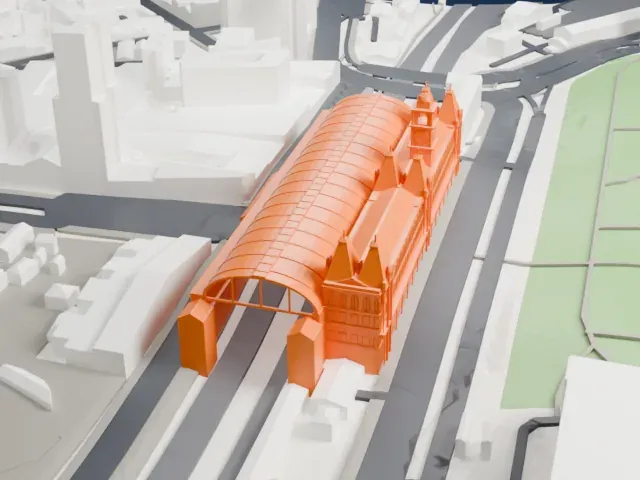 East
-
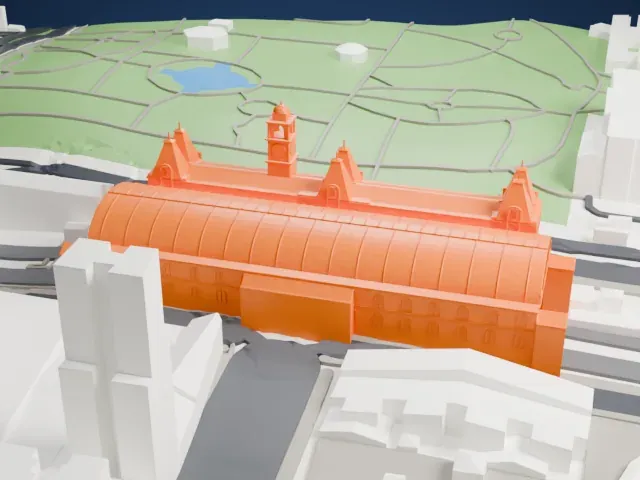 South
-
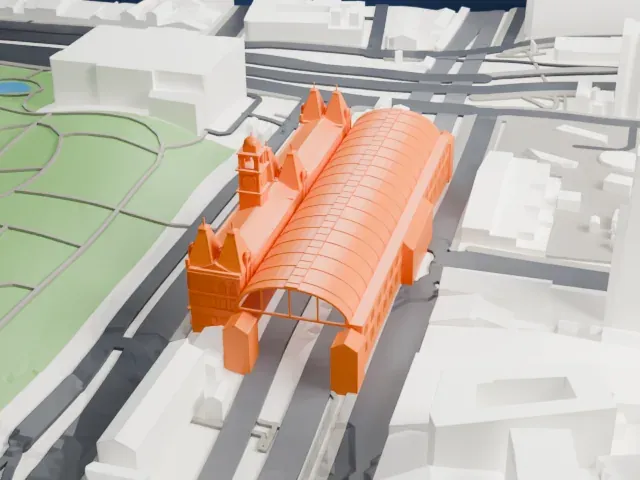 West
- On a 160 mm print
- 16 mm
- Scale
- 1:3,750
16 mm tall on a 160 mm print
Make this print opens the generator on a 600 m square around the landmark. Buildings print at close to true scale, so the landmark grows with the print size.
- Long roof and openings
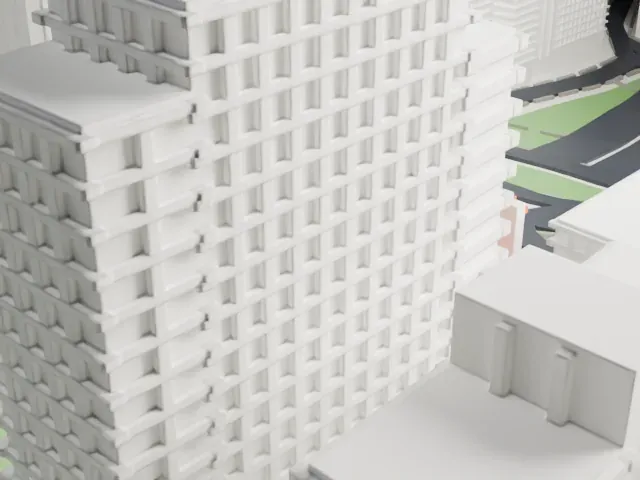
A station model prints as a long building with a wide roof, so roof edges and window openings are the first details to soften. Print friendly adapts thin parts to the scale; a larger print keeps them sharper.
- One piece with the ground
Luz Station is joined to the ground in the exported file, and the four-side check found no floating parts, so nothing needs gluing.
- Pick the detail for your nozzle
In the Buildings settings, set Landmark detail to Print friendly to adapt thin parts and small details to the print scale. Full detail keeps every modeled feature, for larger prints or a finer nozzle.
- Colors
Buildings, roads, water and ground arrive as separate filament slots in the 3MF. Luz Station takes the building color.
- File format
You get a 3MF for Bambu Studio, OrcaSlicer or PrusaSlicer. Any of them can save it as STL if you need one.
About Luz Station
Luz Station is a railway station for commuter and intercity trains in Bom Retiro, a district of São Paulo, Brazil. It serves the RFFSA intercity network and CPTM's Turquoise (Line 10), Coral (Line 11) and Jade (Line 13, Airport Express) routes. An underground station of the same name links it with Line 1-Blue of the São Paulo Metro and Line 4-Yellow of ViaQuatro.
The station dates from 1895 to 1901 and was designed by Charles Henry Driver, a British architect, for the São Paulo Railway. That London-based company built the state's first railway, from the port of Santos to Jundiaí. The present building was completed in 1901 with materials shipped from the United Kingdom. Walter Macfarlane & Co.'s Saracen Foundry in Glasgow produced it, assembled it in Scotland, then took it apart for shipping to São Paulo, where it was put back together.
The Museum of the Portuguese Language, founded in 2006, is housed in the station, and a metro station forms part of the complex. In the early 20th century the station was the city's main gateway and received much of the coffee shipped from Santos. After a fire in 1946 another floor was added; the clock tower lost in that fire was rebuilt five years later.
About this model
Luz Station is one of more than 4,400 landmark models in Mini Skyline. They are made with AI, and each one is checked from four sides in its real surroundings before release. Everything around it is built from OpenStreetMap and Overture map data. If you would rather print the shape from map data, turn off Landmark models in the Buildings settings.
Same skyline