3D print Mode Gakuen Cocoon Tower
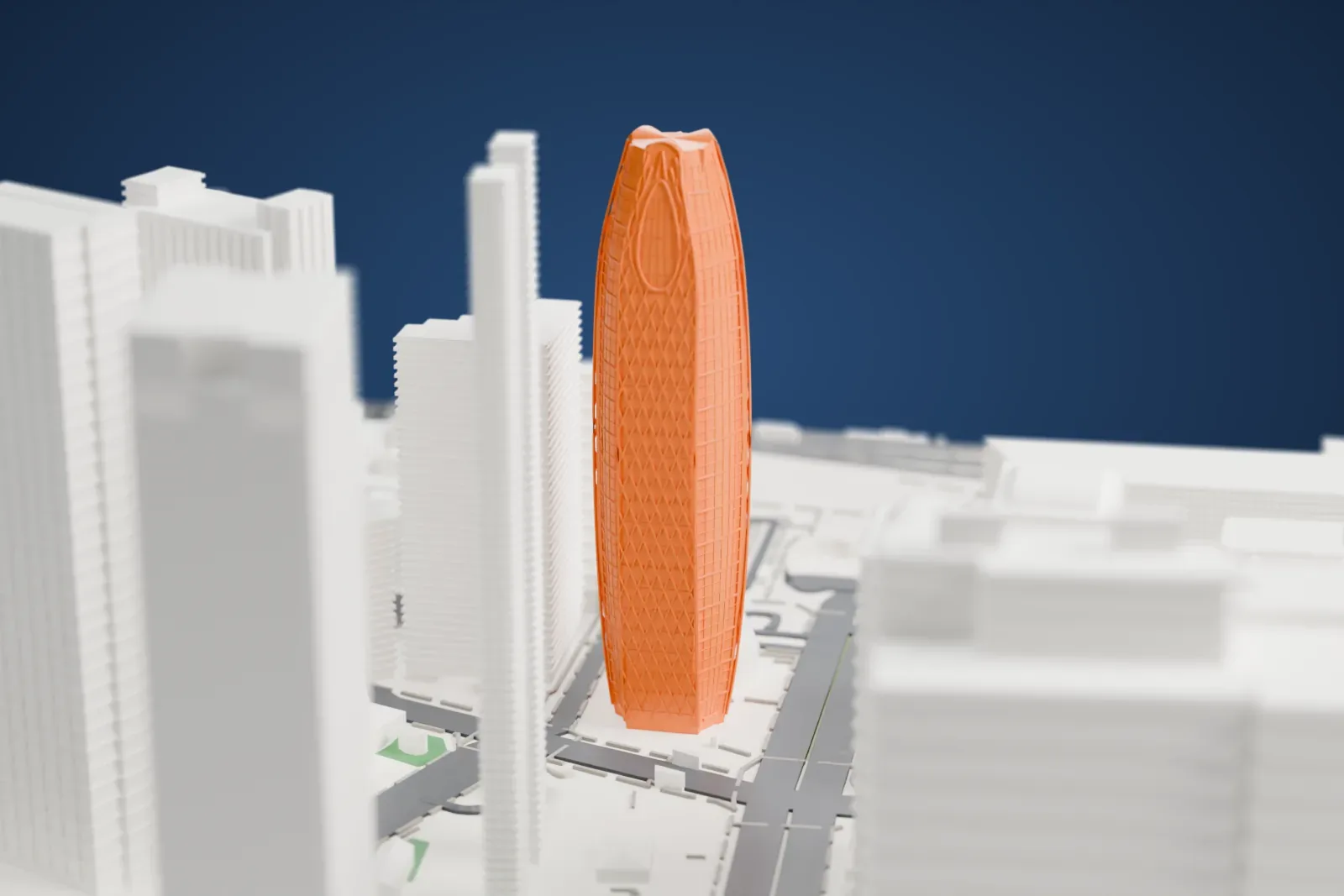
A free, printable model of the Mode Gakuen Cocoon Tower, its oval shell crossed by diagonal lines, with the high-rises and streets around it, generated from real map data in your browser.
-
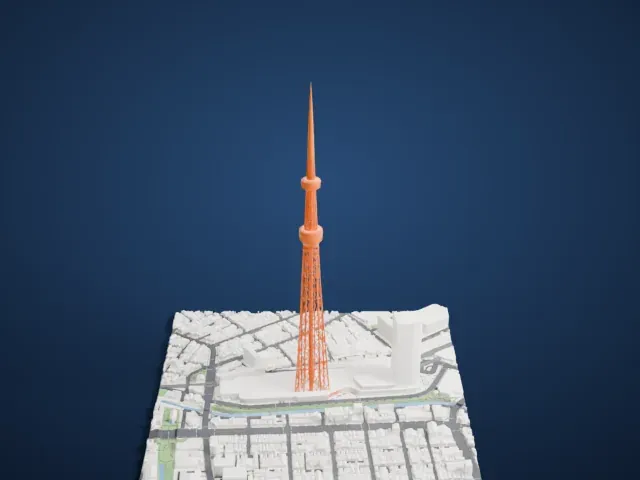
 North
-
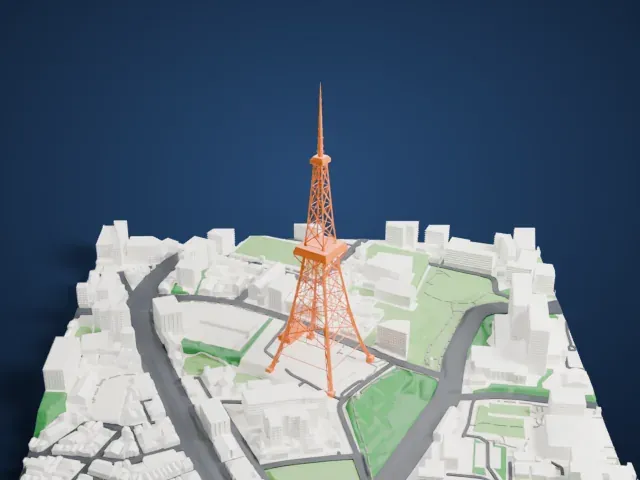
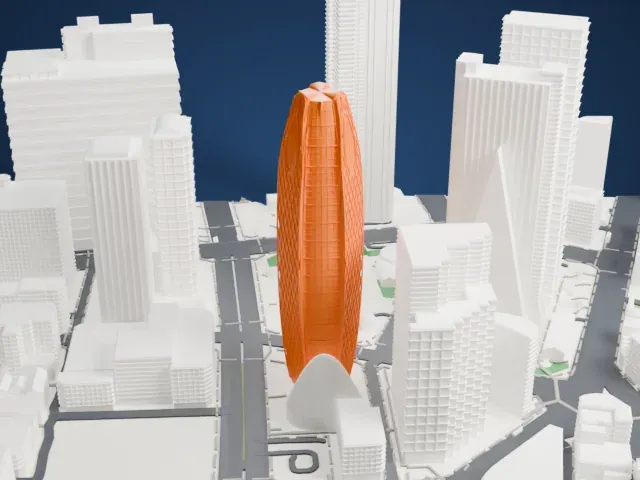 East
-
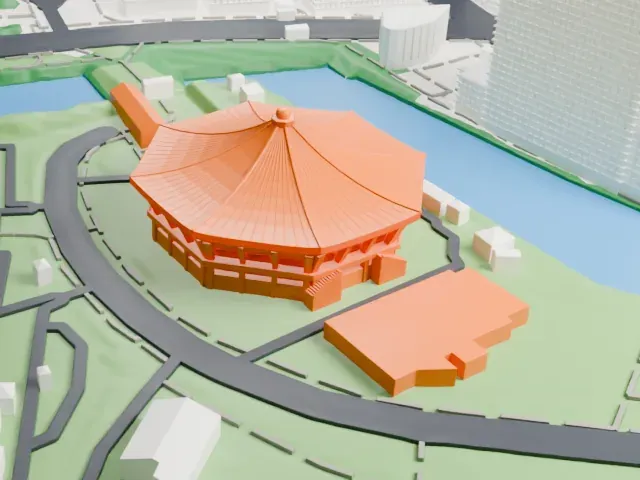
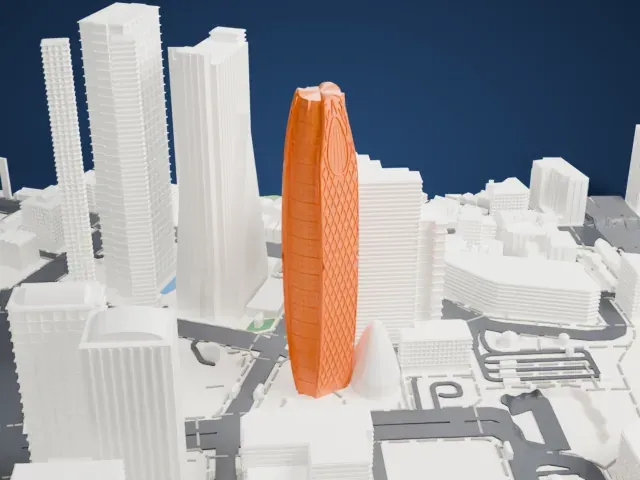 South
-
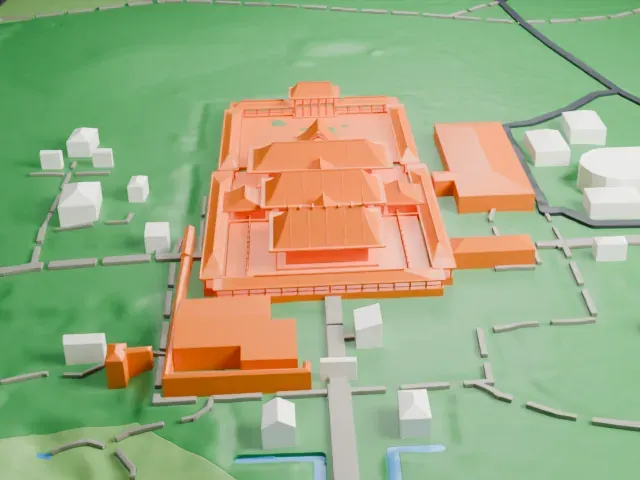
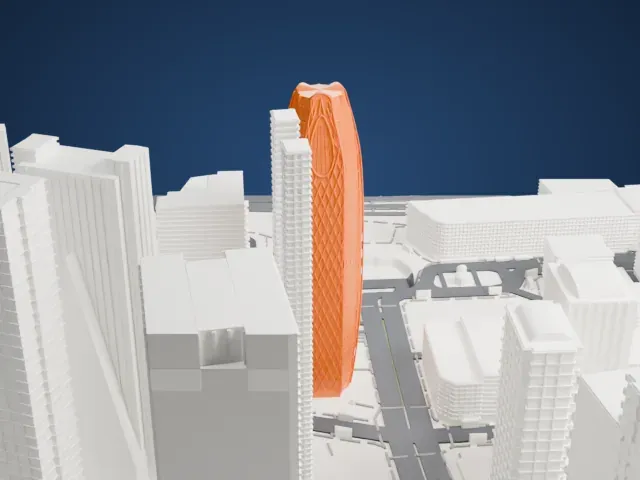 West
- Real height
- 204 m
- On a 160 mm print
- 55 mm
- Scale
- 1:3,750
204 m of Mode Gakuen Cocoon Tower, 55 mm on your shelf
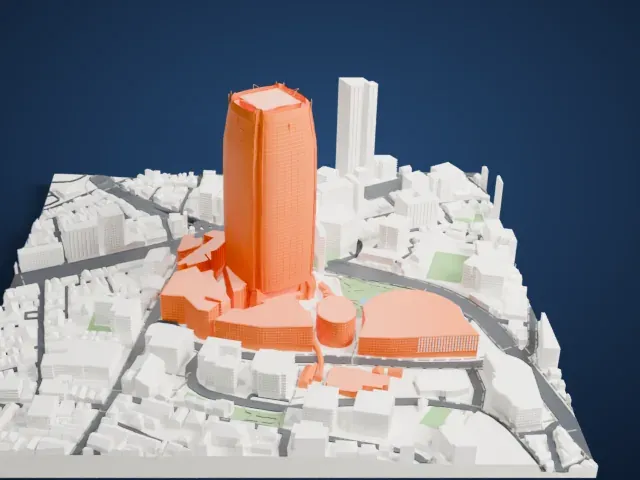
Make this print opens the generator on a 600 m square around the landmark. Buildings print at close to true scale, so the landmark grows with the print size.
- Diagonal web across the shell
The curved shell is crossed by a web of fine diagonal lines. Print friendly adapts such small surface details to the print scale; Full detail keeps them, which suits a larger print.
- Slim, tall shape
The tower is tall and slim for its width. Printing slowly with good cooling helps tall thin shapes, and layers of 0.12 to 0.16 mm keep the curved outline smooth.
- One piece with the ground
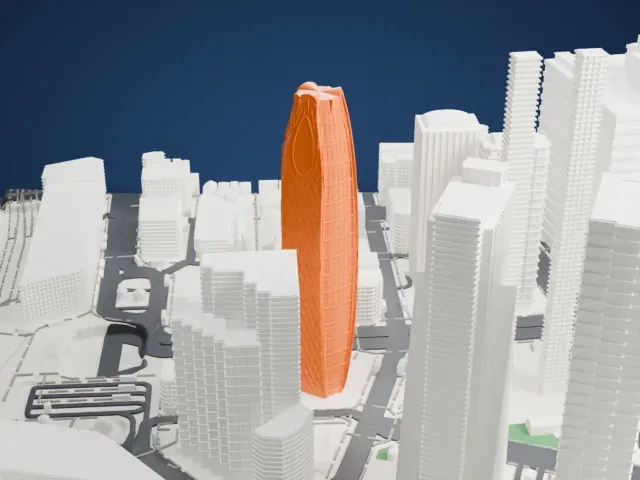
Mode Gakuen Cocoon Tower is joined to the ground in the exported file, and the four-side check found no floating parts, so nothing needs gluing.
- Pick the detail for your nozzle
In the Buildings settings, set Landmark detail to Print friendly to adapt thin parts and small details to the print scale. Full detail keeps every modeled feature, for larger prints or a finer nozzle.
- Colors
Buildings, roads, water and ground arrive as separate filament slots in the 3MF. Mode Gakuen Cocoon Tower takes the building color.
- File format
You get a 3MF for Bambu Studio, OrcaSlicer or PrusaSlicer. Any of them can save it as STL if you need one.
About Mode Gakuen Cocoon Tower
Mode Gakuen Cocoon Tower is a 50-story school building in the Nishi-Shinjuku district of Shinjuku, Tokyo, standing 204 m (669 ft) tall. Paul Noritaka Tange, son of Kenzo Tange, headed the team that designed it for Mode Gakuen. The school invited architects to compete and required a shape other than a rectangle. Around 50 architects entered, with more than 150 proposals between them.
The winning design has a curved shell that combines white aluminum with dark blue glass, with white diagonal lines running across it in a web. Tange Associates said the shape, which resembles a cocoon, symbolizes nurturing for the students inside, and that they wanted to revitalize the surrounding area and serve as a gateway linking Shinjuku Station with the Shinjuku central business district. Construction began in May 2006 and ended in October 2008, on the former site of the Asahi Life headquarters.
Each floor has three rectangular classrooms around an inner core that holds a staircase, an elevator and a support shaft, and a three-story student lounge appears every third floor, facing east, southwest and northwest. The tower's vertical campus has room for 10,000 students across three institutions: Tokyo Mode Gakuen, a fashion vocational school, HAL Tokyo, and Shuto Ikō, a medical college. Emporis named the tower its 2008 Skyscraper of the Year. Among educational buildings it ranks second tallest in the world, behind only the main building of Moscow State University.
About this model
Mode Gakuen Cocoon Tower is one of more than 4,300 landmark models in Mini Skyline. They are made with AI, and each one is checked from four sides in its real surroundings before release. Everything around it is built from OpenStreetMap and Overture map data. If you would rather print the shape from map data, turn off Landmark models in the Buildings settings.
Same skyline