3D print Ōsaki Station
A free, printable model of Ōsaki Station in Tokyo, with the surrounding streets and buildings, generated from real map data in your browser.
-
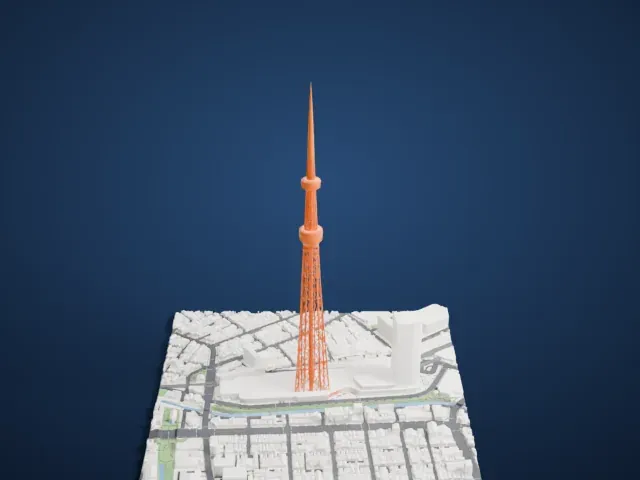
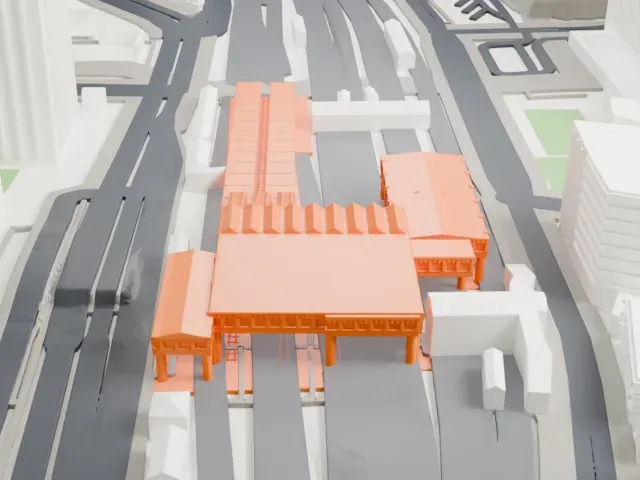 North
-
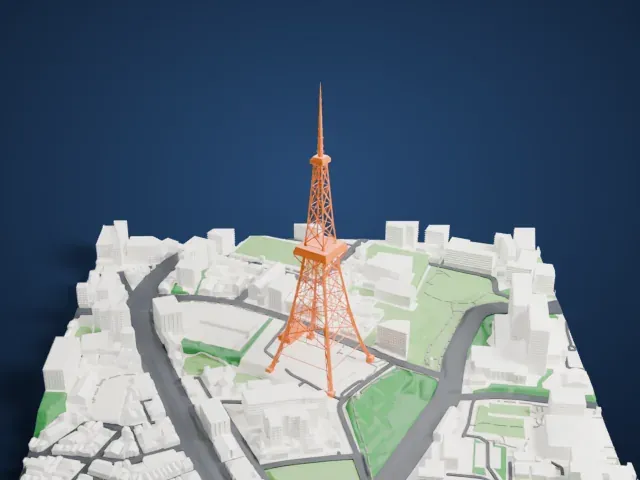
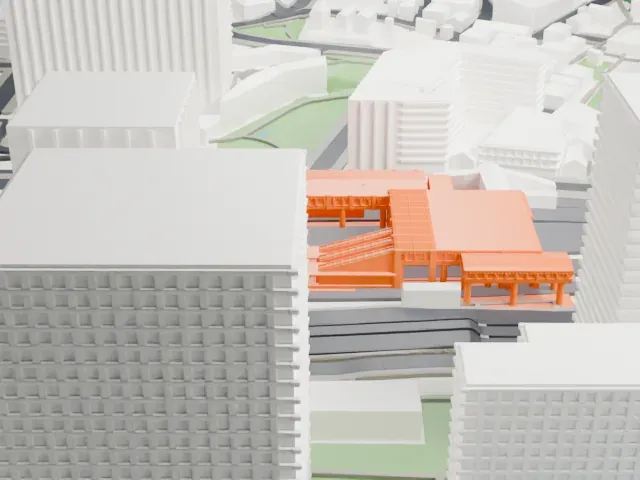 East
-
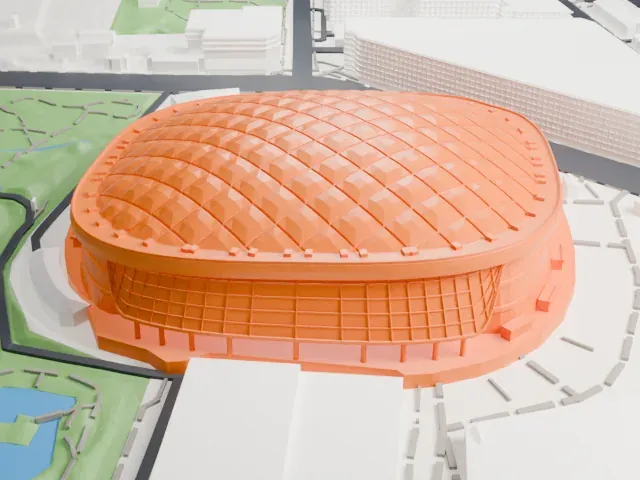
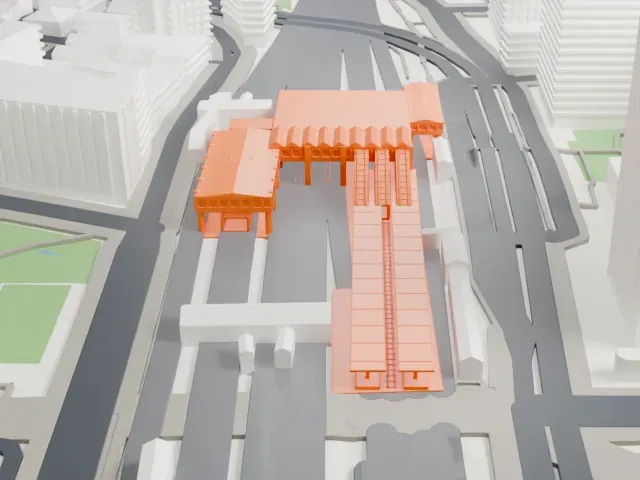 South
-
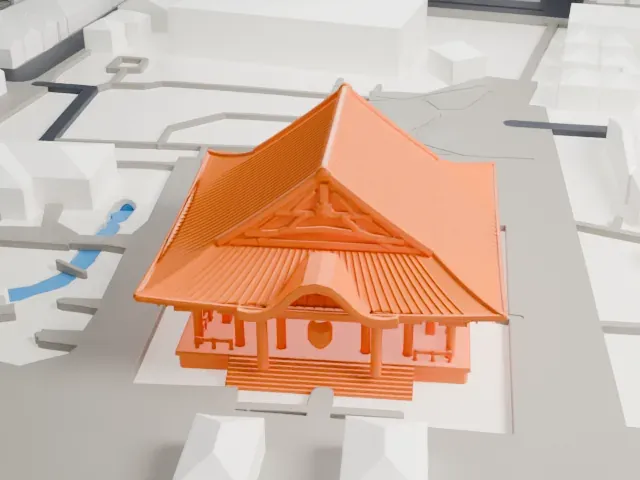
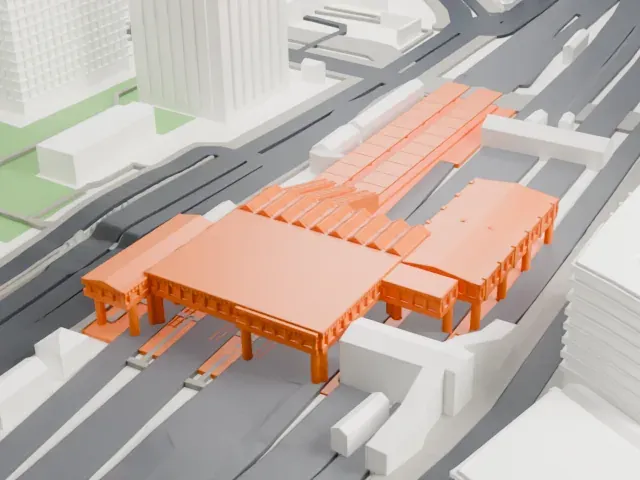 West
The model you print
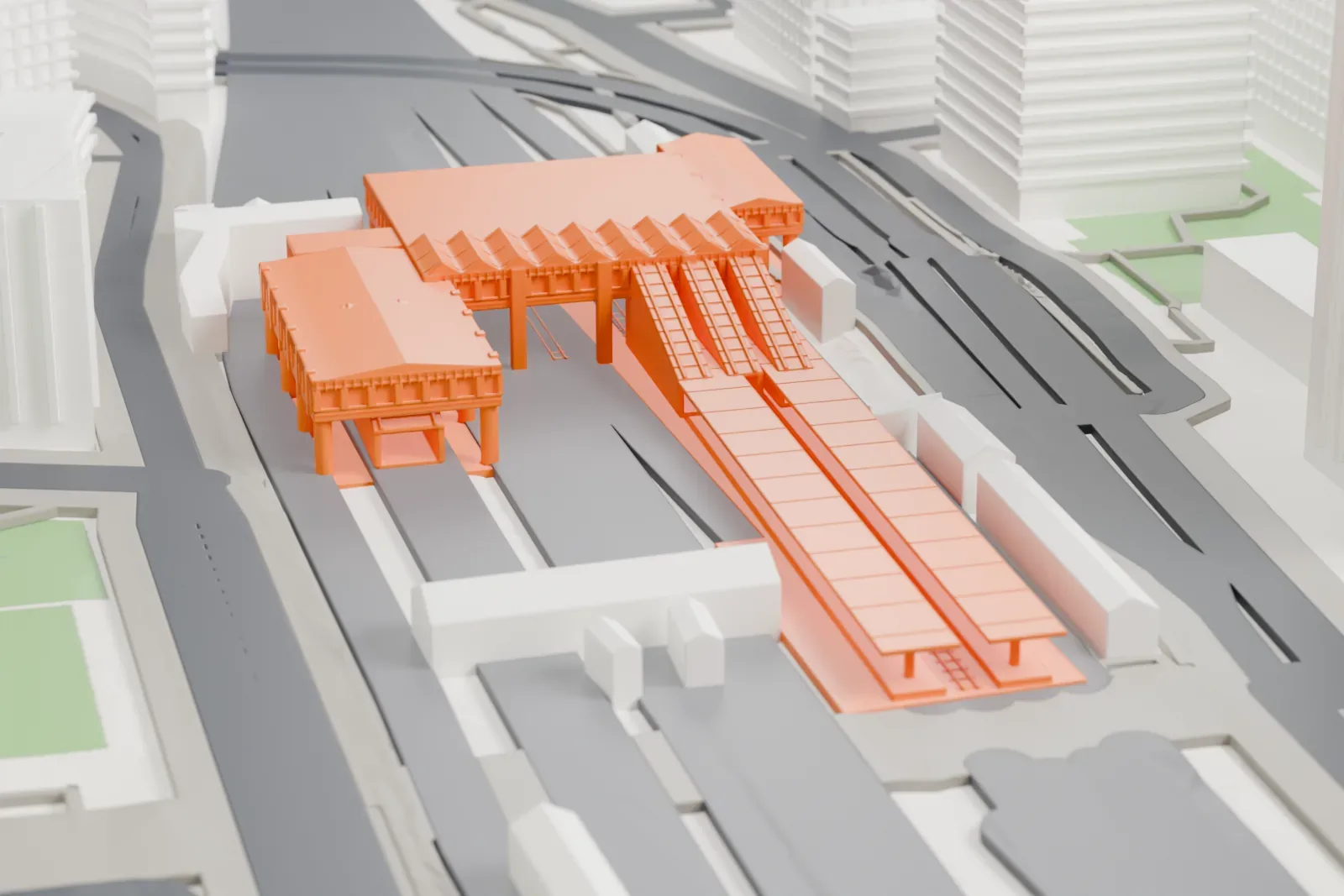
Ōsaki Station in 3D
The landmark on its own, at its size on a 160 mm print. Print friendly thickens thin parts for a 0.4 mm nozzle; Full detail keeps every part.
- On a 160 mm print
- 4 mm
- Scale
- 1:3,750
4 mm tall on a 160 mm print
Make this print opens the generator on a 600 m square around the landmark. Buildings print at close to true scale, so the landmark grows with the print size.
- Long station volumes
Stations are mostly long, low buildings, with platform and roof edges doing the work. A larger print keeps those long lines clean.
- One piece with the ground
Ōsaki Station is joined to the ground in the exported file, and the four-side check found no floating parts, so nothing needs gluing.
- Pick the detail for your nozzle
In the Buildings settings, set Landmark detail to Print friendly to adapt thin parts and small details to the print scale. Full detail keeps every modeled feature, for larger prints or a finer nozzle.
- Colors
Buildings, roads, water and ground arrive as separate filament slots in the 3MF. Ōsaki Station takes the building color.
- File format
You get a 3MF for Bambu Studio, OrcaSlicer or PrusaSlicer. Any of them can save it as STL if you need one.
About Ōsaki Station
Ōsaki Station stands in Shinagawa, Tokyo, Japan. JR East, formally East Japan Railway Company, and TWR (Tokyo Waterfront Area Rapid Transit) share ownership and operation. The station handles six passenger services. They are the Yamanote Line, the Shōnan–Shinjuku Line, the Saikyō Line, the Shōnan limited express, the Rinkai Line and the Sōtetsu–JR Link Line.
Four island platforms handle eight tracks. Yamanote trains use platforms 1 to 4; the Ōsaki Branch Line uses platforms 5 and 8; the Rinkai Line uses platforms 6 and 7. Because it is one of the stations where Yamanote trains enter and leave service, the station has four Yamanote tracks, two per direction. This lets trains start or end their run without getting in the way of trains staying on the loop.
Service began on February 25, 1901, under Nippon Railway, which the state took over in 1906. New platforms for the Saikyō, Rinkai and Shōnan–Shinjuku lines opened on the west side on December 1, 2002. Fare gates are shared by JR East and the Rinkai Line, letting passengers change between the two without leaving the paid area.
About this model
Ōsaki Station is one of more than 4,900 landmark models in Mini Skyline. They are made with AI, and each one is checked from four sides in its real surroundings before release. Everything around it is built from OpenStreetMap and Overture map data. If you would rather print the shape from map data, turn off Landmark models in the Buildings settings.
Same skyline