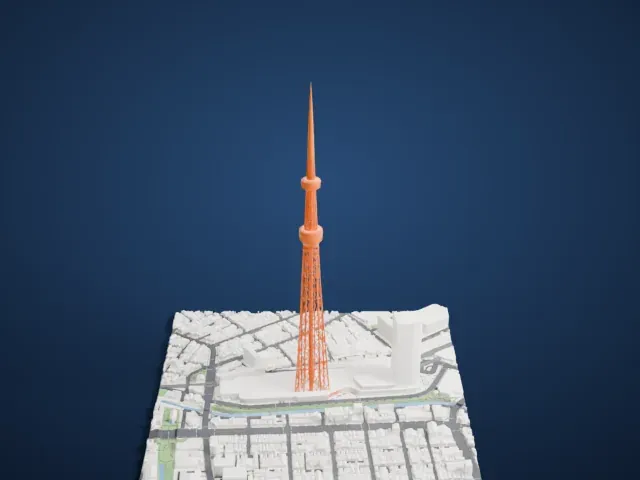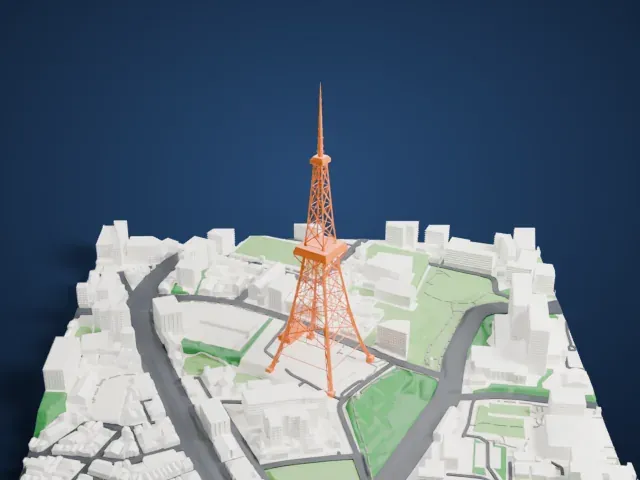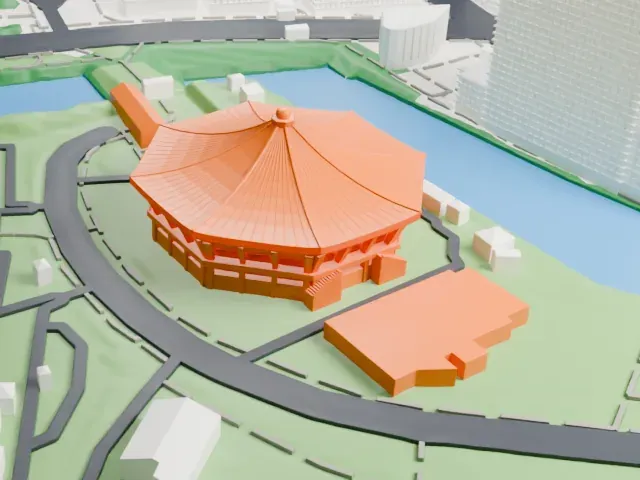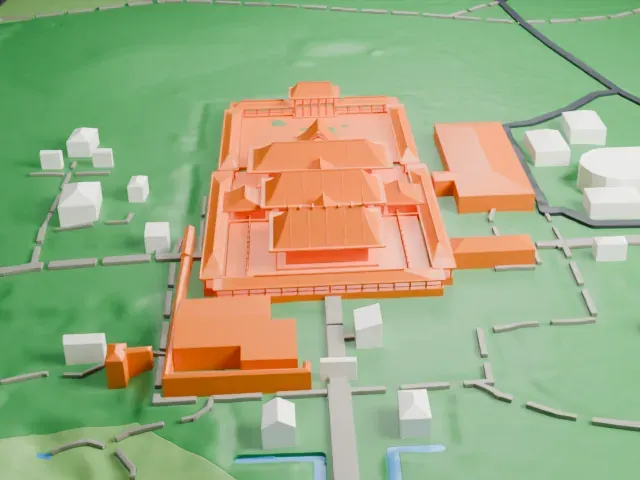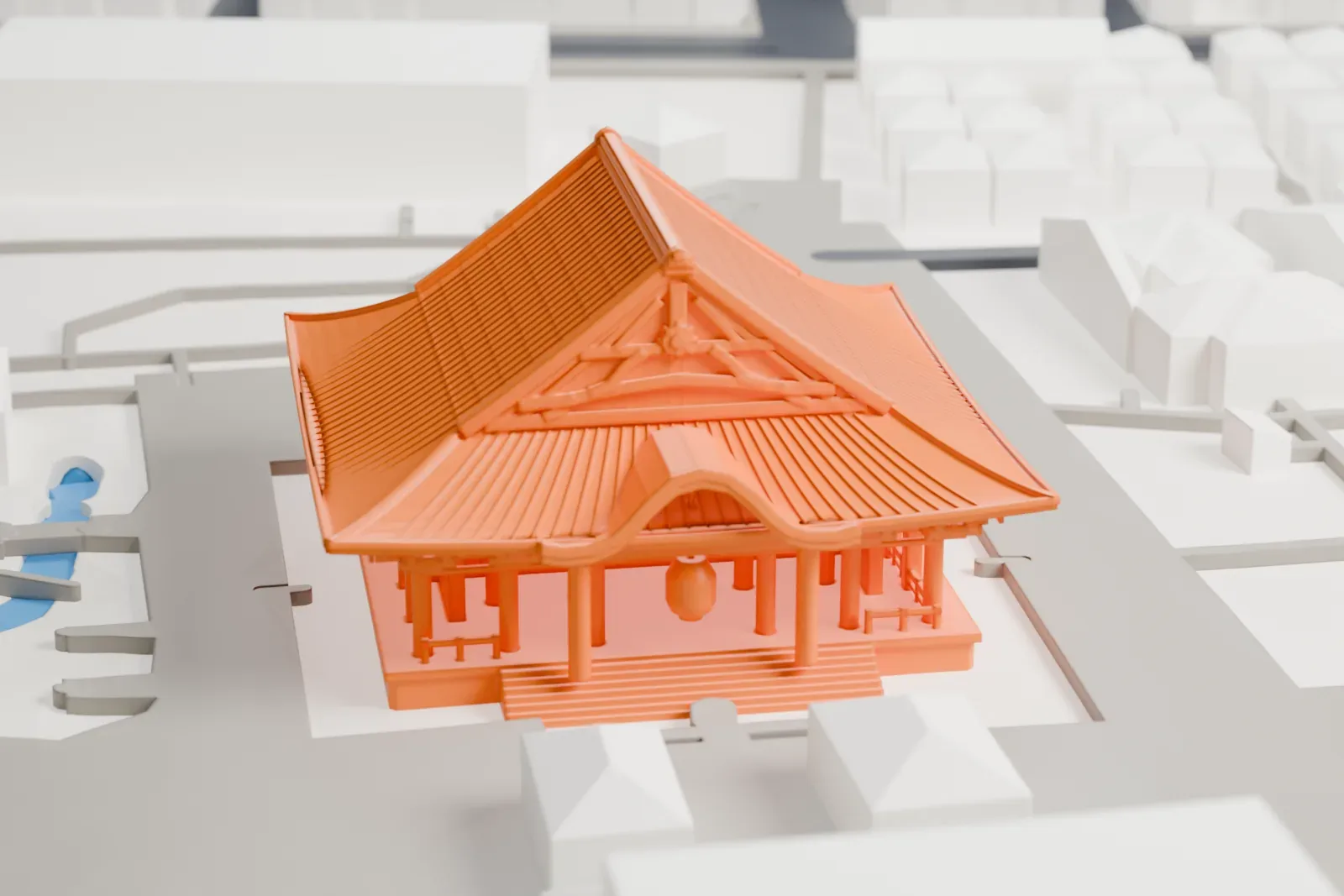
3D print Sensō-ji
A free, printable model of Sensō-ji and the streets and buildings around it in Asakusa, generated from real map data in your browser.
-
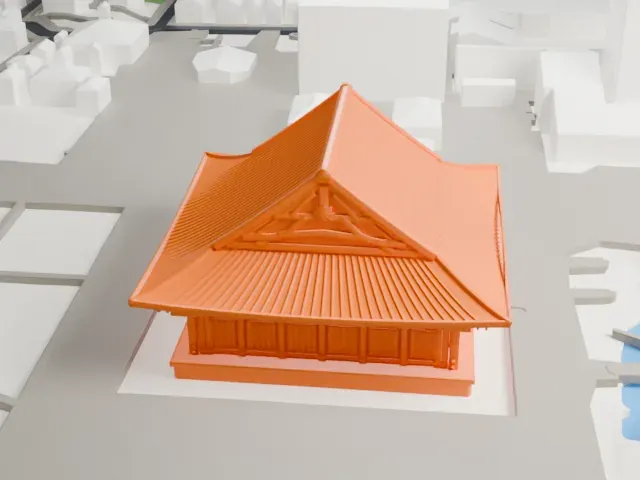 North
-
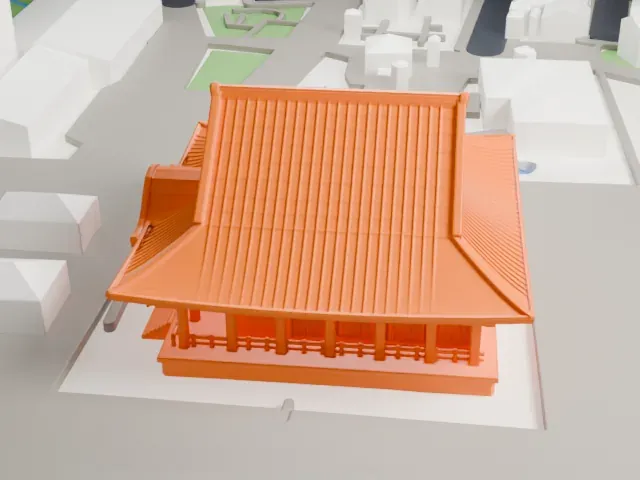 East
-
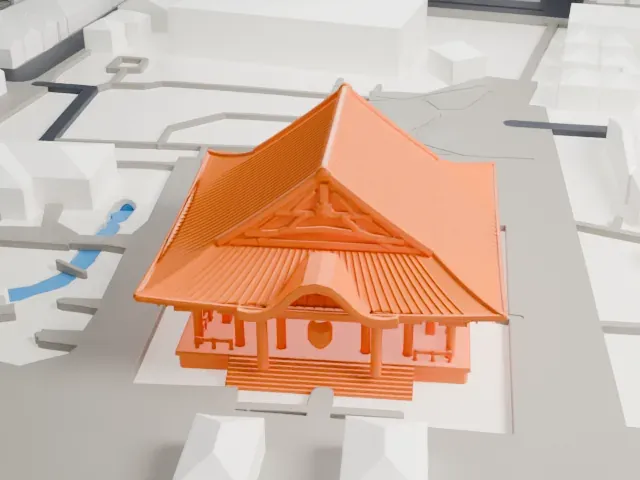 South
-
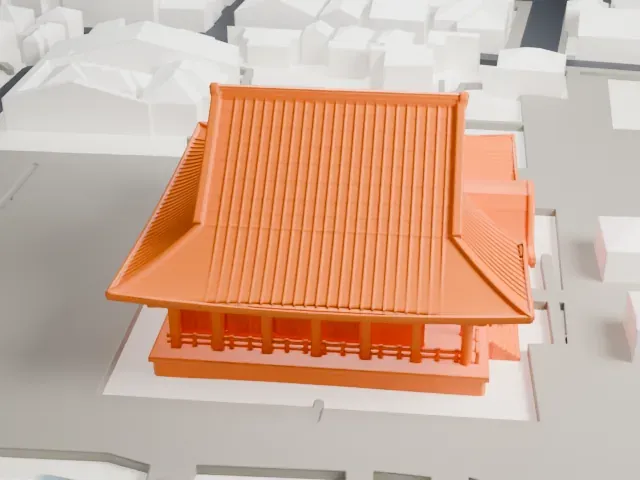 West
- On a 160 mm print
- 8 mm
- Scale
- 1:3,750
8 mm tall on a 160 mm print
Make this print opens the generator on a 600 m square around the landmark. Buildings print at close to true scale, so the landmark grows with the print size.
- Low halls with deep roofs
The buildings are low and wide, and their roofs reach out past the walls, so at the default print size the eaves matter more than the walls. Layers of 0.12 to 0.16 mm keep a roof edge clean.
- A larger print for the gates
Small parts on gates and lanterns shrink quickly. Print friendly adapts them at the default size; Full detail holds them better on a large print or with a fine nozzle.
- One piece with the ground
Sensō-ji is joined to the ground in the exported file, and the four-side check found no floating parts, so nothing needs gluing.
- Pick the detail for your nozzle
In the Buildings settings, set Landmark detail to Print friendly to adapt thin parts and small details to the print scale. Full detail keeps every modeled feature, for larger prints or a finer nozzle.
- Colors
Buildings, roads, water and ground arrive as separate filament slots in the 3MF. Sensō-ji takes the building color.
- File format
You get a 3MF for Bambu Studio, OrcaSlicer or PrusaSlicer. Any of them can save it as STL if you need one.
About Sensō-ji
The ancient Buddhist temple of Sensō-ji stands in Asakusa, in Tokyo, Japan, and honors Kannon, the bodhisattva of compassion. The temple is the oldest-established in Tokyo, one of the city's most significant, and the 13th stop along the Bandō Sanjūsankasho pilgrimage route. Its grounds hold a five-story pagoda, a main hall and large gates, with Nakamise-dōri, a street of shops selling traditional goods, leading in; the Asakusa Shrine stands directly to its east.
The temple burned in the firebombing of Tokyo on March 10, 1945, during World War II. Its main hall went up again in 1951-58; the Kaminarimon gate followed in 1960, then the Hōzōmon gate in 1964, and a new pagoda in 1973. The rebuilt temple has a titanium tiled roof that keeps the historic look while being stronger and lighter. The Kaminarimon, or Thunder Gate, is the outer of the two entrance gates and holds a huge paper lantern painted in vivid red and black.
Legend says the temple began when two brothers, fishing the Sumida River in 628, found a statue of Kannon, and a monk named Katsumi renovated it in 645. The first documented mention comes in a Kamakura-period chronicle, which records carpenters from Asakusa being called to Kamakura in 1181. In 1590 Tokugawa Ieyasu made Sensō-ji the shogunate's official place of prayer and gave it land.
About this model
Sensō-ji is one of more than 4,400 landmark models in Mini Skyline. They are made with AI, and each one is checked from four sides in its real surroundings before release. Everything around it is built from OpenStreetMap and Overture map data. If you would rather print the shape from map data, turn off Landmark models in the Buildings settings.
Same skyline