3D print Palazzo Piccolomini, Pienza
A free, printable model of the square palace with its hipped roof and the crowded streets and buildings around it, generated from real map data in your browser.
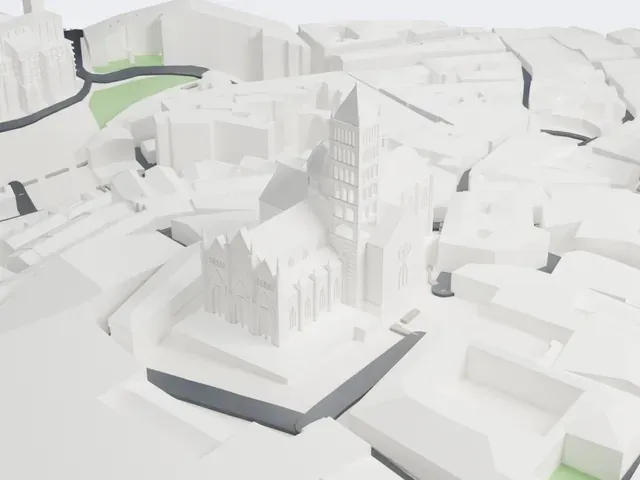
-
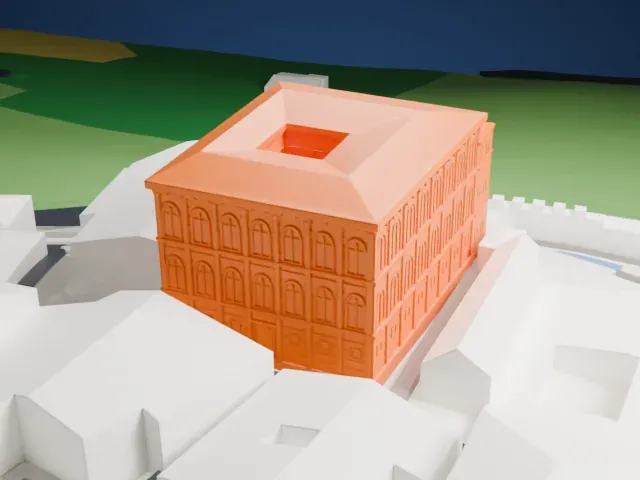 North
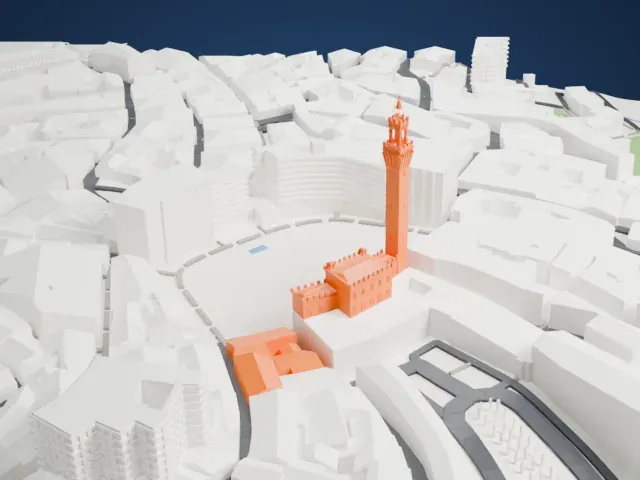
-
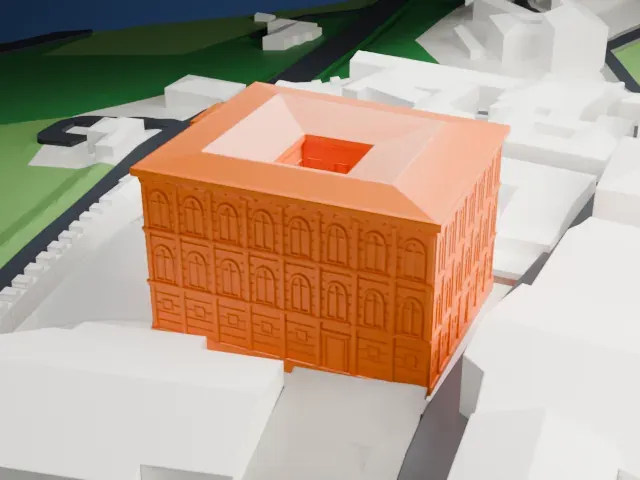 East
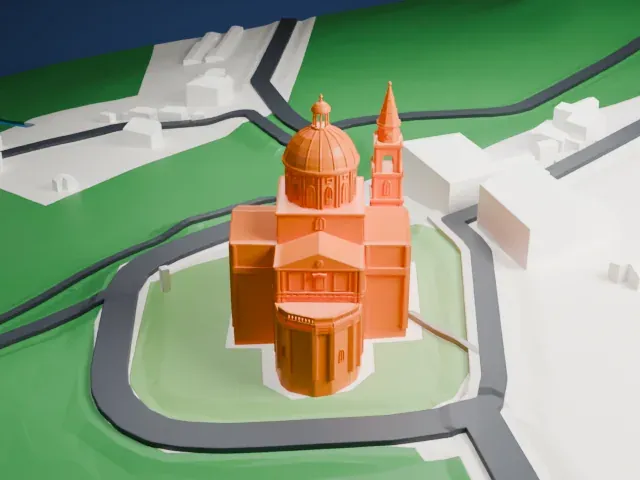
-
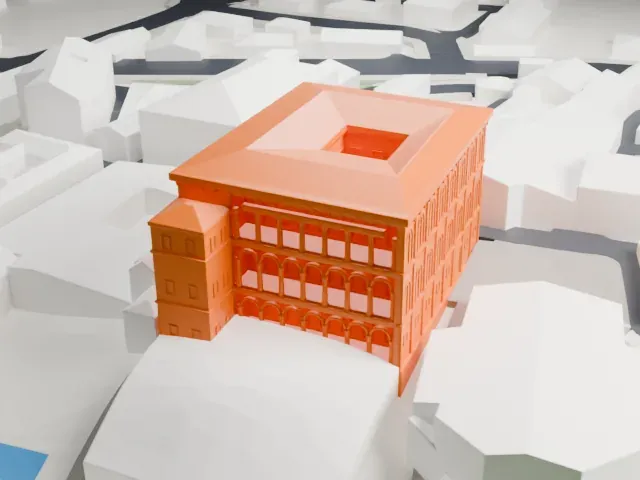 South
-
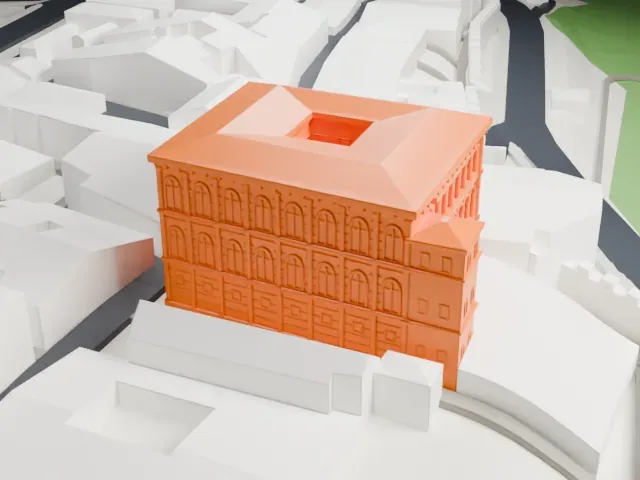 West
The model you print
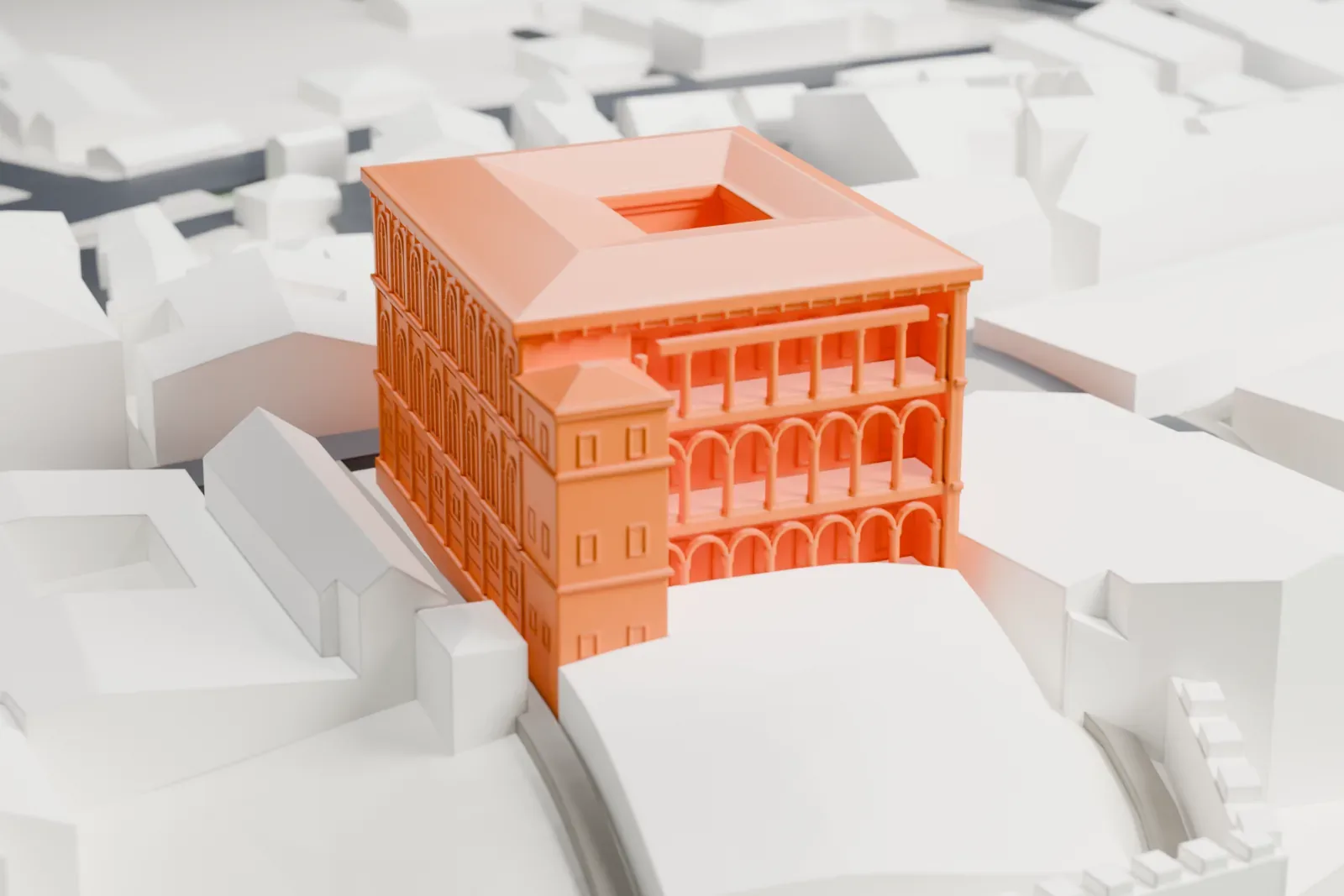
Palazzo Piccolomini, Pienza in 3D
The landmark on its own, at its size on a 160 mm print. Print friendly thickens thin parts for a 0.4 mm nozzle; Full detail keeps every part.
- On a 160 mm print
- 8 mm
- Scale
- 1:3,750
8 mm tall on a 160 mm print
Make this print opens the generator on a 600 m square around the landmark. Buildings print at close to true scale, so the landmark grows with the print size.
- Rows of arched windows
Every side carries rows of arched windows, and the south side has tiers of arched openings. Print friendly adapts them at small sizes; Full detail keeps all of them and suits a larger print with fine layers.
- One piece with the ground
Palazzo Piccolomini, Pienza is joined to the ground in the exported file, and the four-side check found no floating parts, so nothing needs gluing.
- Pick the detail for your nozzle
In the Buildings settings, set Landmark detail to Print friendly to adapt thin parts and small details to the print scale. Full detail keeps every modeled feature, for larger prints or a finer nozzle.
- Colors
Buildings, roads, water and ground arrive as separate filament slots in the 3MF. Palazzo Piccolomini, Pienza takes the building color.
- File format
You get a 3MF for Bambu Studio, OrcaSlicer or PrusaSlicer. Any of them can save it as STL if you need one.
About Palazzo Piccolomini, Pienza
Palazzo Piccolomini stands in the heart of Pienza, Italy, beside the Duomo. Work began in 1459 on a plan by Bernardo Rossellino, and it ranks among the earliest Renaissance buildings. Pope Pius II commissioned it. Born Enea Silvio Piccolomini in the small village of Corsignano, that village was later renamed Pienza, meaning "city of Pio", in his honor.
The palace belonged to the plan for rebuilding Pienza as the ideal city. Rossellino drew on the Palazzo Rucellai in Florence, a creation of Leon Battista Alberti, his master. The square building rises through three floors and is built of rustic light stone. It faces the trapezoidal piazza, where the Duomo stands at the center. Inside is a rectangular courtyard with a loggia carried by stone columns.
Large windows, evenly spaced, line the upper floors in two rows, and a thin column splits each window in two. Stone family crests appear between some of them. The palace holds a museum with the old hall of arms, bedchambers and Pius II's study, plus the collection of art and sculpture he assembled. It has also appeared in films, among them Zeffirelli's Romeo and Juliet.
About this model
Palazzo Piccolomini, Pienza is one of more than 6,500 landmark models in Mini Skyline. They are made with AI, and each one is checked in its real surroundings before release. Each model is written as code from public descriptions, plans, photographs and aerial views used only as references; no image or third-party model is copied into it. Everything around it is built from OpenStreetMap and Overture map data. Rights in the building itself, its name and any brands on it are not granted by Mini Skyline; clear them separately before you sell prints. If you would rather print the shape from map data, turn off Landmark models in the Buildings settings.
Mini Skyline is not affiliated with, or endorsed by, the owners of this building or its names and marks.
Same skyline