3D print San Biagio, Montepulciano
A free, printable model of San Biagio, with its dome and bell tower, and the grass, roads and hillside around it, generated from real map data in your browser.
-
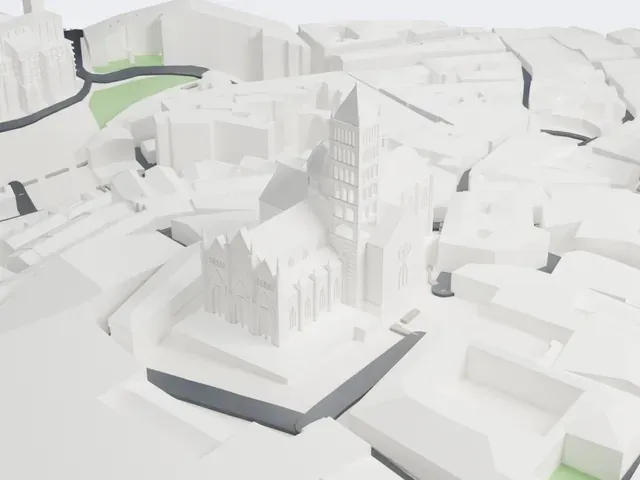
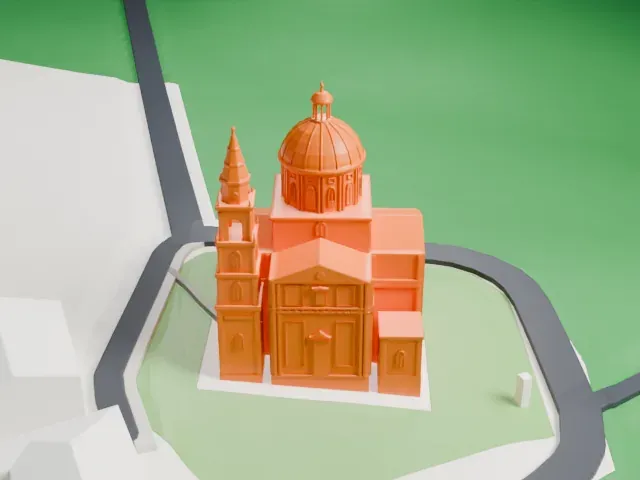 North
-
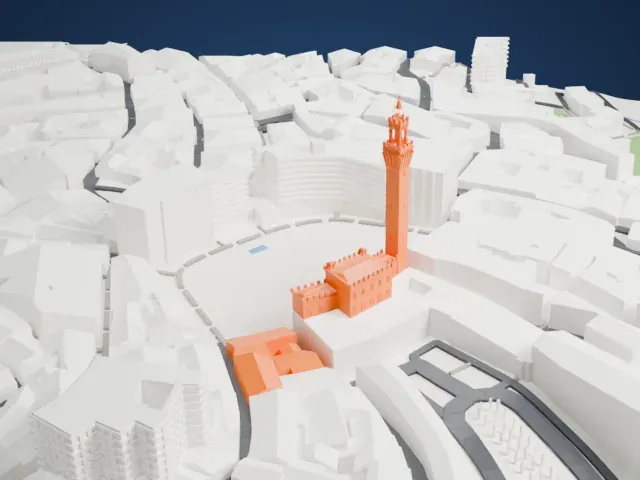
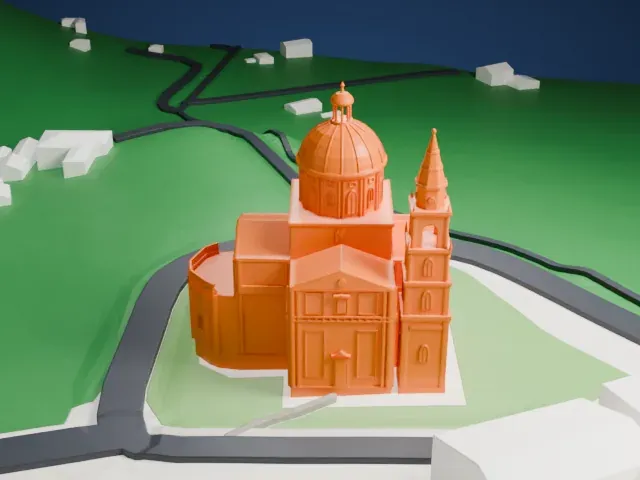 East
-
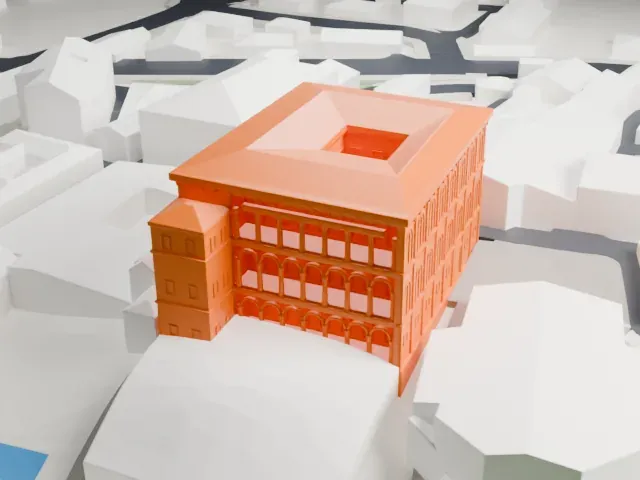
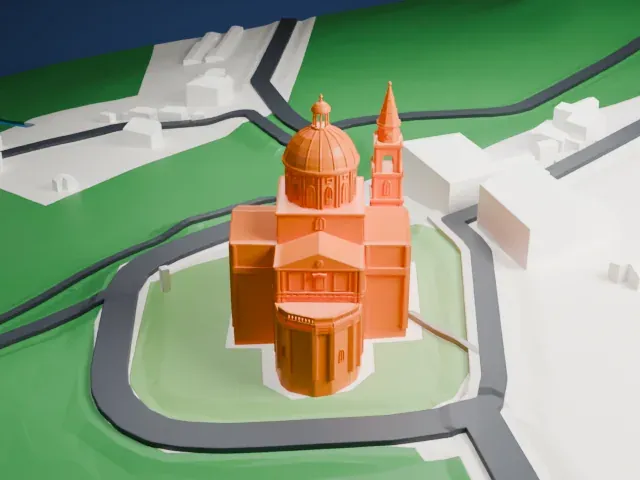 South
-
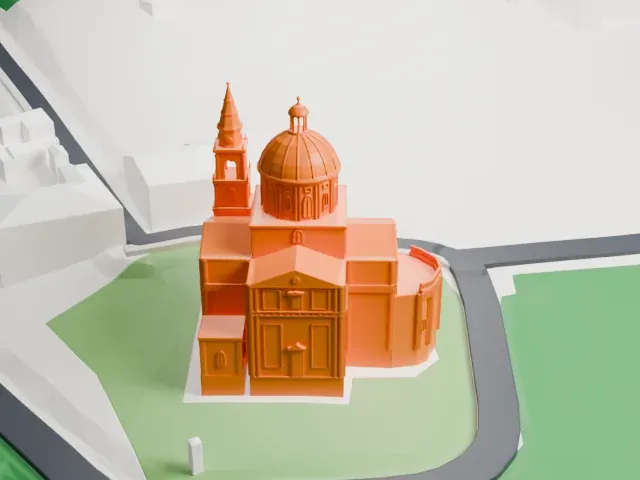 West
The model you print
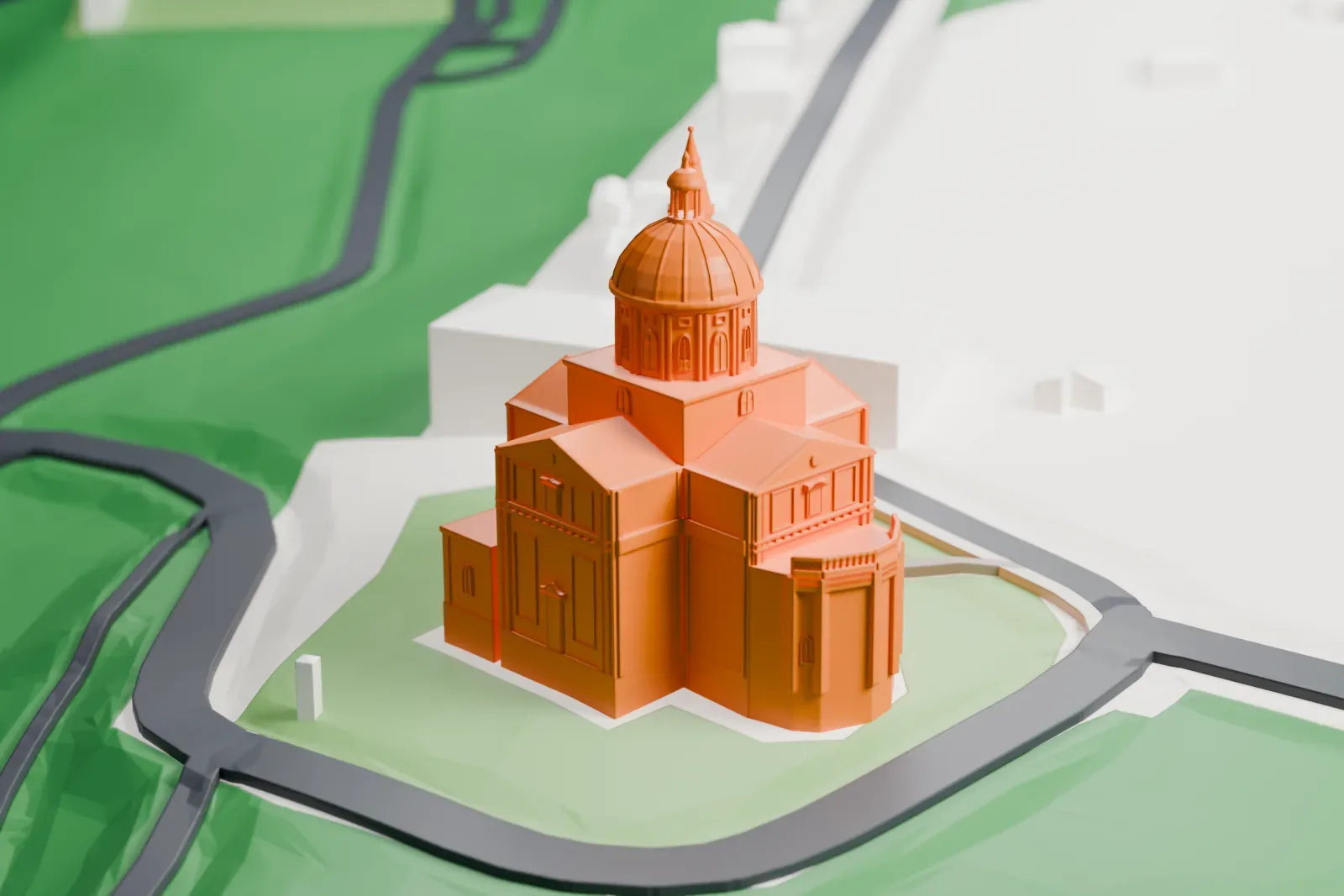
San Biagio, Montepulciano in 3D
The landmark on its own, at its size on a 160 mm print. Print friendly thickens thin parts for a 0.4 mm nozzle; Full detail keeps every part.
- On a 160 mm print
- 14 mm
- Scale
- 1:3,750
14 mm tall on a 160 mm print
Make this print opens the generator on a 600 m square around the landmark. Buildings print at close to true scale, so the landmark grows with the print size.
- Spired bell tower
The bell tower ends in a thin pyramid-shaped spire, the most delicate part of the model. Print friendly adapts it to the print scale; print slowly with good cooling.
- Dome and lantern
The ribbed dome carries a small open lantern on top. A larger print, or Full detail, keeps the lantern's small details; 0.12–0.16 mm layers keep the ribs crisp.
- One piece with the ground
San Biagio, Montepulciano is joined to the ground in the exported file, and the four-side check found no floating parts, so nothing needs gluing.
- Pick the detail for your nozzle
In the Buildings settings, set Landmark detail to Print friendly to adapt thin parts and small details to the print scale. Full detail keeps every modeled feature, for larger prints or a finer nozzle.
- Colors
Buildings, roads, water and ground arrive as separate filament slots in the 3MF. San Biagio, Montepulciano takes the building color.
- File format
You get a 3MF for Bambu Studio, OrcaSlicer or PrusaSlicer. Any of them can save it as STL if you need one.
About San Biagio, Montepulciano
San Biagio is a church standing just outside Montepulciano in Tuscany, central Italy. Antonio da Sangallo the Elder designed it, and it went up between 1518 and 1540 as an example of the Renaissance Greek cross central plan. He took his cue from Santa Maria delle Carceri, a basilica in Prato that his brother Giuliano da Sangallo had designed years earlier.
The late Renaissance church replaced an earlier Palaeochristian pieve dedicated first to St. Mary and later to St. Blaise. Pope Leo X, a former student of Angelo Poliziano (who came from Montepulciano), backed the project. The same central plan, taken from the work of Filippo Brunelleschi, was used in the original design for St. Peter's Basilica by Bramante and Michelangelo, and in Santa Maria della Consolazione in Todi.
The plan is a Greek cross with a central dome carried on a drum, and a semicircular apse opposite the entrance. A large entablature with a frieze of triglyphs and metopes runs around the whole building, splitting the main façade into two levels; the same scheme repeats, with minor changes, on the two side façades. Travertine slabs form the whole exterior. A multifloor bell tower topped by a pyramidal cusp flanks the façade; two matching towers were planned, but only one was built.
About this model
San Biagio, Montepulciano is one of more than 6,500 landmark models in Mini Skyline. They are made with AI, and each one is checked in its real surroundings before release. Each model is written as code from public descriptions, plans, photographs and aerial views used only as references; no image or third-party model is copied into it. Everything around it is built from OpenStreetMap and Overture map data. Rights in the building itself, its name and any brands on it are not granted by Mini Skyline; clear them separately before you sell prints. If you would rather print the shape from map data, turn off Landmark models in the Buildings settings.
Mini Skyline is not affiliated with, or endorsed by, the owners of this building or its names and marks.
Same skyline