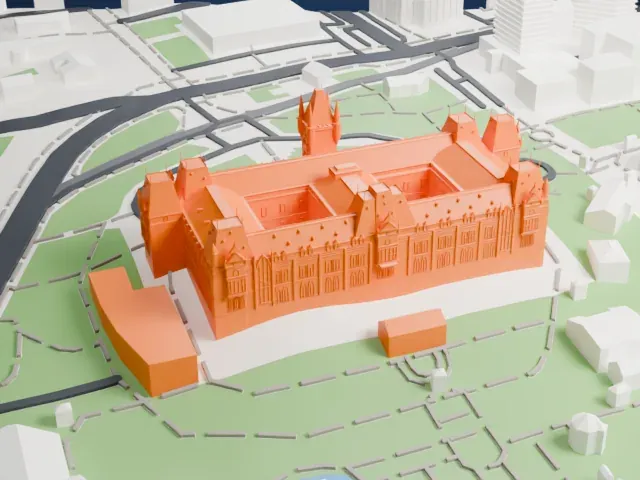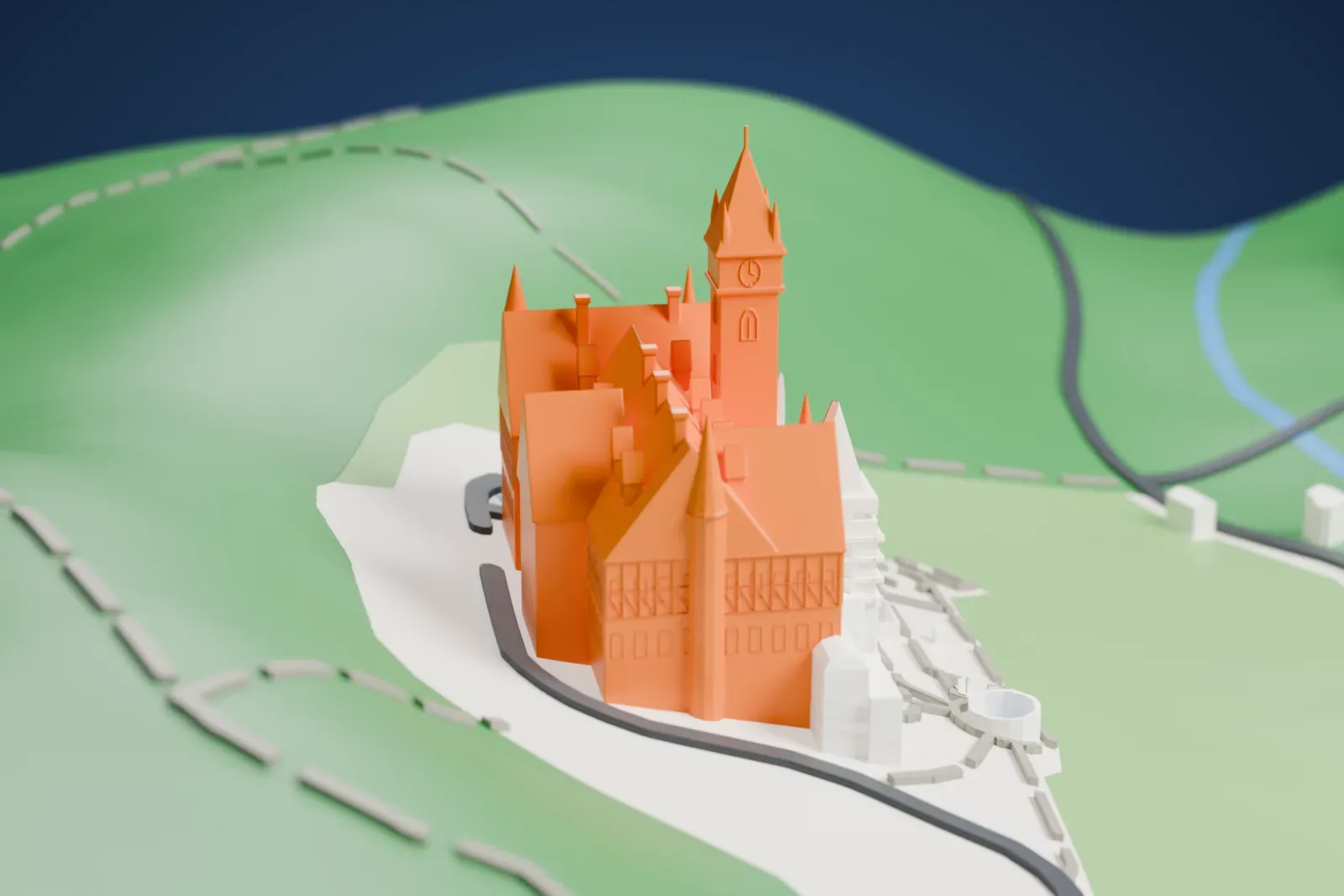
3D print Peleș Castle
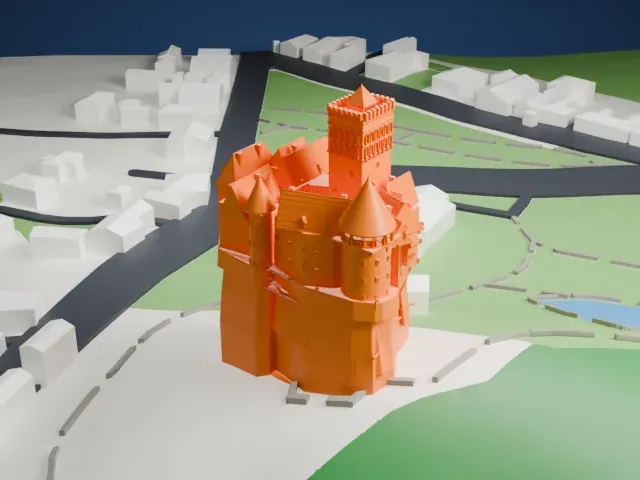
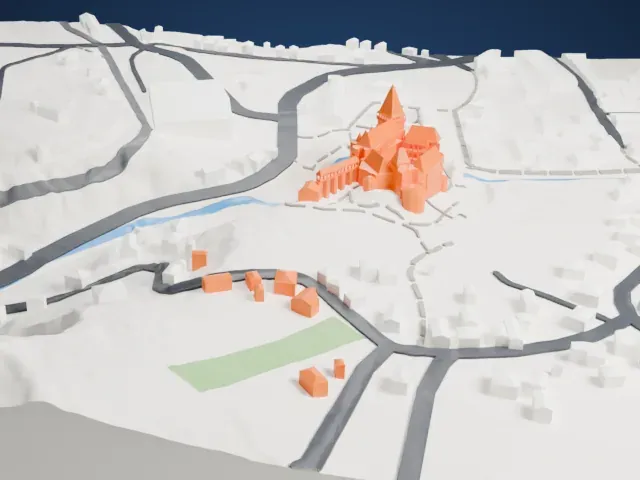
A free, printable model of Peleș Castle, with its tall spired tower and steep gabled roofs, and the wooded mountain slope and buildings around it, generated from real map data in your browser.
-
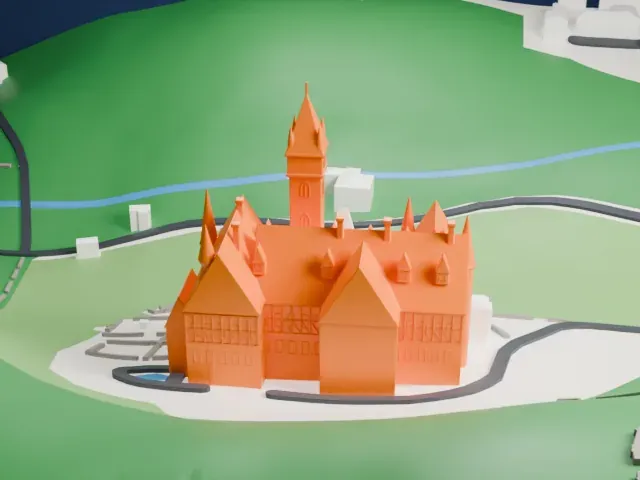 North
-
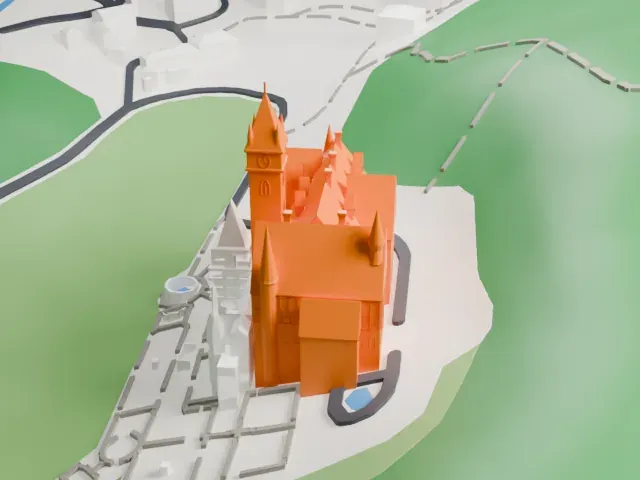 East
-
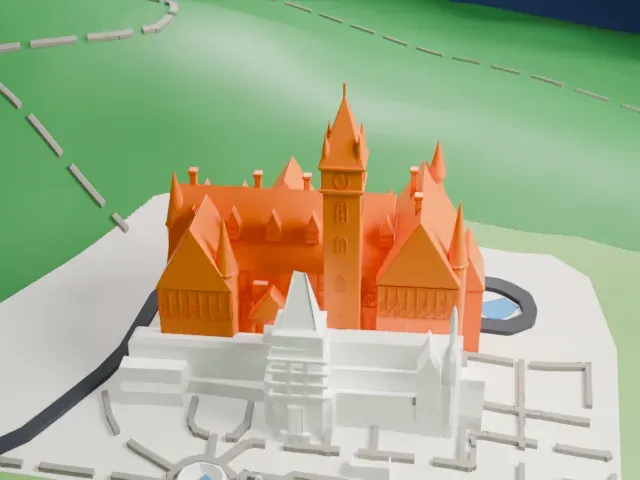 South
-
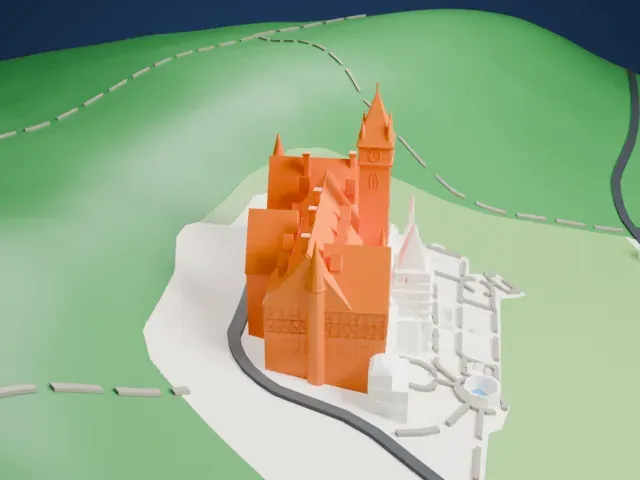 West
- Real height
- 66 m
- On a 160 mm print
- 21 mm
- Scale
- 1:3,750
66 m of Peleș Castle, 21 mm on your shelf
Make this print opens the generator on a 600 m square around the landmark. Buildings print at close to true scale, so the landmark grows with the print size.
- Tall spired tower
The central tower ends in a slim pointed spire, and smaller spires stand around it. Print friendly adapts these thin tips to the print scale; Full detail keeps them on larger prints. Print slowly with good cooling.
- Steep gables and fine lines
Steep gables and fine lines cover the facades. A layer height of 0.12–0.16 mm and a bigger print size keep those lines crisp.
- One piece with the ground
Peleș Castle is joined to the ground in the exported file, and the four-side check found no floating parts, so nothing needs gluing.
- Pick the detail for your nozzle
In the Buildings settings, set Landmark detail to Print friendly to adapt thin parts and small details to the print scale. Full detail keeps every modeled feature, for larger prints or a finer nozzle.
- Colors
Buildings, roads, water and ground arrive as separate filament slots in the 3MF. Peleș Castle takes the building color.
- File format
You get a 3MF for Bambu Studio, OrcaSlicer or PrusaSlicer. Any of them can save it as STL if you need one.
About Peleș Castle
Peleș Castle is a Neo-Renaissance palace that belongs to the Royal Domain of Sinaia. The domain lies in the Carpathian Mountains, near the town of Sinaia in Prahova County, Romania, on a medieval route that links Transylvania and Wallachia. The palace was built between 1873 and 1914 for King Carol I, who first visited the site in 1866 and fell in love with the mountain scenery. The foundation was laid on August 22, 1873, and the castle was inaugurated in 1883. It is described as the first castle in the world to run entirely on electricity produced locally.
King Carol I rejected the first three design plans as lacking originality and costing too much, since they copied other Western European palaces. Johannes Schultz, a German architect, won the project with a more original plan: a grand palatial alpine castle that combined features of classic European styles along Renaissance lines, led chiefly by Italian elegance and German aesthetics. Carol Benesch also led the works. Between 1893 and 1914 the Czech architect Karel Liman made later additions and designed the towers, among them the main central tower at 66 meters (217 ft).
Peleș Castle shares the site with the Foișor Hunting Lodge and Pelișor Castle, making three monuments. Three to four hundred men worked on the building. On October 7, 1883, it held the official Royal Ball of Inauguration, and Carol II of Romania was born there in 1893. It was declared a museum in 1953.
About this model
Peleș Castle is one of more than 4,300 landmark models in Mini Skyline. They are made with AI, and each one is checked from four sides in its real surroundings before release. Everything around it is built from OpenStreetMap and Overture map data. If you would rather print the shape from map data, turn off Landmark models in the Buildings settings.
Keep exploring