3D print Santa Susanna, Rome
A free, printable model of Santa Susanna on the Quirinal Hill, with the surrounding streets and buildings of Rome, generated from real map data in your browser.
-
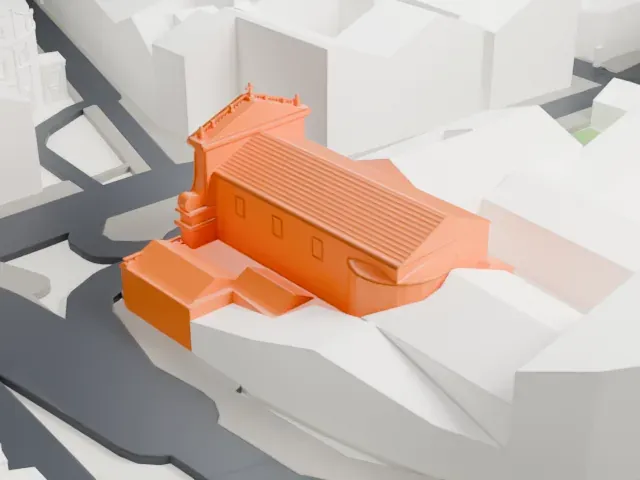 North
-
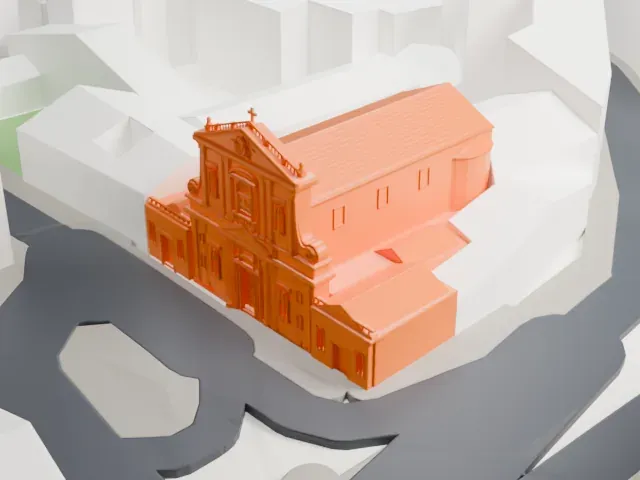 East
-
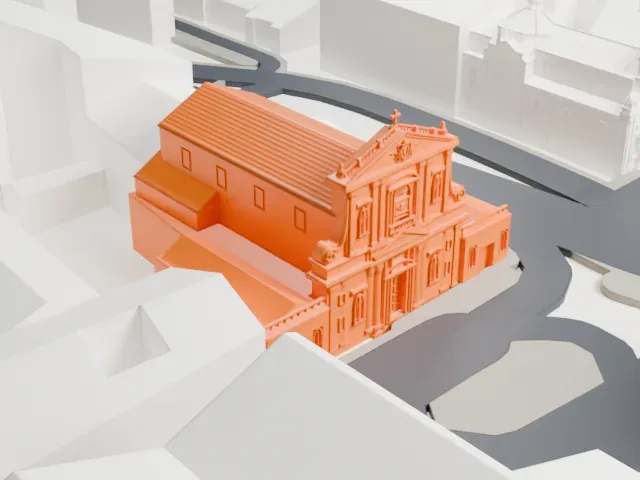 South
-
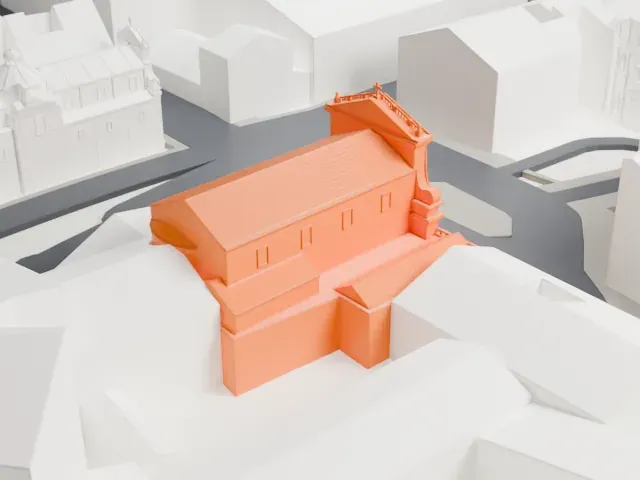 West
- On a 160 mm print
- 9 mm
- Scale
- 1:3,750
9 mm tall on a 160 mm print
Make this print opens the generator on a 600 m square around the landmark. Buildings print at close to true scale, so the landmark grows with the print size.
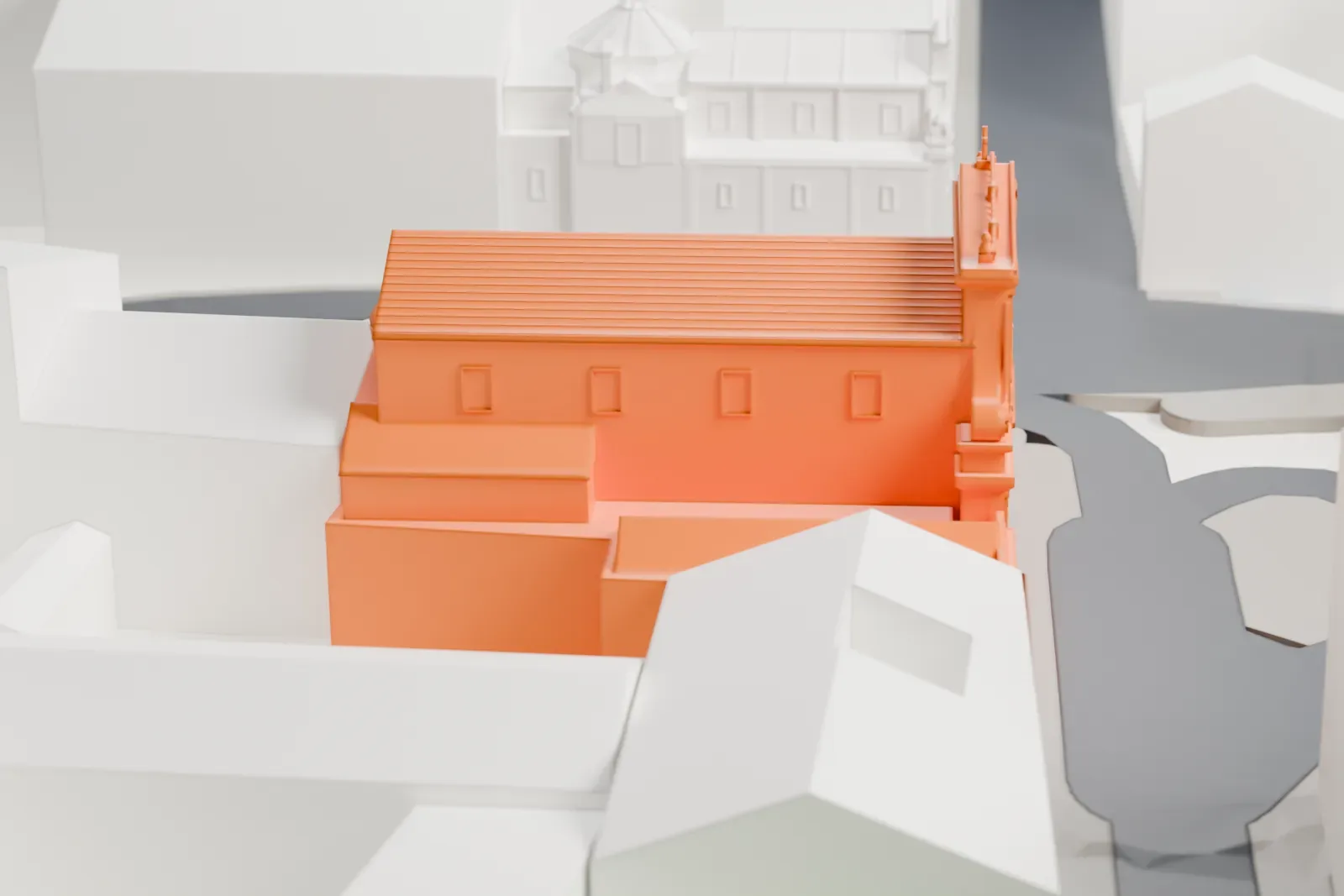
- A tall front, low roof
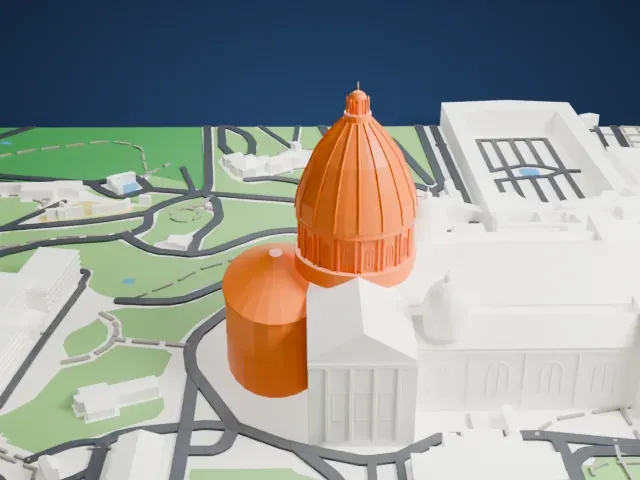
The church is broad and low behind a tall front. Print it larger if you want the front's detail to read, and use 0.12 to 0.16 mm layers for the vertical lines.
- One piece with the ground
Santa Susanna, Rome is joined to the ground in the exported file, and the four-side check found no floating parts, so nothing needs gluing.
- Pick the detail for your nozzle
In the Buildings settings, set Landmark detail to Print friendly to adapt thin parts and small details to the print scale. Full detail keeps every modeled feature, for larger prints or a finer nozzle.
- Colors
Buildings, roads, water and ground arrive as separate filament slots in the 3MF. Santa Susanna, Rome takes the building color.
- File format
You get a 3MF for Bambu Studio, OrcaSlicer or PrusaSlicer. Any of them can save it as STL if you need one.
About Santa Susanna, Rome
Santa Susanna is a Catholic parish and a Cistercian conventual church on Rome's Quirinal Hill, in Italy. A titular church has been linked to the site since as early as AD 280. The present building dates from a rebuilding between 1585 and 1603, undertaken to serve a community of Cistercian nuns founded there in 1587; that community is still based at the site.
The first Christian church here stood over the remains of three Roman villas, just outside the wall of the Baths of Diocletian. Tradition holds that it rose on the house of Susanna, where she was martyred; fourth-century records gave it the name ad duas domos, meaning at the two houses. On those ancient foundations Carlo Maderno built the present church as his first independent commission in Rome, finishing the travertine facade in 1603. That front became a highly influential example of early Baroque design.
Columns and pilasters crowd toward the center of the facade in a dynamic rhythm; triangular pediments cap the entrance and the roof, and niches replace windows. Pope Caius and Genesius of Rome appear in statues on the upper level, Susanna and Felicitas of Rome on the lower. The design's success led Paul V to appoint him architect of Saint Peter's Basilica in 1605. From 1921 to 2017 the church was the national parish for United States residents of Rome.
About this model
Santa Susanna, Rome is one of more than 4,400 landmark models in Mini Skyline. They are made with AI, and each one is checked from four sides in its real surroundings before release. Everything around it is built from OpenStreetMap and Overture map data. If you would rather print the shape from map data, turn off Landmark models in the Buildings settings.
Keep exploring