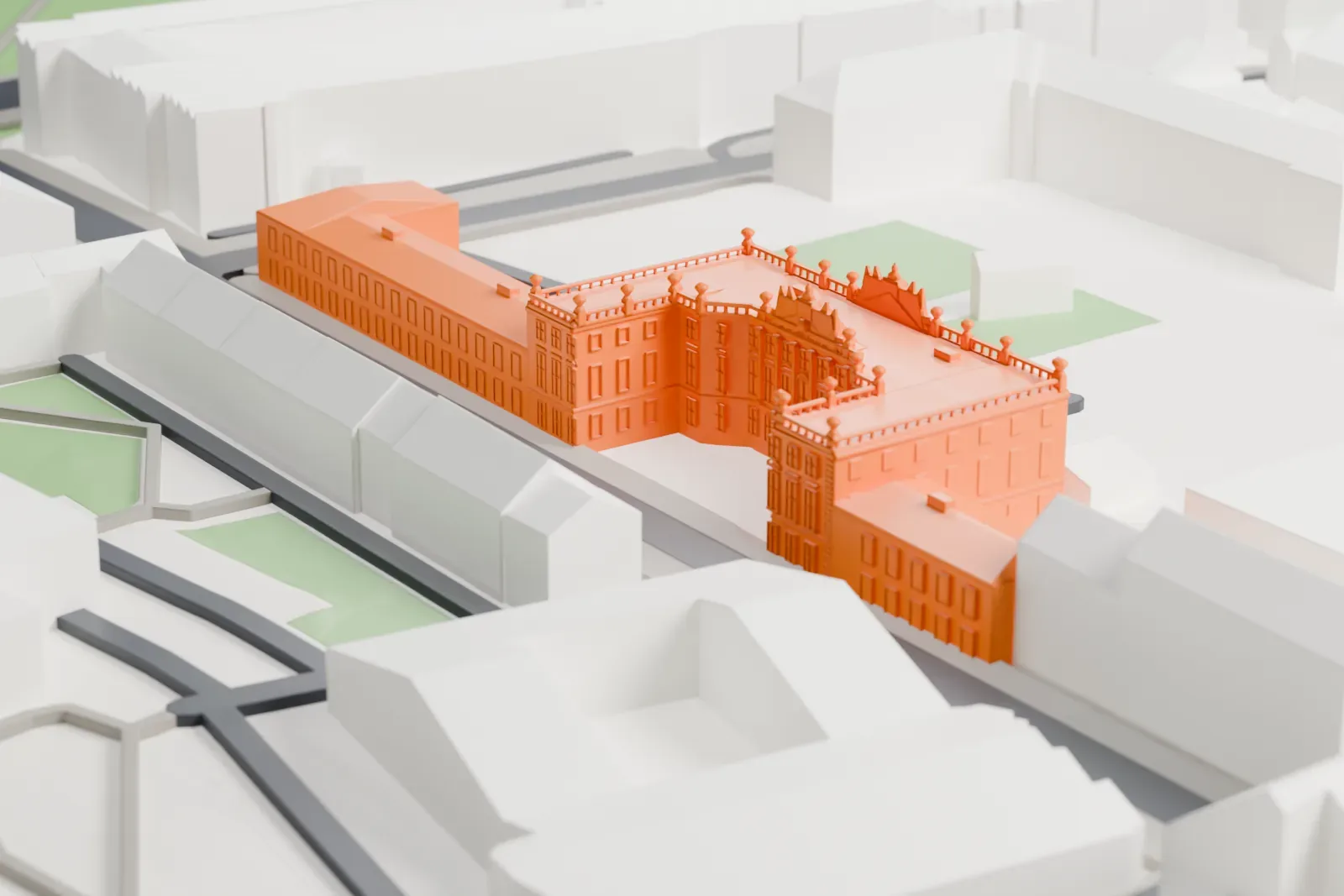
3D print the Sapieha Palace, Warsaw
A free, printable 3D model of Sapieha Palace and its surrounding streets and buildings, generated from real map data in your browser.
-
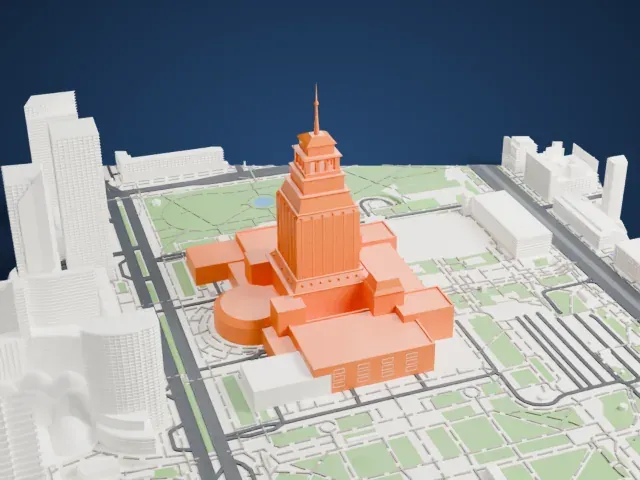
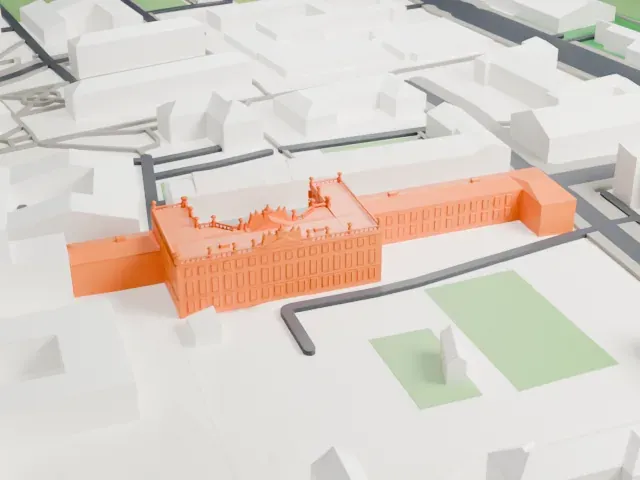
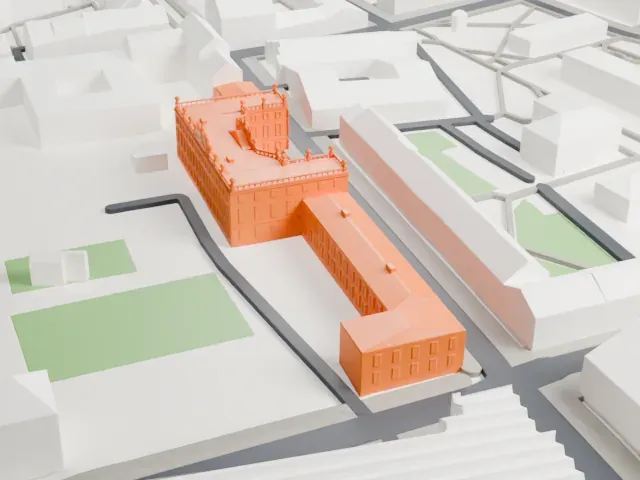 North
-
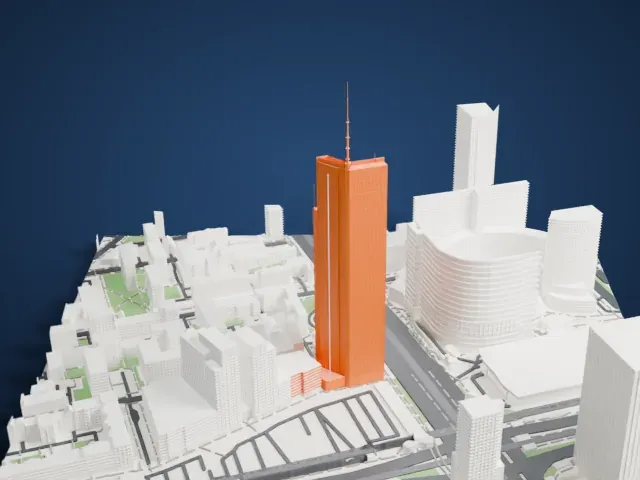
 East
-
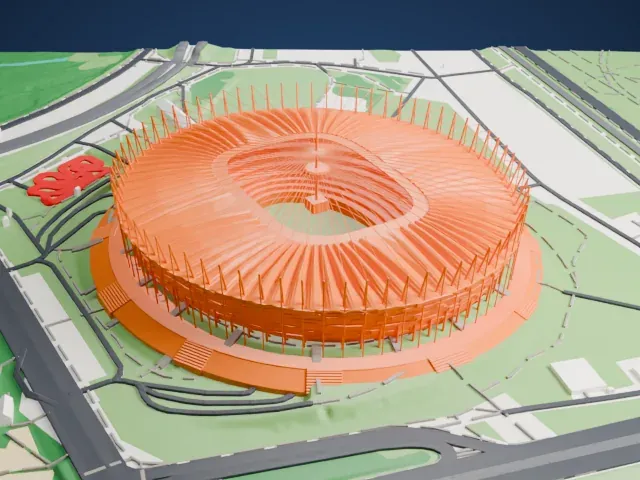
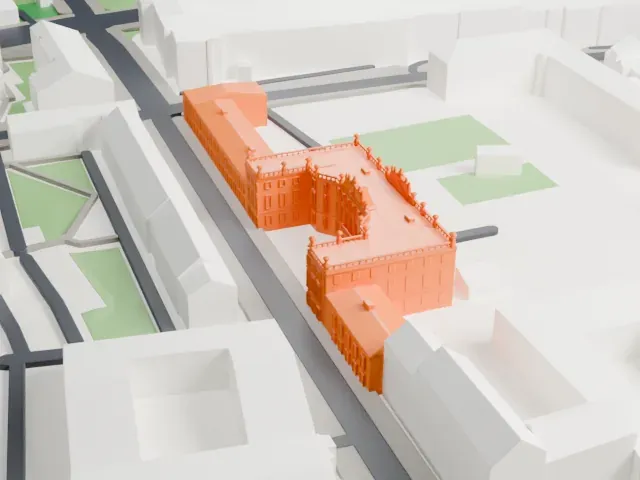 South
-
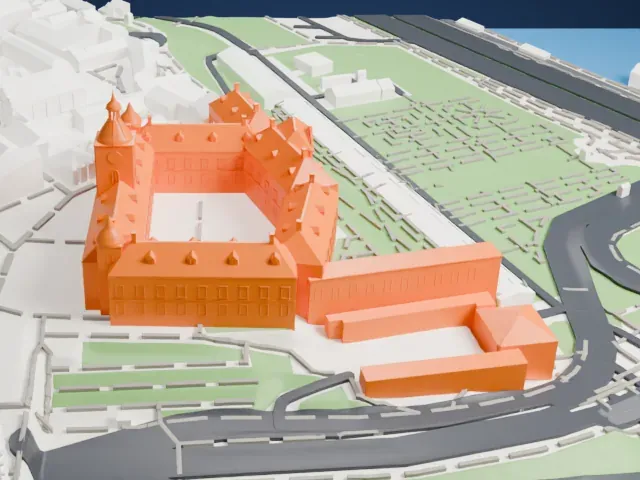
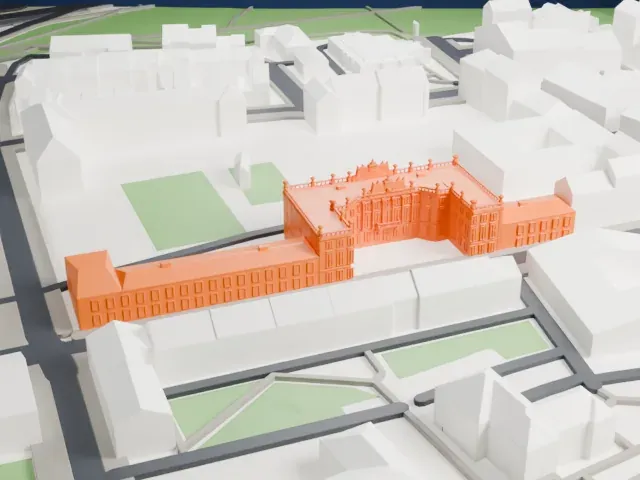 West
- On a 160 mm print
- 6 mm
- Scale
- 1:3,750
6 mm tall on a 160 mm print
Make this print opens the generator on a 600 m square around the landmark. Buildings print at close to true scale, so the landmark grows with the print size.
- Give the palace a larger print
At this small default height, a larger print or the Full detail setting keeps the facade and roofline readable. Layers of 0.12–0.16 mm help the vertical detail stay crisp.
- One piece with the ground
The Sapieha Palace, Warsaw is joined to the ground in the exported file, and the four-side check found no floating parts, so nothing needs gluing.
- Pick the detail for your nozzle
In the Buildings settings, set Landmark detail to Print friendly to adapt thin parts and small details to the print scale. Full detail keeps every modeled feature, for larger prints or a finer nozzle.
- Colors
Buildings, roads, water and ground arrive as separate filament slots in the 3MF. The Sapieha Palace, Warsaw takes the building color.
- File format
You get a 3MF for Bambu Studio, OrcaSlicer or PrusaSlicer. Any of them can save it as STL if you need one.
About the Sapieha Palace, Warsaw
Sapieha Palace belongs to the group of palaces in Warsaw's New Town district in Poland. Jan Fryderyk Sapieha, the Grand Duchy of Lithuania's chancellor, commissioned it, and Johann Sigmund Deybel built it in Rococo style between 1731 and 1746. It was built as a French-style city palace, a so-called hôtel particulier.
At first the complex had five-axial main buildings and two outbuildings set between the palace and the street. The existing one-story outbuilding was joined to the main outbuilding between 1741 and 1742, and another wing linking the main building to the second outbuilding went up between 1771 and 1790.
In 1818–1820 the palace was turned into the Sapieha Barracks. The Neo-Classical remodelling of the early 19th century was Wilhelm Henryk Minter's work. The Polish 4th Infantry Regiment, known as the Czwartacy, was barracked there in the November Uprising, which ran from 1830 to 1831. German occupying forces destroyed the palace in 1944, and Maria Zachwatowiczowa rebuilt it in the 1950s. The building houses the Environmental Protection School Complex.
About this model
The Sapieha Palace, Warsaw is one of more than 4,400 landmark models in Mini Skyline. They are made with AI, and each one is checked from four sides in its real surroundings before release. Everything around it is built from OpenStreetMap and Overture map data. If you would rather print the shape from map data, turn off Landmark models in the Buildings settings.
Same skyline