3D print the Staszic Palace
A free, printable 3D model of the Staszic Palace and the surrounding streets and buildings of Warsaw, generated from real map data in your browser.
-
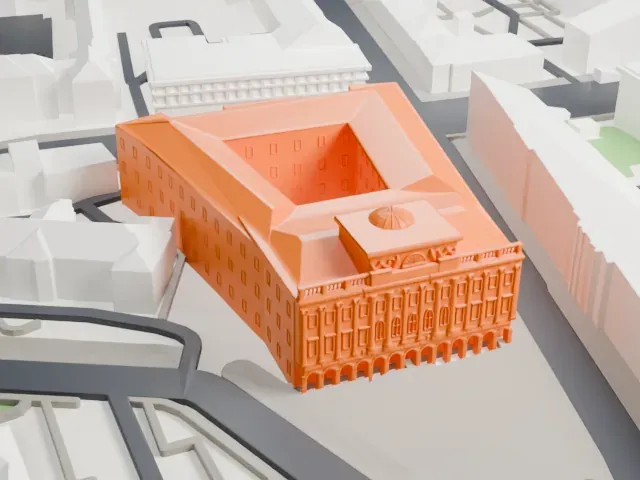 North
-
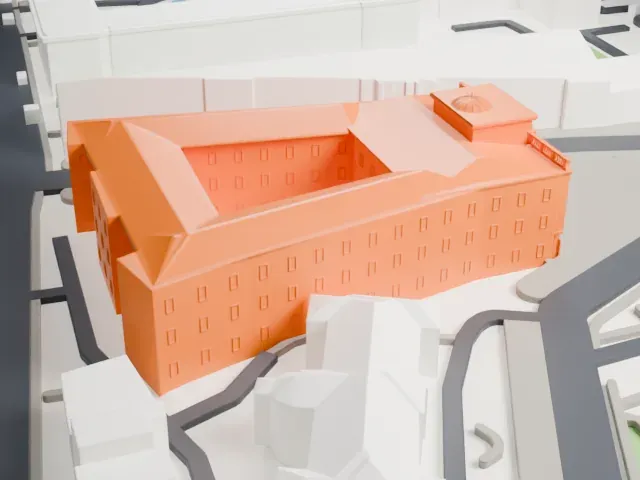 East
-
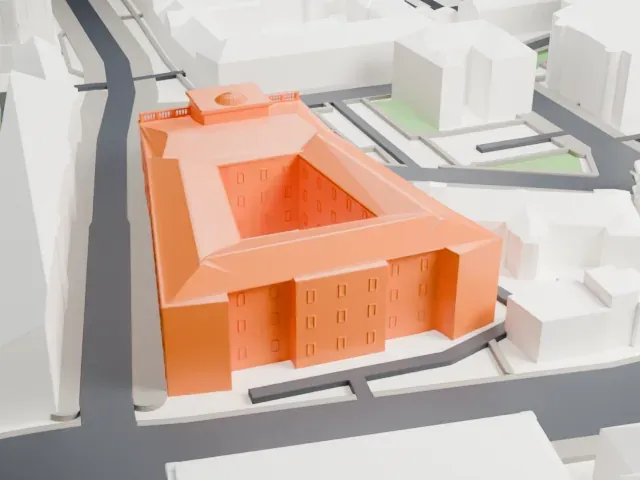 South
-
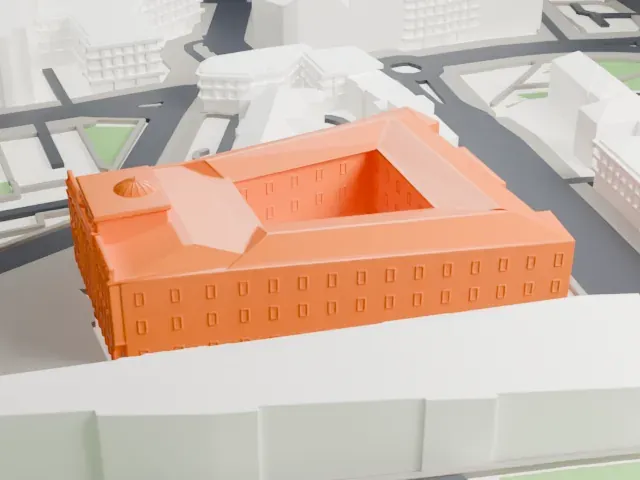 West
The model you print
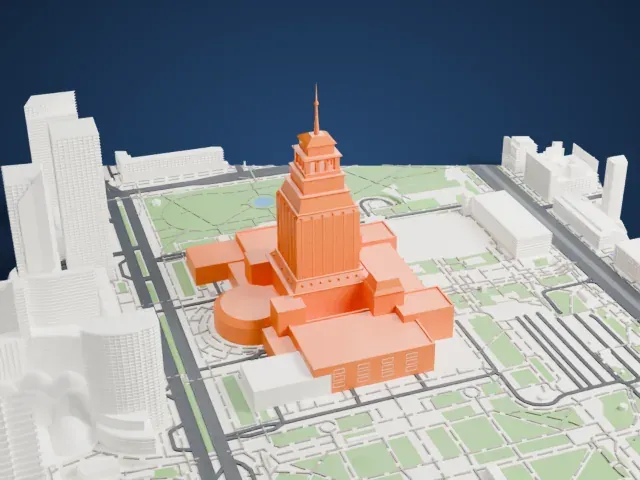
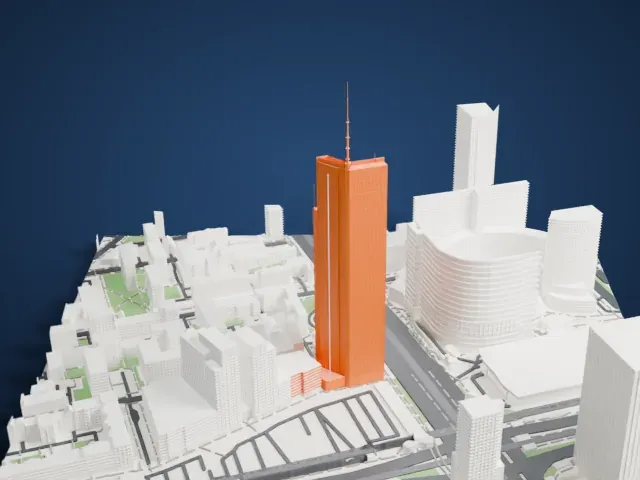
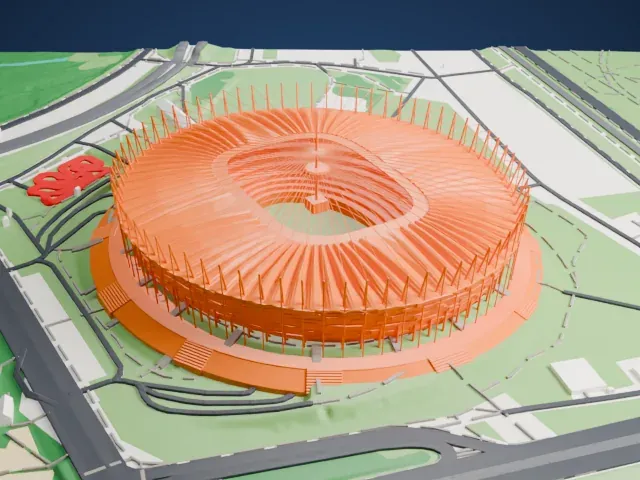
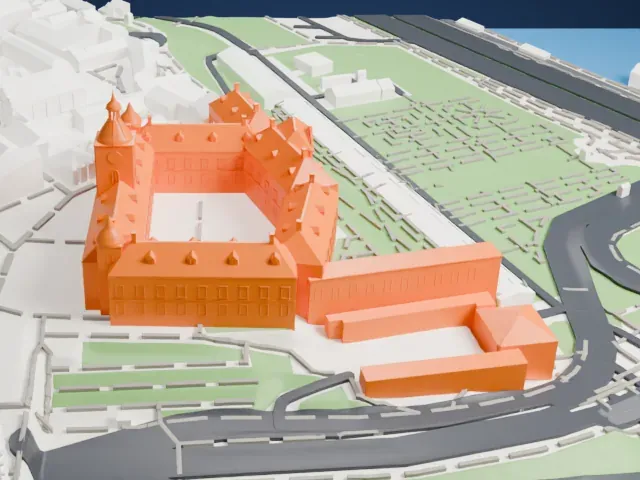
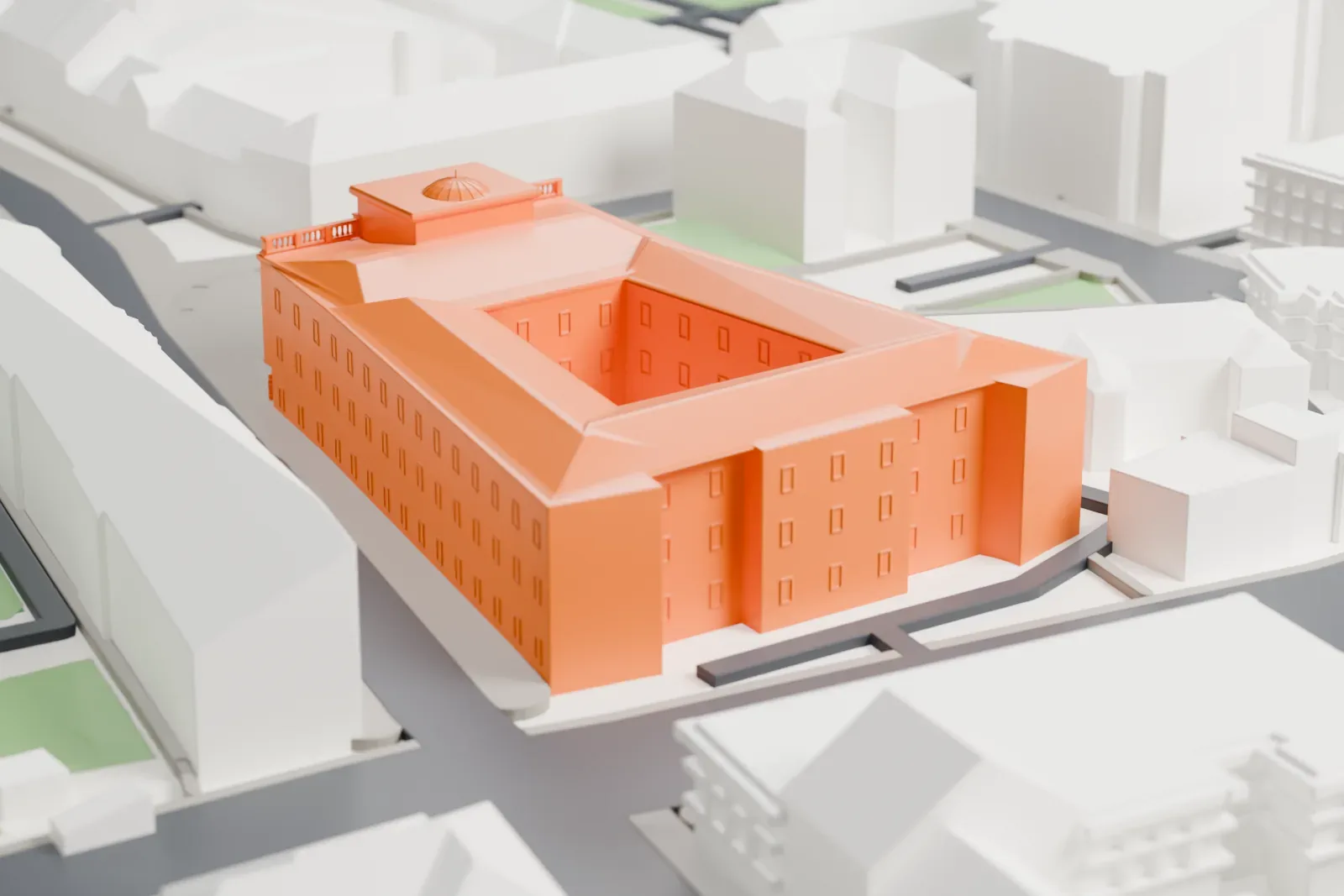
Staszic Palace in 3D
The landmark on its own, at its size on a 160 mm print. Print friendly thickens thin parts for a 0.4 mm nozzle; Full detail keeps every part.
- On a 160 mm print
- 8 mm
- Scale
- 1:3,750
8 mm tall on a 160 mm print
Make this print opens the generator on a 600 m square around the landmark. Buildings print at close to true scale, so the landmark grows with the print size.
- Palace facade detail
A neoclassical palace has a formal facade with fine, regular detail. Use Full detail on a larger print to keep it, or Print friendly for a sturdier small print.
- One piece with the ground
The Staszic Palace is joined to the ground in the exported file, and the four-side check found no floating parts, so nothing needs gluing.
- Pick the detail for your nozzle
In the Buildings settings, set Landmark detail to Print friendly to adapt thin parts and small details to the print scale. Full detail keeps every modeled feature, for larger prints or a finer nozzle.
- Colors
Buildings, roads, water and ground arrive as separate filament slots in the 3MF. The Staszic Palace takes the building color.
- File format
You get a 3MF for Bambu Studio, OrcaSlicer or PrusaSlicer. Any of them can save it as STL if you need one.
About the Staszic Palace
The Polish Academy of Sciences has its seat in the Staszic Palace (Pałac Staszica), at ulica Nowy Świat 72 in Warsaw, Poland. The story begins in 1620 with an order from Poland's King Sigismund III for a small Eastern Orthodox chapel, meant as the burial site of Vasili IV, the former Tsar of Russia, and Dmitry Shuisky, his brother, both of whom had died in Polish custody. In 1668 the chapel passed from King John II Casimir to the Dominican Order, who looked after it until 1808.
In 1818 the building was bought by Stanisław Staszic, a major figure in the Polish Enlightenment, and he commissioned its renovation. The architect Antonio Corazzi redesigned it in neoclassical style between 1820 and 1823. Staszic then donated it, and the Society of Friends of Science, founded in 1800, received the building. On May 11, 1830, the monument to Nicolaus Copernicus by Bertel Thorvaldsen was unveiled in front of the palace.
The palace changed hands and styles over the next century. Russian authorities remodeled it in Russo-Byzantine style in 1892–93, and architect Marian Lalewicz restored a Polish neoclassical look in 1924–26. The 1939 siege of Warsaw damaged it, and the 1944 Warsaw Uprising left it nearly razed. Piotr Biegański rebuilt it in its original neoclassical form in 1946–50.
About this model
The Staszic Palace is one of more than 5,500 landmark models in Mini Skyline. They are made with AI, and each one is checked from four sides in its real surroundings before release. Each model is written as code from public descriptions, plans, photographs and aerial views used only as references; no image or third-party model is copied into it. Everything around it is built from OpenStreetMap and Overture map data. Rights in the building itself, its name and any brands on it are not granted by Mini Skyline; clear them separately before you sell prints. If you would rather print the shape from map data, turn off Landmark models in the Buildings settings.
Same skyline