3D print the Teatro di San Carlo
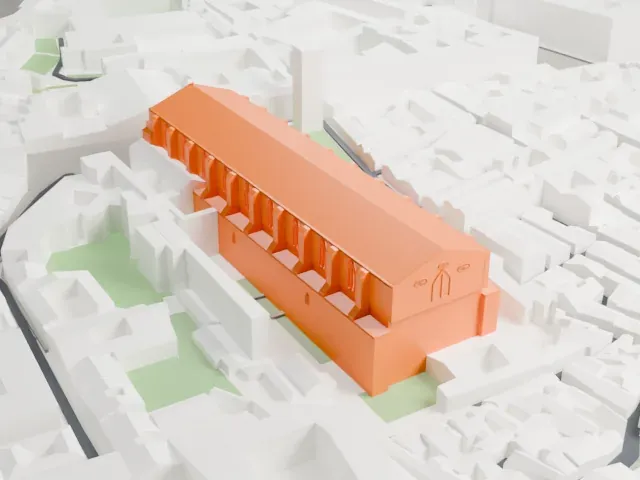
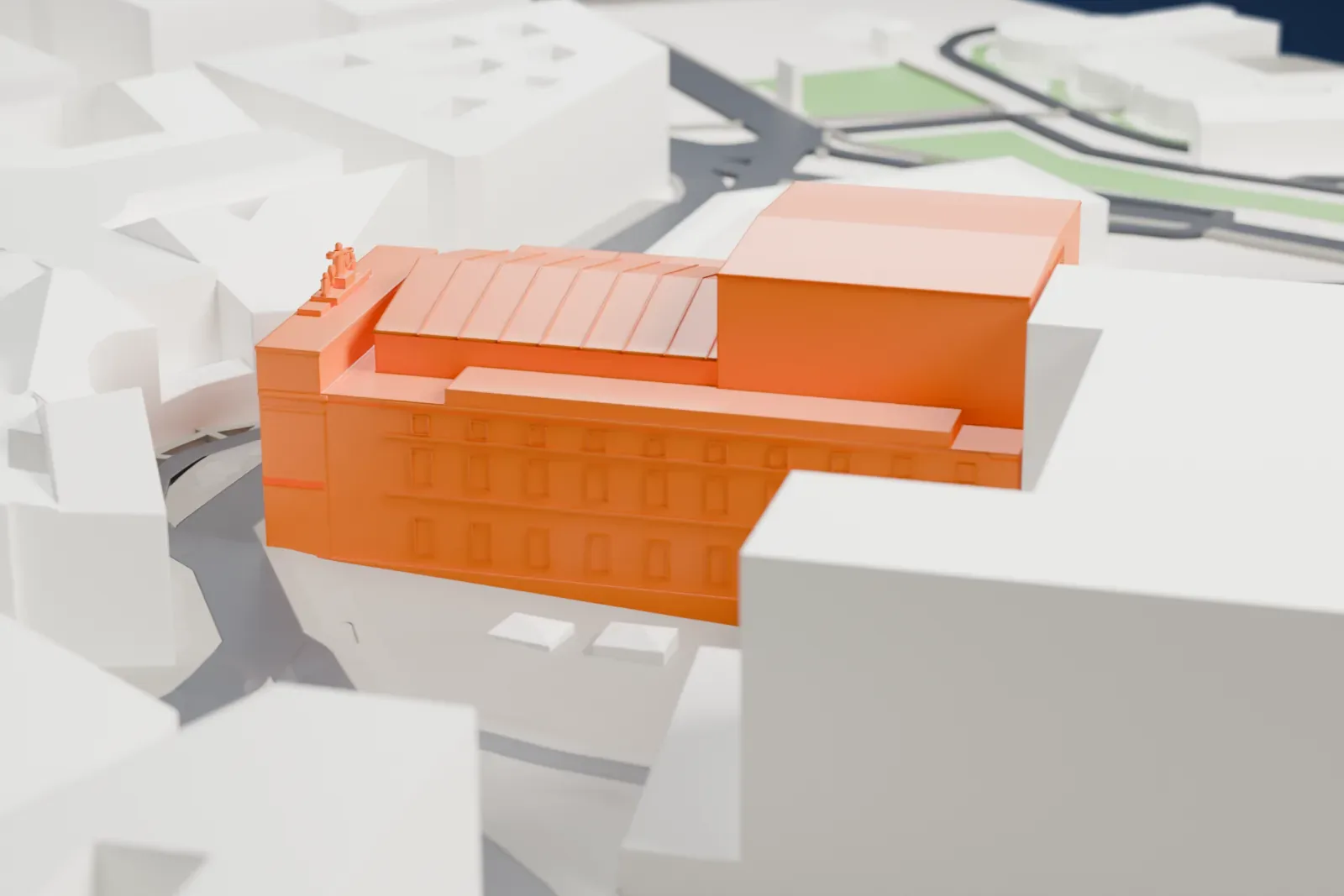
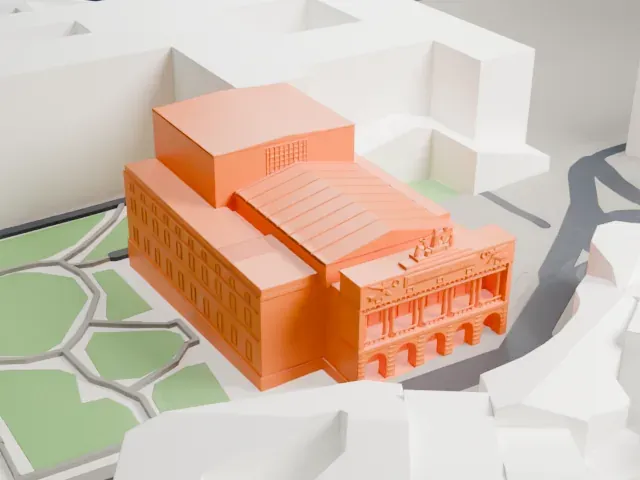
A free, printable model of the Teatro di San Carlo, a historic opera house in Naples, with the surrounding streets and buildings, generated from real map data in your browser.
-
 North
-
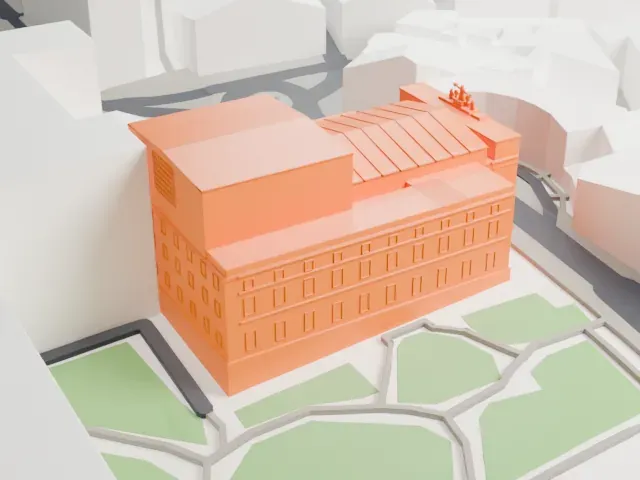 East
-
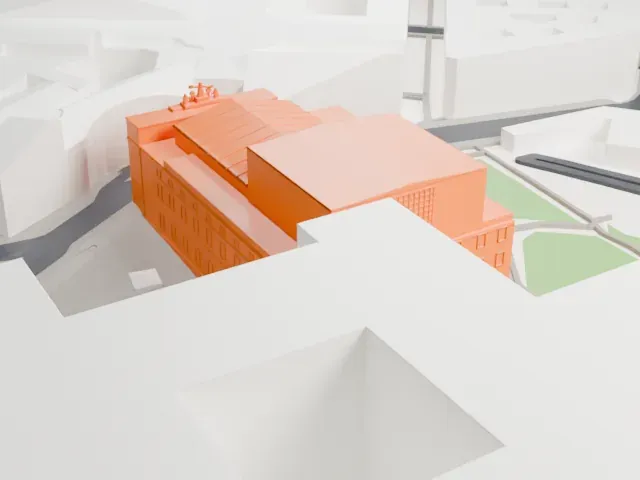 South
-
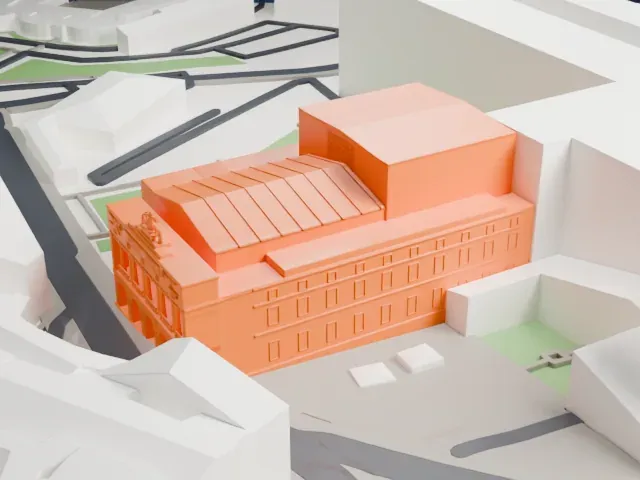 West
- On a 160 mm print
- 12 mm
- Scale
- 1:3,750
12 mm tall on a 160 mm print
Make this print opens the generator on a 600 m square around the landmark. Buildings print at close to true scale, so the landmark grows with the print size.
- Facade and roof detail
A larger print keeps the opera house's facade and roofline crisp. If small details blur, set Landmark detail to Print friendly or use a 0.12–0.16 mm layer height.
- One piece with the ground
The Teatro di San Carlo is joined to the ground in the exported file, and the four-side check found no floating parts, so nothing needs gluing.
- Pick the detail for your nozzle
In the Buildings settings, set Landmark detail to Print friendly to adapt thin parts and small details to the print scale. Full detail keeps every modeled feature, for larger prints or a finer nozzle.
- Colors
Buildings, roads, water and ground arrive as separate filament slots in the 3MF. The Teatro di San Carlo takes the building color.
- File format
You get a 3MF for Bambu Studio, OrcaSlicer or PrusaSlicer. Any of them can save it as STL if you need one.
About the Teatro di San Carlo
The Teatro di San Carlo in Naples is an opera house linked to the Royal Palace and next to the Piazza del Plebiscito. No other opera venue in the world has been in continuous use for longer; it opened in 1737, decades before Milan's La Scala and Venice's La Fenice.
King Charles VII of Naples commissioned it to replace the older, smaller Teatro San Bartolomeo of 1621. Giovanni Antonio de Medrano designed it, and it was inaugurated on November 4, 1737, which was the king's name day, for a performance of Domenico Sarro's Achille in Sciro. The world's oldest auditorium, it has a horseshoe shape, and the original hall had 184 boxes and was built for 75,000 ducats.
A fire broke out on February 13, 1816, during a dress rehearsal and destroyed part of the building. Under King Ferdinand IV, Barbaia rebuilt it within ten months with the architect Antonio Niccolini, and it reopened on January 12, 1817. Its seating capacity, once 3,285, is 1,386. By its size, structure and age, it became a model for later theaters in Europe.
About this model
The Teatro di San Carlo is one of more than 4,400 landmark models in Mini Skyline. They are made with AI, and each one is checked from four sides in its real surroundings before release. Everything around it is built from OpenStreetMap and Overture map data. If you would rather print the shape from map data, turn off Landmark models in the Buildings settings.
Same skyline