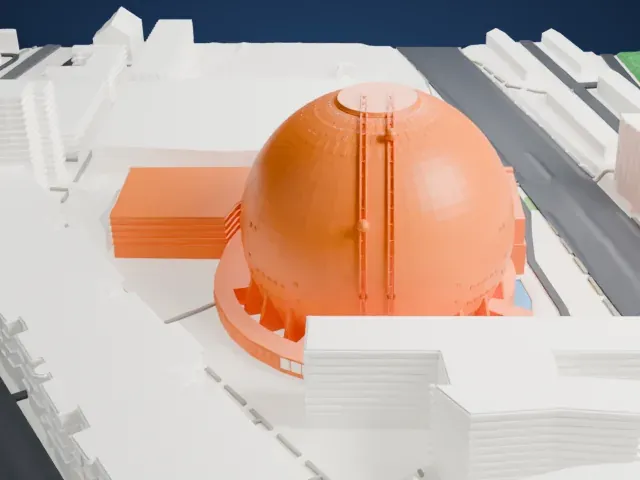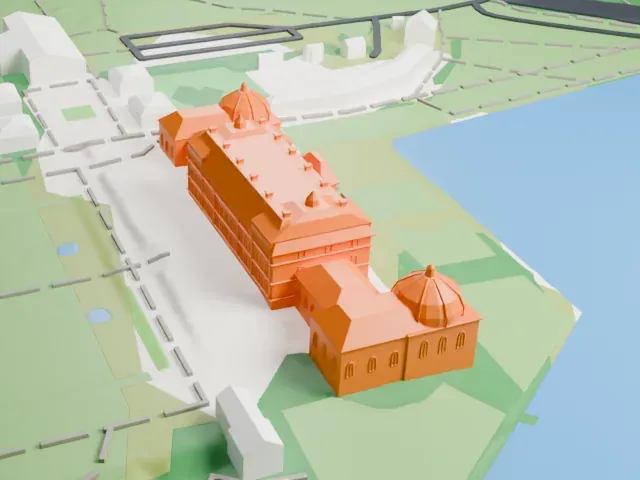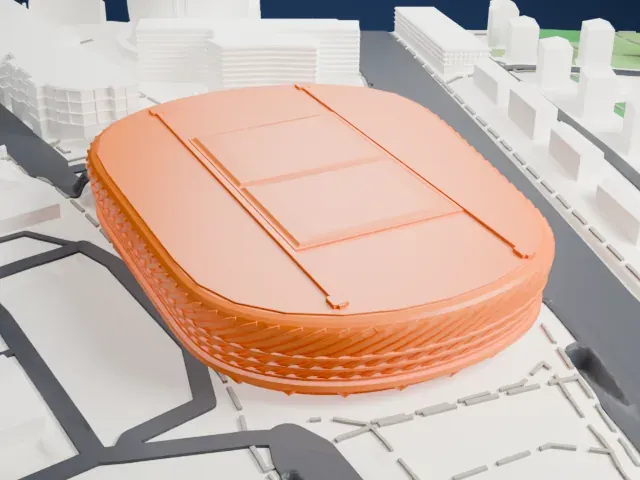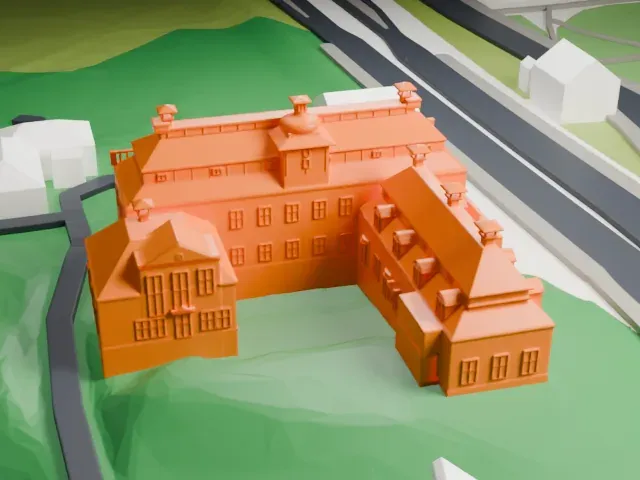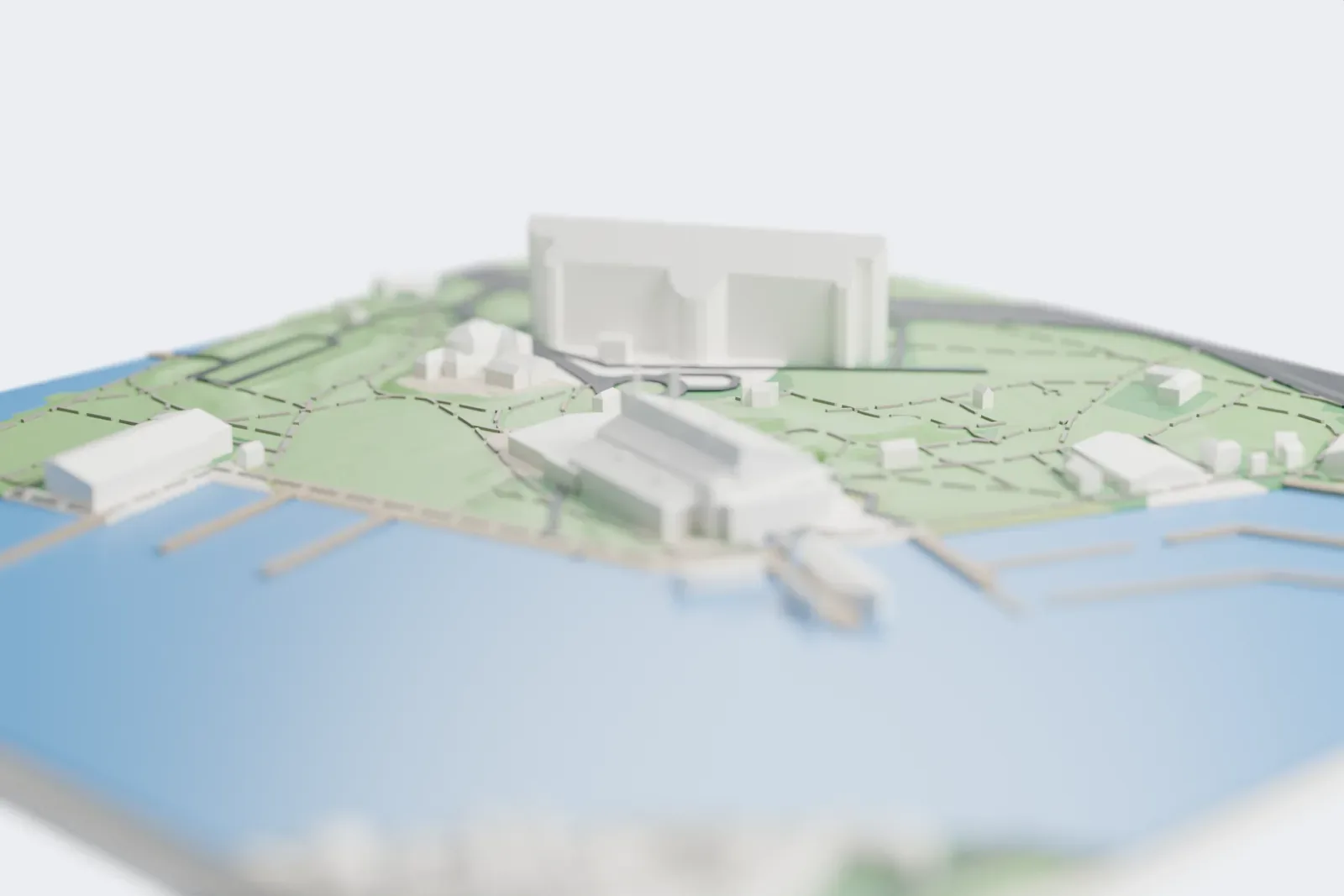
Vasa Museum in 3D
The Vasa Museum appears in city models you make here; its design may still be protected, so it isn't offered as a separate download.
-
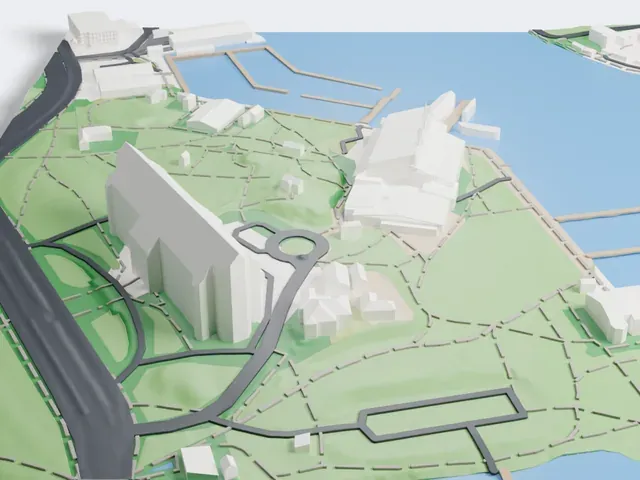 North
-
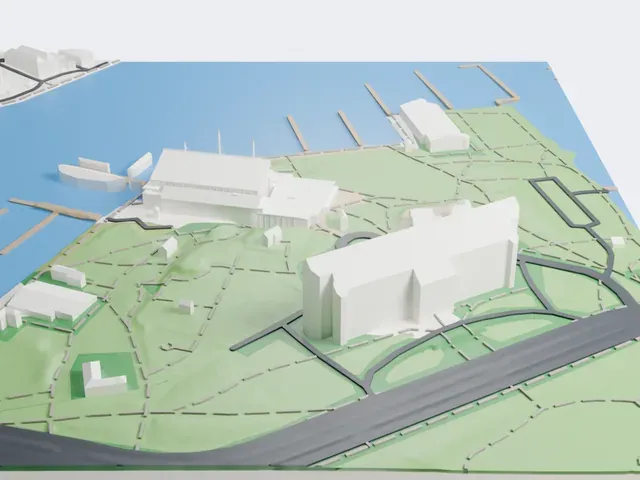 East
-
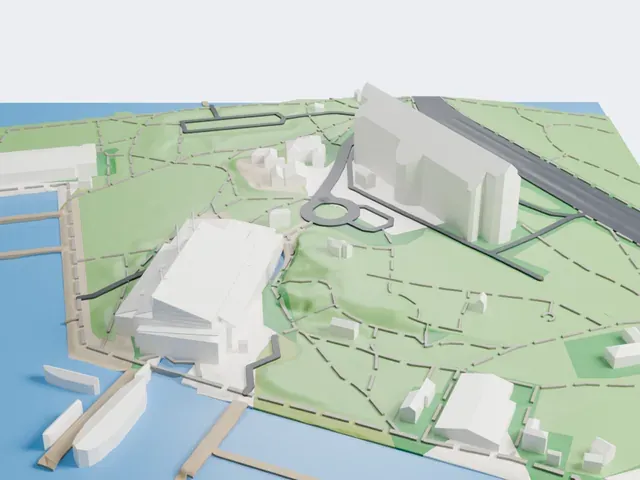 South
-
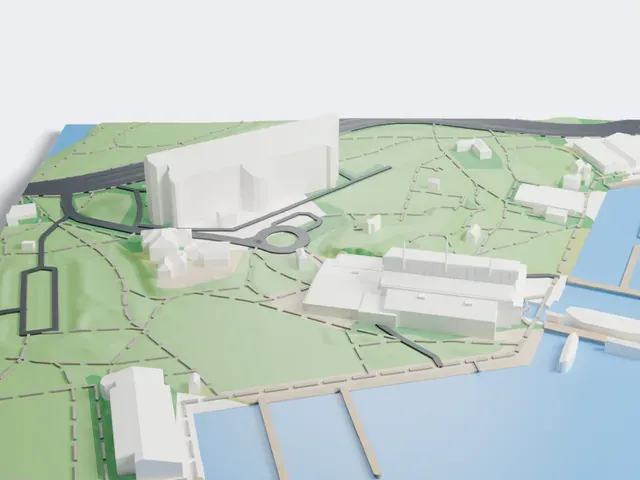 West
Copyright notice
The design of Vasa Museum may still be protected by copyright. It appears in the city models you make here, but it is not offered as a separate model.
- On a 160 mm print
- 16 mm
- Scale
- 1:3,750
16 mm tall on a 160 mm print
Make this print opens the generator on a 600 m square around the landmark. Buildings print at close to true scale, so the landmark grows with the print size.
- Three thin masts
Three tall, thin masts rise above the roof. Slow printing and layers of 0.12 to 0.16 mm help them stay crisp, and Print friendly adapts them to the print scale.
- A big roof with fine ridges
The large sloping roof carries rows of fine ridges. A larger print size keeps them readable, which suits Full detail.
- One piece with the ground
The Vasa Museum is joined to the ground in the exported file, and the four-side check found no floating parts, so nothing needs gluing.
- Pick the detail for your nozzle
In the Buildings settings, set Landmark detail to Print friendly to adapt thin parts and small details to the print scale. Full detail keeps every modeled feature, for larger prints or a finer nozzle.
- Colors
Buildings, roads, water and ground arrive as separate filament slots in the 3MF. The Vasa Museum takes the building color.
- File format
You get a 3MF for Bambu Studio, OrcaSlicer or PrusaSlicer. Any of them can save it as STL if you need one.
About the Vasa Museum
The Vasa Museum (Vasamuseet) is a maritime museum on the island of Djurgården in Stockholm, Sweden. It opened in 1990 and displays the 64-gun warship Vasa, which went down on her first voyage in 1628. Vasa is the only almost completely intact ship of the 17th century to have been salvaged. Before the museum opened, the ship stood in a temporary structure called Wasavarvet from 1961 to 1983, and received treatment with polyethylene glycol.
After the Swedish government decided in 1981 to build a permanent museum, a design competition was held, and 384 architects submitted entries. Marianne Dahlbäck and Göran Månsson won with a design called Ask, which means 'box'. In December 1987 Vasa was pulled into the flooded dry dock beneath the new building, and the museum officially opened on June 15, 1990. A large copper roof dominates the building, and its stylized masts stand for the real height of the fully rigged ship. Wooden panels cover parts of the building, in colors including ochre yellow, tar black, dark green, blue and dark red.
Visitors can view the ship from six levels, from her keel up to the top of the sterncastle. Replacement parts were left untreated and unpainted, so they show clearly against the original material, which darkened after three centuries under water. Four other museum ships are moored in the harbor outside: Sankt Erik, an ice breaker launched in 1915, Finngrundet, a lightvessel from 1903, Spica, a torpedo boat from 1966, and Bernhard Ingelsson, a rescue boat from 1944.
About this model
The Vasa Museum is one of more than 5,500 landmark models in Mini Skyline. They are made with AI, and each one is checked in its real surroundings before release. Each model is written as code from public descriptions, plans, photographs and aerial views used only as references; no image or third-party model is copied into it. Everything around it is built from OpenStreetMap and Overture map data. Rights in the building itself, its name and any brands on it are not granted by Mini Skyline; clear them separately before you sell prints. If you would rather print the shape from map data, turn off Landmark models in the Buildings settings.
Mini Skyline is not affiliated with, or endorsed by, the owners of this building or its names and marks.
Same skyline