3D print the Vermont State House
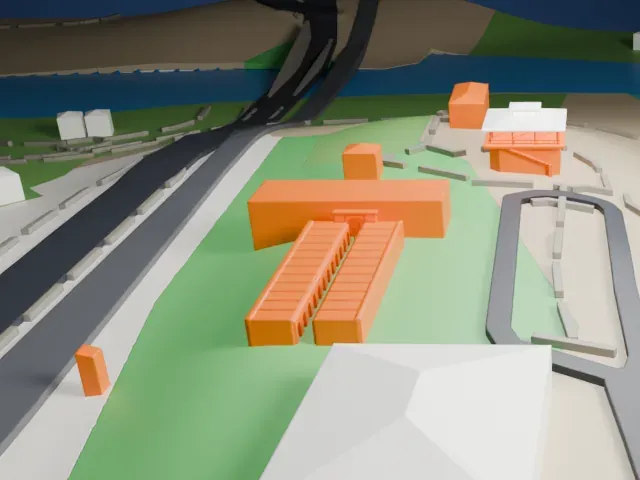
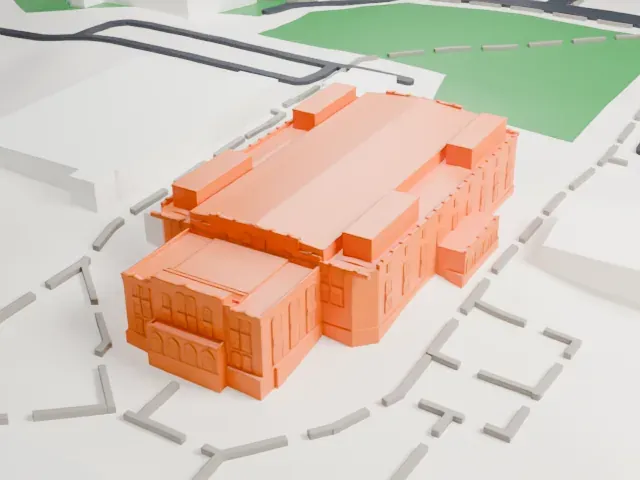
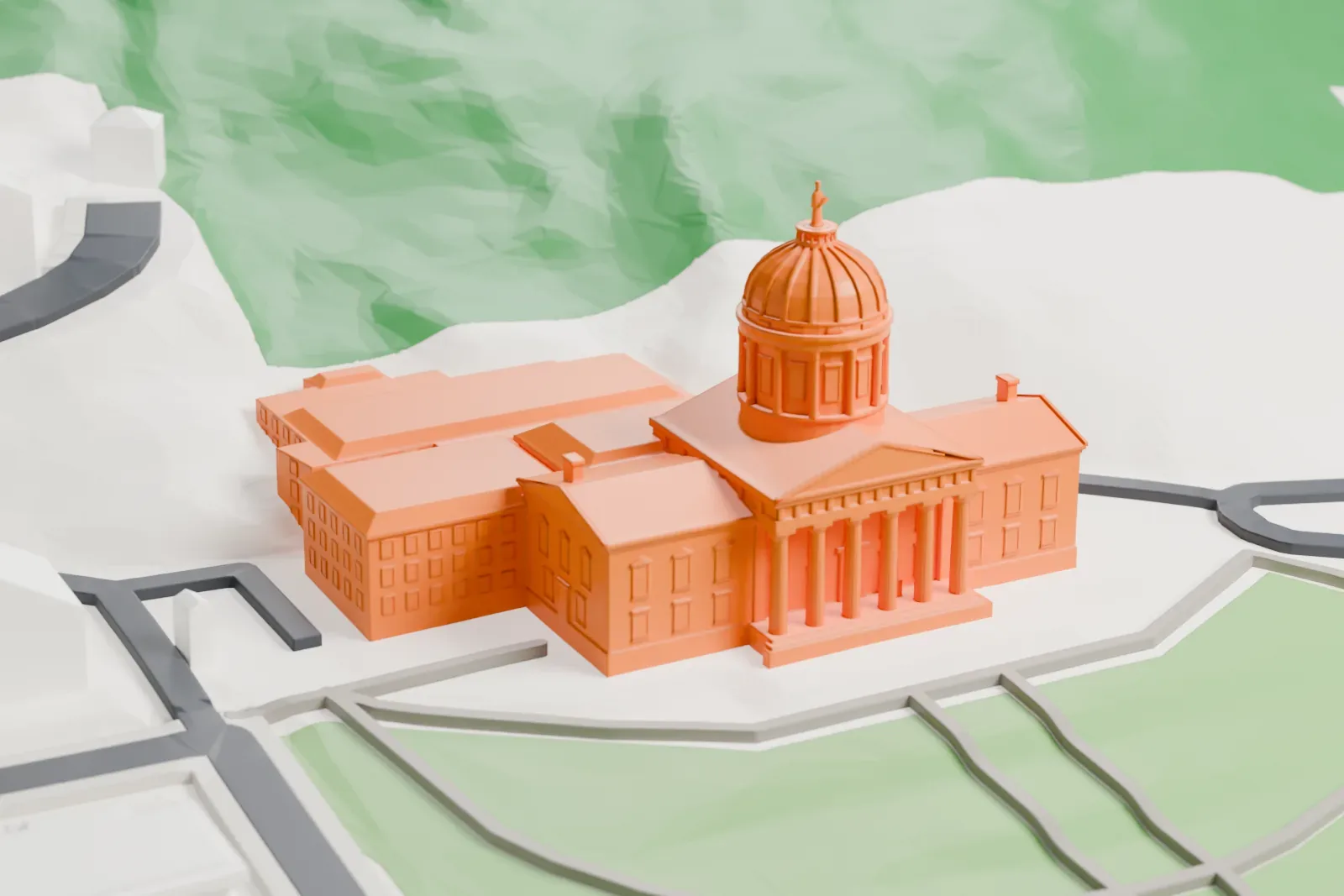
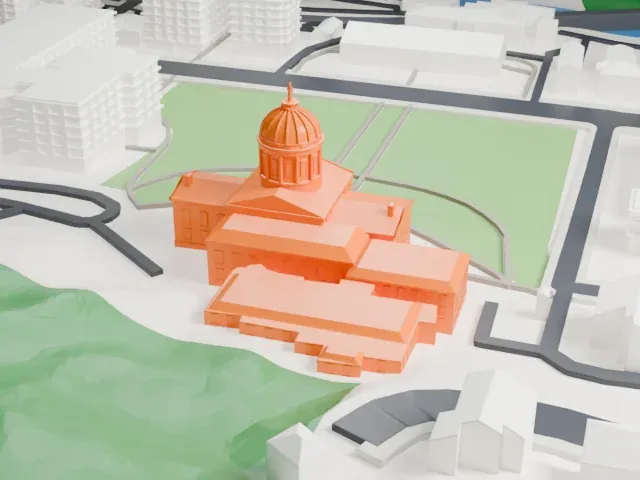
A free, printable model of the Vermont State House in Montpelier, with its Doric portico, domed center and wings and the hillside and streets around it, generated from real map data in your browser.
-
 North
-
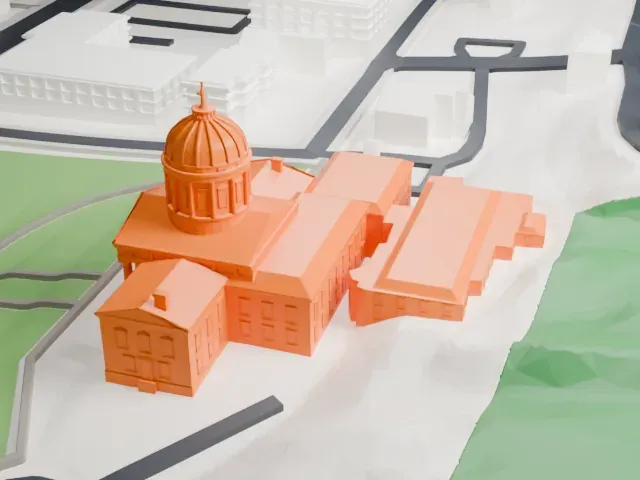 East
-
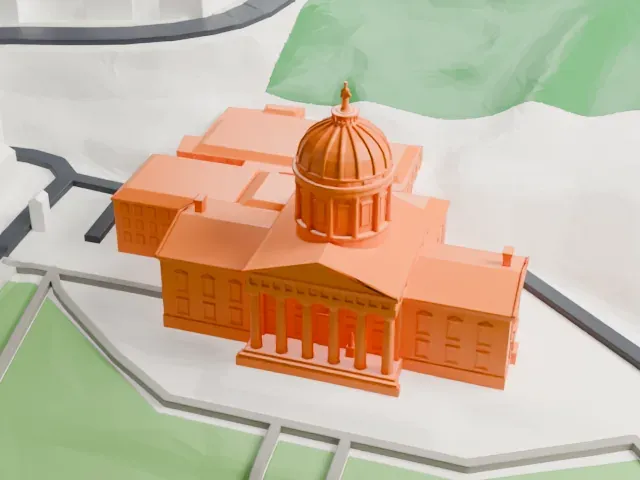 South
-
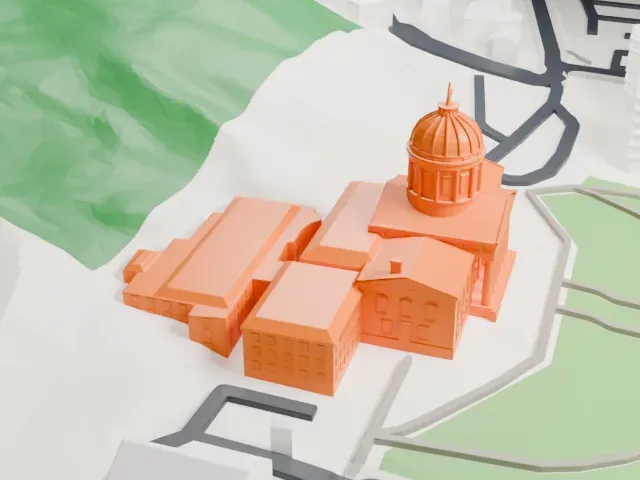 West
The model you print
Vermont State House in 3D
The landmark on its own, at its size on a 160 mm print. Print friendly thickens thin parts for a 0.4 mm nozzle; Full detail keeps every part.
- On a 160 mm print
- 12 mm
- Scale
- 1:3,750
12 mm tall on a 160 mm print
Make this print opens the generator on a 600 m square around the landmark. Buildings print at close to true scale, so the landmark grows with the print size.
- Portico columns
The row of tall columns under the front pediment is the most delicate part of the facade. Use Full detail on a larger print to keep them, or Print friendly to adapt them to the print scale.
- Ribbed dome and tiny statue
The ribbed dome carries a very small statue on its peak. Print the top slowly with good cooling, and use a 0.12 mm layer height to keep the figure crisp.
- Pick the detail for your nozzle
In the Buildings settings, set Landmark detail to Print friendly to adapt thin parts and small details to the print scale. Full detail keeps every modeled feature, for larger prints or a finer nozzle.
- Colors
Buildings, roads, water and ground arrive as separate filament slots in the 3MF. The Vermont State House takes the building color.
- File format
You get a 3MF for Bambu Studio, OrcaSlicer or PrusaSlicer. Any of them can save it as STL if you need one.
About the Vermont State House
The Vermont State House in Montpelier is Vermont's state capitol, where the General Assembly sits. The present Greek Revival building is the third to serve as the State House on the same site. Thomas Silloway designed it in 1857 and 1858, and it was first occupied in 1859. No other state house in the country is smaller. The building stands on State Street at the western edge of downtown, one block north of the Winooski River, against a wooded hillside.
The previous building, a Greek Revival design by Ammi B. Young modeled on the Temple of Hephaestus in Athens, was almost entirely destroyed by fire in January 1857. Silloway salvaged its Doric portico and parts of the granite walls, widened the facade with an extra window bay beside the portico on both sides and raised the dome to its present height. The dome and roofs were first painted dark terracotta red, and gilding came to the dome only in the early 20th century. A statue named Agriculture, representing the Roman goddess Ceres, tops the dome.
The Doric portico is the main ceremonial entrance and shelters a granite statue of Ethan Allen, carved by Aristide Piccini in 1941. The architect Stanford White regarded Silloway's building as the finest example of Greek Revival in the United States. The General Assembly's two chambers occupy the second floor, and the Hall of Inscriptions holds eight marble tablets with quotations about Vermont's culture and heritage.
About this model
The Vermont State House is one of more than 6,500 landmark models in Mini Skyline. They are made with AI, and each one is checked in its real surroundings before release. Each model is written as code from public descriptions, plans, photographs and aerial views used only as references; no image or third-party model is copied into it. Everything around it is built from OpenStreetMap and Overture map data. Rights in the building itself, its name and any brands on it are not granted by Mini Skyline; clear them separately before you sell prints. If you would rather print the shape from map data, turn off Landmark models in the Buildings settings.
Mini Skyline is not affiliated with, or endorsed by, the owners of this building or its names and marks.
Keep exploring