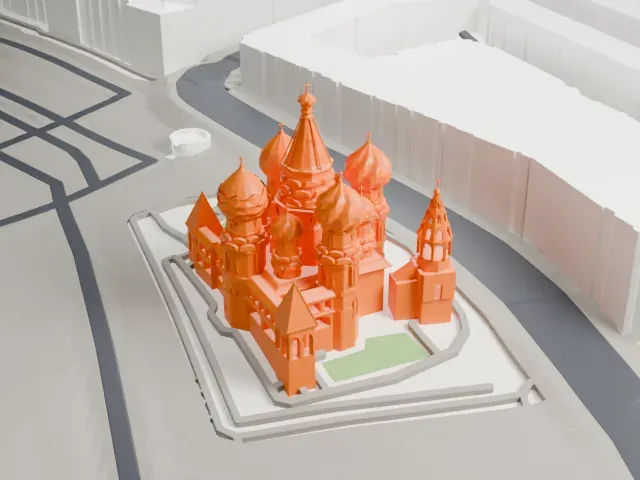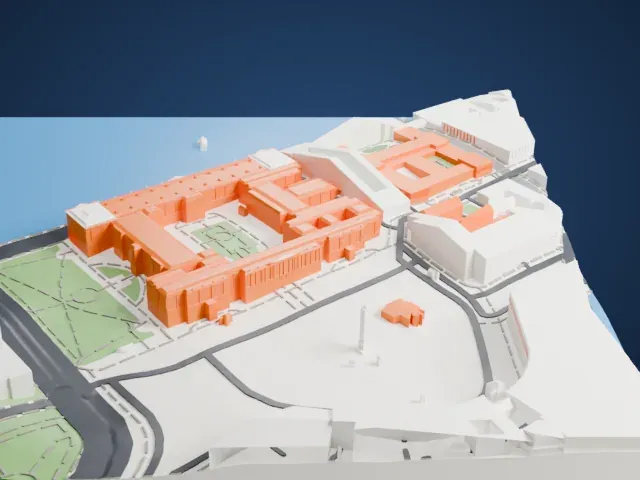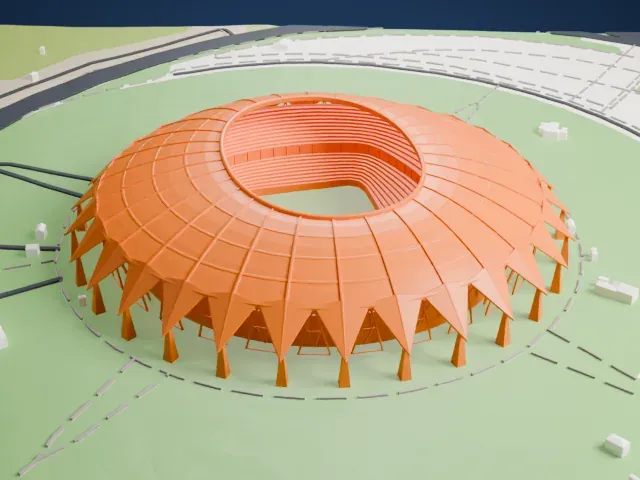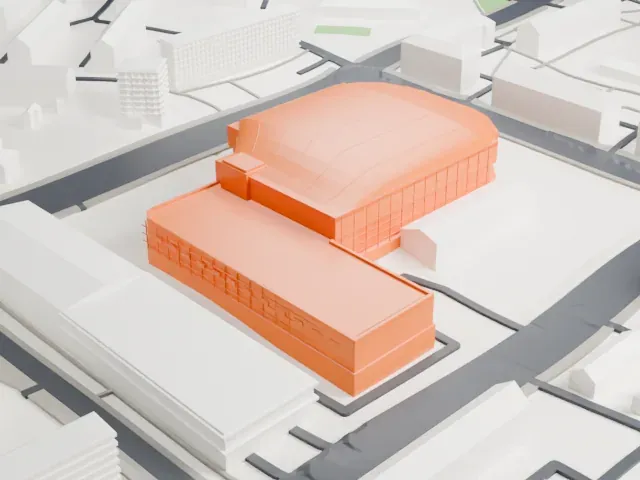
Vladivostok railway station in 3D
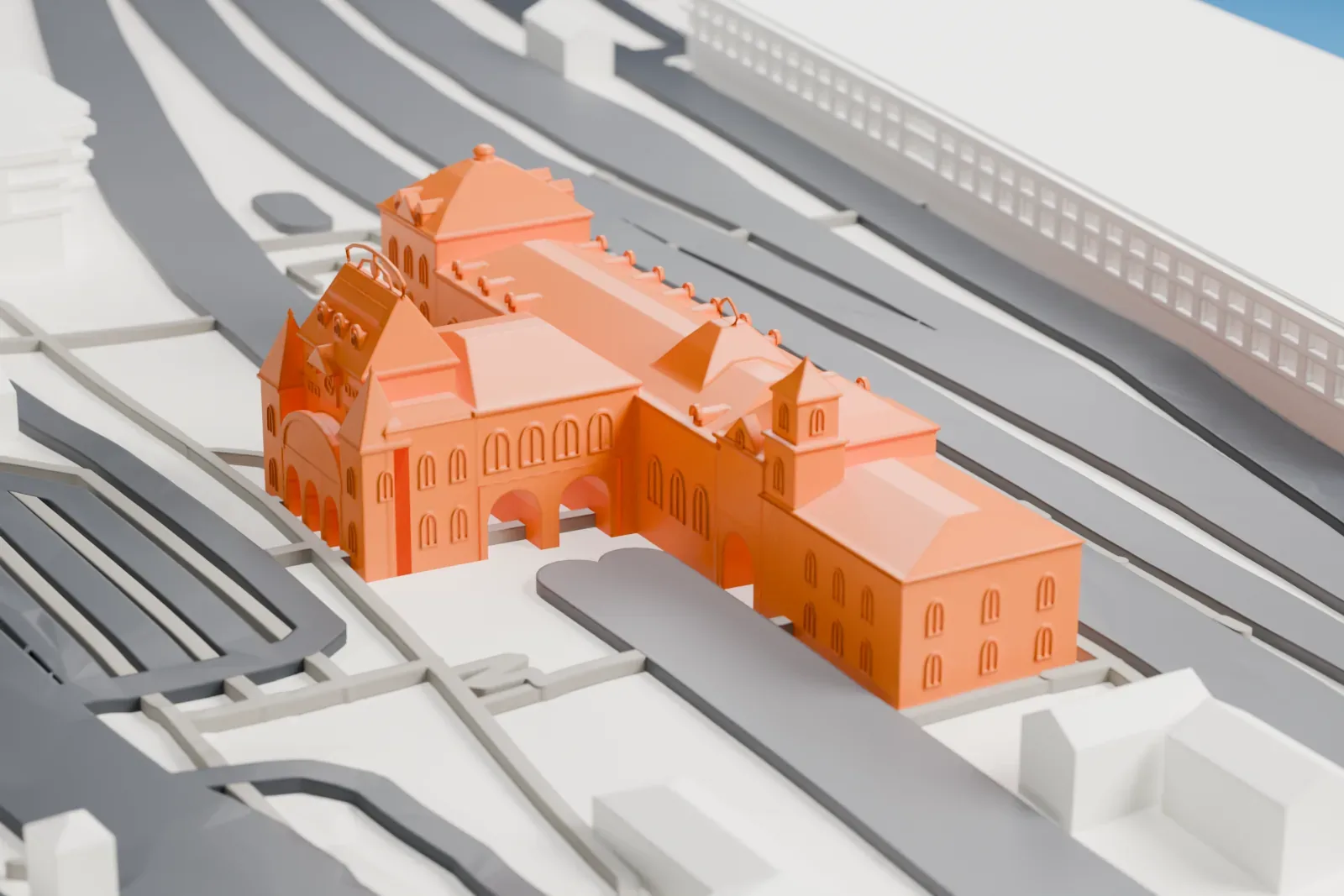
The Vladivostok railway station appears in city models you make here; its design may still be protected, so it isn't offered as a separate download.
-
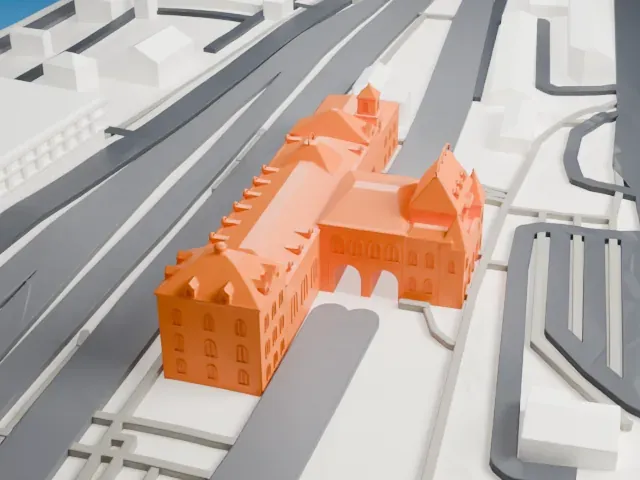 North
-
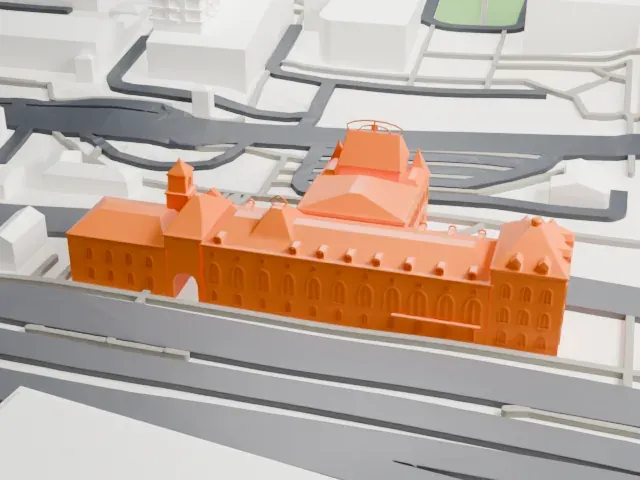 East
-
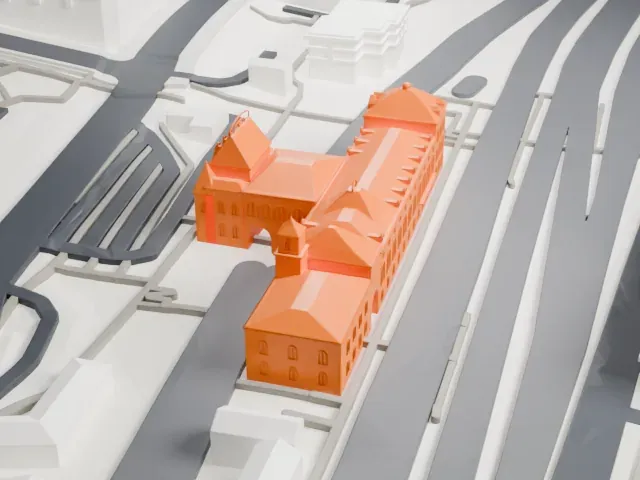 South
-
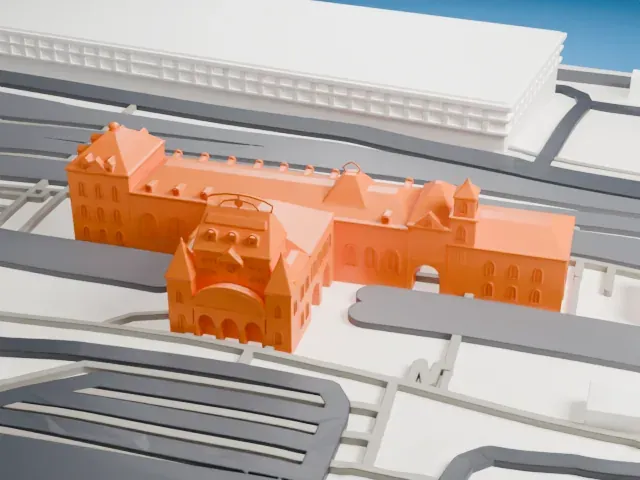 West
Copyright notice
The design of Vladivostok railway station may still be protected by copyright. It appears in the city models you make here, but it is not offered as a separate model.
- On a 160 mm print
- 7 mm
- Scale
- 1:3,750
7 mm tall on a 160 mm print
Make this print opens the generator on a 600 m square around the landmark. Buildings print at close to true scale, so the landmark grows with the print size.
- Dormers, spires and towers
The roofline carries many small dormers, spires and little towers. Print friendly adapts them to the print scale; Full detail suits a large print and a fine nozzle. A 0.12–0.16 mm layer height keeps them crisp.
- One piece with the ground
The Vladivostok railway station is joined to the ground in the exported file, and the four-side check found no floating parts, so nothing needs gluing.
- Pick the detail for your nozzle
In the Buildings settings, set Landmark detail to Print friendly to adapt thin parts and small details to the print scale. Full detail keeps every modeled feature, for larger prints or a finer nozzle.
- Colors
Buildings, roads, water and ground arrive as separate filament slots in the 3MF. The Vladivostok railway station takes the building color.
- File format
You get a 3MF for Bambu Studio, OrcaSlicer or PrusaSlicer. Any of them can save it as STL if you need one.
About the Vladivostok railway station
The Vladivostok railway station stands in Vladivostok, Russia, where the Trans-Siberian Railway ends in the east. The project's architect, P.E. Bazilevsky, helped lay the first stone on May 19 (31), 1891, with the future emperor Nicholas II (then Tsarevich Nikolai Aleksandrovich) in attendance.
The station was solemnly consecrated on November 2, 1893, and a rail link to Ussuriysk opened. At first it was a stone building roofed in iron, one story high in the middle and two stories at the edges, with floors of clay Japanese plates that are well preserved. In 1910–1912 the civil engineer V. A. Planson expanded it in the image of Moscow's Yaroslavsky station, so that the two ends of the Trans-Siberian each had an architecturally finished station.
The western facade carried the Primorskaya Oblast's coat of arms in mosaic, and the eastern facade Moscow's. From 1924 the appearance gradually changed, and the facade color went from yellow to green. The Russian-Italian company Tegola Canadese carried out a restoration in 1994–1996 that moved the building nearer to how it looked before the revolution.
About this model
The Vladivostok railway station is one of more than 6,500 landmark models in Mini Skyline. They are made with AI, and each one is checked in its real surroundings before release. Each model is written as code from public descriptions, plans, photographs and aerial views used only as references; no image or third-party model is copied into it. Everything around it is built from OpenStreetMap and Overture map data. Rights in the building itself, its name and any brands on it are not granted by Mini Skyline; clear them separately before you sell prints. If you would rather print the shape from map data, turn off Landmark models in the Buildings settings.
Mini Skyline is not affiliated with, or endorsed by, the owners of this building or its names and marks.
Keep exploring