3D print Camden Yards
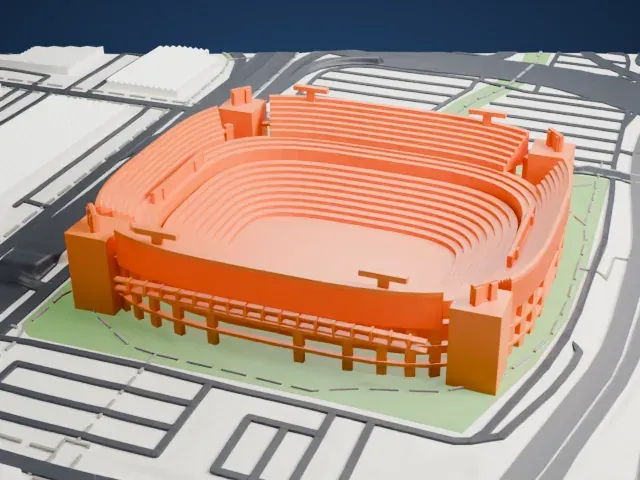
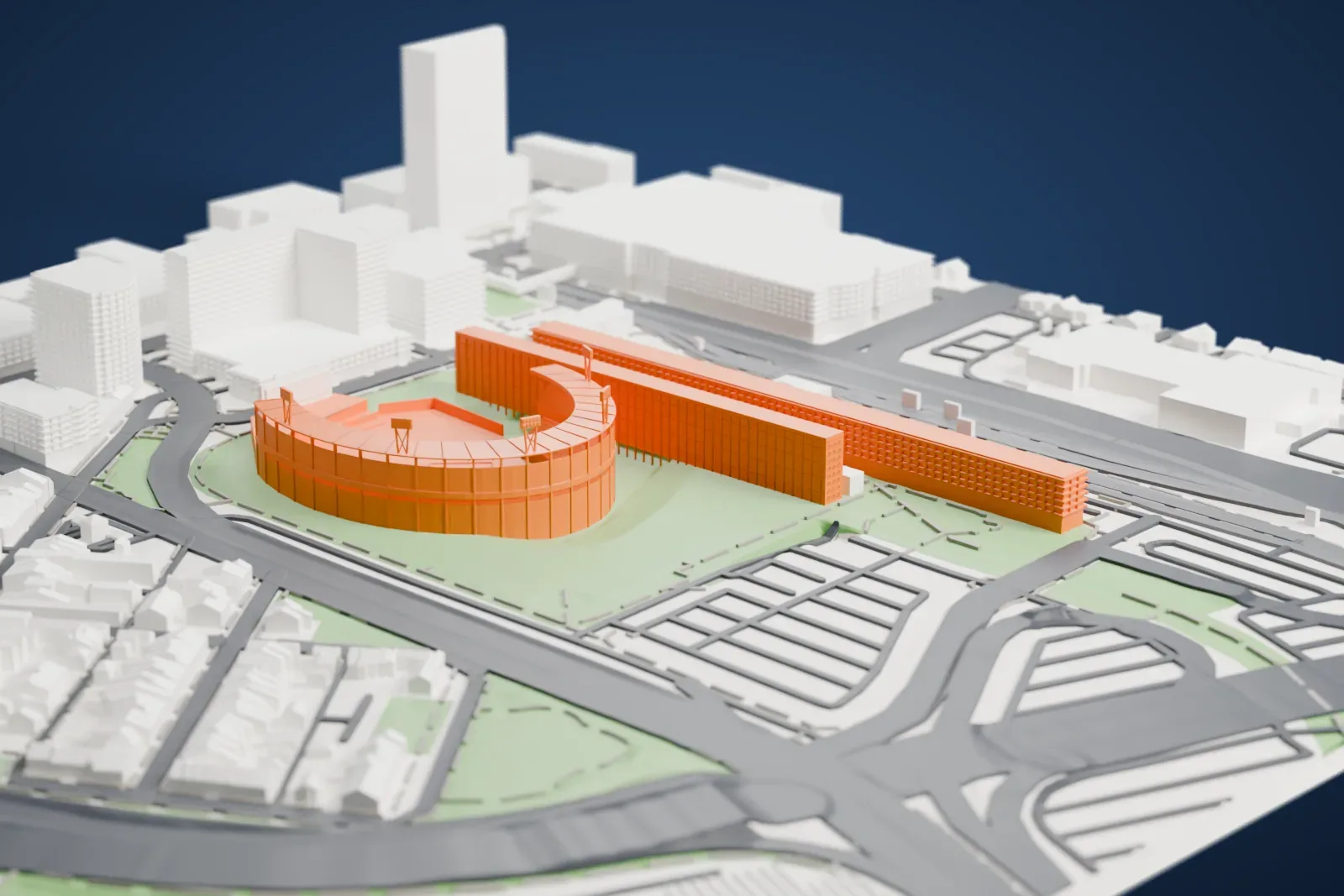
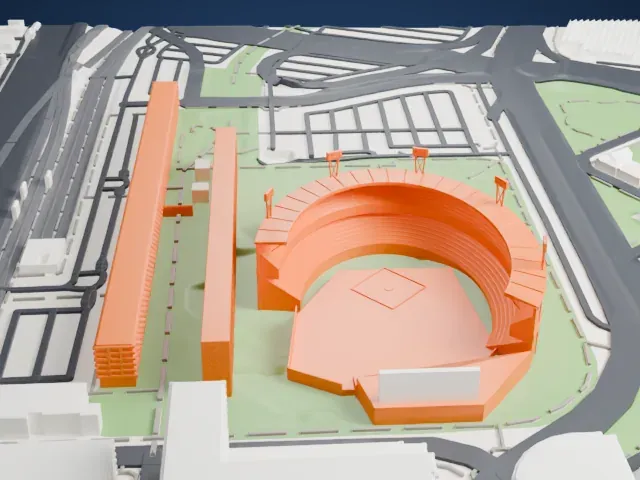
A free, printable model of Camden Yards, its curved grandstand, open field and light towers, with the streets and buildings around it, generated from real map data in your browser.
-
 North
-
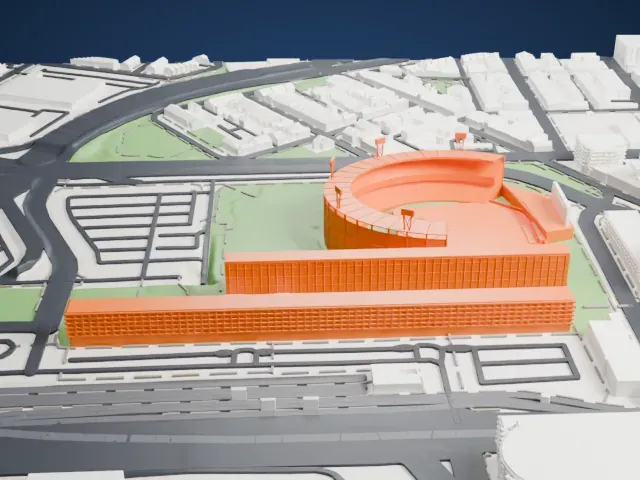 East
-
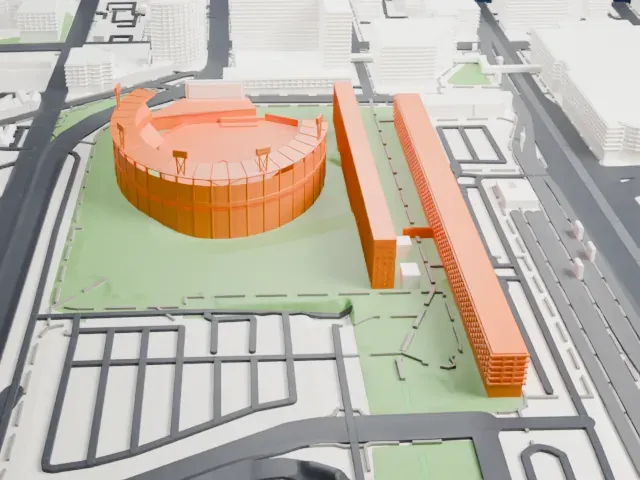 South
-
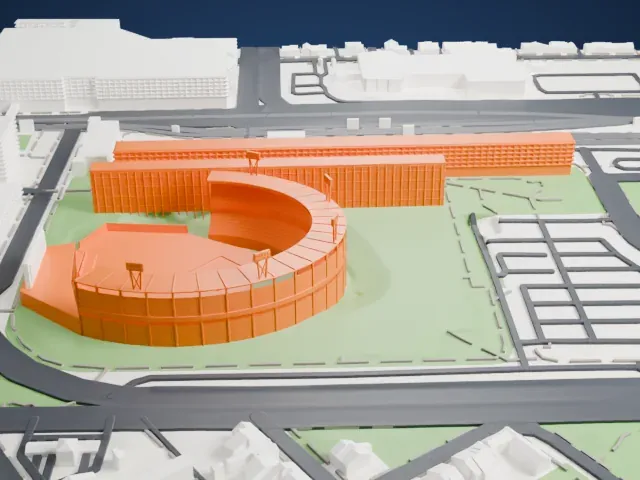 West
- On a 160 mm print
- 11 mm
- Scale
- 1:5,000
11 mm tall on a 160 mm print
Make this print opens the generator on a 800 m square around the landmark. Buildings print at close to true scale, so the landmark grows with the print size.
- Thin light towers
Slim light towers with lamp frames stand along the roofline of the grandstand. Print friendly adapts thin parts like these to your print scale; Full detail keeps them, best printed slowly with 0.12 to 0.16 mm layers.
- Tall, narrow building beside the field
A long, tall, thin-walled building runs along one side of the ballpark and carries small window details. A larger print keeps those details readable, and slower printing helps the narrow wall.
- One piece with the ground
Camden Yards is joined to the ground in the exported file, and the four-side check found no floating parts, so nothing needs gluing.
- Pick the detail for your nozzle
In the Buildings settings, set Landmark detail to Print friendly to adapt thin parts and small details to the print scale. Full detail keeps every modeled feature, for larger prints or a finer nozzle.
- Colors
Buildings, roads, water and ground arrive as separate filament slots in the 3MF. Camden Yards takes the building color.
- File format
You get a 3MF for Bambu Studio, OrcaSlicer or PrusaSlicer. Any of them can save it as STL if you need one.
About Camden Yards
Camden Yards is the Baltimore Orioles' ballpark in downtown Baltimore, Maryland; its full name is Oriole Park at Camden Yards. It sits within the Camden Yards Sports Complex, just west of the Inner Harbor, a few blocks from it. Finished in 1992 as the successor to Memorial Stadium, it was the earliest of the "retro" big-league ballparks built from the 1990s into the early 2000s, and it is widely seen as among baseball's best stadiums.
The ballpark is credited with launching a trend toward neotraditional ballparks after decades of cookie-cutter stadiums. The master plan came from the design firm RTKL, and HOK Sport completed the stadium design. HOK Sport's first scheme resembled the new Comiskey Park, but Orioles president Larry Lucchino rejected it in favor of an old-fashioned ballpark with modern amenities. Ashton Design created the signs, graphics and logos, plus a clock styled after the 19th century, set over the scoreboard.
Building work started in 1989 and took 33 months. Former owner Eli Jacobs preferred the name Oriole Park, while Maryland governor William Donald Schaefer wanted Camden Yards, so both names were adopted. The first game, a 5–3 preseason exhibition win over the New York Mets, was played on April 3, 1992, and the ballpark officially opened on April 6. The 1993 MLB All-Star Game was played there, and on September 6, 1995, Cal Ripken Jr. played his record-setting 2,131st consecutive game on its field.
About this model
Camden Yards is one of more than 4,300 landmark models in Mini Skyline. They are made with AI, and each one is checked from four sides in its real surroundings before release. Everything around it is built from OpenStreetMap and Overture map data. If you would rather print the shape from map data, turn off Landmark models in the Buildings settings.
Keep exploring