3D print El Cilindro
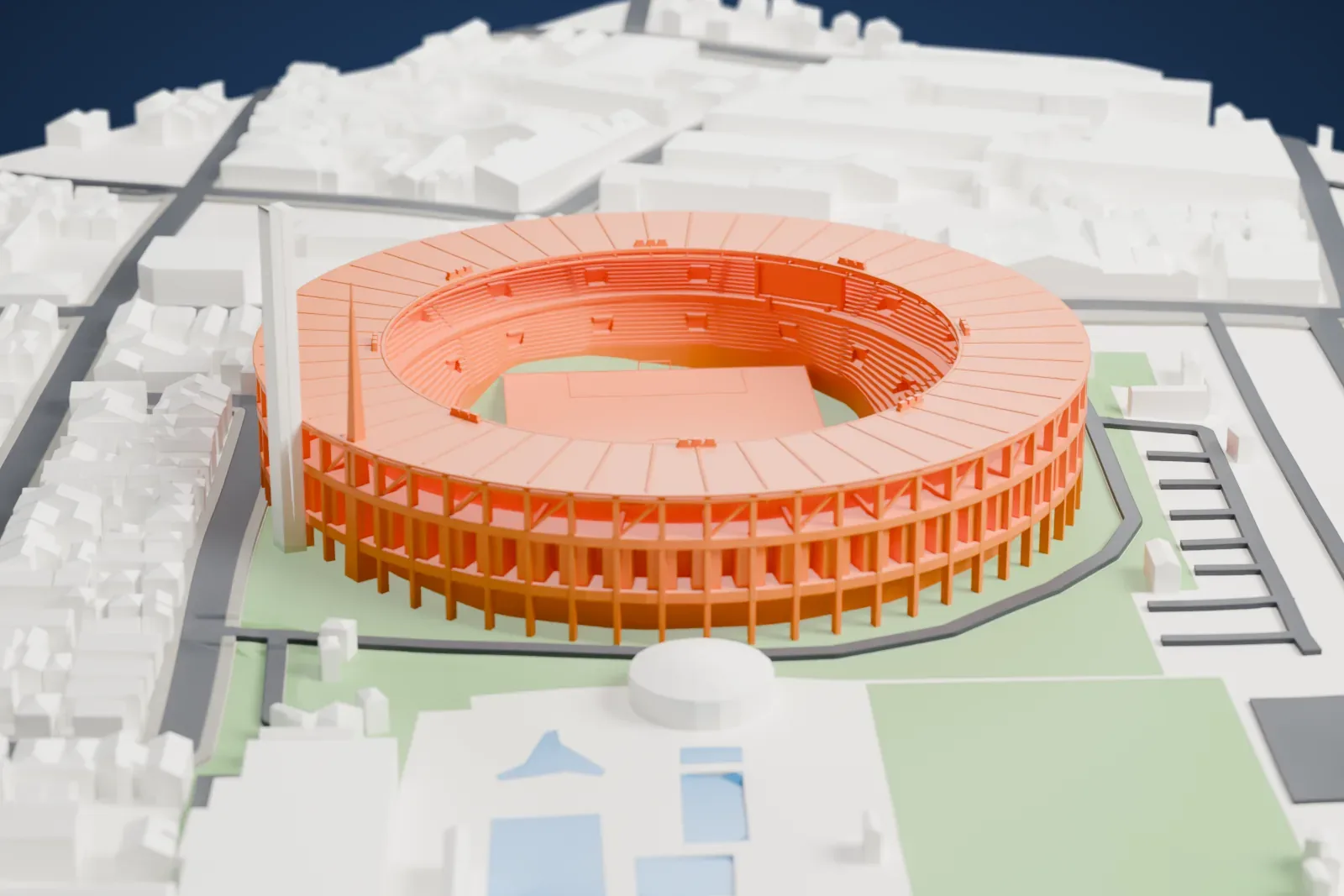
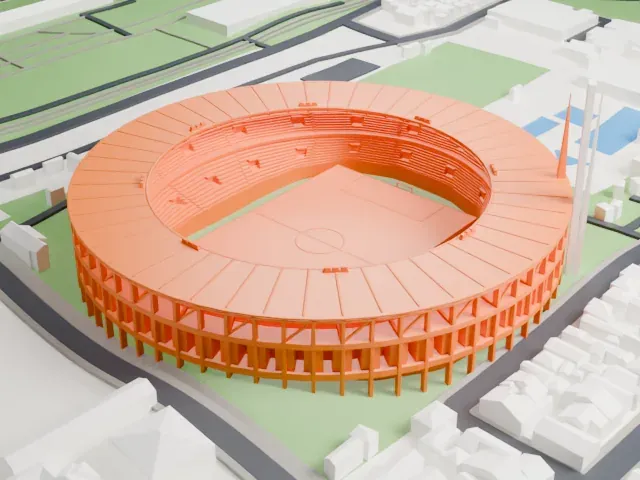
A free, printable model of El Cilindro, a round concrete stadium with a ring-shaped roof and a tall tower, among the surrounding city, generated from real map data in your browser.
-
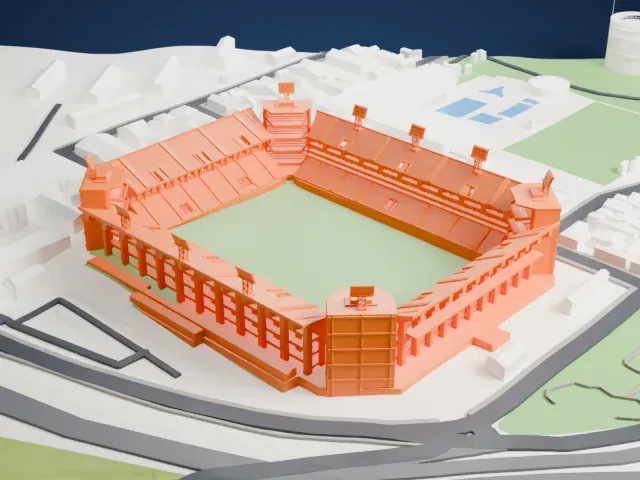
 North
-
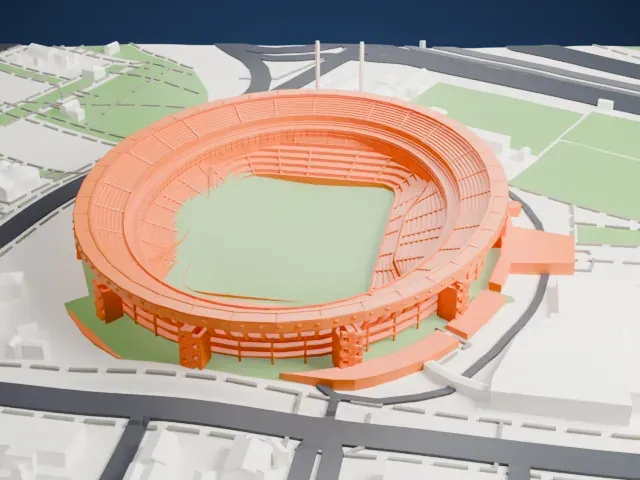
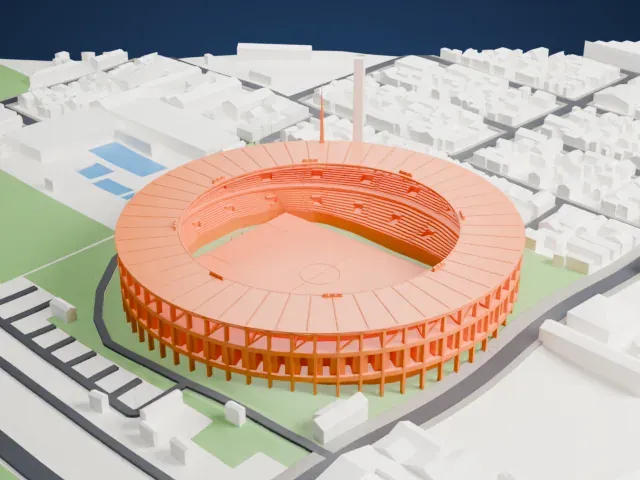 East
-
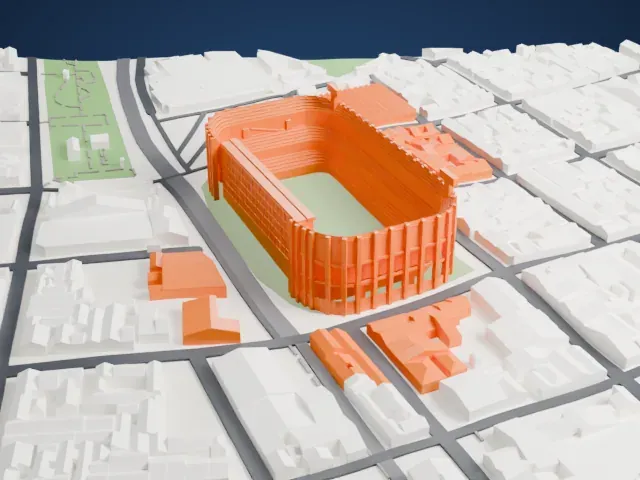
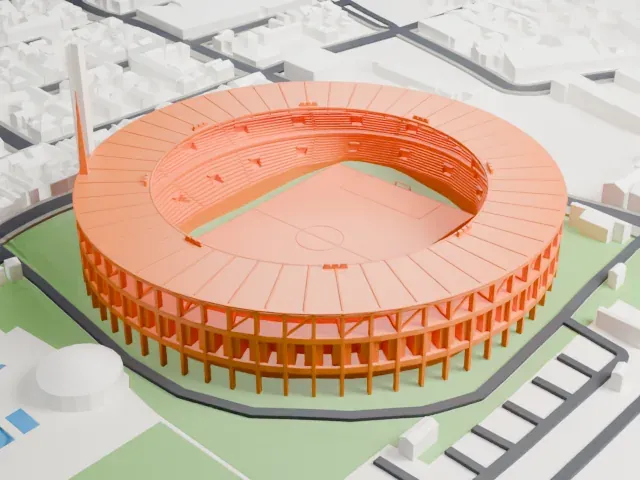 South
-
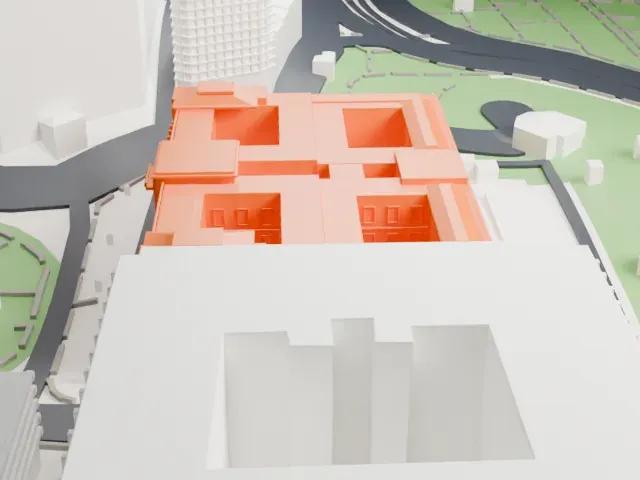
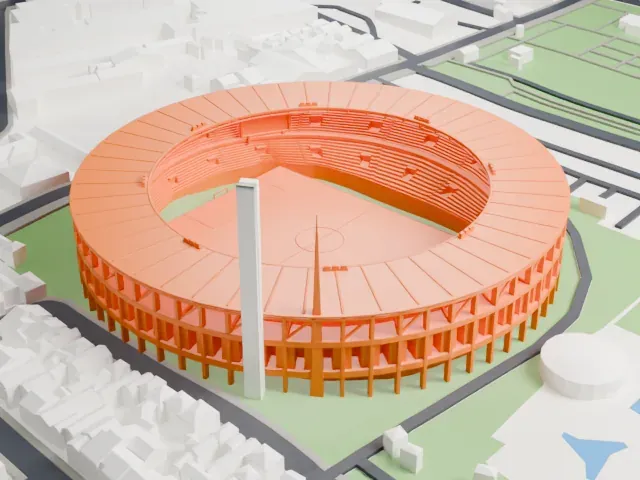 West
The model you print
El Cilindro in 3D
The landmark on its own, at its size on a 160 mm print. Print friendly thickens thin parts for a 0.4 mm nozzle; Full detail keeps every part.
- On a 160 mm print
- 18 mm
- Scale
- 1:3,750
18 mm tall on a 160 mm print
Make this print opens the generator on a 600 m square around the landmark. Buildings print at close to true scale, so the landmark grows with the print size.
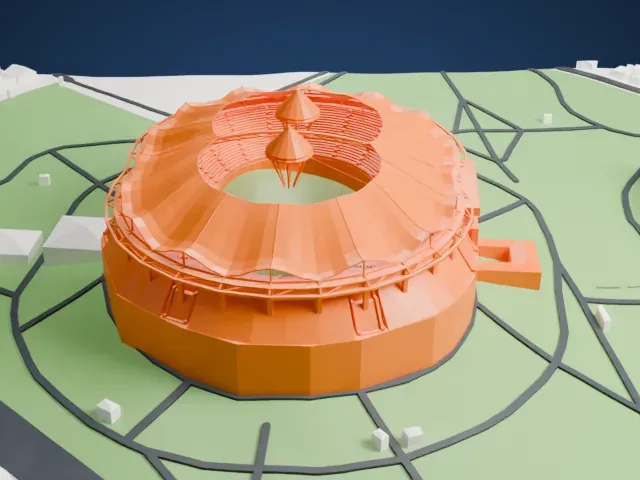
- Ring roof and open center
The thin ring roof has open radial trusses and a large open center, with a tall tapered tower at the rim. Full detail keeps the trusses and tower; Print friendly adapts them to the print scale.
- Open concrete bays
The round exterior has narrow recessed slots and open ground-level bays. A 0.12–0.16 mm layer height and a larger print keep those vertical openings crisp.
- One piece with the ground
El Cilindro is joined to the ground in the exported file, and the four-side check found no floating parts, so nothing needs gluing.
- Pick the detail for your nozzle
In the Buildings settings, set Landmark detail to Print friendly to adapt thin parts and small details to the print scale. Full detail keeps every modeled feature, for larger prints or a finer nozzle.
- Colors
Buildings, roads, water and ground arrive as separate filament slots in the 3MF. El Cilindro takes the building color.
- File format
You get a 3MF for Bambu Studio, OrcaSlicer or PrusaSlicer. Any of them can save it as STL if you need one.
About El Cilindro
Avellaneda, Argentina, is home to El Cilindro, whose official name is Estadio Presidente Perón; it is a football stadium and Racing's ground. The club's earlier stadium stood on the same site, and this one opened in 1950. Engineers from GEOPÉ designed it; GEOPÉ was a subsidiary of Philipp Holzmann, a German firm known for post-war city rebuilding. Renovations and safety rules cut the original 120,000 capacity over time, and the ground is approved for 50,880 spectators.
Racing's first ground had wooden stands at Alsina and Colón streets and held roughly 50,000. After lengthy negotiations, the club acquired 30,000 m2 beside it in 1944, and a 1946 loan from Juan Perón's government, arranged through Finance Minister Ramón Cereijo, funded the concrete stadium. It was named Presidente Perón to honor the president. Rosario Central won 6–4 there on December 1, 1946, in the old ground's last match.
Racing beat Vélez Sarsfield 1–0 at the official opening on September 3, 1950, with Llamil Simes scoring. The following year the ground hosted the opening ceremony and every football match of the 1951 Pan American Games. In 1997 a metal structure went up to carry a translucent roof with an opening system; when first used in 1998, it made El Cilindro the first Argentine stadium with all its seating covered.
About this model
El Cilindro is one of more than 4,900 landmark models in Mini Skyline. They are made with AI, and each one is checked from four sides in its real surroundings before release. Everything around it is built from OpenStreetMap and Overture map data. If you would rather print the shape from map data, turn off Landmark models in the Buildings settings.
Keep exploring