3D print Stadio Olimpico
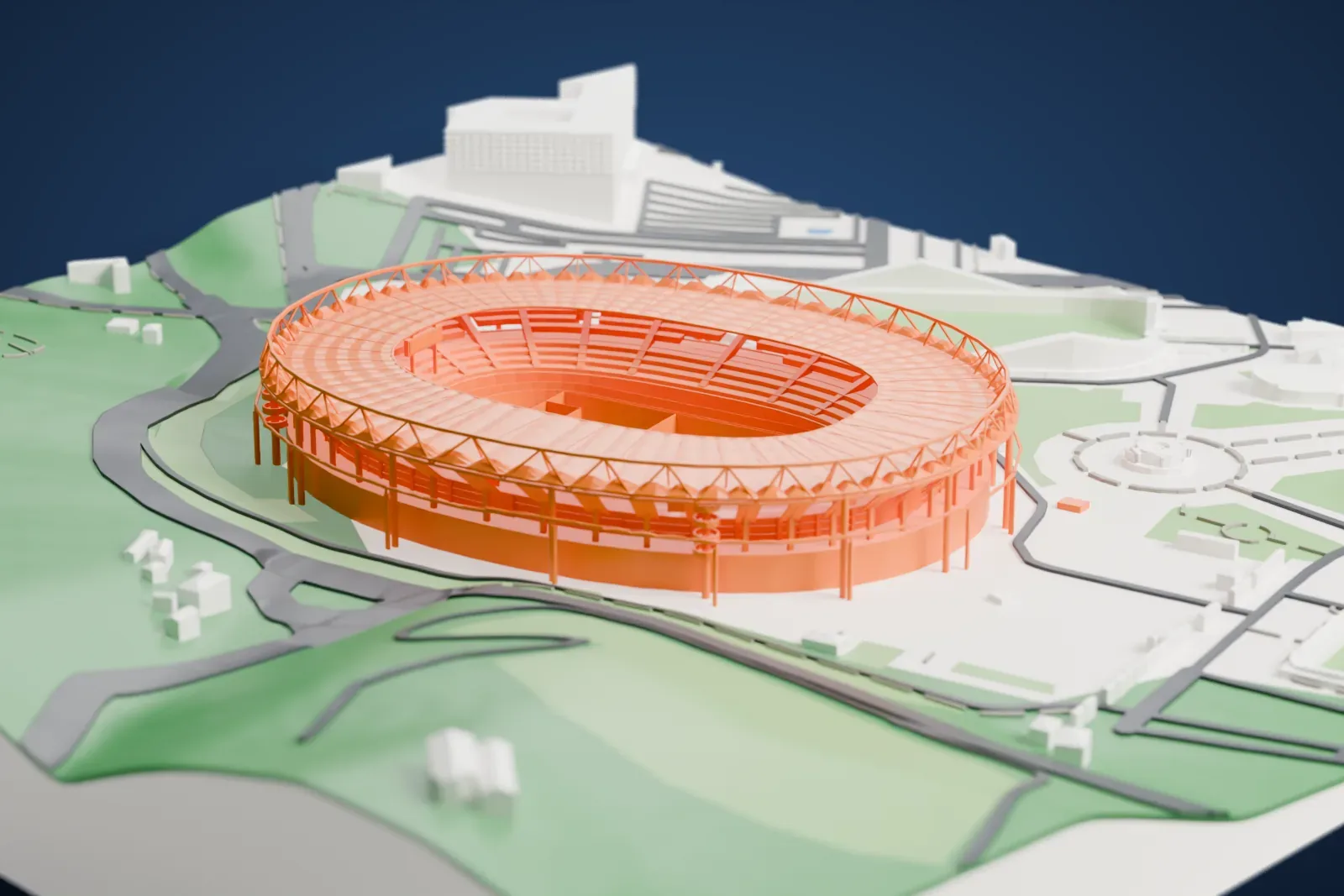
A free, printable model of Stadio Olimpico and its ring roof, with the plazas, roads and green hillside around it, generated from real map data in your browser.
-
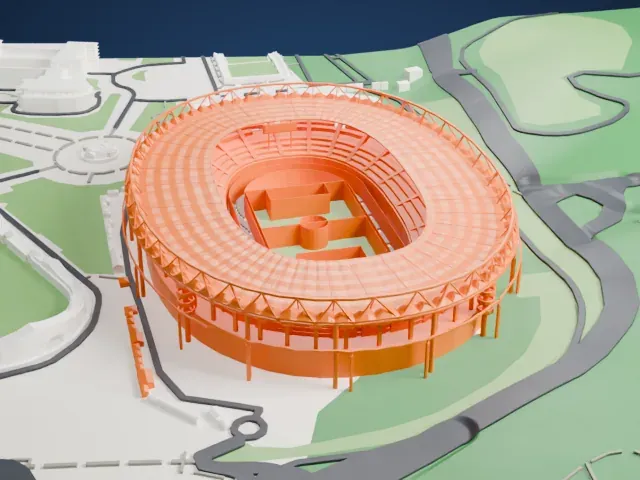 North
-
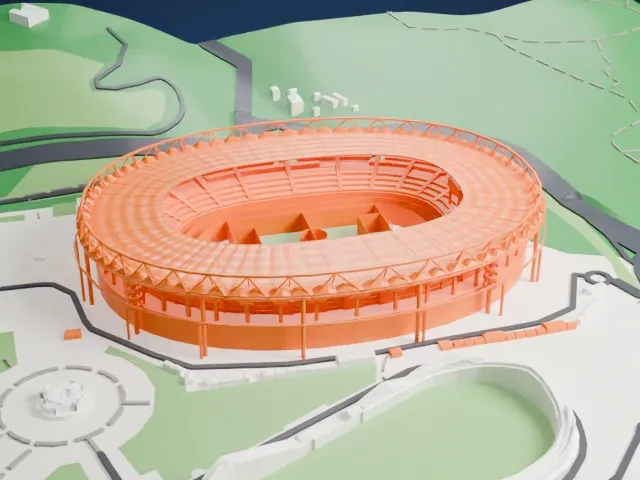 East
-
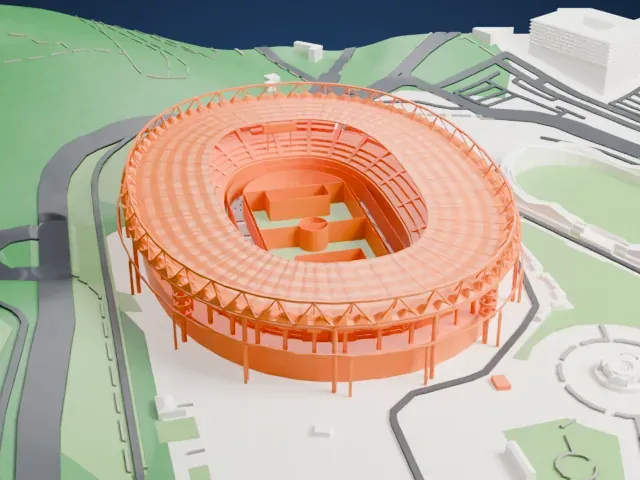 South
-
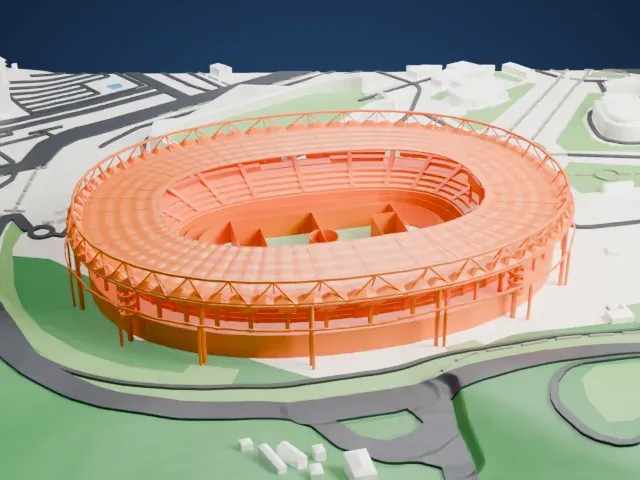 West
- On a 160 mm print
- 12 mm
- Scale
- 1:4,375
12 mm tall on a 160 mm print
Make this print opens the generator on a 700 m square around the landmark. Buildings print at close to true scale, so the landmark grows with the print size.
- Ring roof on slim struts
A ring roof rests on slim struts and thin columns around the outside. Print friendly adapts these thin parts to your print scale; Full detail keeps all of them, best for a larger print or a fine nozzle.
- Slender roof rim
The roof edge is a thin ring above the stands. Layers of 0.12 to 0.16 mm keep it crisp, and printing slowly helps this fine rim.
- One piece with the ground
Stadio Olimpico is joined to the ground in the exported file, and the four-side check found no floating parts, so nothing needs gluing.
- Pick the detail for your nozzle
In the Buildings settings, set Landmark detail to Print friendly to adapt thin parts and small details to the print scale. Full detail keeps every modeled feature, for larger prints or a finer nozzle.
- Colors
Buildings, roads, water and ground arrive as separate filament slots in the 3MF. Stadio Olimpico takes the building color.
- File format
You get a 3MF for Bambu Studio, OrcaSlicer or PrusaSlicer. Any of them can save it as STL if you need one.
About Stadio Olimpico
Stadio Olimpico, nicknamed l'Olimpico, is a multi-purpose sports venue in northwestern Rome, inside the Foro Italico sports complex. It can seat more than 70,000 spectators and is the biggest sports facility in Rome, and Italy's second biggest after Milan's San Siro. It once held more than 100,000 people and was also known as Stadio dei Centomila, the Stadium of the 100,000. The city's two main professional football clubs, A.S. Roma and S.S. Lazio, have played there since the stadium opened in 1953.
The architect Enrico Del Debbio oversaw work that began in 1928, and Luigi Moretti enlarged the venue in 1937. World War II interrupted further expansion. Afterward, CONI, the Italian National Olympic Committee, was made operator of the venue and completed construction, and the stadium opened on May 17, 1953, with a football match between Italy and Hungary. It became the Olimpico in 1955, the year Rome was given responsibility for staging the 1960 Summer Olympics. Until 1990 it was almost entirely unroofed, apart from the Monte Mario Grandstand. It was rebuilt and given a roof in 1990, ahead of that year's FIFA World Cup.
The European Championships of 1968 and 1980 and the 1990 FIFA World Cup used the Olimpico as their main venue, and each final was played there. It also staged two European Cup finals, in 1977 and 1984, and the UEFA Champions' League finals of 1996 and 2009. For the 1960 Olympics it held the track-and-field events and both the opening and the closing ceremonies. It has hosted the Coppa Italia final since 2008.
About this model
Stadio Olimpico is one of more than 4,300 landmark models in Mini Skyline. They are made with AI, and each one is checked from four sides in its real surroundings before release. Everything around it is built from OpenStreetMap and Overture map data. If you would rather print the shape from map data, turn off Landmark models in the Buildings settings.
Same skyline