3D print 254–260 Canal Street
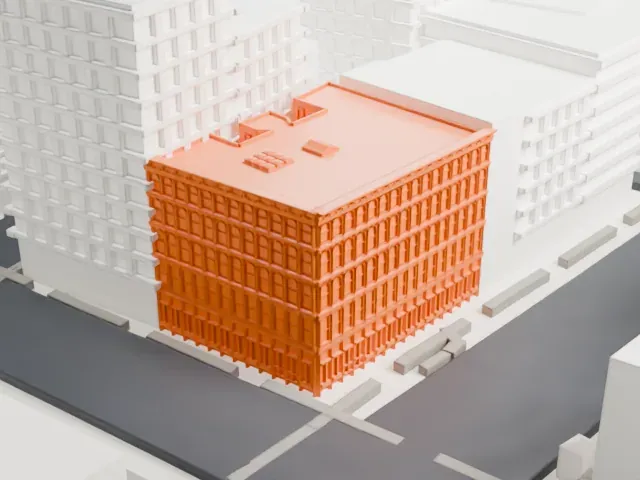
A free, printable 3D model of 254–260 Canal Street, set among the dense blocks of tall and low buildings around it, generated from real map data in your browser.
-
 North
-
 East
-
 South
-
 West
- On a 160 mm print
- 6 mm
- Scale
- 1:3,750
6 mm tall on a 160 mm print
Make this print opens the generator on a 600 m square around the landmark. Buildings print at close to true scale, so the landmark grows with the print size.
- A cast-iron window grid
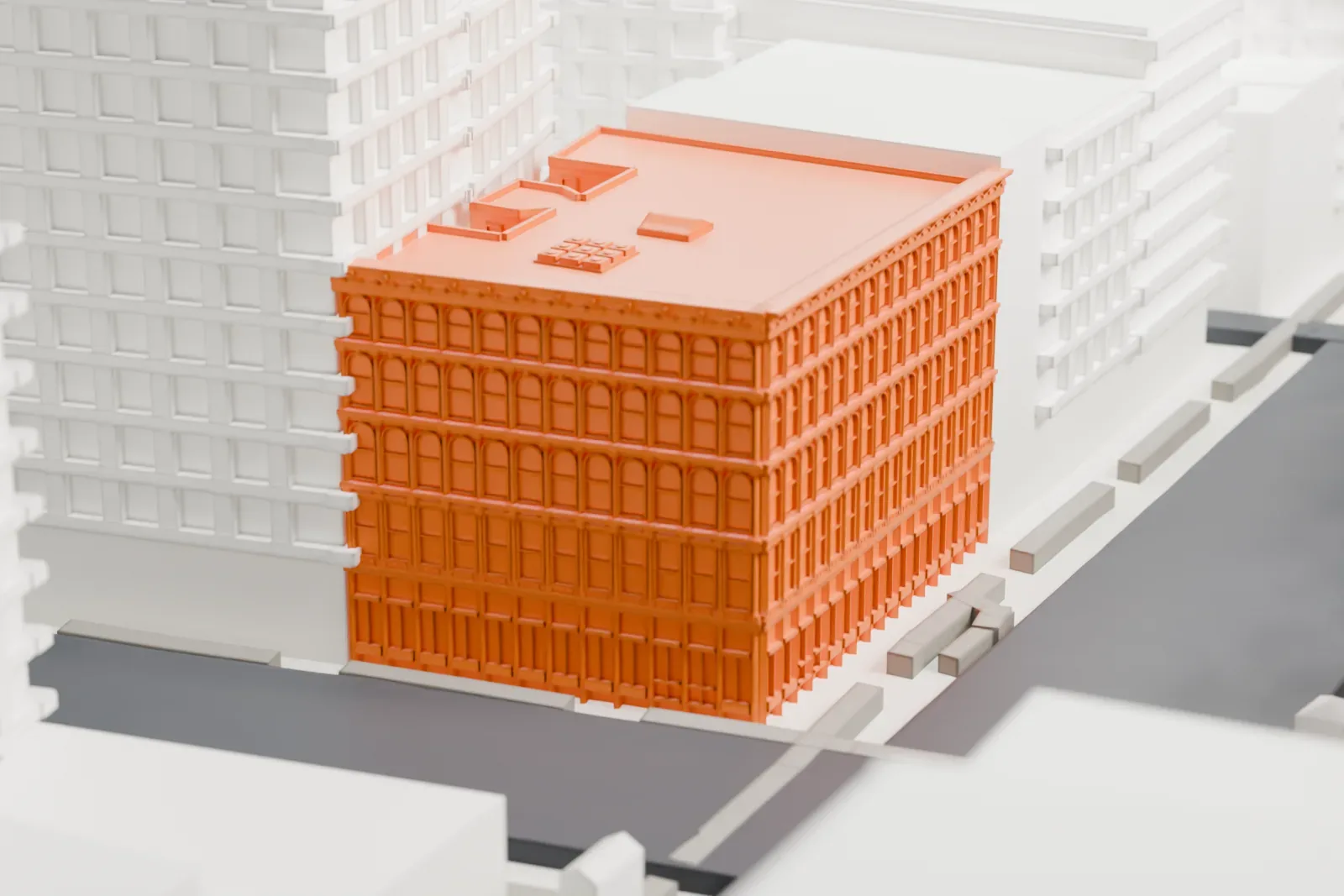
The facade is a regular grid of columns and large windows, which can blur into fine lines at small sizes. A larger print with Full detail, or a 0.12–0.16 mm layer height, keeps the grid crisp.
- One piece with the ground
254–260 Canal Street is joined to the ground in the exported file, and the four-side check found no floating parts, so nothing needs gluing.
- Pick the detail for your nozzle
In the Buildings settings, set Landmark detail to Print friendly to adapt thin parts and small details to the print scale. Full detail keeps every modeled feature, for larger prints or a finer nozzle.
- Colors
Buildings, roads, water and ground arrive as separate filament slots in the 3MF. 254–260 Canal Street takes the building color.
- File format
You get a 3MF for Bambu Studio, OrcaSlicer or PrusaSlicer. Any of them can save it as STL if you need one.
About 254–260 Canal Street
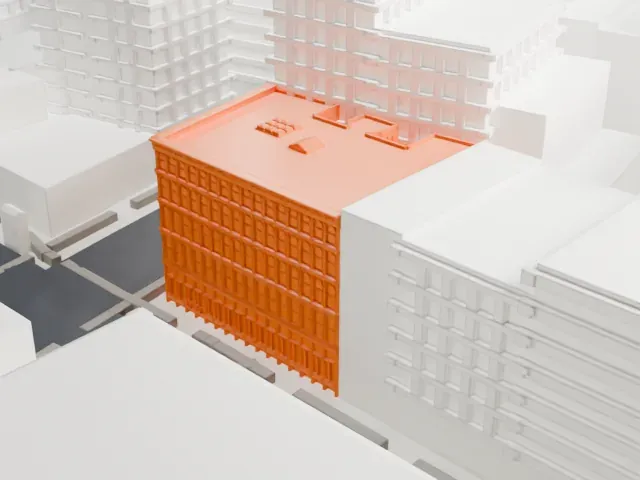
The Bruce Building, at 254–260 Canal Street, stands at the Lafayette Street corner, in Manhattan's Chinatown. It was built in 1856–57 in the Italian Renaissance revival style and is five stories tall. George Bruce, a successful printer who invented new printing technologies, was the client; printing then ranked among the leading industries in New York.
James Bogardus, a pioneer in using cast iron in architecture, may have supplied the cast-iron parts of the facade. If so, it would rank as the biggest and most significant of his remaining works. The cast-iron columns made large windows possible, which improved working conditions and efficiency in manufacturing. The lot was open because a lumber mill there had burned down shortly before, which made fire-retardant cast iron appealing.
Architect Jack L. Gordon converted the building to offices in 1987. New York City designated it a landmark in 1985, and the National Register of Historic Places listed it in 2006. Its mildly Italianate style makes it a particularly handsome piece of industrial architecture from the nineteenth century.
About this model
254–260 Canal Street is one of more than 4,300 landmark models in Mini Skyline. They are made with AI, and each one is checked from four sides in its real surroundings before release. Everything around it is built from OpenStreetMap and Overture map data. If you would rather print the shape from map data, turn off Landmark models in the Buildings settings.
Same skyline