3D print Abu Simbel
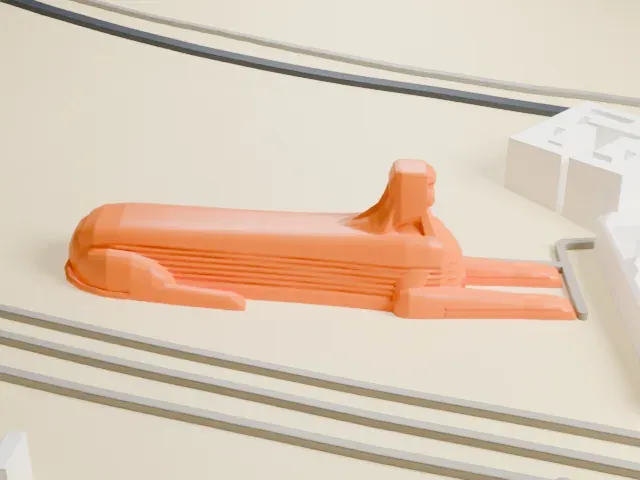
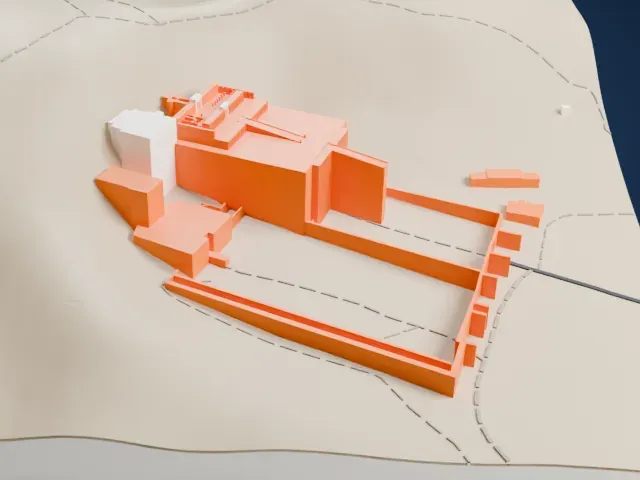
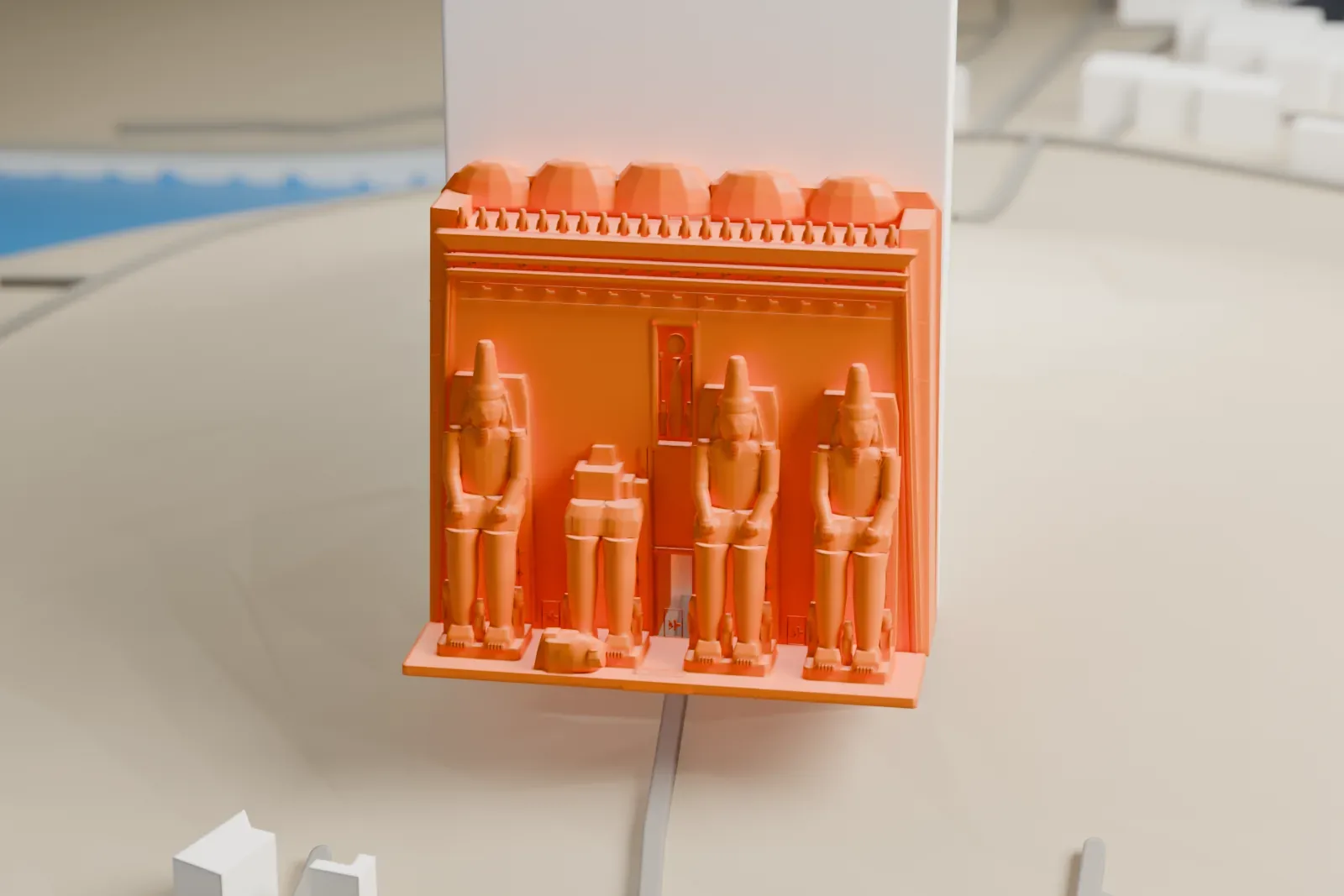
A free, printable model of Abu Simbel's temple facade with seated statues, open ground, nearby water and a tall block behind it, generated from real map data in your browser.
-
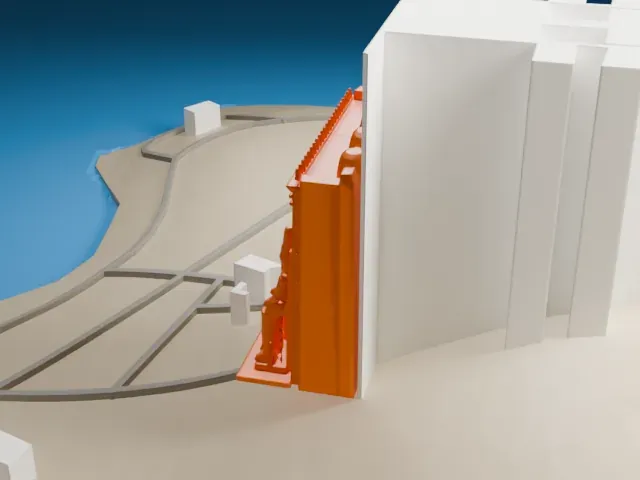 North
-
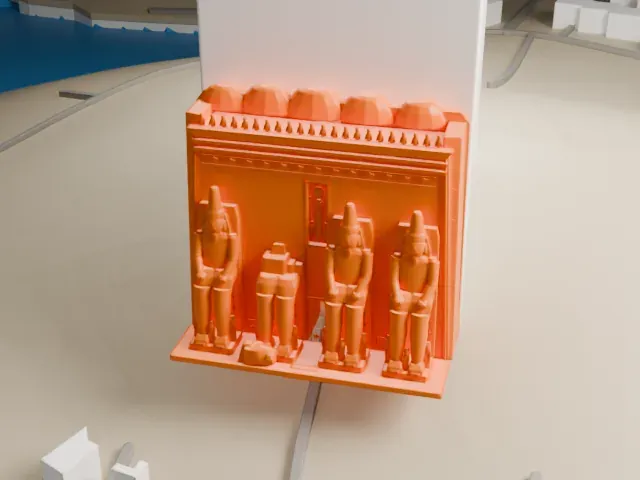 East
-
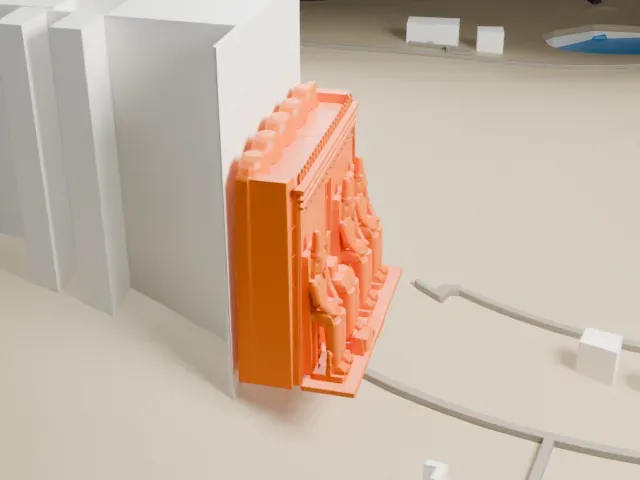 South
-
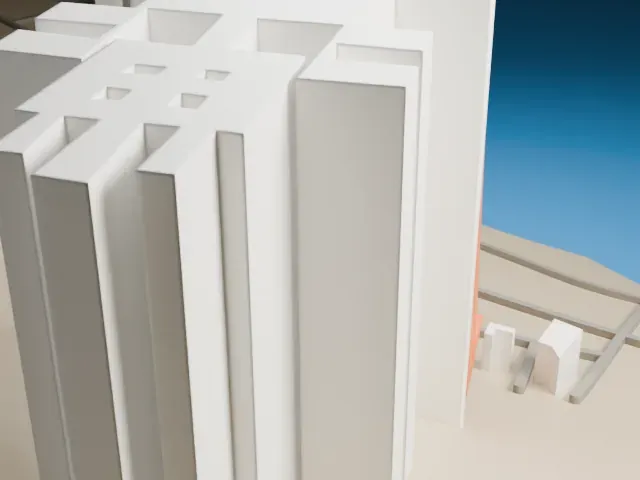 West
The model you print
Abu Simbel in 3D
The landmark on its own, at its size on a 160 mm print. Print friendly thickens thin parts for a 0.4 mm nozzle; Full detail keeps every part.
- On a 160 mm print
- 9 mm
- Scale
- 1:3,750
9 mm tall on a 160 mm print
Make this print opens the generator on a 600 m square around the landmark. Buildings print at close to true scale, so the landmark grows with the print size.
- Keep the seated figures clear
The facade has seated statues with small features around their legs and feet. A larger print with Full detail retains these features; use a slicer layer height of 0.12–0.16 mm for crisp vertical relief.
- Preserve the small upper figures
A row of tiny figures runs along the facade's upper edge. Choose Print friendly to adapt them to the print scale, or increase the print size when using Full detail.
- Pick the detail for your nozzle
In the Buildings settings, set Landmark detail to Print friendly to adapt thin parts and small details to the print scale. Full detail keeps every modeled feature, for larger prints or a finer nozzle.
- Colors
Buildings, roads, water and ground arrive as separate filament slots in the 3MF. Abu Simbel takes the building color.
- File format
You get a 3MF for Bambu Studio, OrcaSlicer or PrusaSlicer. Any of them can save it as STL if you need one.
About Abu Simbel
Abu Simbel consists of two temples carved into rock in the village of the same name, within Egypt's Aswan Governorate. The site stands beside Lake Nasser on its western bank, near the Sudanese border. The temples were cut into a mountainside during Ramesses II's reign in the 13th century BC. The Great Temple was dedicated to Ramesses himself, while the Small Temple honored his chief wife, Queen Nefertari. Large relief figures of Ramesses mark the exterior.
Smaller figures at Ramesses's feet depict his wife Nefertari and his children, while sculptures inside the Great Temple commemorate his leadership at Kadesh. In 1968, the entire complex was moved to higher ground to prevent flooding by Lake Nasser, the reservoir created by the Aswan Dam. A domed structure formed an artificial hill to house the temples as part of an international rescue campaign for Nubia's monuments. Polish archaeologist Kazimierz Michałowski supervised this work. Abu Simbel belongs to the Nubian Monuments UNESCO heritage site, together with other relocated temples including Philae, Amada and Wadi es-Sebua.
About this model
Abu Simbel is one of more than 6,500 landmark models in Mini Skyline. They are made with AI, and each one is checked in its real surroundings before release. Each model is written as code from public descriptions, plans, photographs and aerial views used only as references; no image or third-party model is copied into it. Everything around it is built from OpenStreetMap and Overture map data. Rights in the building itself, its name and any brands on it are not granted by Mini Skyline; clear them separately before you sell prints. If you would rather print the shape from map data, turn off Landmark models in the Buildings settings.
Mini Skyline is not affiliated with, or endorsed by, the owners of this building or its names and marks.
Keep exploring