3D print Anthology Film Archives
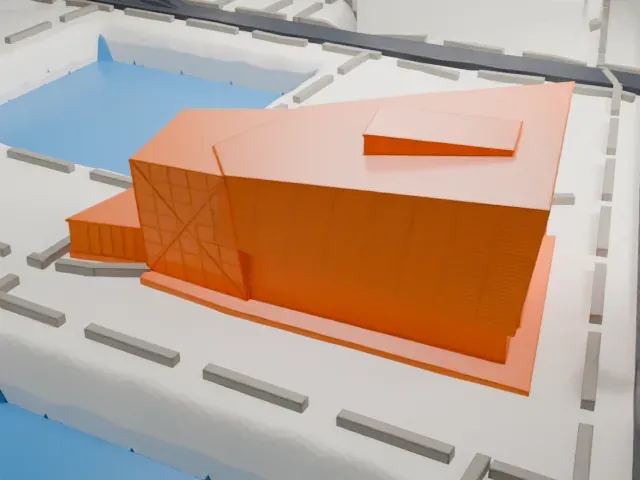
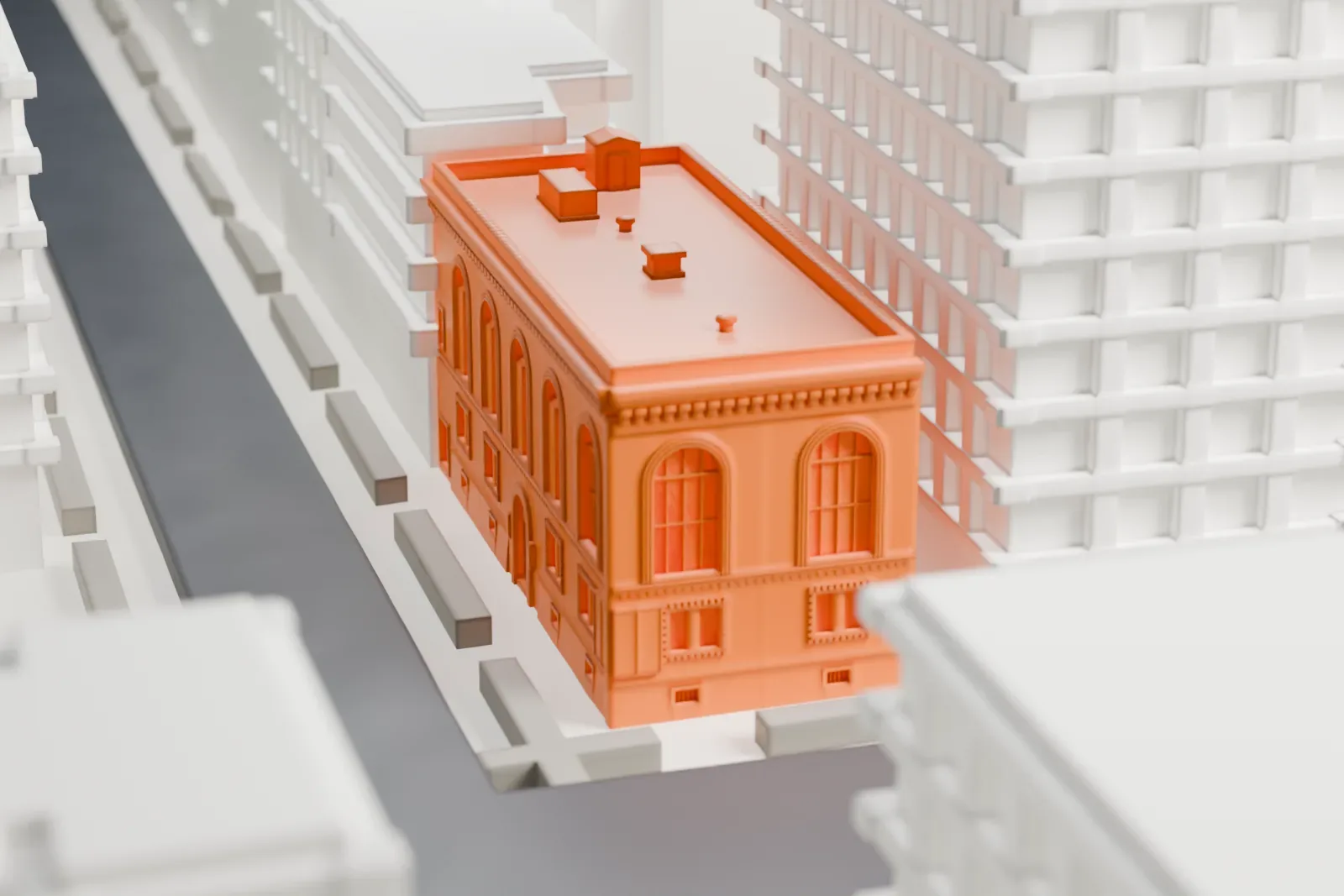
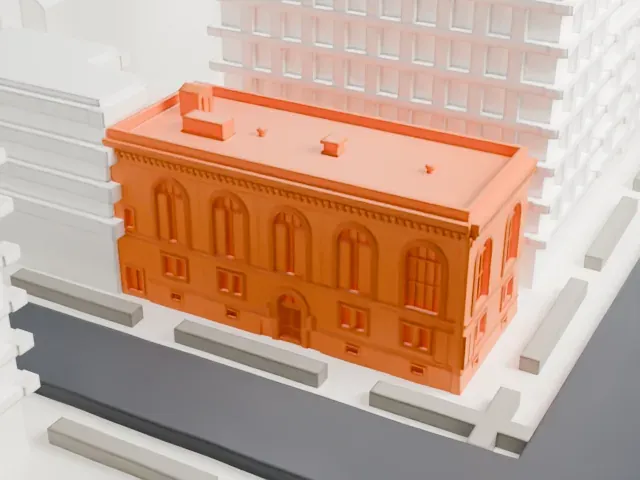
A free, printable model of Anthology Film Archives, a three-story building with tall arched windows, hemmed in by larger buildings, generated from real map data in your browser.
-
 North
-
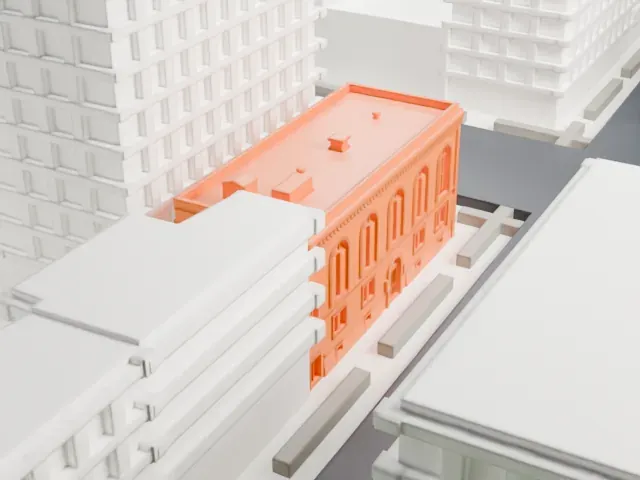 East
-
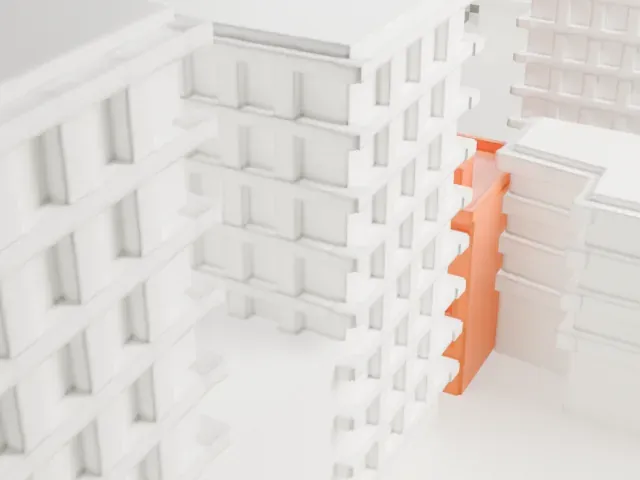 South
-
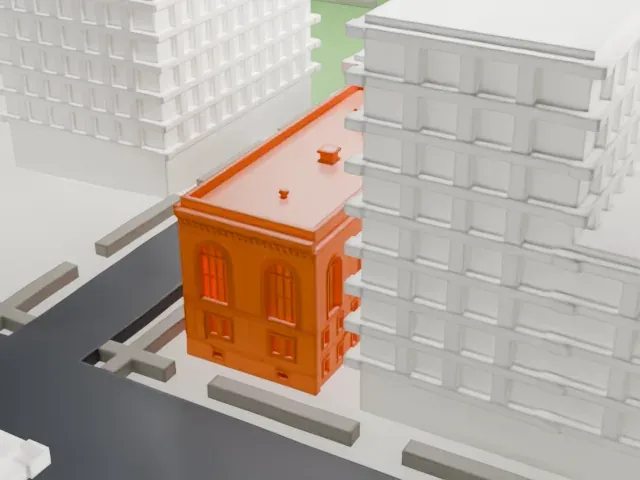 West
- On a 160 mm print
- 5 mm
- Scale
- 1:3,750
5 mm tall on a 160 mm print
Make this print opens the generator on a 600 m square around the landmark. Buildings print at close to true scale, so the landmark grows with the print size.
- Tall arched windows
A row of tall arched windows runs along the front of the building. A larger print and a layer height of 0.12–0.16 mm keep every arch readable.
- Cornice and rooftop details
A toothed cornice rims the roof, with a few small vents and boxes on top. Print friendly adapts these small parts; Full detail keeps them when printed larger.
- One piece with the ground
Anthology Film Archives is joined to the ground in the exported file, and the four-side check found no floating parts, so nothing needs gluing.
- Pick the detail for your nozzle
In the Buildings settings, set Landmark detail to Print friendly to adapt thin parts and small details to the print scale. Full detail keeps every modeled feature, for larger prints or a finer nozzle.
- Colors
Buildings, roads, water and ground arrive as separate filament slots in the 3MF. Anthology Film Archives takes the building color.
- File format
You get a 3MF for Bambu Studio, OrcaSlicer or PrusaSlicer. Any of them can save it as STL if you need one.
About Anthology Film Archives
Anthology Film Archives works as an international center that preserves, studies and exhibits film and video, concentrating on independent, experimental and avant-garde work. Its home is 32 Second Avenue, at the southeast corner where East 2nd Street crosses, in Manhattan's East Village. It began operating on November 30, 1970, in the Public Theater Building of Joseph Papp, sponsored by Jerome Hill. Hill died in 1974, after which Anthology moved to 80 Wooster Street in SoHo.
In 1979 it acquired a former municipal courthouse. Raimund Abraham and Kevin Bone, the architects, adapted it for $1,450,000, creating a gallery, offices, a film preservation department, a reference library and two movie theaters. The public could visit from October 12, 1988.
The building opened on April 30, 1919 as a Manhattan magistrate's courthouse and jail, also called the New Essex Market Courthouse. Alfred Hopkins designed it in the Renaissance Revival style, using brick and terra cotta over three stories. It replaced a 1913 plan, more ambitious, for a 14-story municipal tower. The court moved out after February 1946; the Police Athletic League then used the building as a youth center. In 2012 the city designated a historic district named for the East Village and Lower East Side, and the building lies inside it. The 2004 film Spider-Man 2 used its exterior for Doctor Octopus' laboratory.
About this model
Anthology Film Archives is one of more than 4,300 landmark models in Mini Skyline. They are made with AI, and each one is checked from four sides in its real surroundings before release. Everything around it is built from OpenStreetMap and Overture map data. If you would rather print the shape from map data, turn off Landmark models in the Buildings settings.
Same skyline